Satellite Sanitrax vacuum technology: How it works, where it deploys, and what it costs
- Up to 90 percent less water. Air pressure moves waste through a sealed network, so each flush uses 0.25 to 0.5 liters against more than 2 liters conventionally.
- One pump, up to 78 toilet positions. A single Sanitrax Tech Module supports 26 connected modules, evacuated centrally instead of unit by unit.
- No sewer tie-in required. Waste pumps up to 100 feet to a sewer connection or holding tank, so no service truck works the restroom bank.
- Up to 66 toilet positions per load. Retractable modules ship 22 per 53 foot trailer, cutting shipping cost by roughly 50 percent.
- Utilization decides payback. The cost is upfront while the savings accrue per event day, so days deployed recovers the cost.
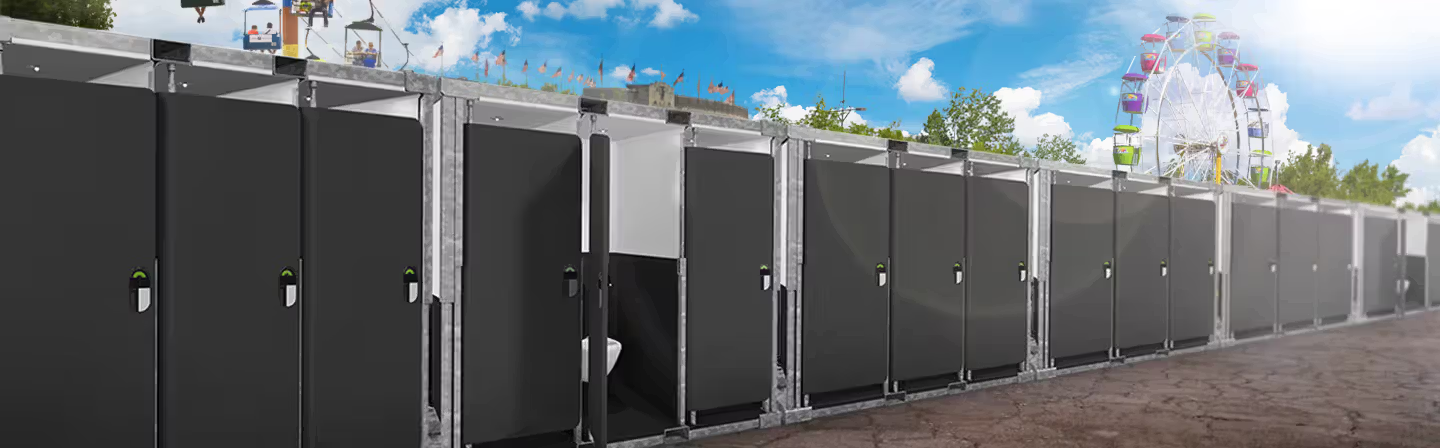
Changing the way that waste moves through portable toilet units can cut water use by up to 90 percent. Satellite Industries does this with Satellite Sanitrax vacuum technology: a vacuum toilet system of modular units connected to a single central pump, and the only patent-pending, retractable, containerized vacuum restroom system on the market.
How vacuum flush technology works in a vacuum toilet system
A conventional portable unit relies on gravity: waste drops into a holding tank below the seat, and recirculated chemical water does the rest. A vacuum toilet system holds its pipe network at lower pressure than the stall, so when a user flushes and the valve opens, air pressure pushes the bowl contents into the network and away from the stall.
Because pressure does the work, each flush needs only a small rinse. Satellite's Sanitrax vacuum system requires only 0.25-0.5 liters of water per flush compared to more than 2 liters for a conventional portable system, reducing water use by up to 90 percent.
- Sealed, closed hose network. Every module shares one network, so waste travels in a closed loop to the collection point.
- Dual macerator pumps. These break waste down so it moves reliably through the hoses to a sewer connection or holding tank.
- Fresh Flush system. Waste leaves the stall with every flush, so there is no open tank under the seat to cause odor.
The saving compounds downstream. Less water means less total volume, which means smaller holding tanks, fewer pump-outs, and fewer haul runs. On a multi-day event, that can mean scheduling one evacuation run instead of several. Evaluating a single unit rather than a site-wide system? See our guide to portable vacuum toilets.
One Sanitrax pump system, 26 modules, 78 toilet positions
A single Sanitrax Tech Module vacuum pump system supports up to 26 connected modules. That equates to up to 78 toilet positions, linked by one closed hose network, with waste evacuated centrally and pumped to a sewer connection or holding tank up to 100 feet away. Most real deployments mix in urinal, ADA, and shower modules, so the toilet count on your site will vary with the mix.
For an operator used to plastic units, the operational change is bigger than the number suggests:
- One pump system instead of 78 service points. A bank of 78 conventional units means 78 holding tanks to pump. A Sanitrax cluster offers one evacuation point.
- One evacuation run instead of a truck circuit. Your service truck connects at the collection point rather than working down a row of units in front of the crowd.
- Restrooms go where the crowd is. Waste moves through hoses, so you place modules by crowd flow, not by where a service vehicle can reach.
Each Sanitrax Toilets Module also carries LED lighting and infrared sensors that track the number of uses. On a conventional fleet, service intervals are set by the calendar or by rule of thumb, so some units get serviced early and others overflow before the truck arrives. Use tracking lets a Sanitrax operator service on actual demand, shifting labor toward the modules working hardest.
The Sanitrax module range and how to configure a vacuum toilet system
Every Sanitrax deployment is built from the same modules, combined in whatever ratio the site needs.
For example, take a 15,000 attendee, two-day festival whose sizing run calls for roughly 90 toilet positions plus urinal capacity for evening peaks. An illustrative configuration would be:
- 30 Sanitrax Toilets Modules (90 toilet positions)
- 6 Sanitrax Urinal Modules near the main stage
- 3 Sanitrax ADA Modules (one per restroom bank) with Washbasin Modules at each bank
- One Sanitrax Stainless Steel 8 Basin Handwash at the food court
That is 39 vacuum-connected modules, more than one Tech Module supports, so the site runs as two clusters split by crowd zone.
Final counts depend on attendance, event hours, alcohol service, and local code. Run your numbers through the Satellite restroom calculator, then take the result into an applications review with Satellite Industries.
Where Sanitrax deploys
Sanitrax fits where conventional units hit a hard limit: crowd density, water supply, vehicle access, or transport distance.
Music festivals and large outdoor events
Festivals push the most people through the least space, in sharp peaks between sets, making event sanitation a highly important factor for event organizers. A Sanitrax bank handles that throughput with no service truck pumping units in front of guests. Satellite customers running festival deployments have reported food and beverage sales rising by as much as 40 percent after the switch. For campgrounds, pair Shower Modules with shower trailers and mobile shower units.
Military forward operating bases
Bases need sanitation that deploys fast, retracts fast, and moves on standard transport. Containerized, retractable modules ship as freight rather than as a fleet of individual units. With water often the scarcest resource on a base, up to 90 percent less per flush directly cuts resupply, and closed-loop handling keeps waste contained without sewer access. Learn more about government and military sanitation.
Humanitarian aid and disaster relief camps
In relief camps, disaster response sanitation has to arrive quickly and serve a dense population from day one. Containerized modules move on the same logistics chain as other relief supplies, and one Tech Module cluster serves up to 78 toilet positions. Low water use matters most here, because clean water is needed for drinking first.
Industrial remote sites
Mining camps, energy projects, and remote builds often have no sewer tie-in and long haul distances. Paired with Jets NOMAD components, Sanitrax portable sanitation for remote worksites runs a self-contained water and waste loop, cutting both water trucked in and waste trucked out.
Film and production
Long shoot days bring crews and talent who expect better than a plastic unit, often on sets a service truck cannot reach. Because Sanitrax pumps waste to a collection point up to 100 feet away, restrooms sit near base camp while the service vehicle stays out of shot.
Transport, setup, and servicing
Logistics is the quiet reason operators switch to Sanitrax. The water saving gets the headlines, but transport and labor savings show up on every job.
Retractable, containerized modules. Modules retract into a compact form for transport, so both the outbound and return hauls carry more positions per load, instead of moving bulky units back to the yard half-empty.
Up to 22 modules on one 53 foot step-down trailer. One trailer can carry up to 66 toilet positions. Satellite Industries estimates the modular design cuts shipping cost by roughly 50 percent.
Fast site setup. Modules deploy from their transport form and connect into the hose network, so a single operator can set up a full load. Compare that with placing and leveling dozens of individual units, each needing its own service access.
Central evacuation. Servicing happens at one point per cluster, not stall by stall. Your crew spends its time on the system rather than on a circuit around the site.
Two features make this model work: the Sanitrax monitoring app gives real-time visibility across the system, so an operator can pinpoint a fault instead of walking the site to find it. Smart Tech Lights outside each module signal availability to guests at a glance, spreading traffic across the bank. Together, they let you manage the site from data, rather than from patrols.
What a Sanitrax system costs, and what it saves
A Sanitrax system costs materially more upfront than an equivalent count of plastic units. The case for Sanitrax is a lifecycle case, won or lost across five cost lines that recur every time the system works:
- Water: up to 90 percent less per flush means less water hauled in.
- Waste hauling: waste volume falls with flush volume, so there are fewer haul runs per event.
- Deodorizer: waste is evacuated rather than held under the seat, so consumption drops substantially.
- Service labor: one evacuation point per 26 modules replaces a unit-by-unit circuit, and use tracking lets you service on demand.
- Transport: up to 66 toilet positions travel on one 53 foot load, lowering transport cost per position on every delivery and return.
None of those savings arrive on the day you buy the system, but rather every event day the system is in use - which makes utilization, not sticker price, the variable that decides payback:
Payback (seasons) = Upfront premium over an equivalent plastic fleet ÷ (Event days per season × Operating saving per event day)
The operating saving per day is the sum of the five lines above, worked from your own costs. The premium is fixed, so the only term you control after purchase is event days per season. An operator whose modules work 60 high-density event days a season recovers the premium four times faster than one whose modules work 15. The first is buying a lower cost base. The second is buying an asset that spends most of the year in the yard.
Satellite pricing is quoted per configuration rather than listed. To see how the numbers land against your season, talk to our team.
Is Sanitrax Right for Your Fleet?
Sanitrax is not the right answer for every job, and it is not meant to be. Where crowds are dense, water is scarce, and a service truck at the stall is not an option, it changes what a site can do. Whether it pays back depends on your utilization.
Explore Sanitrax vacuum technology or request an applications review today.
Frequently Asked Questions
How does a vacuum toilet system work?
A vacuum toilet system uses an air pressure differential, not gravity, to move waste out of the bowl and through a sealed pipe network. When a user flushes, a valve opens and the lower pressure in the network draws the contents away from the stall. In a Sanitrax system, dual macerator pumps break the waste down, and it is evacuated centrally to a sewer connection or holding tank rather than stored under each seat.
Does a vacuum toilet system need a sewer connection?
No, a vacuum toilet system does not need a sewer connection. The Sanitrax Tech Module pumps waste up to 100 feet to either a sewer connection or a holding tank, so sites without a tie-in evacuate to a tank that is pumped out on a schedule. For remote or industrial sites, Jets NOMAD components extend the system into a fully self-contained water and waste loop.
How do you plan a vacuum toilet system for a large event?
Plan a vacuum toilet system for a large event in clusters, with each Sanitrax Tech Module anchoring up to 26 connected modules. Start from your total toilet and urinal positions, then split the modules into clusters placed by crowd zone, such as the main stage, the food court, and the campground. Build ADA and Washbasin Modules into every cluster, then check the totals with the Satellite restroom calculator and an applications review.
Are vacuum restrooms worth the higher upfront cost?
Vacuum restrooms are worth the higher upfront cost when they work enough high-density event days to recover the premium. Sanitrax saves on water, waste hauling, deodorizer, service labor, and transport every day it is deployed, so utilization decides the outcome. Multi-day festivals, military operations, and remote closed-loop sites typically recover the premium. An operator whose calendar is mostly small local jobs may not, and a conventional fleet is often the better buy there. Satellite Industries can work the numbers against your season.
How is a Sanitrax system serviced during an event?
A Sanitrax system is serviced at one central evacuation point per cluster rather than unit by unit. Waste is pumped from the Tech Module to a sewer connection or holding tank, so no service truck works the restroom bank during the event. Infrared use sensors show which modules are working hardest, the Sanitrax monitoring app flags faults in real time, and Smart Tech Lights show guests which modules are free.
How is a vacuum restroom system transported and set up?
A vacuum restroom system like Sanitrax travels as retractable, containerized modules that collapse vertically for shipping on a 53 foot step-down trailer, up to 22 modules per load. On site, modules deploy from their transport form and connect into a closed hose network running back to the Tech Module. Satellite designed the system so one operator can transport and deploy a fleet of modules, which cuts setup labor compared with placing and leveling dozens of individual plastic units.
Latest from the Satellite Industries Blog
Need Help {Finding the Right Sanitation Solution?}
Satellite Industries is the largest manufacturer of portable restrooms, restroom trailers, restroom trucks, septic trucks, slide-ins, unit haulers, vacuum technology, modular solutions, consumables and deodorizers.