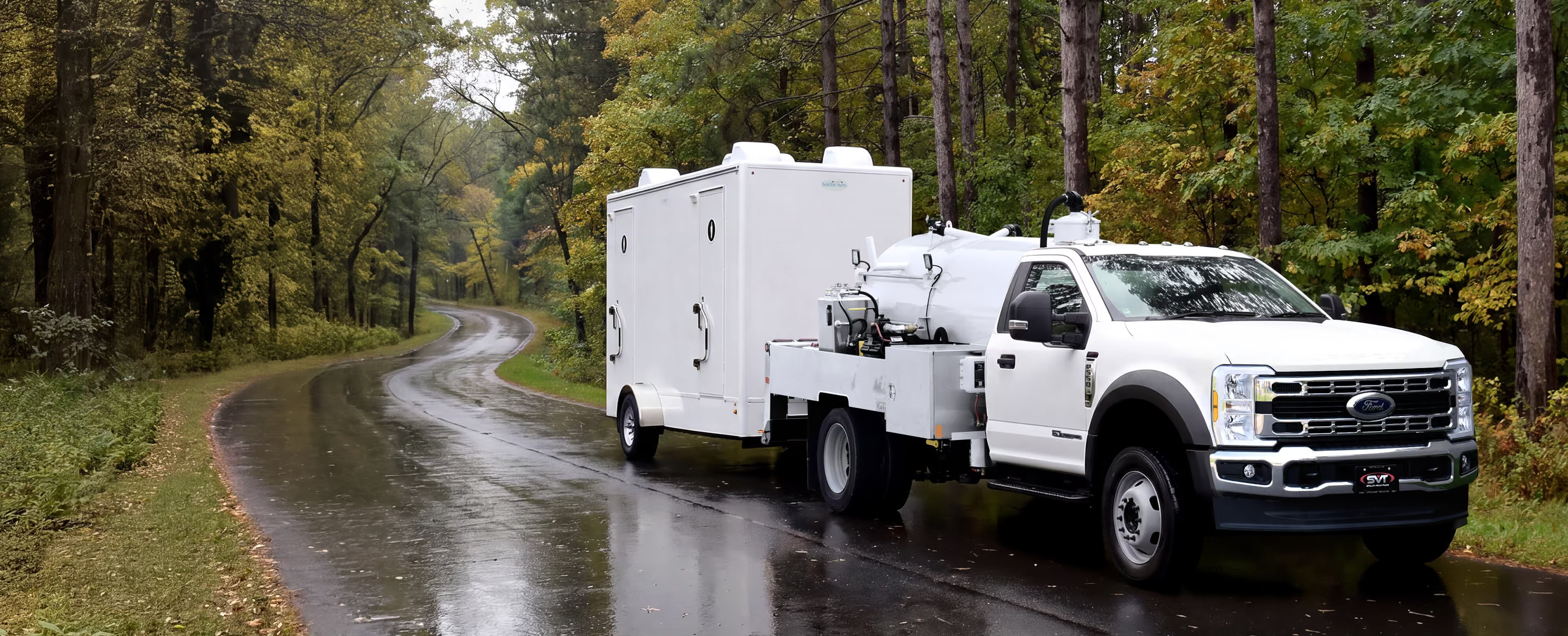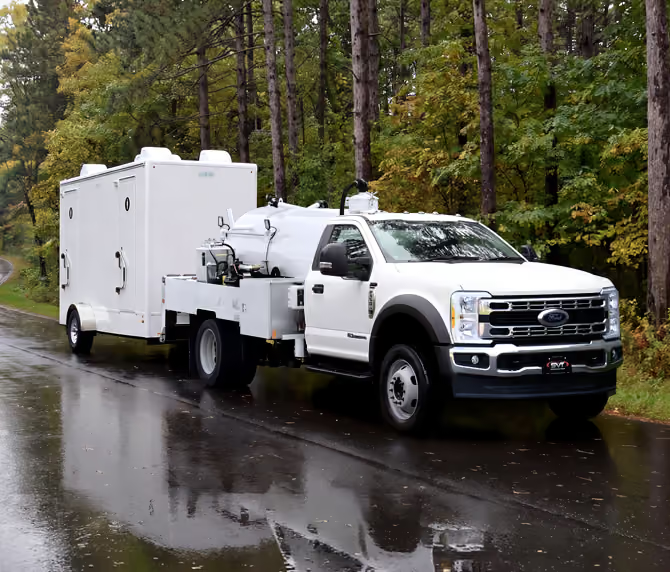
Vacuum Trucks Across Industries: Oil and Gas, Construction, Municipal, and Industrial Applications
Industrial vacuum trucks collect and transport liquids, sludge, slurry, and other materials that conventional handling equipment cannot efficiently remove. They support oil and gas, construction, municipal wastewater, manufacturing, agriculture, and emergency response operations. Each industry's materials, operating conditions, and regulatory requirements determine the equipment needed.
Satellite Industries manufactures vacuum trucks primarily for portable sanitation and septic applications, supporting operators who serve many of these industries. This guide examines common vacuum truck applications and the equipment considerations that distinguish each sector.
What Makes a Vacuum Truck Industrial-Duty?
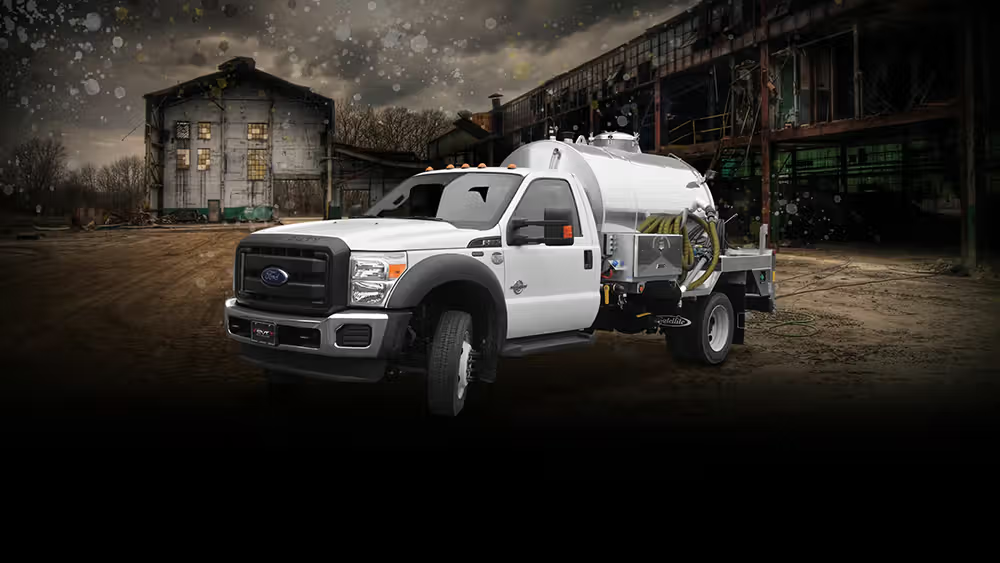
Industrial-duty work is defined less by a truck's appearance than by the demands of its assigned waste stream and worksite. Routine portable restroom collection usually involves known materials and repeatable routes. Industrial assignments may involve dense or abrasive sludge, longer collection cycles, unusual access conditions, or more stringent containment and documentation requirements.
Material characteristics come first. Solids content and abrasiveness affect collection and discharge; chemical composition and temperature affect the compatibility of tanks, hoses, seals, and other wetted components. A truck configured for septage should not be assumed suitable for aggressive chemicals or dry industrial material. The entire collection and containment system must be appropriate for the intended waste.
Duty cycle and operating environment also matter. Extended work periods can change maintenance planning, while confined facilities and uneven access roads constrain vehicle size and maneuverability. Waste transport records, site procedures, and approved disposal arrangements may impose additional requirements. For a general overview of configurations, see the related guide linked below.
Related reading — Vac Trucks: The Complete Guide to Vacuum Truck Types, Applications, and Equipment
Vacuum Truck Applications by Industry
The same basic collection function appears across many industries, but the job changes substantially with the material and location. A truck collecting septage from temporary restrooms is not interchangeable with a unit specified for chemically aggressive plant waste or combination sewer cleaning. The comparison below separates the primary work, material, and specification priorities from Satellite's relevant equipment applications.
Oil, Gas, and Energy
Oil and gas sites may require collection of drilling fluids, produced water, tank-bottom sludge, and other field waste. These streams can differ substantially in composition and handling requirements, so specialized equipment must be evaluated against the specific material. A truck suitable for restroom waste cannot automatically be assigned to process waste.
Distance creates a second constraint. Remote sites may be far from approved disposal facilities, reducing the number of loads a truck can complete in a shift. Payload, usable capacity, fuel range, and travel time must be considered together. Unimproved roads also influence chassis suitability and access. Where repair support is limited, planned maintenance and dependable access to parts become operational priorities.
Satellite Industries' clearest role in this sector is remote workforce sanitation. Restrooms and temporary wastewater facilities serving drilling, pipeline, and energy crews need scheduled collection and cleaning. Operators can calculate expected waste accumulation, number of facilities, route length, and water required for washdown to establish an appropriate service schedule. The truck must reach each facility safely without assuming that a larger tank is always the better choice.
For broader planning of remote crew facilities, see the related worksite sanitation article.
Related reading — Portable Sanitation for Remote Worksites: Oil & Gas, Pipeline, and Mining
Construction and Excavation
Construction operations may use vacuum equipment for site dewatering and collection of slurry or accumulated groundwater. These jobs require equipment suited to the actual material, discharge arrangements, and site conditions. Hydro-excavation is another major construction application involving purpose-built equipment. The linked article covers hydro-excavation vacuum trucks in greater detail.
Related reading — Unearthing Solutions: Find Your Local Badger Vacuum Truck Service
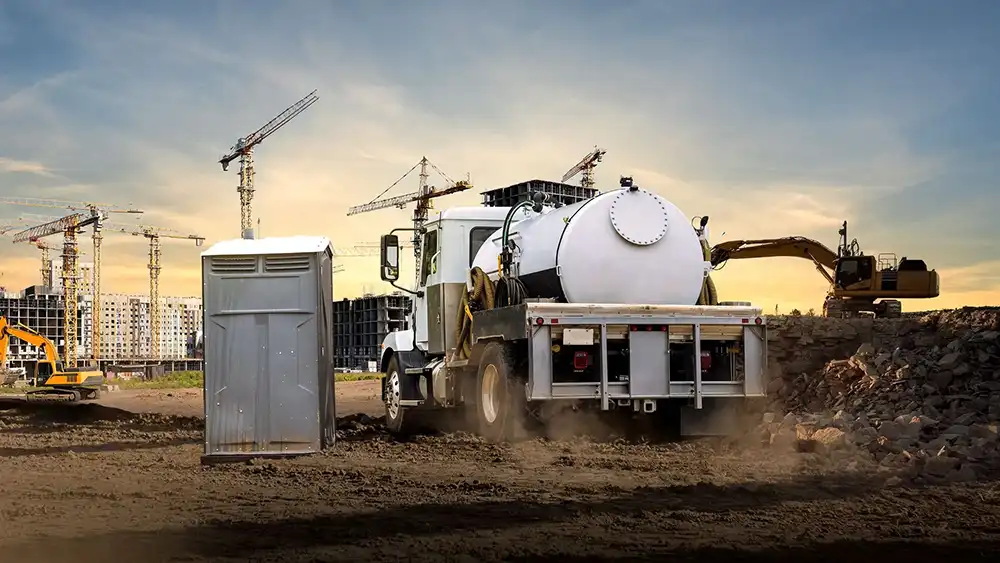
For Satellite Industries, the direct construction application is portable sanitation servicing. Restroom operators may visit several active jobsites daily, each with changing access roads, parked machinery, restricted entrances, and different unit counts. A truck must maneuver to collection points without interfering with site operations. Payload and tank capacity need to support the route while remaining appropriate for road and ground conditions.
Construction schedules can shift sanitation demand as projects progress from excavation to structural work and finishing. Operators should reassess unit counts and collection frequency when workforce levels change. The practical objective is a route that completes scheduled stops without avoidable disposal trips or missed service windows. That requires coordination between site access, actual waste accumulation, and available truck capacity, not simply the largest possible vehicle.
Municipal and Wastewater
Municipal vacuum operations include sewer and storm drain maintenance, lift station cleanout, and collection of sewage, grit, and storm debris. These applications can require specialized equipment. Sewer and storm-line work, for example, may specify a combination jetting and vacuum truck; an ordinary septic collection truck should not be treated as equivalent. Lift station work likewise depends on the solids content, access, and discharge requirements at the facility.
Municipal portable sanitation is a distinct assignment. Parks, public events, temporary facilities, and municipal construction projects may need scheduled restroom and septic collection. Satellite Industries' restroom and septic trucks are relevant to compatible waste streams in those contracts, where access, service frequency, and route capacity shape the work.
Procurement adds another layer. Municipal tenders may specify vehicle dimensions, capacity, safety equipment, certifications, compliance records, and documentation. Contractors should review the actual solicitation before configuring a truck or committing to a bid. Waste transportation and disposal requirements must also be checked for the jurisdiction and material. Matching the written specification is as important as demonstrating that the vehicle can physically perform the collection task.
Related equipment — Septic Trucks
Industrial and Manufacturing
Manufacturing facilities may use vacuum equipment to clean tanks, sumps, silos, and process areas during routine maintenance or scheduled shutdowns. The waste stream can range from wet process sludge to dry material or spent chemicals. These are not interchangeable assignments: solids, temperature, abrasiveness, and chemical composition can all affect whether a collection system is appropriate.
Material compatibility is the first qualification. The tank, hoses, seals, fittings, and discharge arrangement must suit the substance and any applicable containment requirements. Certain tasks call for purpose-built wet-and-dry equipment or specialized handling provisions. Operators should establish the material characteristics and site requirements rather than assume that any truck capable of producing vacuum can perform the work.
Shutdowns and turnarounds add a scheduling constraint. Cleaning may need to finish within a defined maintenance window before inspection and production restart. Access to the collection point, disposal arrangements, equipment availability, and contingency planning can determine whether the job fits that window. Planning should therefore cover the full collection-to-disposal process, not just time spent operating the vacuum system.
Satellite Industries primarily manufactures equipment for portable sanitation and septic waste collection. Suitability for aggressive chemicals, dry-material recovery, or specialized industrial plant cleanout must be confirmed with the product team; those capabilities should not be implied from the standard sanitation lineup.
Portable Sanitation
Portable sanitation is a core application for Satellite Industries' vacuum truck lineup. Operators collect waste from restrooms and service sanitation equipment at construction sites, events, industrial facilities, and temporary locations. Unlike a single-site cleanout, a sanitation route can involve dozens of collection points, each with its own access, waste volume, and service requirements.
Route Productivity and Washdown
The useful measure of a truck is not tank size alone but the work it completes during a route. Operators can track units serviced per run, disposal trips per shift, route completion time, and truck utilization. These figures help identify whether delays come from limited waste capacity, long travel distances, congested stops, or insufficient service time. A larger tank may reduce unloading frequency, but vehicle payload limits and maneuverability still apply.
Washdown capability is part of the service workflow. The truck needs an appropriate clean-water supply and cleaning system, alongside waste collection capacity, to complete each stop consistently. Route planning should account for both water consumption and waste accumulation. Closely grouped units can improve productivity, while dispersed accounts may consume much of a shift in driving rather than servicing.
Reviewing these metrics over time helps operators adjust route boundaries, service frequency, and truck assignments before adding another vehicle. It also provides a more useful basis for fleet planning than unit count alone.
Building a Fleet Around the Service Mix
A smaller operator may begin with slide-in vacuum units mounted on an appropriately configured vehicle. As route volume grows, a dedicated restroom truck can provide a configuration focused on daily sanitation work. Cabover trucks or septic trucks may become appropriate as access requirements, customer accounts, and collection volumes change. This is not a universal purchasing sequence: the right mix depends on the services the business actually provides.
Unit haulers address restroom transportation rather than replacing vacuum collection, and the SVT truck line should be evaluated by its specific configuration and intended use. Before expanding the fleet, compare utilization, disposal frequency, maintenance costs, and route completion performance. Additional equipment should resolve a documented operational constraint.
Related equipment — Restroom Trucks
Related equipment — Slide-in Vacuum Units
Agriculture and Emergency Response
Agriculture
Agricultural vacuum applications can include livestock slurry collection, lagoon maintenance, and wastewater handling. These materials may contain significant solids and require equipment specifically suited to their composition and collection conditions. Satellite Industries' more directly relevant role is rural septic collection, where compatible septage is collected from customers across broad service territories. Spread-out accounts make travel time and access to approved disposal facilities important planning factors. Do not assume that a septic truck is suitable for manure slurry or lagoon waste without separate product verification.
Emergency Response
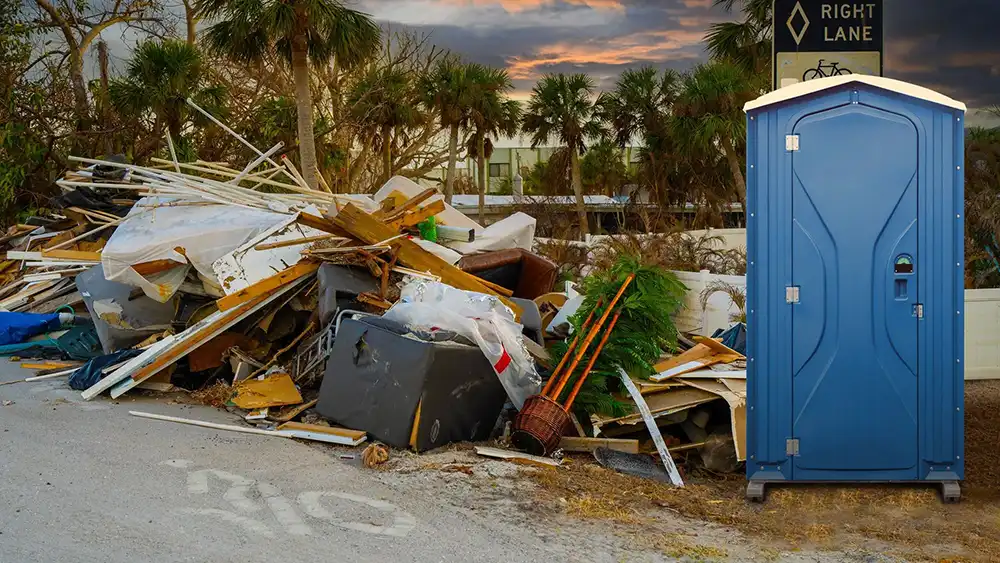
Flooding and disasters can create demand for standing-water recovery, waste collection, and temporary sanitation. Specialized recovery equipment must be selected for the material and contamination involved. Satellite Industries' restroom and septic trucks can support the sanitation side of response operations by servicing temporary facilities for displaced residents and recovery crews. Changing site access, disrupted infrastructure, and disposal availability may complicate deployment. Confirm compatible waste streams and approved disposal arrangements before assigning equipment. For background on collection equipment and operations, see the linked guide.
Related reading — How a Vacuum Truck Works: Components, Operation, and Fleet Lifecycle
Matching a Vacuum Truck to Your Sector
Selection begins with the work, not a tank-size target. Use five questions to establish a practical specification:
- Material: What will be collected, and is the complete equipment system compatible?
- Compliance: What handling, transport, disposal, contract, and documentation requirements apply?
- Access: Can the vehicle safely reach the collection point given roads, clearance, and maneuvering space?
- Capacity: What volume and payload are required between collection stops and approved disposal facilities?
- Fleet needs: How will maintenance, utilization, backup coverage, and changing service demand affect the choice?
These considerations narrow the configuration before comparing individual models. Satellite Industries offers vacuum trucks primarily for portable sanitation and septic operators. A Satellite Account Executive can discuss configurations for those applications and help identify questions that require product-team confirmation.
Explore vacuum trucks.
Frequently Asked Questions About Industrial Vacuum Trucks
What is an industrial vacuum truck used for?
Industrial vacuum trucks support jobs such as tank and sump cleanout, municipal sewer debris collection, oil-field waste handling, and removal of compatible wastewater or slurry. The appropriate vehicle depends on material composition, collection conditions, and transport requirements. Satellite Industries focuses primarily on portable sanitation and septic collection rather than every industrial waste category; specialized applications require equipment-specific verification.
What industries use vacuum trucks?
Common sectors include oil and gas, construction, municipal wastewater, manufacturing, portable sanitation, agriculture, and emergency response. Their uses range from process-waste removal to temporary restroom servicing. Satellite Industries manufactures restroom trucks, septic trucks, cabover trucks, and slide-in units primarily for sanitation and septic operators. Its role in other sectors is typically tied to those applications, not all forms of industrial cleanout.
What is the difference between an industrial vacuum truck and a septic truck?
A septic truck is configured to collect septage and compatible wastewater. Industrial vacuum truck is a broader term that can encompass equipment built for abrasive sludge, dry material, or chemically aggressive substances. Such work may require different tank materials, seals, containment, or wet-and-dry capability. Both use vacuum collection, but a truck designed for septic work is not automatically appropriate for industrial waste.
What should you look for in a vacuum truck for oil and gas work?
Identify the waste stream first, then evaluate disposal distance, usable capacity, payload, road conditions, and maintenance access. Remote locations may limit the number of collection cycles completed each day. Specialized field waste requires purpose-built equipment and material-specific verification. For crew sanitation, Satellite Industries' restroom and septic trucks address compatible waste from temporary facilities rather than the full range of oil-field process waste.
Do municipal contracts require different vacuum truck specifications?
They often can. Municipal solicitations may establish written requirements for capacity, dimensions, safety systems, equipment certifications, and documentation. Sewer work may require combination jetting equipment, whereas municipal portable sanitation contracts can call for restroom or septic trucks. Review the actual tender and applicable waste-handling requirements before selecting a configuration; equipment suitable for one municipal application may not satisfy another.
Equipment Built Around Your Operation
Vacuum truck requirements vary with the waste stream, site access, operating range, and disposal arrangements. Satellite Industries manufactures restroom trucks, septic trucks, cabover trucks, and slide-in vacuum units for sanitation and septic operators serving construction, municipal, energy, agricultural, and event markets. Explore the lineup or contact a Satellite Account Executive to discuss the configuration appropriate for your operation.
Latest from the Satellite Industries Blog
Need Help {Finding the Right Sanitation Solution?}
Satellite Industries is the largest manufacturer of portable restrooms, restroom trailers, restroom trucks, septic trucks, slide-ins, unit haulers, vacuum technology, modular solutions, consumables and deodorizers.