The Essential Guide to Handwashing Stations From Emergency Use to Everyday Hygiene
Why Handwashing Stations Are Essential for Every Business
Handwashing stations are self-contained, portable hygiene units providing soap, water, and towels where permanent plumbing is unavailable. They are essential for meeting OSHA requirements on construction sites and health department mandates for food service at events. The heightened public awareness of hygiene, spurred by the COVID-19 pandemic, has made these units a standard expectation.
Key Types of Handwashing Stations:
- Freestanding units: Single or multi-sink designs for high-traffic areas.
- In-unit stations: Built into portable restrooms to save space.
- Heated water stations: Temperature-controlled for food service compliance.
- Hand sanitizer stations: An alcohol-based alternative where water isn’t practical.
Essential Components:
- Hands-free foot pump operation
- Potable water and greywater collection tanks
- Soap and paper towel dispensers
- Durable HDPE (high-density polyethylene) construction
Handwashing is a primary defense against infection and is crucial for reducing foodborne illness and meeting regulations. For portable sanitation businesses, offering a robust fleet of handwashing stations is key to serving diverse clients, from construction and events to agriculture. These units provide the hygiene infrastructure that keeps projects running and clients satisfied.
I’m Michelle Amelse, Vice President of Marketing at Satellite Industries. With over 26 years in the portable sanitation industry, I’ve helped businesses build successful rental operations. My experience covers strategic planning for handwashing stations and other hygiene products that meet customer needs across all sectors.

Handwashing stations definitions:
The Critical Role of Hand Hygiene in Public Spaces
Proper hand hygiene is critical for preventing disease and ensuring safety in public spaces. The CDC identifies handwashing as the top step for preventing infection. In locations without traditional plumbing, like construction sites or outdoor events, handwashing stations are the first line of defense against illness and contamination.
The science is clear: pathogens can easily transfer from hands to food and surfaces. This is a major risk in agricultural settings and at construction sites. Public health experts note that many foodborne diseases originate from poor hand hygiene. Failing to provide accessible facilities risks public health and your clients’ business reputation.
Meeting health regulations is not optional. OSHA requires one handwashing station per 20 employees on construction sites, and food service operations must comply with local health codes. Public expectation for hygiene remains high, and providing quality facilities shows a commitment to safety and professionalism.
Key Benefits for Events and Projects
Investing in quality handwashing stations offers rental businesses a way to provide clients with peace of mind and regulatory compliance.
- Improved guest experience: Clean hands are a basic comfort. When attendees at a festival or event can easily wash their hands, they have a better experience, leading to repeat business for your clients.
- Meeting health regulations: Proper equipment makes compliance straightforward. Quality stations help clients meet AHS, FDA, and OSHA standards without stress.
- Reducing liability: Disease outbreaks can lead to lawsuits and bad publicity. Providing proper hygiene infrastructure protects everyone involved, from event organizers to your rental business.
- Versatility: These units are valuable assets for any rental fleet. A station can serve a farmers market on Saturday and a construction crew on Monday, adapting to diverse client needs.
- Supporting food vendors: Food handlers require consistent access to warm water and soap. Quality stations ensure they can comply with food safety regulations, keeping their operations running smoothly.
Essential Components of a Functional Station

An effective handwashing station is more than a sink and a tank. Each component must be durable and work seamlessly.
- Hands-free foot pump operation: This eliminates contact with contaminated faucets, preventing the recontamination of clean hands.
- Potable water tanks: Must hold clean, drinkable water (minimum 5 gallons). For food service, water may need to be heated. Larger tanks mean fewer service calls.
- Soap dispensers: Liquid soap is essential for effective cleaning and often required by health codes.
- Paper towel dispensers: Single-use towels for drying are crucial. The dispenser should protect towels from splashes while keeping them accessible.
- Greywater collection systems: The collection tank must be equal to or larger than the freshwater tank to prevent overflow. Wastewater must be disposed of in a sanitary sewer.
- Durable HDPE construction: High-density polyethylene resists weather, impacts, and chemicals, ensuring a long rental life while being lightweight and recyclable.
- Vandal-resistant spigots: Quality hardware withstands heavy use, reducing maintenance costs and service calls.
Exploring Types of Portable Handwashing Stations
Building a successful rental business requires understanding the different types of handwashing stations to meet diverse customer needs. At Satellite Industries, we know the right equipment can transform a rental operation. Offering multiple station types allows you to serve a wider range of clients, from construction companies to event planners.
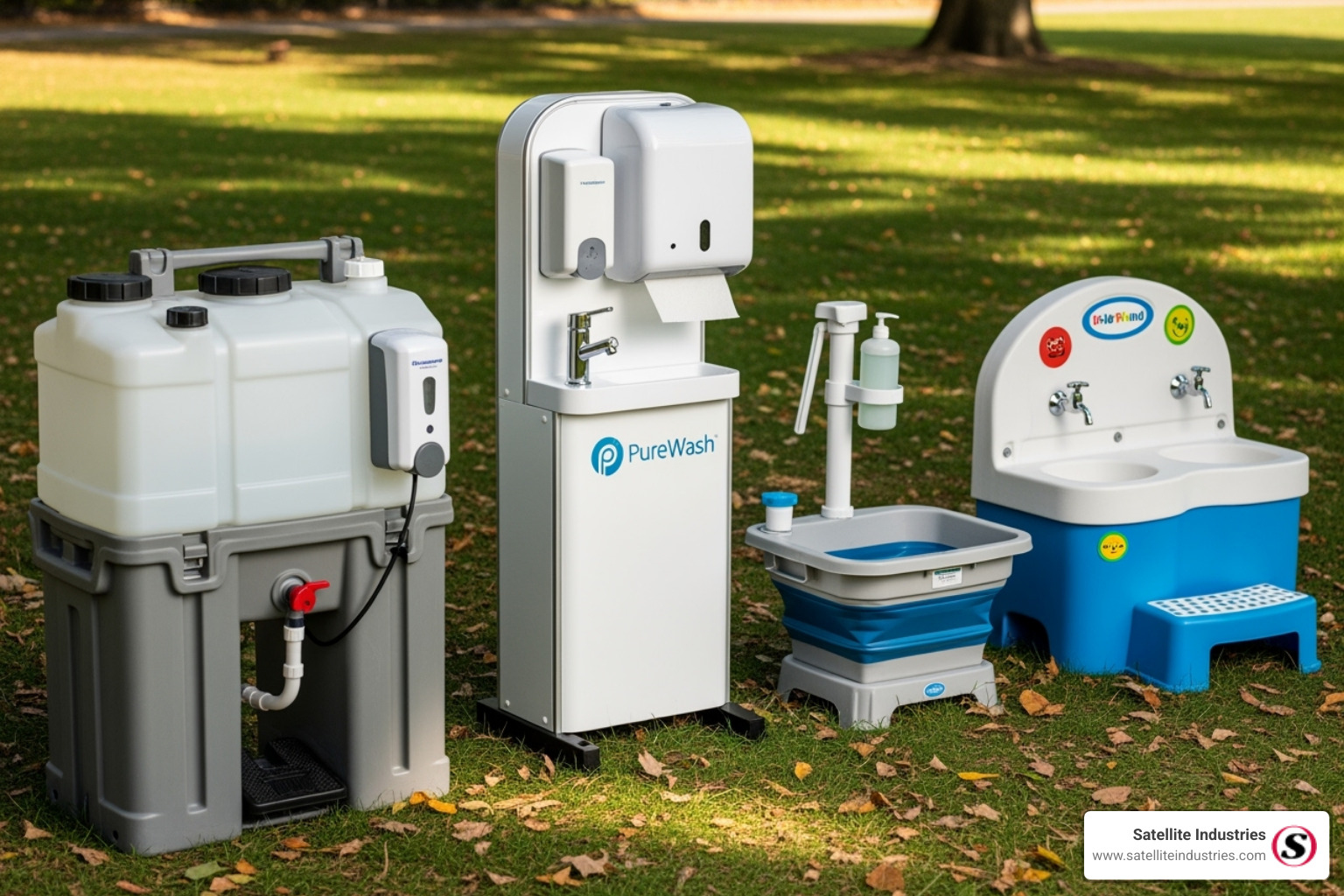
Our engineering team designs each unit with durability for rental use as a priority. Equipment must handle frequent transport, varied crews, and heavy daily use. We test every component for the real-world rigors of rental operations.
Freestanding Multi-Sink Units
These are the heavy hitters of your rental fleet, perfect for when crowds gather and efficiency is key. Two-sided stations are ideal for medium-sized events, while four-sided stations serve major events like music festivals or large construction projects by keeping traffic flowing.
A key feature is their high-capacity water tanks. Some models handle up to 600 washes before needing service, a game-changer for your scheduling and your customers’ peace of mind. Maximizing user throughput isn’t just about convenience; it’s about your reputation. A smooth, positive experience brings customers back.
In-Unit Handwashing Stations
In-unit handwashing stations are an integrated solution that solves multiple problems. They are designed for portable restrooms, creating a complete hygiene station in a compact footprint. This space-saving design is valuable for clients with tight layouts.
From a business perspective, the simplified maintenance is a huge benefit. Service crews can handle both the restroom and handwashing needs in one stop, as the units typically drain into the restroom waste tank. This streamlines pumping operations. Most importantly, this design improves user convenience and hygiene by making handwashing immediately accessible, which increases compliance.
Specialized and Heated Water Stations
For jobs with specific requirements, specialized and heated water stations are essential. The warm water capability is often a compliance issue, not just a comfort.
- Food service operations must meet FDA standards that often specify water temperatures around 105°F.
- Agricultural operations benefit from warm water, which is more effective for cleaning heavily soiled hands.
- Cold weather applications make heated stations a necessity, as people are unlikely to wash their hands in freezing water.
These units feature heavy-duty construction for demanding environments. The improved user comfort and effectiveness translate directly into customer satisfaction, providing real value that clients will remember.
Operational Excellence: Regulations, Placement, and Maintenance
Managing handwashing stations in a rental fleet requires more than just quality equipment. Operational excellence depends on understanding regulations, smart placement, and rigorous service standards.
OSHA requirements mandate one station per 20 employees on construction sites, but smart rental operators know that convenience drives use. Providing ample units is better than meeting the bare minimum. Similarly, food establishment policies, like the AHS Food Establishment Policy, create steady demand from events with food vendors.
One non-negotiable is potable water standards; all water must be clean enough to drink. This standard influences everything from water sourcing to tank cleaning procedures.
Strategic placement is critical. Position units near portable toilets, in high-traffic areas, and near food handling zones to encourage regular use.

Health Guidelines and Regulatory Compliance
Navigating health guidelines is straightforward when you focus on providing consistent access to proper hygiene.
- Food Handling: The AHS Food Establishment Policy and Alaska Food Code are examples of regulations requiring temporary handwashing stations for food booths. Stations must be operational before any food handling begins.
- Water Temperature: Food service often requires warm water between 30°C and 45°C (86°F to 113°F), with some preparation tasks requiring 105°F. Our heated handwashing stations are designed to meet these specifications.
- Wastewater Disposal: The greywater collection tank must match or exceed the potable water capacity to prevent overflows. This water must be disposed of in a sanitary sewer, never a storm drain, to protect the environment.
Best Practices for Servicing and Maintenance
Proper maintenance separates successful rental operations from the rest. We engineer our handwashing stations for easy servicing, but correct procedures are vital.
- Service Schedules: Base schedules on usage, not just dates. A busy site may need daily service, while a weekend event needs pre- and post-event attention.
- Supplies: Regularly refill fresh water and replenish soap and paper towels. Running out of supplies creates frustrated customers and health code risks.
- Pumping: Pump greywater before tanks are full to prevent messy overflows.
- Cleaning: Sanitize units between rentals. A bleach solution (two tablespoons per gallon of water) sloshed for five minutes is effective.
- Inspection: A pre-delivery inspection of pumps, dispensers, and tanks prevents service calls and builds customer confidence.
- Tools: Equip service teams with the right tools for maintenance, including buckets, brushes, hoses, pumps, disinfectants, and test strips for efficient service calls.
Our portable sinks are designed with features like liquid hand soap dispensers, hands-free foot pumps, and paper towel holders to help your customers meet state and local requirements. We design every component to be worry-free, ensuring units arrive clean and sanitary for every rental.
Choosing the Right Units for Your Business
Building a successful portable sanitation rental business begins with smart inventory choices. After nearly three decades in this industry, I’ve seen how the right equipment selection impacts profitability and customer satisfaction. Key factors for your rental fleet are durability, ease of service, customer demand, and a solid return on investment.
At Satellite Industries, we engineer products specifically for the rental market. Your handwashing stations must withstand constant transport and heavy use. For us, durability is the foundation of everything we build.
Handwashing Stations vs. Hand Sanitizer Stations
While hand sanitizer stations have a role, they do not replace traditional handwashing stations. They serve different but complementary hygiene functions.
FeatureHandwashing StationsHand Sanitizer StationsEffectivenessHighly effective, especially on visibly dirty hands.Less effective on visibly dirty hands or grease.ComponentsWater, soap, paper towels.Alcohol-based gel.User PreferencePreferred for thorough cleaning.Convenient for quick sanitization.Situational UseEssential for food handling, after toilet use.Useful where water is restricted or creates hazards.ComplianceOften required by health regulations.Supplements handwashing; rarely a full substitute.
Water and soap are far more effective than alcohol-based gel on visibly dirty or greasy hands. For construction, food service, or agricultural workers, there is no substitute for a thorough wash. Hand sanitizer is a good supplementary option, but for regulatory compliance and true hygiene, handwashing stations are indispensable.
Factors to Consider for Your Inventory
When building your rental fleet, several considerations will guide your investment.
- Target Market: For events, you’ll need high-capacity, multi-sink units. For construction, focus on rugged single units and in-unit stations that pair with portable restrooms.
- Water Capacity Needs: Units that accommodate up to 600 washes reduce service calls and labor costs, leading to happier customers.
- Portability and Weight: Lighter, well-designed units are easier for crews to handle, speeding up deliveries. Some of our single units weigh as little as 22 pounds.
- Single vs. Multiple User Stations: Single-user units are perfect for small sites or individual food booths. Multi-user stations are essential for large events to minimize wait times.
- Hot Water Requirements: To serve the lucrative food service and catering markets, you need units that meet health code requirements for warm water (often 105°F).
- Budget and Long-Term Value: Our HDPE construction may have a higher upfront cost, but it pays for itself through years of reliable service, unlike cheaper alternatives that lead to frequent repairs and lost business.
A diverse fleet that can handle any job, from a small party to a major construction project, is the key to keeping your units rented and revenue steady.
Frequently Asked Questions about Handwashing Stations
Running a successful portable sanitation rental business means answering client questions with confidence. After 26 years in this industry, I’ve heard them all. Here are insights to help you guide your customers to the right solutions.
How many handwashing stations are needed for a construction site or event?
This is a common question where getting it right affects compliance and satisfaction. OSHA requires one station per 20 employees on construction sites, but this should be treated as a minimum. The real goal is convenience.
For events, the calculation depends on size and food service. A small gathering needs few stations, but a festival with food trucks requires many more to avoid long lines. The AHS Food Establishment Policy mandates stations for food booths, a key compliance point for your clients.
The best practice is to place stations where people expect them: near portable toilets, at entrances, and close to food areas. Convenience drives use.
What are the water requirements for portable handwashing stations?
Water quality is the foundation of effective hygiene. All water must be potable, meeting the same standards as drinking water.
Temperature is also critical. While ambient temperature is fine for general use, food service regulations often require warm water (86°F to 113°F), with food preparation specifically needing 105°F water.
Tank capacity determines your service schedule. Our larger units can handle up to 600 washes, meaning fewer service calls. A 24-gallon fresh water tank should be paired with an equally sized greywater tank to prevent overflows.
Can you build your own handwashing station?
While a simple DIY station can be made cheaply for personal use, they are not suitable for commercial rental.
DIY solutions cannot withstand the demands of rental use. I’ve seen companies try to save money with homemade units, only to face constant repairs, compliance failures, and unhappy customers.
Professional *handwashing stations are built for the rental world.* Our durable HDPE construction, hands-free foot pumps, and integrated dispensers are essential for a professional service. They also provide liability and compliance protection, as they are designed to meet the standards that OSHA and health inspectors require. A professional unit will serve your fleet for years, justifying the investment.
Conclusion
It’s clear that handwashing stations have evolved from a convenience to a necessity. For your clients in construction, events, or food service, these portable hygiene solutions are as essential as portable restrooms. Food safety regulations, OSHA requirements, and public expectations for cleanliness have permanently raised the bar, creating a significant opportunity for your rental business.
I’m excited to see how handwashing stations solve real problems for our rental partners. They help clients meet regulations, improve guest experiences, reduce liability, and open new market segments. A client impressed with your heated water stations for a construction site may become a long-term partner.
At Satellite Industries, we’ve built our reputation on advanced engineering for durability and user-friendliness, understanding the unique demands of the rental market. Our HDPE construction and hands-free foot pumps are investments in your long-term profitability. Your equipment must withstand constant transport, heavy use, and rigorous cleaning.
Adding quality handwashing stations to your fleet complements your existing business while opening new revenue streams. They are durable, easy to transport, and essential enough to ensure repeat business.
Ready to explore how the right hygiene solutions can grow your business? Explore our full range of hand sanitation products and see why rental businesses worldwide trust Satellite Industries.
Latest from the Satellite Industries Blog
Need Help {Finding the Right Sanitation Solution?}
Satellite Industries is the largest manufacturer of portable restrooms, restroom trailers, restroom trucks, septic trucks, slide-ins, unit haulers, vacuum technology, modular solutions, consumables and deodorizers.