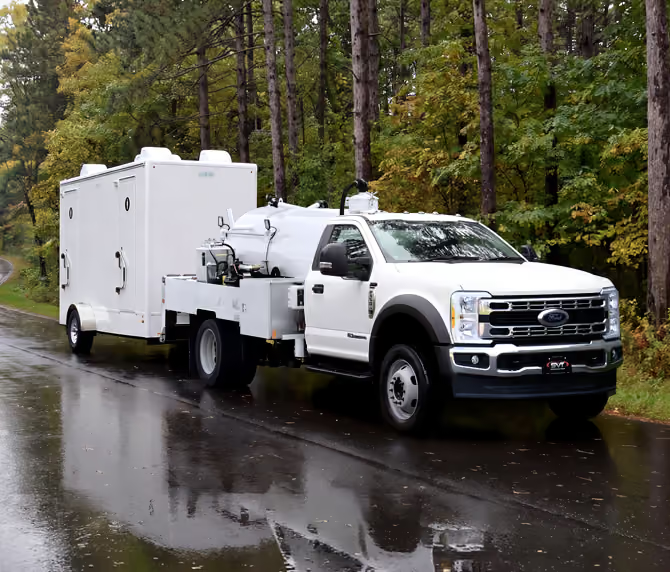
Truck Vacuum Pumps Explained: What Do They Really Do?
When you hear about a vacuum pump in a truck, you might wonder: ‘what does a vacuum pump do in a truck?’
In simple terms, a vacuum pump is a crucial component in a truck’s mechanical system that creates a vacuum to power various parts. It manages to do this without letting any liquid or debris enter the pump, by only allowing air to flow through it. This can be pivotal for assisting brakes, controlling the HVAC system, and even operating other pneumatic components.
A vacuum pump’s work ensures that these systems operate efficiently, maintaining the safety and comfort of the vehicle. At Satellite Industries, we recognize the importance of truck vacuum pumps in the sanitation industry, especially for those managing large events or maintaining fleets. With our expert knowledge and cutting-edge designs, we aim to improve truck vacuum systems and help you make informed decisions about upgrading your fleet.
Let’s explore truck vacuum pumps!
What Does a Vacuum Pump Do in a Truck?
A vacuum pump in a truck is all about creating a pressure change. This change is essential for making certain parts of the truck work smoothly. By creating a vacuum, it allows for airflow that powers various systems within the vehicle.
How Does It Work?
The vacuum pump works by removing air from a sealed area, creating a low-pressure environment. This vacuum creation is the magic behind its functionality. It’s like when you suck air out of a straw and create a vacuum to lift a liquid. In trucks, this vacuum is used to power systems like the brakes and HVAC controls.
Why Is It Important?
Think of the vacuum pump as a silent helper. In diesel trucks, which often lack throttle valves to create natural pressure differences, the vacuum pump becomes even more crucial. It assists the brake booster, making it easier to stop the vehicle. It also helps operate pneumatic components like exhaust-gas recirculation valves and turbocharger controls.
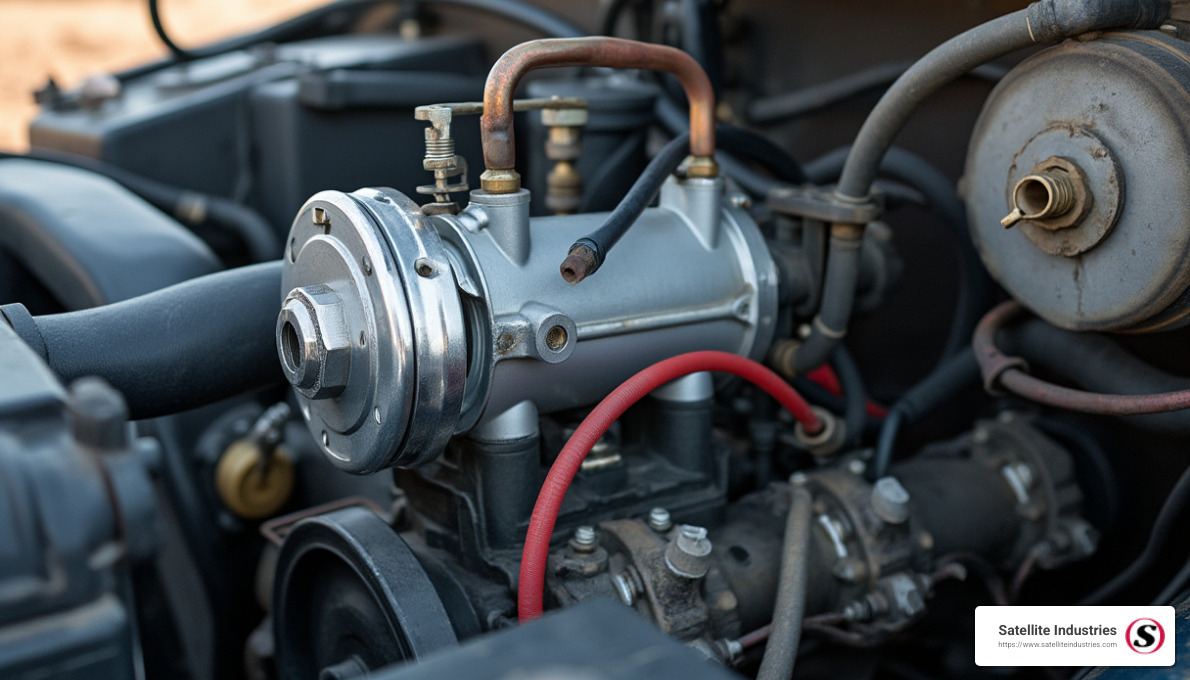
In some cases, a vacuum pump can generate a vacuum pressure of approximately 0.7 to 0.9 bar, ensuring efficient operation of these systems.
Real-World Impact
A vacuum pump’s efficiency is vital for safety and performance. General Motors recently recalled 3.8 million vehicles due to a vacuum pump issue that affected the braking system. This highlights how crucial a well-functioning vacuum pump is, as any failure could lead to increased stopping distances and potential accidents.
In summary, a vacuum pump is not just a component; it’s the backbone that supports various truck systems through pressure change, vacuum creation, and airflow management. Understanding its role can help you appreciate the complexity and importance of maintaining this part of your truck.
Next, we’ll explore the key components that make these pumps tick and how they contribute to the overall functionality of the truck vacuum system.
Key Components of Truck Vacuum Pumps
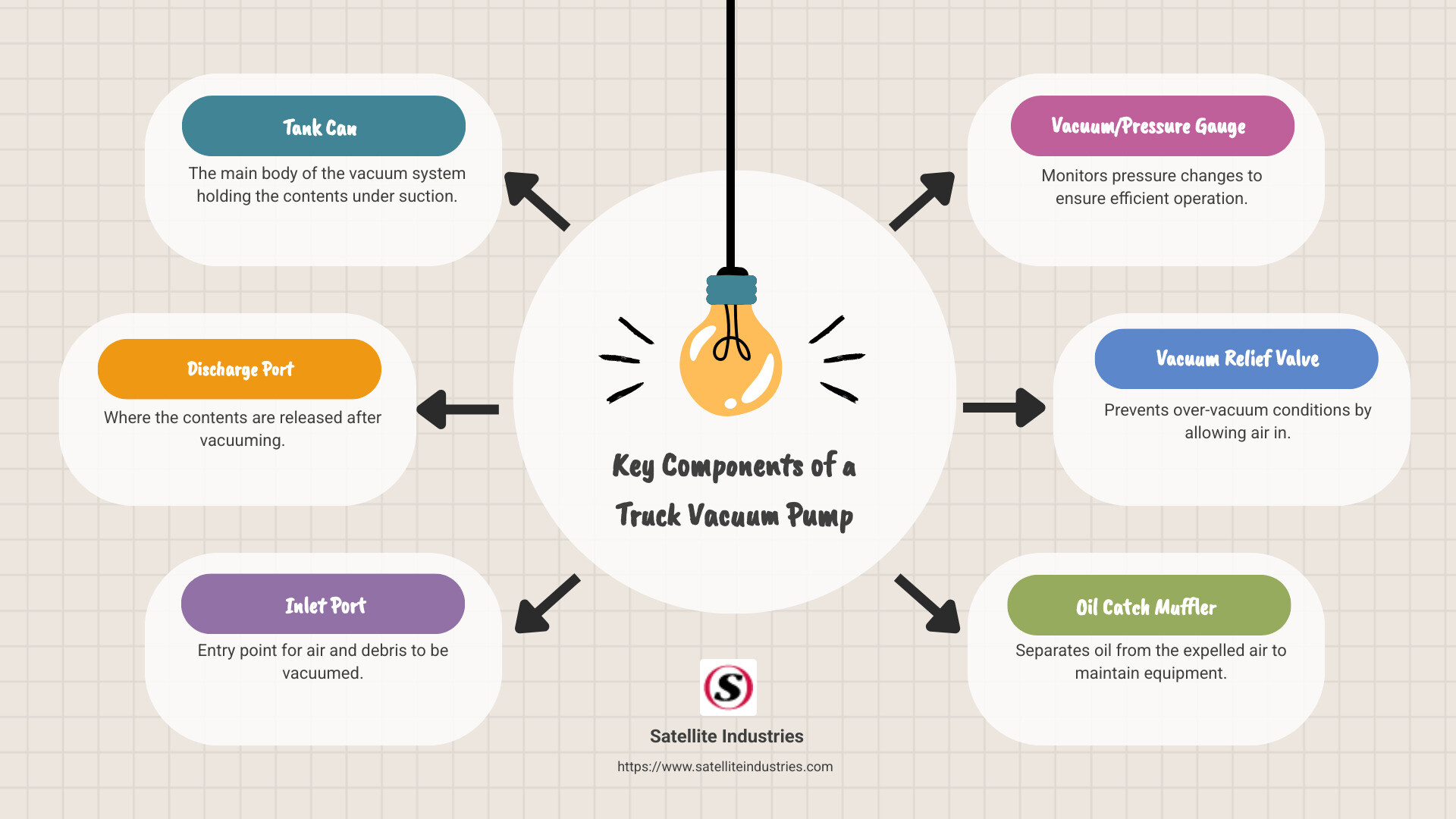
Understanding the key components of a truck vacuum pump can help you appreciate how these systems work together to keep your truck running smoothly. Let’s break down each part:
Tank Can and Tank Head
The tank can is the central cylinder of the vacuum tank, usually made from steel or stainless steel. It provides the main structure for holding the vacuum. The tank head is the end cap of this cylinder, formed using a flange and dish process, ensuring a tight seal to maintain the vacuum.
Discharge Port and Inlet Port
The discharge port is where the contents exit the tank, typically through a 3″, 4″, or 6″ pipe. It’s controlled by a valve to manage flow. The inlet port allows materials to enter the tank and is generally smaller than the discharge port to prevent large objects from clogging the system.
Sight Eyes and Vacuum/Pressure Gauge
Sight eyes are windows into the tank, letting you see the load level. They’re made of glass or plastic and are easy to clean. The vacuum/pressure gauge tells you the vacuum or pressure level inside the tank, helping you monitor the system’s status.
Manway/Hatch/Portal
This is an access point for cleaning the tank, ranging from 12″ to 36″ in diameter. It’s usually located on the top or rear of the tank, making maintenance straightforward.
Vacuum Relief Valve and Pressure Relief Valve
These safety features regulate the vacuum and pressure levels, preventing damage to the tank from excessive force. They also help cool the vacuum pump by allowing air circulation.
Primary and Secondary Shutoffs
The primary shutoff prevents tank contents from entering the pump, acting as the first line of defense. The secondary shutoff provides additional protection, ensuring no materials reach the pump.
Float Ball and Ball Seat
The float ball rises with the tank’s contents, signaling when the tank is full. It works with the ball seat, which creates a seal to stop more material from entering the tank when it’s at capacity.
Vacuum Pump or Blower
This is the heart of the system, creating the vacuum and airflow needed to operate the truck’s systems. A rotary vane pump uses sliding vanes for air movement, while a vacuum blower achieves higher CFMs without lubrication needs.
Oil Catch Muffler/Oil Separator
This component reduces pump noise and separates oil from the exhaust, ensuring that the system runs quietly and efficiently.
Tank Rails
Tank rails support the tank’s bottom, available in straight or tapered designs, providing stability and ensuring even weight distribution.
Each of these components plays a crucial role in the overall functionality and efficiency of truck vacuum systems. By understanding how they work together, you can better maintain and troubleshoot your vacuum pump.
Next, we’ll dive into the common symptoms of vacuum pump failure and how to keep your truck’s system in top shape.
Common Symptoms of Vacuum Pump Failure
When it comes to truck vacuum pumps, recognizing the common symptoms of failure can save you from unexpected breakdowns and costly repairs. Here are the key signs to watch out for:
Increased Noise
One of the first indicators of a failing vacuum pump is an unusual increase in noise levels. A properly functioning pump should operate quietly, with minimal disruption. If you start hearing loud whirring, grinding, or rattling sounds, it could mean the internal components are worn out or misaligned. This noise often results from issues with the rotary vane pump or vacuum blower components.
Maintenance Needs
A vacuum pump that requires frequent maintenance may be on the verge of failure. Regular checks are essential, but if you find yourself constantly addressing leaks, pressure drops, or lubrication issues, it might be time to consider a thorough inspection or replacement. The oil catch muffler/oil separator and vacuum relief valve should be checked regularly to ensure they’re functioning correctly and not contributing to excessive maintenance needs.
Cleaning Requirements
Higher-than-normal cleaning requirements often signal a problem. If the sight eyes become cloudy or the manway/hatch/portal access is more difficult to clean, it could indicate that the system is not operating efficiently. This might be due to blockages or damage in the inlet port or discharge port, causing debris to accumulate and hinder performance.
Regular inspections and understanding these symptoms can help you maintain your truck’s vacuum pump in excellent condition. By addressing these signs early, you can prevent more severe issues down the line and ensure your truck continues to operate smoothly.
Next, we’ll explore how to maintain your truck’s vacuum pump to avoid these issues altogether.
How to Maintain Your Truck’s Vacuum Pump
Proper maintenance is crucial for keeping your truck’s vacuum pump in top shape. Here are the key steps to ensure lubrication, conduct regular inspections, and follow cleaning procedures effectively.
Lubrication
A well-lubricated vacuum pump is essential for smooth operation. If you’re using a rotary vane pump, make sure to check the oil levels frequently. These pumps rely on constant lubrication from an oil reservoir to keep the vanes moving smoothly. Without proper lubrication, the vanes can wear out quickly, leading to increased noise and potential pump failure.
- Check oil levels: Before each service trip, ensure the oil reservoir is filled with the recommended type of oil.
- Monitor oil flow: During operation, keep an eye on the oil flow to the vacuum pump to prevent dry running.
Regular Inspections
Routine inspections help catch potential problems before they become costly repairs. Make a habit of checking the following components:
- Vacuum/Pressure Gauge: Verify that the gauge readings are within normal ranges. A sudden drop in pressure could indicate a leak or blockage.
- Relief Valves: Test the vacuum and pressure relief valves to ensure they are functioning correctly. These valves prevent tank fatigue and potential collapse.
- Primary and Secondary Shutoffs: Inspect the shutoffs to ensure they are sealing correctly and not allowing tank contents to reach the pump.
Cleaning Procedures
Keeping your vacuum pump and its components clean is vital for efficient operation. Regular cleaning prevents blockages and ensures optimal airflow.
- Sight Eyes and Manway/Hatch/Portal: Remove and clean these components to maintain clear visibility and easy access. Cloudy sight eyes can obscure the load level, leading to overfilling.
- Oil Catch Muffler/Oil Separator: Drain the oil catch muffler after each operation to prevent oil blow-by and reduce exhaust noise.
By following these maintenance steps, you can extend the life of your vacuum pump and avoid unexpected breakdowns. Next, we’ll answer some frequently asked questions about truck vacuum pumps to help you troubleshoot and understand your system better.
Frequently Asked Questions about Truck Vacuum Pumps
What happens when a vacuum pump fails?
When a vacuum pump fails, several issues can arise. One of the most noticeable signs is increased noise. A failing pump often makes louder, unusual sounds due to worn-out components or lack of lubrication.
Maintenance needs also escalate as a failing pump might require more frequent checks and repairs. A significant issue is pressure change. Without a functioning vacuum pump, the pressure levels in the system can drop, leading to vacuum loss. This can affect the truck’s overall performance, especially if the vacuum is used for critical functions like brake assistance.
How do I know if my truck vacuum pump is bad?
Identifying a bad vacuum pump involves looking for specific symptoms. One major indicator is a loss of vacuum pressure. If your truck’s systems that rely on vacuum—such as brake boosters or HVAC controls—start to perform poorly, it might be due to a failing pump.
Keep an ear out for unusual noises coming from the pump area. This could be a grinding or whining sound, suggesting mechanical wear or lack of lubrication. Regularly inspect the vacuum/pressure gauge for unexpected drops in pressure, as these can signal leaks or pump inefficiencies.
What does a vacuum pump do on a Diesel truck?
In diesel trucks, vacuum pumps play a crucial role due to the engine’s design. Diesel engines typically lack throttle valves, which are used in gasoline engines to create a vacuum. This means a vacuum pump is essential for certain functions.
One primary use is in HVAC controls. The vacuum system helps operate various components like heater control valves and climate control selectors, ensuring a comfortable cabin environment.
Another critical function is brake assist. The vacuum pump provides the necessary pressure to power the brake booster, ensuring effective braking even when the engine isn’t producing enough vacuum naturally. This is especially important for safety, as it reduces the effort required to apply the brakes.
By understanding these aspects, you can better diagnose and maintain your truck’s vacuum pump, ensuring long-term reliability and performance. Stay tuned as we continue to explore more about truck vacuum systems.
Conclusion
At Satellite Industries, we pride ourselves on our advanced engineering, which ensures our products are built for durability and user-friendliness. Our vacuum trucks are no exception. They are designed to withstand the rigors of daily use while maintaining optimal performance, making them an excellent choice for businesses in the sanitation industry.
Our innovative approach includes using non-wood materials and advanced deodorizers, which set us apart in the market. This commitment to quality means our trucks not only last longer but also require less maintenance, saving you time and money.
Whether you’re navigating urban streets with our Isuzu Cabover P&D700 or managing larger operations, we offer customizable solutions to fit your needs. Our trucks are designed with features that improve comfort, reliability, and safety, ensuring you have the best tools at your disposal.
When it comes to vacuum systems, understanding the role of each component, from the vacuum pump to the float ball, is crucial. Regular maintenance and timely inspections can prevent failures and keep your operations running smoothly. By choosing Satellite Industries, you are investing in a partner committed to your success.
Ready to upgrade your fleet? Explore our offerings and see how our engineering excellence can benefit your business. Contact us today to learn more about our industry-leading vacuum trucks and services.
Latest from the Satellite Industries Blog
Need Help {Finding the Right Sanitation Solution?}
Satellite Industries is the largest manufacturer of portable restrooms, restroom trailers, restroom trucks, septic trucks, slide-ins, unit haulers, vacuum technology, modular solutions, consumables and deodorizers.