
Route Optimization & Fuel Efficiency for Growing Fleets
As portable sanitation businesses grow, so do their service areas, customer expectations, and operating costs. Adding units and trucks increases revenue potential, but without strategic route planning, fuel expenses, labor hours, and equipment wear can quickly eat into profits. For growing fleets, route optimization isn’t just a scheduling tool, it’s a competitive advantage.
Why Route Optimization Matters
Every unnecessary mile impacts your bottom line. Poorly planned routes lead to:
- Increased fuel consumption
- Overtime labor costs
- Delayed service windows
- Excessive wear on pumps, hoses, and vacuum systems
- Higher risk of missed or non-compliant service intervals
In an industry where reliability and compliance are critical, inefficient routing can affect both customer satisfaction and regulatory standing. Growth without structure creates chaos. Growth with optimized routing creates opportunity.
Building Smarter Routes
Effective route optimization starts with data. Growing fleets should evaluate:
1. Service Frequency by Unit Type
Construction sites, long-term rentals, disaster relief placements, and special events all require different servicing intervals. Mapping accurate service frequencies prevents costly over-servicing while avoiding compliance risks from under-servicing.
2. Geographic Clustering
Group stops by proximity to reduce drive time between locations. Dense routing lowers fuel usage and increases the number of daily stops a technician can complete.
3. Truck Capacity Planning
Align tank capacity with projected route volume. A 1,300-gallon service truck, for example, should be matched strategically to avoid unnecessary mid-day dump runs that add mileage and fuel costs.
4. Traffic & Seasonal Conditions
Construction detours, snow routes, and peak traffic hours impact route efficiency. Seasonal adjustments maintain safety and protect productivity during harsh weather conditions.
Fuel Efficiency Strategies
Fuel remains one of the largest variable expenses in portable sanitation. Route optimization is step one, but disciplined operational habits make an even bigger impact:
- Maintain proper tire pressure and engine performance
- Reduce idle time during service stops
- Train drivers on smooth acceleration and braking
- Implement preventive maintenance plans aligned with mileage
- Track fuel usage per truck and per route
Even a small improvement, saving one gallon per truck per day, can translate into thousands of dollars annually across a growing fleet.

Leveraging Technology
For expanding fleets, technology is no longer optional, it’s essential. Modern route management platforms provide visibility, automation, and accountability that manual scheduling simply cannot match.
One industry-specific solution helping portable sanitation operators scale efficiently is ServiceCore.
Built specifically for portable sanitation, septic, and waste-handling businesses, ServiceCore centralizes scheduling, dispatch, routing, invoicing, and customer management into one platform — replacing spreadsheets, paper route sheets, and disconnected systems.
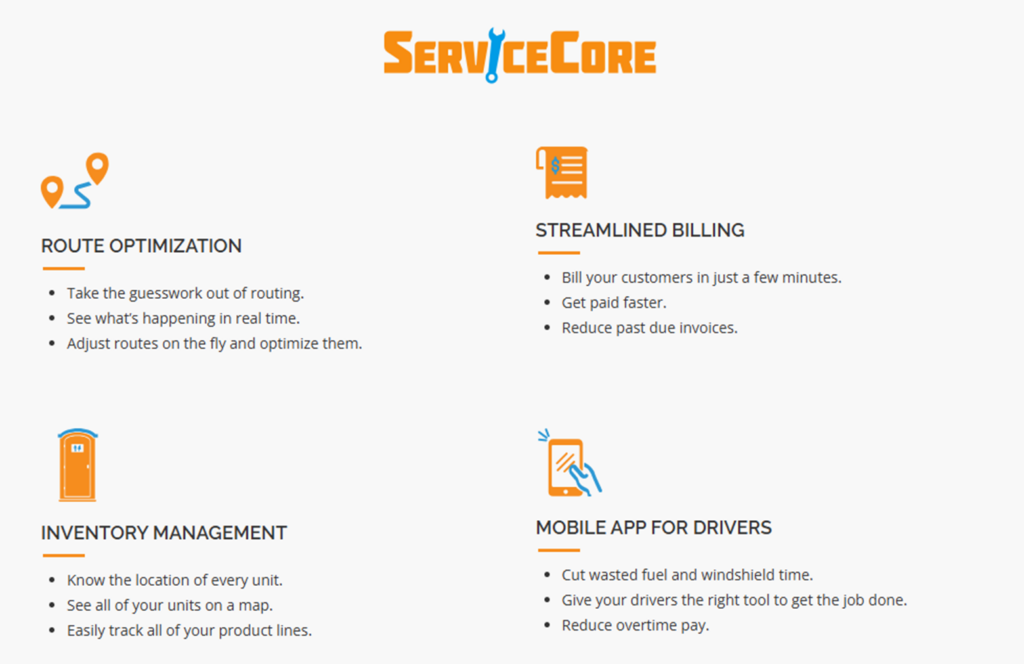
Smart Route Optimization
ServiceCore allows dispatchers to view daily jobs on a digital map and automatically optimize routes based on:
- Stop location
- Service time requirements
- Driver availability
- Equipment capacity
With one-click route optimization, fleets reduce redundant miles, minimize backtracking, and increase daily service density, directly lowering fuel consumption.
Real-Time Communication
In portable sanitation, things change fast. Locked gates, emergency pump-outs, weather delays, or customer schedule changes can derail even the best plan.
ServiceCore’s mobile app allows drivers to update job status instantly while dispatchers adjust routes in real time. This responsiveness prevents unnecessary detours and idle time, both critical for fuel efficiency and labor control.
Data & Performance Visibility
Technology also provides measurable insight. Operators can track:
- Drive time per route
- Stops completed per technician
- Fuel trends
- Route profitability
Over time, this data-driven visibility helps refine service territories, rebalance workloads, and continuously remove inefficiencies from operations.
Scaling Without Losing Control
Growth introduces complexity. More trucks, more drivers, and larger territories can create bottlenecks if routing systems are not standardized early.
Establish:
- Clear route planning guidelines
- Daily stop targets per truck
- Fuel usage benchmarks
- Preventive maintenance schedules tied to mileage
When processes are structured, growth becomes sustainable instead of reactive.
The Bottom-Line Impact
Route optimization and fuel efficiency directly influence profitability, compliance, and customer satisfaction. For portable sanitation operators, efficient routing means:
- More stops per day
- Lower fuel and labor costs
- Reduced equipment wear
- Improved on-time service performance
- Stronger margins to reinvest in fleet expansion
As fleets grow, smart routing evolves from an operational improvement into a strategic necessity. By combining disciplined planning, fuel management, and technology solutions like ServiceCore, portable sanitation companies can scale confidently, delivering reliable service while protecting their bottom line.
Latest from the Satellite Industries Blog
Need Help {Finding the Right Sanitation Solution?}
Satellite Industries is the largest manufacturer of portable restrooms, restroom trailers, restroom trucks, septic trucks, slide-ins, unit haulers, vacuum technology, modular solutions, consumables and deodorizers.
.webp)
.webp)