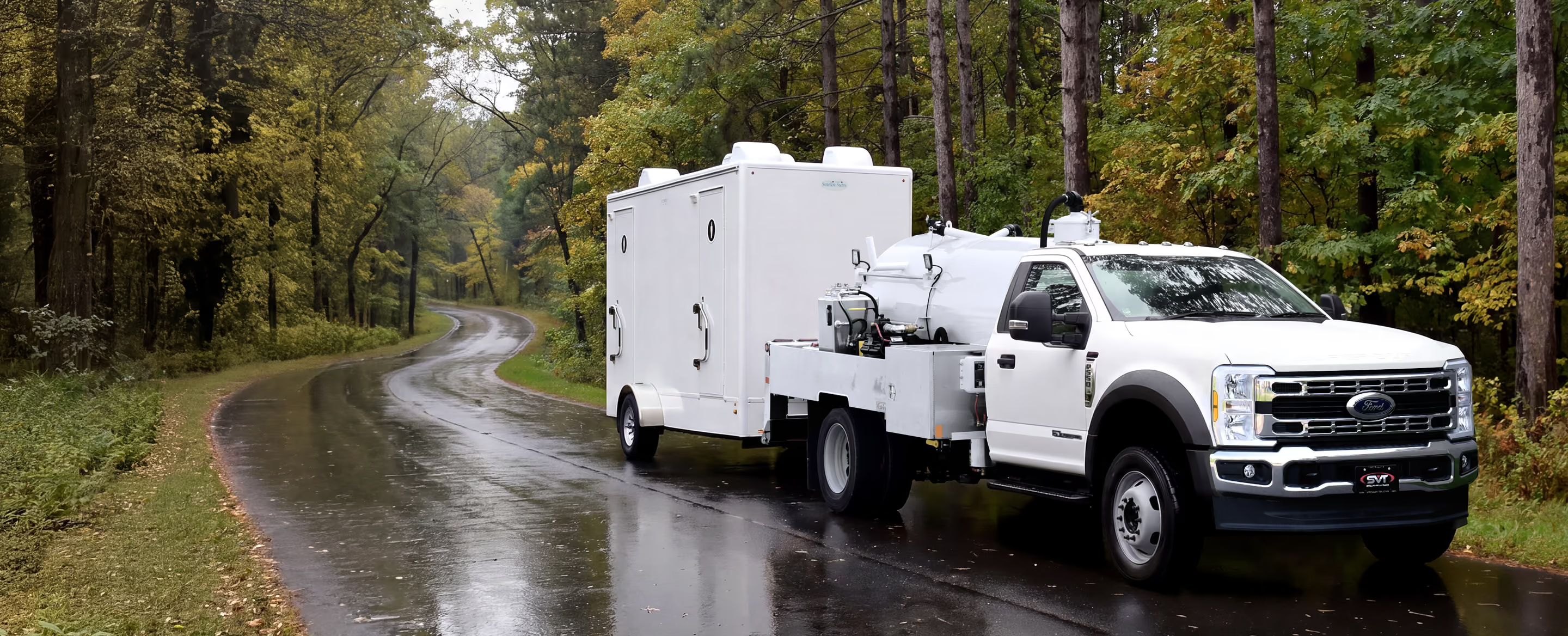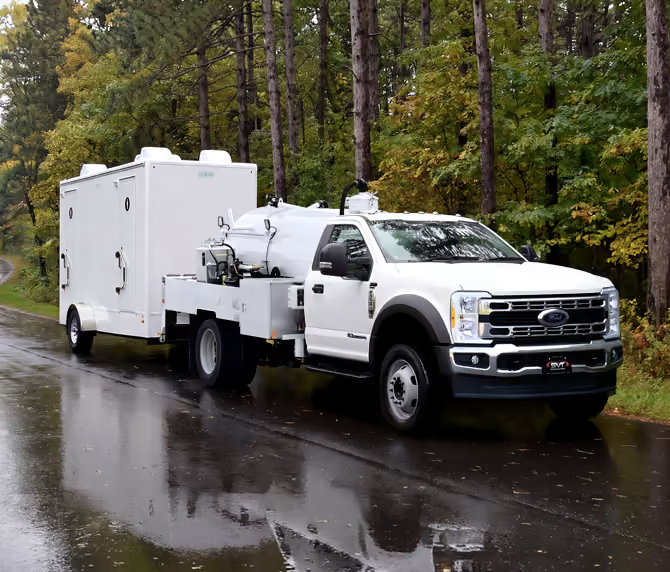
The Safety Scoop: Unpacking Vacuum Truck Protection
Vacuum truck safety features: Ultimate Guide 2025
Why Vacuum Truck Safety Features Are Critical for Your Fleet
Vacuum truck safety features are essential systems designed to protect operators, equipment, and the environment during industrial cleaning and waste management. Operators face considerable daily risks, including exposure to toxic gases, fire hazards, and confined space dangers. Integrating robust safety features is non-negotiable for any fleet.
These critical components range from primary safeguards like emergency shut-downs and automatic vacuum breakers to structural protections like hydraulic door locks and safety handrails. Advanced technologies such as remote controls and integrated scales further improve operator protection by allowing for safer, more controlled operation.
The importance of these systems cannot be overstated. In one real-world example, two operators used their vacuum truck’s capabilities to save a worker’s life during a trench collapse. This proves that proper equipment and training are not just about compliance—they are lifesaving tools.
I’m Michelle Amelse, Vice President of Marketing and Customer Success at Satellite Industries. With over 26 years in the portable sanitation industry, my experience in manufacturing and project management has shown me how well-engineered safety systems prevent accidents and protect the communities we serve.
Engineered for Protection: A Deep Dive into Vacuum Truck Safety Features
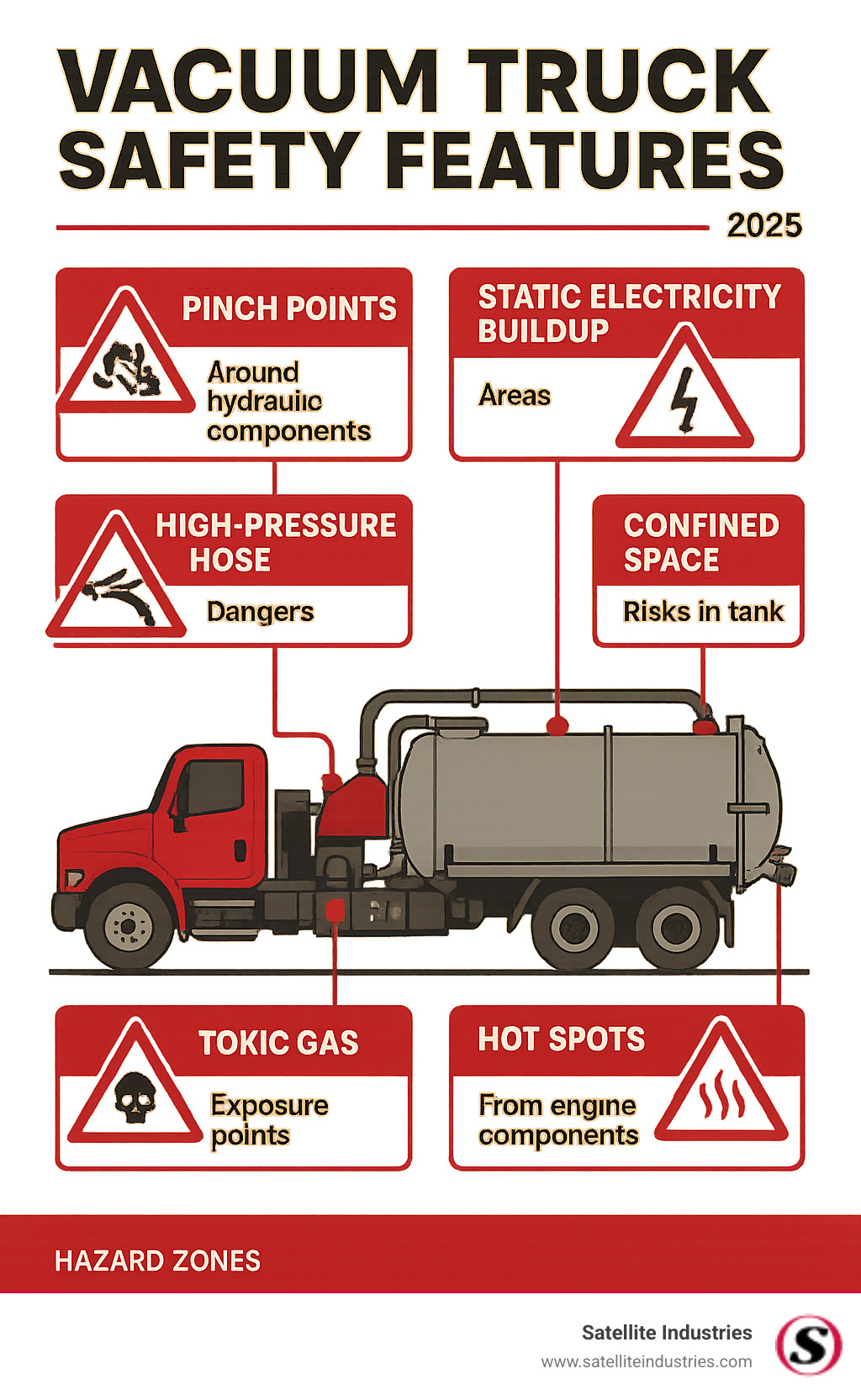
Vacuum truck safety features are integrated into the core design of these powerful machines to mitigate the diverse hazards of their operation. From automated safeguards to structural integrity, every component is engineered to turn potential danger zones into controlled work environments.
Mechanical & Automated Safeguards: Core Vacuum Truck Safety Features
These systems form the backbone of modern vacuum truck safety, working behind the scenes to prevent accidents.
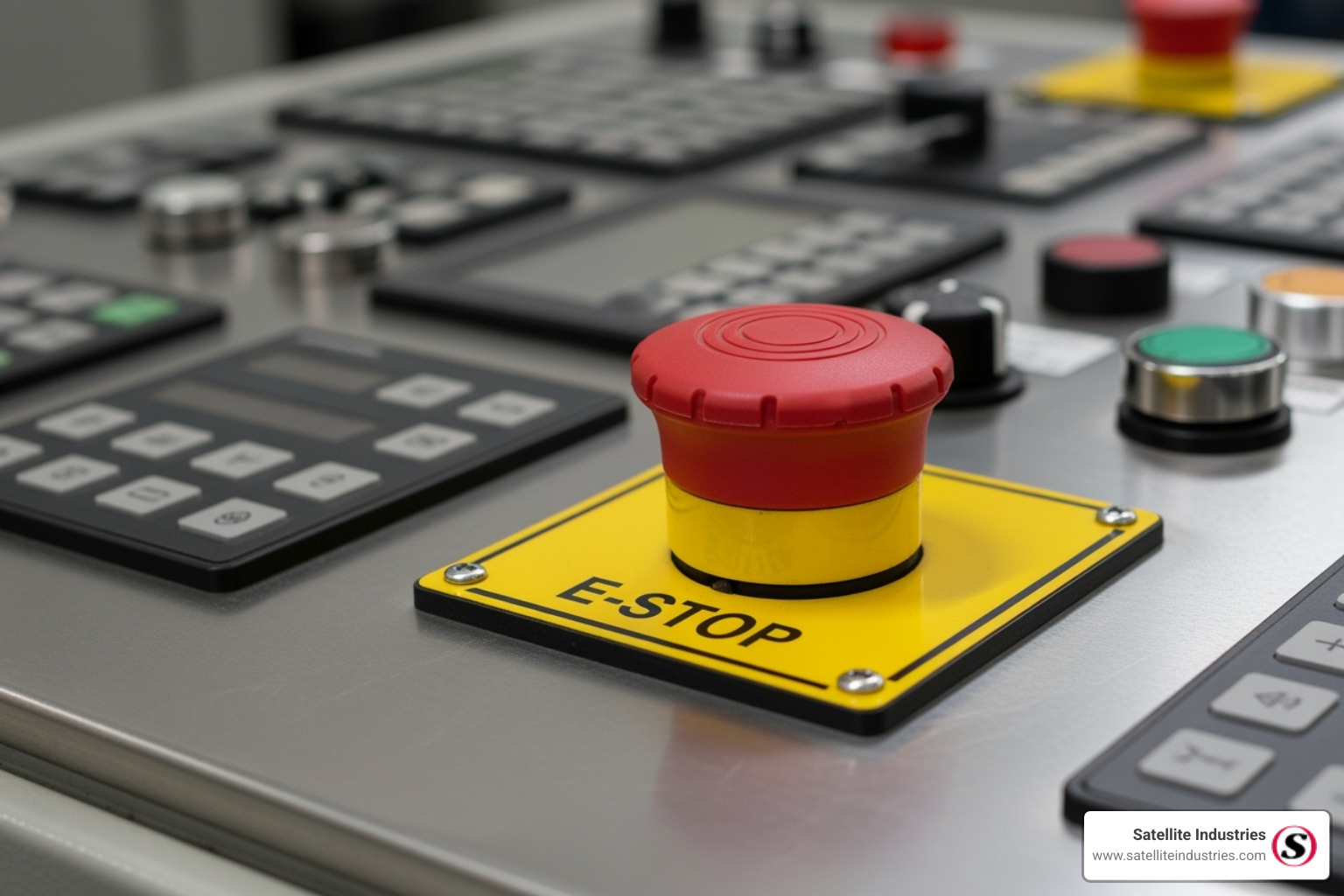
- Emergency Shut-downs (E-stops): Prominently placed buttons that immediately cut power to all critical functions, providing an instant lifeline in an emergency. They are often located on both the truck and remote controls for accessibility.
- Automatic Vacuum Breakers: These devices automatically relieve excessive vacuum or pressure within the tank, preventing dangerous buildups that could lead to tank rupture or hose bursts.
- Hydraulic Rear Door Locks: Robust locking mechanisms that ensure the rear tank door remains firmly sealed during operation and transport, preventing spills of hazardous materials.
- Hydraulic Safety Interlocks: Intelligent systems that prevent operations, like engaging the vacuum, until critical components such as the rear door clamps are fully and properly secured.
- Two-Hand Controls: Requires the operator to use both hands to activate critical functions like rear door movement, ensuring full attention and preventing accidental activation.
- Safety Valves and Burst Disks: The final line of defense against over-pressurization. These components automatically vent or rapidly release pressure if it exceeds safe limits, preventing catastrophic tank failure.
Structural Design for Inherent Safety
The physical design of a vacuum truck is fundamental to its safety, improving stability, visibility, and ergonomics.
- Boom Design: Engineered for safe reach, with some designs limiting height to avoid overhead power lines. Remote operation of the boom also reduces physical strain and back injuries from handling heavy hoses.
- Noise Reduction (82 dBA): Some trucks are engineered for quieter operation (max 82 dBA), which is crucial for clear communication on job sites and preventing accidents caused by misunderstandings.
- Tank Construction: Built from heavy-duty materials to safely contain a wide range of materials, including hazardous waste. The tank’s integrity is paramount to preventing leaks and spills.
- Reflective Striping: Improves the truck’s visibility in low-light conditions or near traffic, reducing the risk of collisions.
- Fold-Down Safety Handrails and Catwalks: Provide stable footing and support for operators accessing different parts of the truck, preventing slips, trips, and falls.
- Safety Props for Tanks and Doors: Mechanical supports that securely hold heavy components like the rear door in an open position during maintenance, protecting technicians from injury.
Advanced Technology: The Future of Vacuum Truck Safety Features
Cutting-edge technology provides real-time data and remote capabilities, taking operator protection to the next level.
- CAN Bus Systems: An integrated electronic system that monitors operations, such as axle weight and water pump pressure, and can shut down the unit if safe limits are exceeded. It also logs data for accountability and training.
- Handheld Remote Controls: Allow operators to manage critical functions from a safe distance, improving visibility and reducing exposure to hazards. Most remotes include a built-in E-stop for added safety.
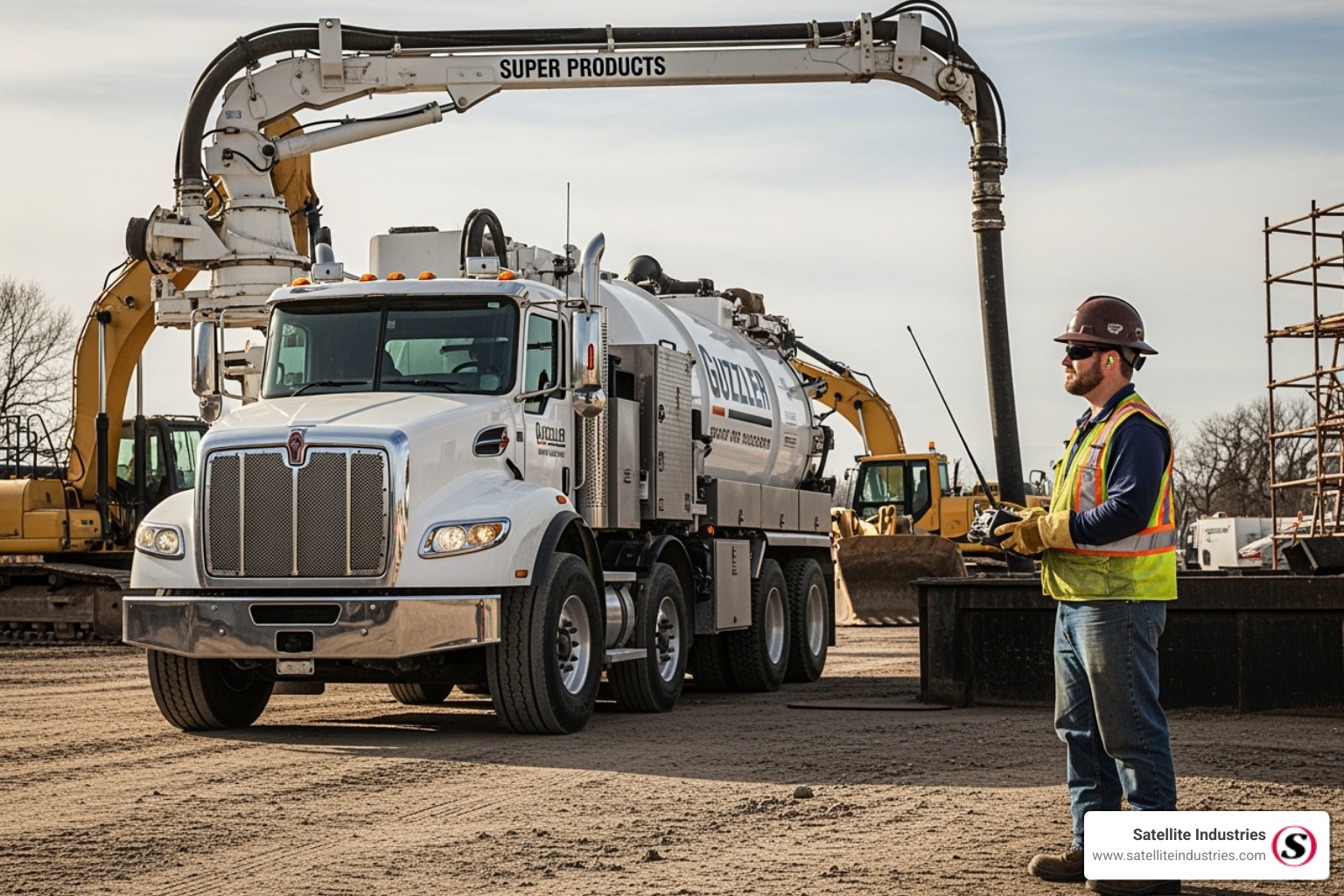
- Integrated Scales: Provide real-time weight data to prevent dangerous and illegal overloading, which impacts vehicle stability and braking.
- Reversing Cameras and Audible Alarms: Eliminate blind spots and alert people nearby when the truck is backing up, preventing collisions and accidents.
- Visual Signals: Flashing lights and indicators provide clear, unambiguous communication about the truck’s status, such as an unsecured door or a tipped tank.
- Ground Detection Systems: Ensures the truck is properly grounded before operation to dissipate static electricity, a critical feature for preventing fires or explosions when handling flammable materials.
The Human Factor: Best Practices for Safe Operation and Maintenance
Even the most advanced vacuum truck safety features are only effective when used correctly. The human element—proper training, good judgment, and consistent procedures—is the most critical factor in ensuring safe operations. Technology is a powerful tool, but it cannot replace a diligent and well-informed operator.
Essential Personal Protective Equipment (PPE) and Its Role
PPE is your personal armor against job site hazards. Using the correct equipment is essential for personal safety and for mitigating legal liability in case of an accident. Always wear:
- High-visibility vests to ensure you are seen by other equipment operators.
- Safety glasses or goggles to protect from splashes and flying debris.
- Steel-toed boots to guard against crush injuries and provide stable footing.
- A hard hat to protect from falling objects or overhead impacts.
- Chemical-resistant gloves matched to the specific materials being handled.
- Respiratory protection when working with materials that produce toxic gases like H2S.
- Face shields for an extra layer of protection from high-pressure spray.
- Hearing protection to prevent long-term damage from equipment noise.
Daily Inspections and Safe Operating Procedures
Safety is a daily commitment that begins before the engine starts. A thorough pre-operation routine is essential for every operator, every day.
Pre-Operation Walkaround:
- Check for fluid leaks (oil, hydraulic, fuel).
- Verify all fluid levels (engine oil, coolant, etc.).
- Inspect tire condition and inflation.
- Test all lights, horns, and backup alarms.
- Confirm all safety features, including E-stops and interlocks, are functional. Do not operate the truck if a safety system is faulty.
Safe Operating Practices:
- Hose Selection and Setup: Use the correct hose diameter for the job. Smooth bore hoses are best for long runs to reduce friction, while a short, corrugated section at the end provides flexibility. Avoid sharp 90-degree elbows, which create wear points and reduce efficiency.
- Grounding Procedures: Always ground the truck properly when handling flammable or combustible materials. The movement of material generates static electricity, and a ground detection system or manual grounding is critical to prevent a spark that could cause an explosion.
- Material Handling: Be aware of your cargo. Different materials carry different risks, and mixing materials from previous loads can create dangerous chemical reactions, potentially producing deadly gases like H2S.
- Spill Prevention: Constantly monitor tank levels to prevent overfilling, which creates safety and environmental hazards. An inline vacuum breaker can act as a failsafe for emergency shutdowns.
Training and Awareness:
Proper training is non-negotiable. Operators must understand equipment limits, recognize hazards, and know emergency procedures. Specialized training is vital for:
- H2S Awareness: Hydrogen sulfide is an invisible, deadly gas. Training on detection and response is critical. The OSHA guidelines for mobile vacuum use offer a valuable resource.
- Confined Space Entry: Entering a tank for cleaning requires specific protocols to ensure safety.
- External Safety: Use warning signs, barriers, and traffic control measures to secure your work zone. High-visibility clothing ensures you remain visible to others.
Routine maintenance ensures all vacuum truck safety features perform as designed. A well-maintained truck is a safe truck. By combining advanced engineering with diligent practices, we create an environment where everyone goes home safe. At Satellite Industries, we build that safety and durability into every product we manufacture. Explore our vacuum truck solutions to learn more.
Latest from the Satellite Industries Blog
Need Help {Finding the Right Sanitation Solution?}
Satellite Industries is the largest manufacturer of portable restrooms, restroom trailers, restroom trucks, septic trucks, slide-ins, unit haulers, vacuum technology, modular solutions, consumables and deodorizers.