Beyond the Bowl: A Guide to Vacuum Composting Toilets
Why Vacuum Composting Toilets Are Revolutionizing Portable Sanitation
A vacuum composting toilet combines the water-saving benefits of vacuum flush technology with on-site waste processing through composting. These hybrid systems use minimal water (0.5-1.5 liters per flush) and negative pressure to transport waste to a composting chamber, where aerobic decomposition converts human waste into pathogen-free compost.
Key Features of Vacuum Composting Toilets:
- Water Usage: 70% less water than standard flush toilets
- Flush Volume: 0.5-1.5 liters compared to 6+ liters for conventional toilets
- Waste Processing: On-site composting reduces waste volume by 80-90%
- Installation: Flexible piping allows uphill transport and challenging locations
- End Product: Nutrient-rich, pathogen-free compost suitable for soil amendment
The portable sanitation industry is seeing growing demand for sustainable solutions that offer familiar user experiences while dramatically reducing environmental impact. As one industry example shows, the Bullitt Center initially used composting toilets but transitioned to a vacuum flush system after seven years, highlighting the evolution toward hybrid technologies that balance sustainability with operational reliability.
For distributors serving environmentally conscious clients – from green building projects to high-end outdoor events – vacuum composting toilets represent a premium offering that addresses water conservation mandates while maintaining the flush experience users expect.
As Michelle Amelse, Vice President of Marketing and Customer Success at Satellite Industries with over 26 years in the portable sanitation industry, I’ve witnessed the growing demand for advanced vacuum composting toilet systems among our distributor partners. My experience in strategic marketing and manufacturing operations provides unique insights into how these innovative sanitation solutions can expand your rental fleet capabilities and meet emerging market demands.
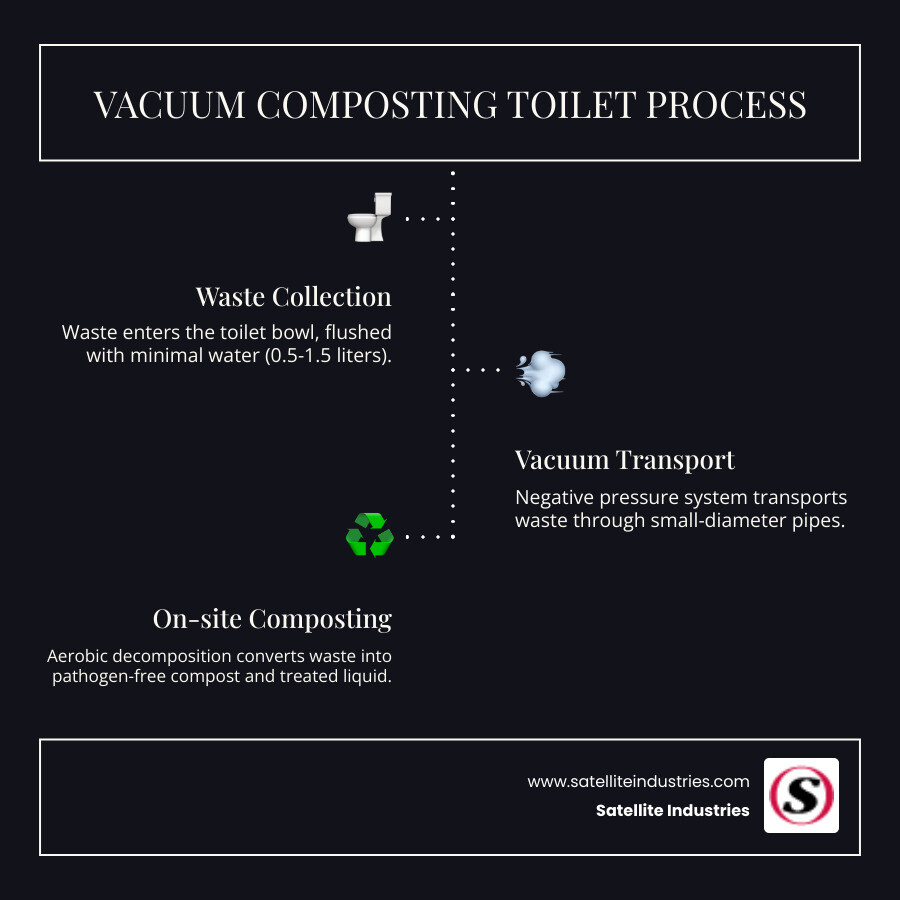
Common vacuum composting toilet vocab:
What is a Vacuum Composting Toilet System?
Think of a vacuum composting toilet system as the perfect marriage between modern convenience and environmental responsibility. This sophisticated hybrid technology combines the familiar flush experience your rental clients expect with the ecological benefits of turning waste into a valuable resource. Instead of just making waste disappear, these systems transform it into something useful.
The beauty lies in its neat simplicity. Users see a toilet bowl that looks and operates just like any conventional toilet – no learning curve, no hesitation. But behind the scenes, something remarkable happens. Instead of using gallons of water and relying on gravity, the system employs powerful vacuum technology to whisk waste through compact pipes to a composting chamber where nature takes over.
What sets these systems apart is source separation – the smart way they handle liquid and solid waste differently for optimal processing. This isn’t just about being eco-friendly; it’s about creating a premium sanitation solution that your clients will actually want to use while dramatically reducing your operational costs.
The Power of Suction: How Vacuum Flush Technology Works
Here’s where the magic happens – and it really is impressive. A vacuum composting toilet uses just 0.5 to 1.5 liters of water per flush compared to the 6+ liters that standard toilets guzzle. That’s a whopping 70% reduction in water usage. When you consider that over a third of indoor water use goes to toilet flushing, the savings add up fast for your clients.
The secret is negative pressure. When someone hits the flush button, a valve opens and powerful suction created by vacuum pumps pulls waste through the system at high velocity. This means waste moves efficiently through smaller diameter pipes – typically just 2 to 3 inches wide instead of the bulky 4-inch pipes gravity systems require.
But here’s what really excites distributors: installation flexibility. Because waste is actively pulled rather than flowing downhill, these systems can transport waste uphill for hundreds of feet. Your pipes can go vertical, horizontal, around corners, wherever you need them. This opens up installation possibilities that would be impossible with conventional plumbing – think multi-story restroom trailers, remote locations, or challenging terrain where gravity just won’t cooperate.
Many systems include grinder pumps that eliminate problematic solids before transport, virtually eliminating clogs. This reliability means fewer service calls and happier rental clients – a win-win for your operation.
From Waste to Resource: The Composting Process
Once the vacuum system delivers waste to the composting chamber, the real change begins. This is where “waste” becomes “resource” through the natural process of aerobic decomposition.
The key to successful composting is getting the carbon-to-nitrogen ratio just right – ideally around 30:1. Human waste is nitrogen-rich, so it needs carbon-rich bulking agents like sawdust, wood chips, or peat moss to balance things out. These materials also create air pockets that keep oxygen flowing to the hardworking microorganisms doing the decomposition.
Temperature management is crucial too. Well-managed systems can reach temperatures above 131°F (55°C), which naturally eliminates pathogens and speeds up the process. Scientific research on composting toilet waste shows that even passive systems can achieve these sanitizing temperatures in certain layers.
The results are impressive: waste volume shrinks by 80 to 90 percent during composting. Any excess liquid (leachate) is drained off and can be further treated. After 6 to 24 months of proper decomposition, what emerges is dark, earthy humanure – a pathogen-free, nutrient-rich soil amendment packed with nitrogen, phosphorus, and potassium.
For your environmentally conscious clients, this isn’t just about waste disposal – it’s about contributing to a circular economy where nothing goes to waste.
Key Advantages for Distributors and Their Rental Clients
When you’re looking to expand your rental fleet with cutting-edge sanitation solutions, vacuum composting toilet systems offer a compelling value proposition that goes far beyond environmental benefits. These systems deliver real operational advantages and user experiences that can help differentiate your business in an increasingly competitive market.

The beauty of these systems lies in how they solve multiple challenges at once. Your clients get a premium restroom experience while you benefit from reduced operational costs and increased deployment flexibility. It’s a win-win that opens doors to new market opportunities and higher-margin rentals.
Unprecedented Water and Waste Reduction
Here’s where the numbers really tell a story. A vacuum composting toilet uses just 0.5 to 1.5 liters per flush compared to the 6+ liters that traditional toilets demand. That’s a 70% reduction in water usage – and when you consider that over a third of indoor water use typically goes to toilet flushing, the savings become substantial for your clients.
But the real operational magic happens with waste volume reduction. Because these systems use so little water, the waste they produce is incredibly concentrated – up to 25 times more concentrated than typical household wastewater. What does this mean for your business? Smaller holding tanks, fewer pump-outs, and dramatically lower servicing costs.
Picture this: instead of servicing a portable restroom every few days at a busy construction site, you might only need to visit once a week or even longer. That’s less fuel for your service trucks, fewer disposal fees, and more efficient route planning. For long-term rentals or high-traffic events, these savings can significantly impact your bottom line while keeping your clients happy with reliable service.
Installation Flexibility and Site Versatility
Traditional gravity-fed systems can be real headaches when it comes to challenging installations. You need the right slope, proper drainage, and sometimes expensive excavation work. Vacuum composting toilet systems throw those limitations out the window.
Because waste is actively pulled through the system rather than flowing by gravity, you can route pipes uphill, around obstacles, or across long distances without breaking a sweat. The flexible pipe routing means you can place restrooms exactly where your clients need them – whether that’s on the third floor of a construction project, at a remote outdoor wedding venue, or in an environmentally sensitive area where minimal ground disturbance is crucial.
This versatility opens up rental opportunities that might have been impossible or prohibitively expensive with conventional systems. Multi-story buildings, remote locations, and temporary installations all become viable markets. You can say “yes” to more projects and command premium pricing for these specialized applications.
Superior User Experience and Odor Control
Let’s be honest – user experience can make or break a portable restroom rental. Nobody wants to use a smelly, unpleasant facility, and negative experiences reflect poorly on your brand. Vacuum composting toilet systems excel in this area.
Users get the familiar flush operation they expect, complete with the satisfying sound and action of a “real” toilet. The powerful vacuum suction ensures hygienic bowl clearing with every flush, leaving no residual waste or unpleasant surprises for the next person.
The odor control is particularly impressive. The vacuum seal creates a barrier that prevents odors from escaping back into the restroom space. Instead, any smells are pulled into the sealed system and directed toward the properly ventilated composting chamber. Many users even comment that the flush is quieter than traditional toilets, adding to the premium feel.
This superior user experience translates directly into positive client perception and repeat business. When event attendees or construction workers have a clean, pleasant restroom experience, they remember it – and so do the people who hired you to provide it.
Operational Realities of a Vacuum Composting Toilet
While the benefits are impressive, let’s have an honest conversation about what it actually takes to operate vacuum composting toilet systems in your rental fleet. These aren’t your typical portable units, and understanding the real-world considerations will help you make informed decisions and set realistic expectations with your clients.

Understanding the Costs and ROI
Let’s be upfront about the investment. A vacuum composting toilet system costs significantly more than a standard portable chemical toilet. We’re talking about commercial composting toilets ranging from $1,500 to $8,000, and adding vacuum technology increases that price point. It’s a substantial upfront investment that requires careful consideration.
But here’s where it gets interesting. The long-term operational savings can be substantial. Think about those dramatic water savings we discussed – that translates to real cost reductions for your clients, especially in areas where water is expensive or scarce. More importantly for your bottom line, the drastically reduced waste volume means fewer pump-outs and lower transportation costs. Over time, these efficiency gains can offset that initial investment.
Energy requirements are another factor to consider. The vacuum pumps and ventilation fans need power to operate. You have two main options: Constant Vacuum Systems (CVS) that maintain continuous vacuum for high-use applications, or Vacuum On Demand (VOD) systems that only activate when flushed. VOD systems use less energy and can even run on solar power, making them perfect for off-grid locations.
Interestingly, while the equipment costs are higher, the overall project costs can actually be lower than traditional flush systems. The flexible piping reduces installation complexity, and on-site treatment is often easier to implement.
Essential Maintenance for Your Rental Fleet
Here’s where vacuum composting toilet systems require a different approach than your standard units. These systems need specific maintenance protocols, but once you understand them, they’re quite manageable.
Your maintenance routine should focus on several key areas. Regular seal and pump checks are critical – inspect all seals for wear to prevent vacuum leaks, and test pumps to ensure optimal pressure. A small leak can lead to reduced efficiency and unwanted odors.
Managing the compost chamber is where the science happens. You’ll need to monitor moisture content and temperature regularly. Too wet slows decomposition, too dry stops it entirely. Bulking agent management is equally important – maintaining a consistent supply of sawdust or wood chips keeps that crucial carbon-to-nitrogen ratio balanced.
Leachate management involves collecting and properly disposing of the liquid that drains from the composting material. This might require evaporation beds or holding tanks, depending on your setup. End-product removal happens annually for well-managed systems, and this finished compost must be handled safely according to local regulations.
Don’t forget the ventilation system checks – those fans need to keep running to supply oxygen for decomposition and prevent odors. And of course, regular cleaning of the bowl, seat, and surfaces maintains the user experience your clients expect.
The reality is that self-help compatibility for these complex systems is low. Your maintenance staff will need professional training. However, once trained, day-to-day maintenance is minimal, with technical components requiring professional attention only as needed.
Common Issues and Troubleshooting a Vacuum Composting Toilet
Even with excellent maintenance, issues can arise. Knowing what to expect helps you respond quickly and keep your units operational.
Clogs in vacuum lines are probably your biggest concern. Despite the system’s efficiency, foreign objects like wipes or feminine hygiene products can cause blockages. Clear signage and user education are your first line of defense. When clogs happen, you’ll need specialized tools and procedures since the pipes are under vacuum.
Inconsistent composting usually stems from an incorrect carbon-to-nitrogen ratio, insufficient aeration, or improper moisture levels. This leads to slow decomposition, increased volume, and potential odors. The fix involves adjusting bulking agent ratios, ensuring fans work properly, and managing moisture levels.
Odor problems almost always point to ventilation failure. A blocked vent pipe, malfunctioning fan, or insufficient airflow creates anaerobic conditions that produce unpleasant smells. Check the ventilation system first when odor complaints arise.
Power dependency is a reality you can’t ignore. These systems need electricity for pumps and fans. A power outage temporarily halts operation, so reliable power sources or backup generators are essential for remote sites and events.
User error remains surprisingly common. People flush inappropriate items or fail to add bulking agent when required. We’ve seen frustrating cases of systems not properly maintained, emphasizing why consistent attention from your trained team is crucial.
The key is anticipating these challenges and training your staff to handle them efficiently. With proper preparation, you can maintain high uptime for these valuable rental assets.
Comparing Sanitation Systems
When you’re helping clients choose the right sanitation solution, understanding how vacuum composting toilet systems stack up against traditional options makes all the difference. Let’s take a honest look at how these premium systems compare to the reliable workhorses of our industry.
MetricVacuum Composting ToiletStandard Portable Toilet (Chemical)Water UseMinimal (0.5-1.5 liters/flush)None (for flushless); some portable units use a small amount for flushingWaste VolumeSignificantly reduced (80-90% by composting)Full volume retained in holding tankMaintenanceTechnical (pump, composting management, leachate, end-product removal)Simpler (pump-out, chemical replenishment, cleaning)User ExperienceFamiliar flush, superior odor control, hygienic bowlNon-flush or limited flush, chemical odor control, holding tank visibleUpfront CostHigherLowerIdeal ApplicationGreen buildings, long-term sites, remote areas, high-end events, water-sensitive locationsShort-term events, construction sites, general public use
Versus Standard Portable Toilets (Chemical Toilets)
Standard portable chemical toilets have been the backbone of rental fleets for good reason. They’re simple, reliable, and cost-effective. These units use a straightforward approach: waste drops into a holding tank where biodegradable chemicals break down solids, control odors, and sanitize. When full, your service truck pumps out the waste for off-site treatment. A typical unit might generate 250 to 300 gallons of waste during its service cycle.
Water usage tells an interesting story. Most chemical toilets operate without water, though some offer a small manual flush. Vacuum composting toilet systems use that minimal 0.5 to 1.5 liters per flush, but this small amount creates a dramatically different user experience. Your clients notice the difference immediately – there’s something psychologically satisfying about a real flush that drops client satisfaction scores when it’s missing.
The waste treatment approach is where these systems really diverge. Chemical toilets require your trucks to haul away full volumes of waste for off-site processing. Vacuum composting toilet systems flip this model entirely by processing waste on-site through composting. This means you’re hauling away 80-90% less material, which translates directly into fuel savings, fewer service trips, and lower disposal costs. Some distributors even find markets for the finished compost, turning waste disposal from a cost center into a potential revenue stream.
User perception matters more than we sometimes realize. The flush mechanism in a vacuum composting toilet provides that familiar, hygienic experience users expect. The powerful vacuum ensures a spotless bowl after each use, while the sealed system naturally prevents odors from escaping. Chemical toilets rely on deodorizing chemicals to mask smells, and let’s be honest – sometimes that distinctive blue chemical scent becomes part of the experience whether users want it or not.
Servicing frequency becomes a competitive advantage with vacuum composting systems. Because they process waste on-site and dramatically reduce volume, you’ll make fewer trips to each location. This frees up your crews and equipment for other deployments, potentially allowing you to serve more clients with the same resources.
While standard portable toilets remain essential for many applications – they’re perfect for short-term events, general construction sites, and situations where simplicity matters most – vacuum composting toilet systems shine in premium applications where sustainability, user experience, and long-term cost efficiency take priority.
Real-World Applications and Case Studies
The true power of vacuum composting toilet systems becomes clear when you see them solving real sanitation challenges across diverse industries. For our distributor partners, these aren’t just theoretical benefits – they’re proven solutions that open doors to premium markets and environmentally conscious clients who demand both sustainability and reliability.

The Bullitt Center: A Lesson in Sustainable Sanitation
Seattle’s Bullitt Center offers one of the most fascinating case studies in sustainable sanitation. Known as “the greenest commercial building in the world,” this pioneering facility initially installed a large-scale composting toilet system as part of its ambitious sustainability goals. The building was designed to meet the rigorous Living Building Challenge standards, which require net-zero water use.
After seven years of operation, however, the Bullitt Center made a telling decision. They removed their innovative composting toilet system and transitioned to a vacuum flush system. This wasn’t a failure of sustainability principles – it was a practical lesson in operational reality.
The transition highlights something crucial for our distributor partners: while composting technology offers incredible environmental benefits, high-traffic commercial applications demand systems that can handle consistent heavy use without compromising user experience or requiring extensive maintenance protocols. The Bullitt Center’s move to vacuum flush technology demonstrates how hybrid solutions can balance extreme water conservation with the operational reliability that busy commercial buildings require.
This real-world experience reinforces why vacuum composting toilet systems represent such a compelling solution. They combine the proven reliability of vacuum flush technology with the environmental benefits of on-site waste processing, creating a system that can handle demanding applications while delivering the sustainability outcomes clients expect.
Insights from the Bullitt Center
Emerging Opportunities for a Vacuum Composting Toilet
The unique capabilities of vacuum composting toilet systems are creating exciting new market opportunities that forward-thinking distributors can capitalize on. These applications represent growing segments where traditional portable sanitation falls short and premium solutions command higher rental rates.
High-end outdoor events present perhaps the most immediate opportunity. Picture providing luxury restroom trailers at exclusive outdoor weddings, upscale corporate retreats, or premium festival experiences. The familiar flush operation and superior odor control create an experience that matches the event’s quality expectations, while the reduced servicing requirements simplify logistics for event planners who are already juggling countless details.
Film sets and remote work camps face unique sanitation challenges that vacuum composting toilet systems are perfectly designed to solve. These temporary locations often operate far from existing infrastructure, yet they need to accommodate large crews for extended periods. Traditional portable toilets can quickly become overwhelmed, while the installation flexibility and reduced waste volume of vacuum composting systems make them ideal for these demanding applications.
The eco-tourism and off-grid resort market is experiencing tremendous growth as travelers increasingly seek sustainable experiences. These destinations need sanitation solutions that align with their environmental values while providing the comfort guests expect. A vacuum composting toilet system not only minimizes environmental impact but can actually contribute to the property’s sustainability story – the finished compost becomes valuable soil amendment for landscaping or on-site agriculture.
Sustainable educational facilities represent another growing opportunity. Schools, universities, and research centers pursuing green building certifications need sanitation solutions that demonstrate environmental leadership. These institutions value systems that serve as teaching tools, showing students and visitors how innovative technology can solve environmental challenges. The Bertschi School, for example, has integrated sustainable sanitation into their educational mission, using their facilities to teach students about resource conservation and environmental stewardship.
Disaster relief and humanitarian applications showcase these systems at their most impactful. When traditional infrastructure is compromised, the installation flexibility and minimal water requirements of vacuum composting toilet systems become lifesaving advantages. They can be deployed quickly in challenging environments where water is scarce and waste management is critical for public health.
Case Study: Bertschi School
These emerging markets share common characteristics: they value innovation over the lowest price, they prioritize environmental responsibility, and they need solutions that perform reliably under demanding conditions. By positioning vacuum composting toilet systems as premium offerings for these applications, distributors can differentiate themselves while building relationships with the most forward-thinking clients in their markets.
Conclusion
As we wrap up our exploration of vacuum composting toilet technology, it’s clear that these systems represent far more than just an upgraded portable toilet. They’re a glimpse into the future of sustainable sanitation – one where environmental responsibility and user comfort work hand in hand.
For our distributor partners, the opportunity here is substantial. We’re seeing a market that increasingly values water efficiency without sacrificing the familiar flush experience users expect. Your clients want solutions that align with their sustainability goals while delivering reliable performance. A vacuum composting toilet system checks both boxes beautifully.
The numbers speak for themselves: 70% less water usage, 80-90% waste volume reduction, and the flexibility to install in locations that would challenge traditional plumbing. These aren’t just environmental wins – they’re operational advantages that can improve your bottom line through reduced service calls and expanded market reach.
Yes, there’s a learning curve. The initial investment is higher, and your maintenance teams will need training on the composting process and vacuum technology. But the distributors who accept this technology now are positioning themselves as leaders in an industry that’s rapidly evolving toward sustainability.
From the lessons learned at pioneering projects like the Bullitt Center to the growing demand in eco-tourism and high-end events, we’re seeing real-world validation of this technology. Your clients – whether they’re managing green building projects, remote work sites, or premium outdoor events – are actively seeking these advanced solutions.
At Satellite Industries, we’ve built our reputation on advanced engineering for durability and user-friendliness. Our vacuum composting toilet systems continue that tradition, offering you and your clients a sustainable waste management solution that doesn’t compromise on performance or user experience. It’s technology that truly takes us beyond the bowl, changing waste into a valuable resource while delivering the reliability your rental fleet demands.
Ready to explore how vacuum composting technology can expand your capabilities? Explore our advanced vacuum technology systems and find what’s possible when innovation meets sustainability.
Latest from the Satellite Industries Blog
Need Help {Finding the Right Sanitation Solution?}
Satellite Industries is the largest manufacturer of portable restrooms, restroom trailers, restroom trucks, septic trucks, slide-ins, unit haulers, vacuum technology, modular solutions, consumables and deodorizers.