Septic Truck Vacuum Pumps: How to Choose, Maintain, and Upgrade Your Pump
A septic truck's vacuum pump influences loading speed, operational efficiency, and equipment downtime. Choosing the right pump requires evaluating more than specifications alone. This guide from Satellite Industries explains how to compare pump types, size a pump for your route, maintain it properly, and determine when rebuilding or replacing it makes sense.
What the Vacuum Pump Determines on a Septic Truck
The vacuum pump plays a critical role in a septic truck's waste collection system. Its performance affects how efficiently the truck loads, how consistently it operates throughout the day, and whether it can meet the demands of a particular route.
Loading efficiency: A properly sized pump helps reduce the time required to evacuate air and load waste. Actual loading speed also depends on hose diameter, hose length, suction lift, material consistency, and restrictions within the system.
Material characteristics: Septage, grease, and other pumpable waste vary in thickness and solids content. The pump must provide sufficient vacuum and airflow for the application, while the tank, hoses, and protective components must accommodate the material being collected.
Duty cycle: A pump operating intermittently faces different demands than one running for extended periods throughout the day. Equipment must be rated for the required operating duration to help manage heat and component wear.
Tank capacity determines how much waste a truck can carry, but it does not independently determine how quickly the truck loads. Pump performance must be evaluated alongside the complete vacuum system.
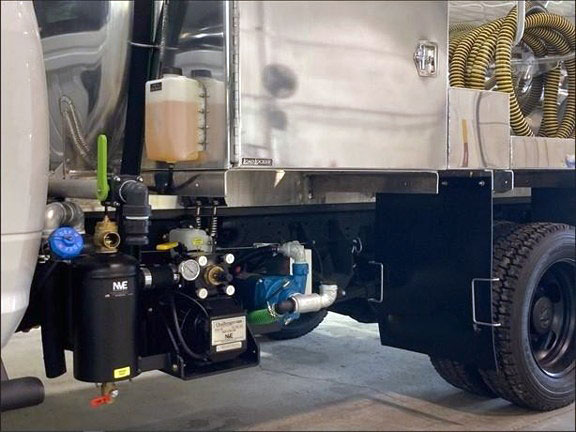
For a broader explanation, see Satellite Industries' guide to how vacuum pumps work in trucks: Truck Vacuum Pumps Explained: What Do They Really Do?
Types of Vacuum Pumps Used on Septic Trucks
Vacuum pumps differ in operating design, maintenance requirements, and suitability for specific applications. Understanding these differences helps operators narrow their options before comparing individual models.
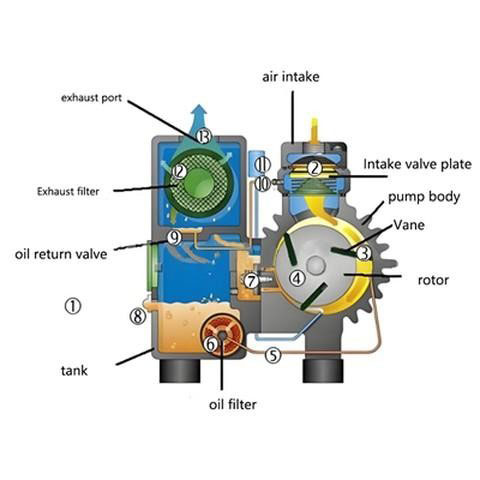
How to Compare Pump Types
The appropriate pump depends on the work the truck performs, not simply which design offers the highest advertised performance. Rotary vane pumps are commonly used in septic applications, while liquid ring designs can offer advantages where moisture exposure is a concern. Additional cooling provisions may support sustained operation, and positive-displacement blowers may be appropriate for certain airflow requirements.
However, pump type alone does not establish suitability. Individual models have different operating limits, and the complete vacuum system must be considered. Before selecting a pump, confirm:
- Airflow and operating vacuum: Verify that the pump meets the application's requirements.
- System compatibility: Confirm compatibility with the tank, hoses, protective components, and drive system.
- Duty cycle: Determine whether the pump can handle the expected operating duration.
- Maintenance requirements: Review lubrication, cooling, inspection, and replacement procedures.
- Parts and service availability: Consider access to replacement components and qualified service support.
Comparing these requirements against actual route conditions provides a more useful starting point than selecting equipment based on maximum performance ratings alone.
Sizing a Vacuum Pump to Your Route
A larger vacuum pump does not automatically increase productivity. The objective is to identify the equipment capacity needed to complete the route efficiently without adding unnecessary operating costs. Start by examining how the truck is currently used.
Step 1: Measure Your Daily Workload
Record the number of stops completed during a typical route and estimate the volume collected at each location. Include differences between residential septic service, commercial pumping, and other applications that may require longer loading periods. A route consisting of numerous small jobs places different demands on a truck than one involving fewer stops with larger waste volumes. Use several representative workdays to account for variations in customer locations, waste characteristics, and disposal requirements.
Step 2: Track Loading and Travel Time
Separate the working day into three categories:
Route conditions can vary significantly by application. Operators servicing remote locations must account for longer travel distances, limited disposal access, and extended service intervals when evaluating equipment requirements. Learn more about these considerations in our guide to portable sanitation for remote worksites.
Step 3: Calculate Potential Time Savings
If loading is the primary bottleneck, estimate how much time an appropriately specified pump could save.
Potential daily time savings = Minutes saved per stop × Number of stops
Illustrative example: 3 minutes saved per stop × 8 stops = 24 minutes saved per day. This is not a prediction of pump performance; actual savings must be established using equipment specifications and operating conditions.
Time savings do not necessarily translate into additional completed jobs. The available time must accommodate another stop, including travel, setup, service, and disposal. If loading time is not the primary constraint, additional pump capacity may provide little operational benefit.
Step 4: Match the Pump to the Complete System
Once the bottleneck is identified, evaluate the pump's airflow, operating vacuum, duty cycle, and compatibility with the existing equipment. Tank size, hose configuration, suction lift, material characteristics, and power requirements must also be considered.
Before assuming an upgrade is necessary, verify that the existing system is functioning correctly. Air leaks, restricted hoses, worn components, and other mechanical problems can reduce loading performance even when the pump is properly sized. An upgrade should be based on documented operating requirements and confirmed manufacturer specifications, not an assumed relationship between tank capacity and pump size.
Vacuum system requirements also vary across applications. For example, hydro-excavation trucks must accommodate different material characteristics, hose configurations, and operating demands. Learn more about these specialized applications in our guide to hydro-excavation vacuum trucks.
Operator takeaway: Measure where time is being lost before investing in additional pump capacity. The right upgrade addresses an actual operational constraint.
Vacuum Pump Maintenance: Preventing Avoidable Downtime
Routine maintenance helps protect vacuum pump components, preserve system performance, and identify developing problems before they interrupt service. Maintenance requirements vary by pump design, manufacturer, and operating conditions. The following checklist identifies important inspection points, but the specific pump's operating manual must determine approved procedures and service intervals.
Vacuum Pump Maintenance Checklist
Warning Signs That Require Further Inspection
Routine inspections should do more than confirm maintenance tasks have been completed. Operators should also watch for changes that may indicate a developing mechanical or system problem.
Low or contaminated lubricant
On oil-lubricated pumps, insufficient or contaminated lubricant can accelerate component wear and cause mechanical damage. Unexpected oil consumption, discoloration, or contamination warrants further investigation. Follow the manufacturer's approved procedure for checking lubricant condition and determining whether service is required.
Moisture or waste entering the pump
Liquid carryover occurs when waste or moisture passes through the system's protective components and reaches the pump. A malfunctioning primary shutoff, improperly maintained moisture trap, or other system fault can allow this to happen. If liquid enters a pump not designed to tolerate it, stop operation and follow the manufacturer's inspection procedure before restarting.
Unusual noise, heat, or declining performance
Changes in operating noise, vibration, temperature, or vacuum performance may indicate component wear or a system problem. Potential contributing factors include restricted airflow, inadequate lubrication, cooling problems, and operation beyond the pump's rated duty cycle. Reduced vacuum does not automatically mean the pump needs replacement. Inspect the complete system for leaks, restrictions, and malfunctioning components before concluding that the pump itself is defective.
Keep Maintenance Records
Document completed service, operating hours, repairs, and recurring problems for each truck. These records help maintenance personnel identify repeated failures, plan component replacement, and compare equipment performance over time. They also provide useful information when determining whether an aging pump should be rebuilt or replaced. Before inspecting or servicing a pump, follow the manufacturer's shutdown, isolation, depressurization, and other applicable safety procedures.
Rebuild or Replace: How to Decide
When a septic truck vacuum pump begins losing performance or requires frequent repairs, operators must determine whether rebuilding the existing unit or replacing it provides the appropriate long-term solution. The decision should account for more than the immediate repair estimate.
1. Compare Total Repair and Replacement Costs
Obtain an estimate for the rebuild, including replacement components, labor, and any additional repairs identified during inspection. Compare that amount with the installed cost of a replacement pump. A rebuild may be practical when the housing and major components remain serviceable and the repair restores the pump to the required operating condition. Replacement becomes a consideration when damage is extensive, repair costs are substantial, or reliable parts are difficult to obtain.
2. Evaluate the Truck's Remaining Service Life
Consider how long the truck is expected to remain in operation. Investing in a major pump replacement may require additional justification when the truck itself is approaching retirement. However, a rebuild is not automatically the less expensive choice. Repeated repairs and additional downtime can change the total cost over the remaining service period. Evaluate the pump investment within the truck's broader maintenance and replacement plan.
3. Account for Downtime
A repair that costs less initially may become more expensive if the truck remains unavailable for an extended period. Consider the expected turnaround time, parts availability, labor requirements, and whether another truck can cover scheduled service. For operations with limited fleet capacity, the cost of missed or rescheduled work may materially affect the decision.
4. Determine Whether the Pump Still Meets Route Requirements
A pump can be mechanically sound and still be undersized for the work it is expected to perform. Route expansion, changes in waste volume, longer hose configurations, or increased operating hours may create demands that the original pump was not specified to handle. If the existing pump no longer meets documented operating requirements, rebuilding it will not resolve the capacity mismatch. Before selecting a replacement, confirm the required specifications and compatibility with the truck's complete vacuum system.
Making the Final Decision
Rebuilding may be appropriate when the pump remains compatible with route requirements, major components are serviceable, and repair costs are justified by its expected remaining life. Replacement warrants consideration when damage is extensive, parts are unavailable, or operating demands exceed the existing pump's capabilities. Evaluate both options against the truck's remaining service life and the total cost of downtime.
Frequently Asked Questions About Septic Truck Vacuum Pumps
What kind of vacuum pump is used on a septic truck?
Septic trucks can use rotary vane, liquid ring, and other vacuum pump designs, depending on the application and truck configuration. Rotary vane pumps are commonly used and require periodic vane maintenance. Liquid ring pumps can offer advantages where moisture exposure is a concern. Positive-displacement blowers may be suitable for certain airflow requirements. Satellite Industries can confirm which pump configurations are available for its specific truck models.
How often should a septic truck vacuum pump be serviced?
Service intervals depend on the pump manufacturer, design, and duty cycle. Operators should perform the prescribed pre-operation checks, monitor lubricant condition where applicable, and inspect moisture protection and inlet components according to the maintenance manual. Oil changes, vane inspections, and mechanical service must follow the manufacturer's schedule. Satellite Industries recommends confirming the requirements for the installed pump rather than applying a universal interval.
What causes a septic truck vacuum pump to fail?
Potential causes include inadequate lubrication, liquid carryover, excessive heat, component wear, and operation outside the pump's rated limits. Restricted filters, malfunctioning shutoffs, and other vacuum system problems can contribute to damage or reduced performance. Regular inspection helps identify these conditions, but the actual cause of a failure should be established through diagnosis before components are repaired or replaced.
How do I know if I need a bigger vacuum pump?
Measure how much of the workday is spent loading waste compared with driving and other activities. If loading time limits route capacity, confirm that the existing pump and vacuum system are functioning correctly before considering an upgrade. Additional capacity may be useful when documented operating requirements exceed the current pump's capabilities. If travel time is the primary constraint, a larger pump may provide little operational benefit.
Should I rebuild or replace my septic truck vacuum pump?
Compare the total rebuild cost with replacement cost, expected service life, downtime, and parts availability. Rebuilding may be practical when major components remain serviceable and the pump still meets operating requirements. Replacement may be appropriate when damage is extensive, parts are unavailable, or route demands exceed the existing pump's capacity. The truck's remaining service life should also factor into the decision.
Find the Right Vacuum System for Your Operation
Pump selection should reflect your route demands, equipment configuration, and long-term maintenance requirements. Satellite Industries offers septic trucks, restroom trucks, and slide-in vacuum units for a range of service applications.
Explore our septic truck lineup here or contact a Satellite Account Executive to discuss your equipment requirements.
Latest from the Satellite Industries Blog
Need Help {Finding the Right Sanitation Solution?}
Satellite Industries is the largest manufacturer of portable restrooms, restroom trailers, restroom trucks, septic trucks, slide-ins, unit haulers, vacuum technology, modular solutions, consumables and deodorizers.