Septic Success: A Guide to Pumping Truck Business Income
Why Septic Tank Pumping Trucks Drive Business Success
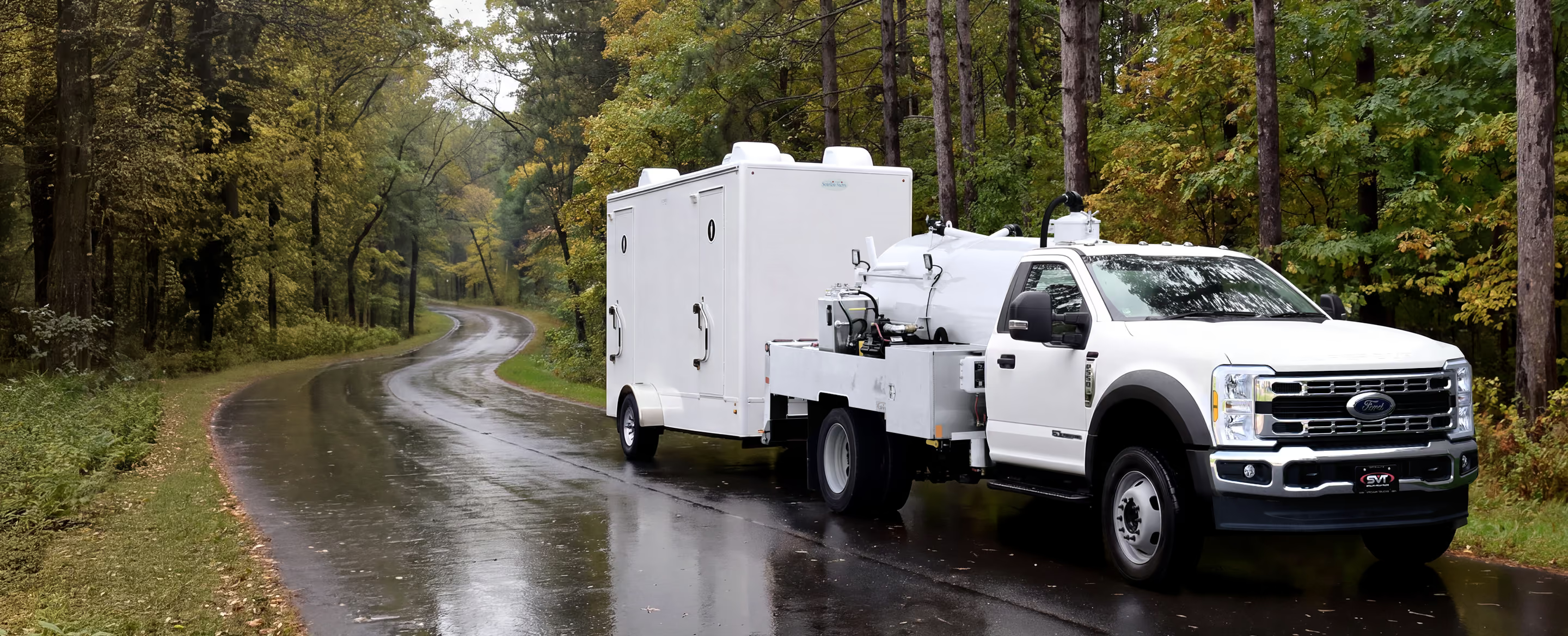
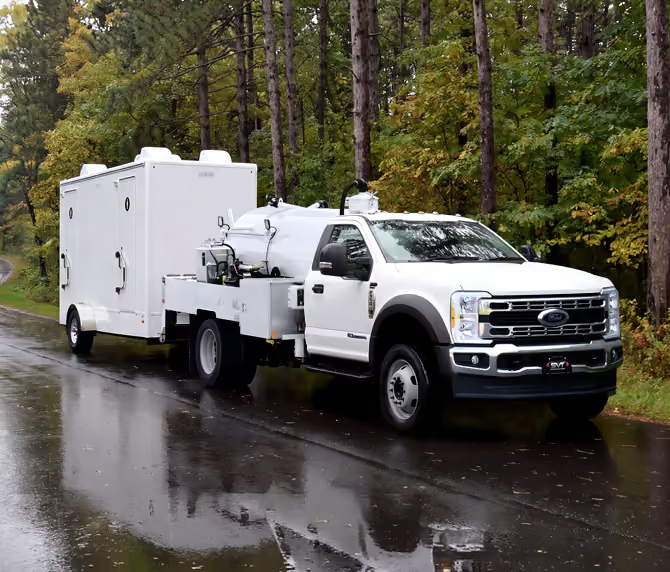
A septic tank pumping truck is the cornerstone of a profitable sanitation business, serving over one in five American households that depend on septic systems. These specialized vacuum trucks extract waste from septic tanks, portable toilets, and grease traps, then transport it to approved disposal facilities.
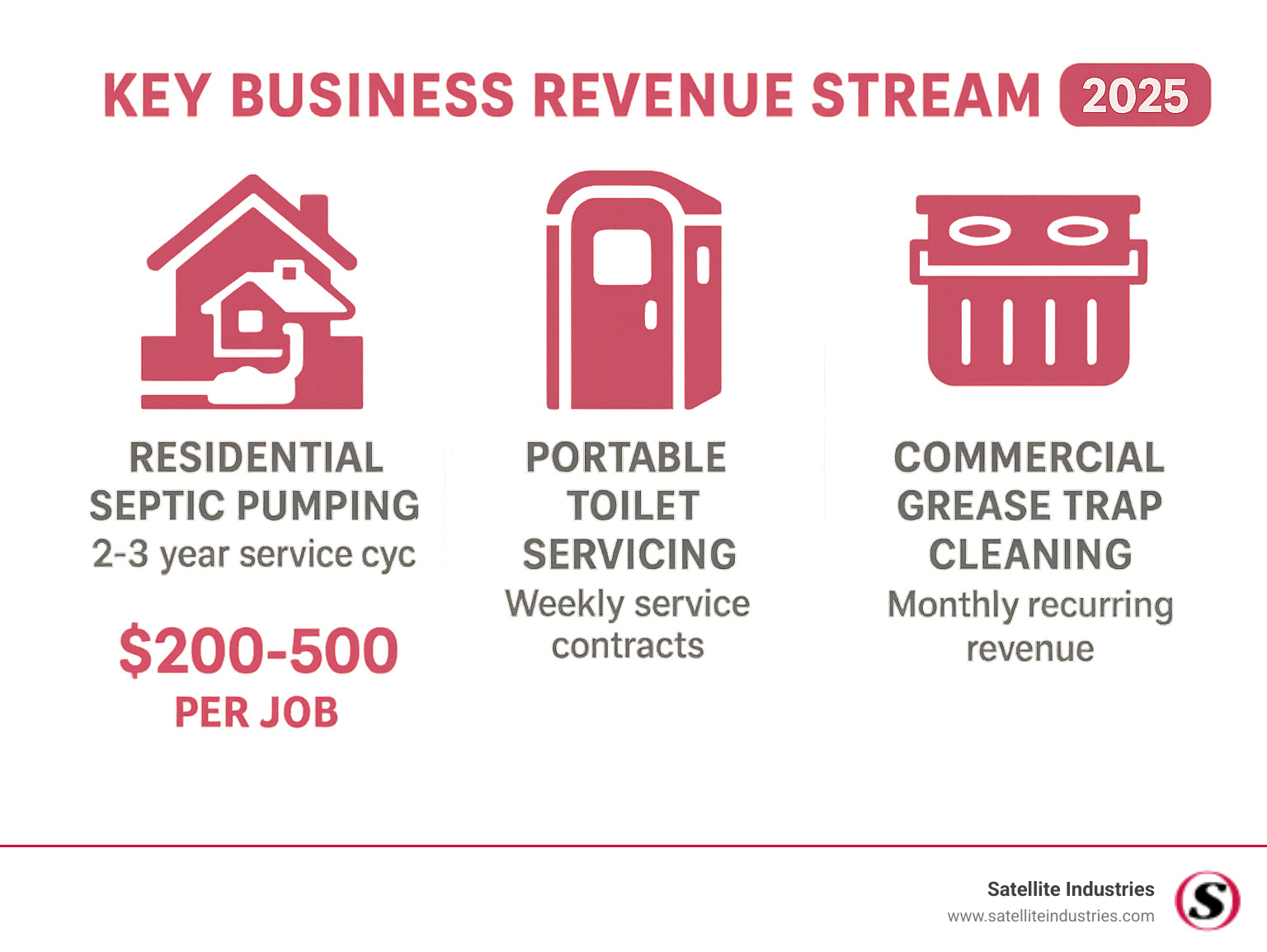
Key Business Revenue Streams:
- Residential septic pumping – Recommended every 2-3 years per household
- Portable toilet servicing – Event and construction site contracts
- Grease trap cleaning – Restaurant and commercial accounts
- Industrial waste removal – Municipal and large-scale operations
- Emergency and after-hours response – Premium-rate callouts that boost margins
- Bundled service agreements – Combine restroom rentals with scheduled pump-outs for predictable, recurring revenue
- Inspection and locating add-ons – Visual checks, baffle inspections, and tank locating to increase average ticket value
Truck Specifications That Impact Profitability:
- Small capacity (300-500 gallons) – Portable restrooms and tight access areas
- Medium capacity (1,500-3,500 gallons) – Residential and small commercial jobs
- Large capacity (3,500+ gallons) – Industrial and municipal contracts
- Engine power (350-500 HP) – Handles heavy loads and varied terrain
- Hose specifications – 50mm-200mm diameter, 16.4-65.6 feet length
- Vacuum pump performance – CFM rating and duty cycle drive faster pull times and shorter job durations
- Tank material and weight – Aluminum vs. steel impacts payload, corrosion resistance, and total cost of ownership
- Cold-weather kits – Heated valves, cabinets, and lines reduce freeze-ups and downtime in winter climates
- Operator aids – Remote controls, powered hose reels, and clear sight glasses improve safety and efficiency
The waste management industry offers significant earning potential. Regular septic pumping prevents costly system failures that can exceed $10,000 in replacement costs, making your services essential rather than optional. With septic tank services typically taking 1-2 hours and recommended every 2-3 years, the recurring revenue model creates a stable business foundation. Understanding OSHA requirements for sealed compartments ensures safe operations while protecting your business from compliance issues.
Profit in this segment is won through route density, asset utilization, and time-on-site. As a simple illustration, a medium-capacity truck completing 4-6 residential jobs per day at an average ticket of $300-$400 can generate strong daily revenue, especially when disposal sites are nearby and routes are efficiently clustered. Add weekly portable restroom servicing and monthly grease trap accounts to fill the schedule, and utilization rises without adding a second chassis. Tracking disposal fees, fuel, and labor against completed gallons helps you dial in target margins by route.
For distributors and rental operators, a well-spec’d septic tank pumping truck complements your portable restroom inventory by keeping service quality in-house and response times fast. Standardized fittings, intuitive controls, and durable components minimize training time and reduce the chance of service delays—key advantages when you’re supporting event schedules or construction timelines.
I’m Michelle Amelse, Vice President of Marketing and Customer Success, with over 26 years of experience in the portable sanitation industry including septic tank pumping truck operations and fleet management. My expertise spans strategic fleet planning, operational excellence, and helping businesses maximize their sanitation equipment investments.
To translate opportunity into dependable income, align truck capacity with your core jobs, design routes that minimize empty miles, and train technicians on consistent setup-to-disposal workflows. When paired with durable equipment engineered for operator friendliness, your septic route becomes a predictable profit center that supports your broader rental and distribution business.
Selecting the Right Septic Tank Pumping Truck for Maximum ROI
Choosing the right septic tank pumping truck is not just about buying a vehicle; it’s about making a strategic investment that directly impacts your business’s profitability and efficiency. To maximize return on investment (ROI), it’s important to carefully consider how a truck’s specifications align with the services you plan to offer.
Choosing Your Truck: Matching Specs to Service Types
When looking to expand a fleet, or starting a new venture, the first step is always a thorough business needs assessment. What kind of demand is anticipated? What types of projects will be the bread and butter? This will dictate the ideal tank capacity and engine strength for the septic tank pumping truck fleet. A wide range of septic trucks is available, offering options to meet these diverse needs.
Different tank sizes cater to different needs and, consequently, different revenue streams.
Truck Capacity (Gallons)Target Jobs & Use CasesRevenue Potential & Operational NotesSmall (300-500)Portable Restrooms, Tight Access AreasIdeal for quick, smaller jobs like servicing portable toilets at events or construction sites. Their maneuverability is a key advantage in urban or restricted spaces.Medium (1,500-3,500)Residential, Small CommercialThe workhorse of the industry. This size is perfect for most residential septic tank cleanouts and smaller commercial clients like restaurants with grease traps. It offers a great balance of capacity and maneuverability.Large (3,500+)Industrial, Municipal ContractsBuilt for high-volume work. These trucks are essential for large-scale projects, such as municipal contracts, large commercial properties, or industrial waste removal, maximizing efficiency by reducing trips to the disposal site.
Key factors to consider when choosing a tank capacity include the primary type of jobs you’ll be taking on, the average volume of waste per job, the distance to disposal facilities, and the typical accessibility of your service locations.
Beyond tank size, evaluate the full system:
- Powertrain: 350-500 HP engines offer reliable performance for hilly routes and heavy payloads; match axle ratios to your typical speeds and terrain.
- Vacuum system: Choose a pump with CFM suitable for your target job duration and duty cycle, with moisture traps and secondary shutoffs to protect the pump.
- Hoses and reels: Size for your most common materials and distances; powered reels and remote controls speed setup and reduce operator fatigue.
- Materials and weight: Aluminum tanks lower tare weight for more payload and better fuel economy; steel maximizes durability in harsh environments.
- Climate readiness: Heated enclosures, insulated valves, and winterization kits keep routes on schedule in cold weather.
- Chassis and compliance: Confirm local CDL/GVWR thresholds, axle ratings, and lighting/braking requirements to ensure legal operation in your region.
Route model examples can help you decide:
- Urban and suburban residential routes benefit from medium-capacity trucks for quick turnarounds, easy parking, and fewer disposal trips per day.
- Rural or industrial corridors may justify a large-capacity tank to minimize long drives to disposal facilities and reduce daily trips.
- For distributors and rental operators servicing portable restrooms, a small-capacity unit can be a high-utility asset for dense job clusters and tight access sites.
Finally, build your ROI case on total cost of ownership, not just purchase price. Factor in fuel use at typical payloads, maintenance intervals, tip fees by disposal site, technician productivity, and residual value. Equipment engineered for durability and user-friendliness lowers training time, reduces wear on moving parts, and improves uptime—key drivers of profitability over the life of your septic tank pumping truck.
Latest from the Satellite Industries Blog
Need Help {Finding the Right Sanitation Solution?}
Satellite Industries is the largest manufacturer of portable restrooms, restroom trailers, restroom trucks, septic trucks, slide-ins, unit haulers, vacuum technology, modular solutions, consumables and deodorizers.