Don't Get Sucked In: How to Buy the Right Septic Pumping Truck
Septic Pumping Truck: Your 2025 Smart Buy
Why Choosing the Right Septic Pumping Truck Matters for Your Business
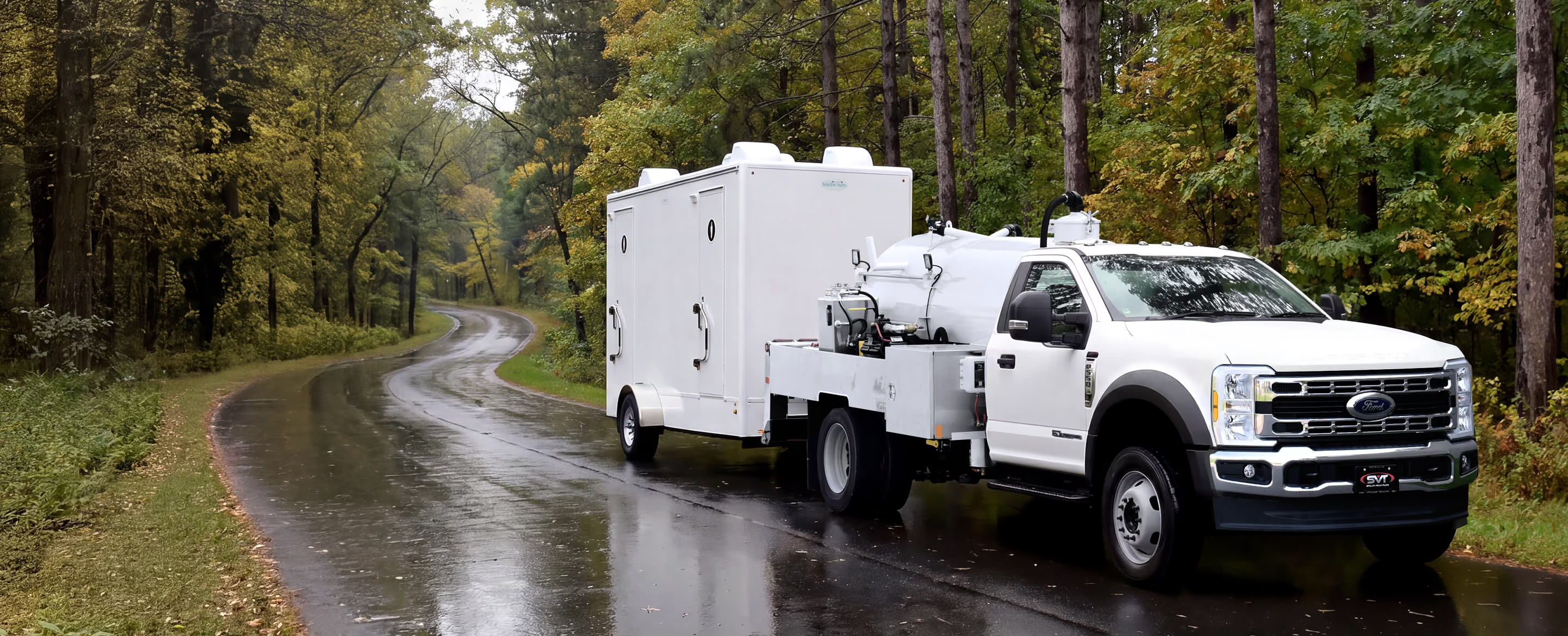
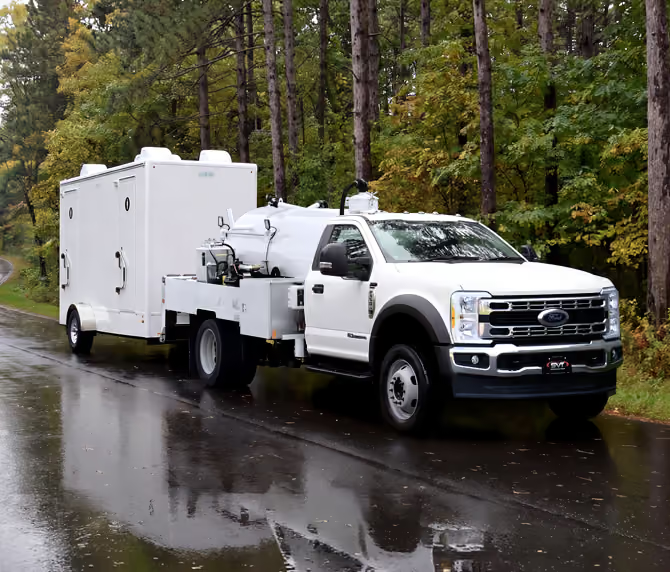
A septic pumping truck is a specialized vacuum truck that removes waste from septic tanks, portable toilets, and grease traps. These trucks use powerful vacuum pumps and large storage tanks to handle liquid waste removal efficiently for proper disposal at approved facilities.
Key septic pumping truck specifications include:
- Tank capacity: 300-5,500 gallons
- Vacuum pump power: Measured in CFM (cubic feet per minute)
- Engine strength: 350-500 HP diesel engines
- Discharge systems: Gravity, pump-assisted, or pressurized
The sanitation industry relies on these specialized vehicles. With over one in five households depending on septic systems, these trucks are essential for waste management businesses. Selecting the right truck for residential or commercial work directly impacts your operational efficiency and profitability.
Tank sizes range from 1,000 gallons for residential jobs to over 5,000 for industrial applications. The investment is significant, as used septic pumping trucks start around $50,000, with new units ranging from $150,000 to over $300,000.
As Michelle Amelse, Vice President of Marketing at Satellite Industries, I’ve spent over 26 years in the portable sanitation industry. My experience has shown me that the right septic pumping truck can transform a business’s growth potential, and smart equipment choices create lasting competitive advantages.
Essential Septic Pumping Truck Specifications and Options
Investing in a septic pumping truck means choosing a core piece of equipment that impacts your daily efficiency and service capabilities. Let’s walk through the key specifications to help you make the smartest choice for your operation.
Tank Capacity and Axle Configurations
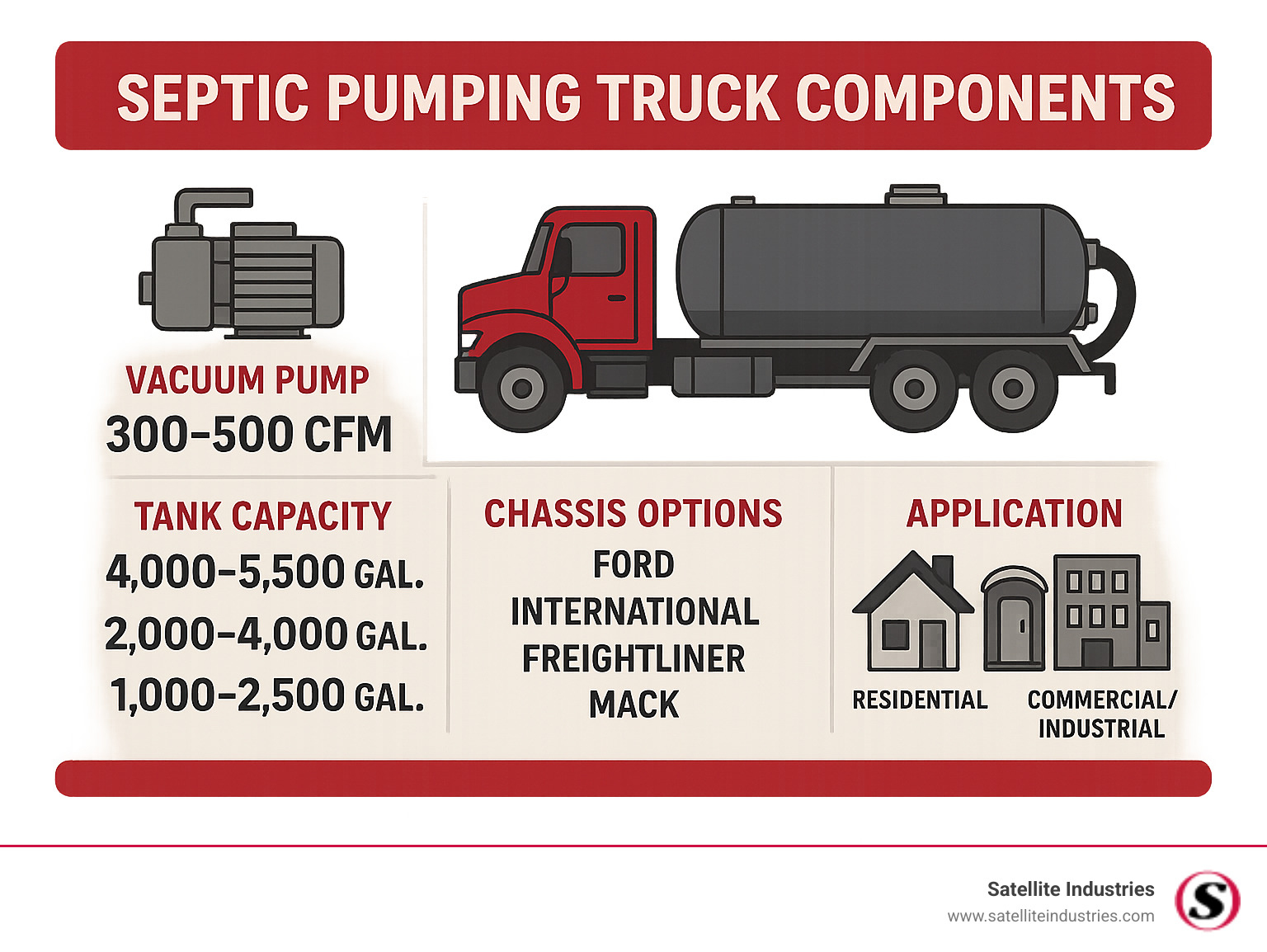
A truck’s tank is its heart. The right size allows you to haul more waste and make fewer trips to the disposal facility, but it must be practical for your routes. Tank capacity is tied to the axle configuration, as more axles allow you to carry more weight legally. The goal is to match hauling needs with road regulations and maneuverability.

Single-axle trucks (1,000-2,500 gallons) are nimble workhorses, perfect for residential work and maneuvering in tight spaces like suburban driveways. They are ideal for servicing home septic systems or portable toilet routes.
Tandem-axle configurations (3,000-4,000 gallons) offer a perfect middle ground. They can tackle multiple residential jobs or smaller commercial accounts, making them a great fit for growing businesses with a mix of customers.
Tri-axle trucks (4,000-5,200 gallons) are powerhouse units for large commercial properties, industrial sites, and municipal contracts. This capacity is essential when pumping restaurant grease traps or handling major construction site waste.
Trailer-mounted units (300-6,600 gallons) offer flexibility for supplementing your fleet or reaching remote locations.
The tank material is as important as its size. Aluminum tanks reduce overall weight, saving fuel and allowing you to carry more waste. Stainless steel is excellent for corrosive materials and offers a long service life. Mild steel is durable with a lower upfront cost, while polyethylene tanks resist chemicals.
Your choice should reflect your daily work. For residential pumping, a smaller aluminum tank may be ideal. For industrial waste with harsh chemicals, stainless steel could save you money in the long run.
Chassis, Engines, and Powertrain
Your septic pumping truck’s chassis is its foundation. Quality options are available from trusted manufacturers, each offering different strengths in fuel efficiency and hauling power.
Diesel engines are the industry standard, providing the necessary torque and reliability. Experts recommend 350 to 500 horsepower for most septic applications, giving you the muscle to handle gross vehicle weights up to 58,000 pounds when fully loaded.
Automatic transmissions simplify operation, especially on routes with frequent stops, reducing driver fatigue. Manual transmissions can offer better fuel economy and more control for experienced drivers.
When speccing your truck, consider your typical routes. Steep hills may require extra horsepower, while flat suburban areas might make fuel efficiency a priority. A slightly larger chassis could save you from buying a second truck as your business expands.
Vacuum Pumps and Discharge Systems
The vacuum pump creates the suction that pulls waste into your truck. Rotary vane pumps are popular for their toughness and ability to handle thick sludge. Liquid ring pumps excel in wet conditions and are forgiving for newer operators.
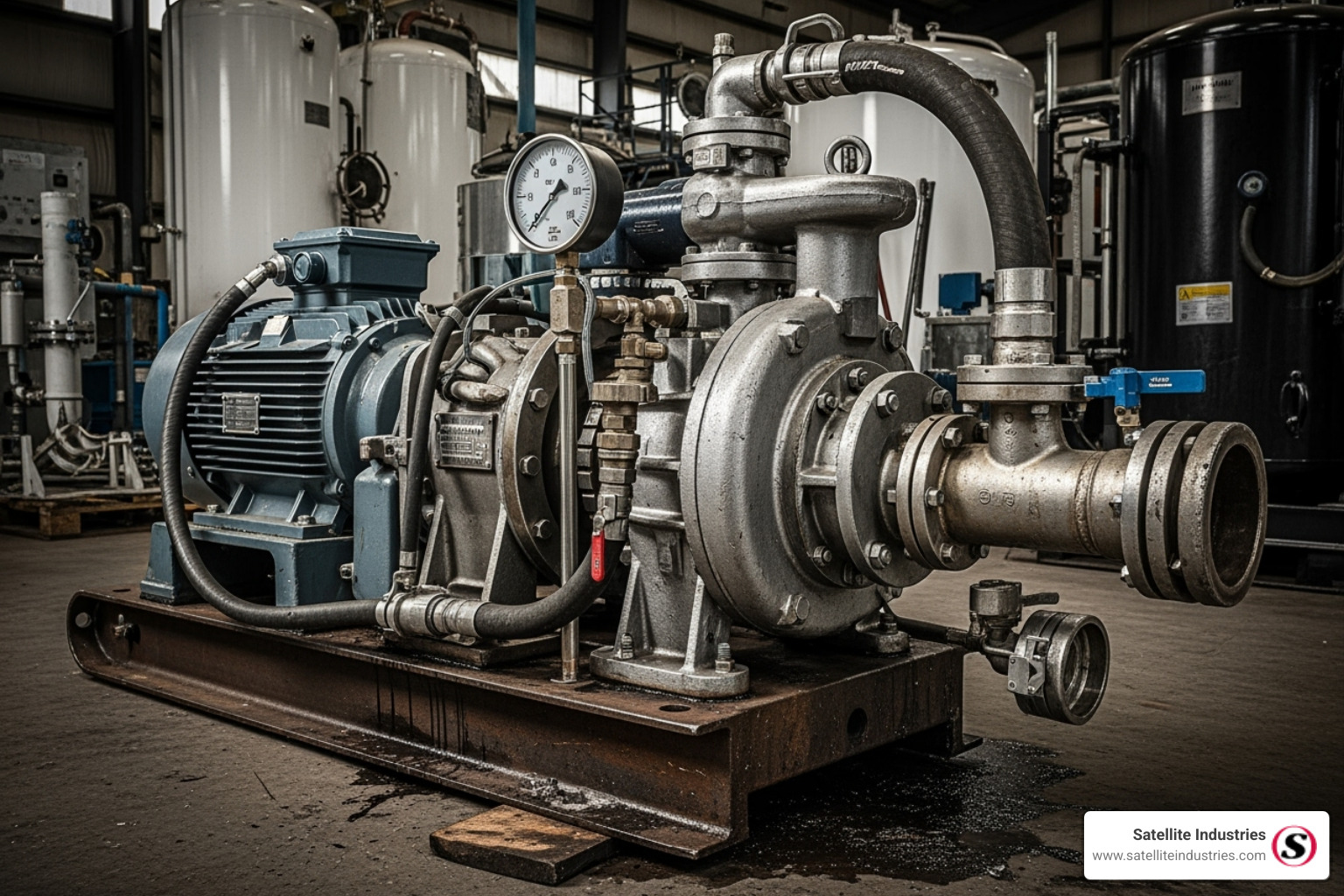
Pump power is measured in CFM (cubic feet per minute). Higher CFM means faster pumping. Low-power pumps (100-300 CFM) work for light residential jobs. Medium-power units (300-800 CFM) handle most commercial applications. High-power pumps (over 800 CFM) are for industrial work where speed is critical.
For discharge, gravity systems are simple and reliable when the disposal site is lower than your truck. Pump-assisted discharge helps push waste uphill or over long distances. Pressurized systems can empty a tank quickly, especially with thicker materials.
Your hoses are your connection to the job. Look for flexible, chemical-resistant materials like PVC or polyurethane. Hose diameters of 2 to 8 inches prevent clogs, and lengths typically range from 16 to 65 feet, though some jobs require up to 200 feet.
Popular Customizations and Upgrades
Smart upgrades are investments that pay for themselves through improved efficiency and expanded services.
Heated systems are essential in cold climates to prevent frozen valves and hoses from shutting down your operation.
High-pressure jetter systems turn your vacuum truck into a combo unit that can clear blockages and clean lines, allowing one truck to do the work of two.
Hydraulic hoists and full-opening rear doors make emptying and cleaning your tank faster and more thorough.
Slide-in pumper units are self-contained systems that can turn a pickup into a vacuum unit for smaller jobs or backup.
Advanced safety features like spill containment systems, emergency shut-offs, and tank level monitoring protect your crew, the environment, and your reputation.
The Business of Buying: Costs, Compliance, and Finding Your Truck
Buying a septic pumping truck is a major business investment that requires careful planning and a clear understanding of your long-term operational needs. The decisions you make now will impact your profitability for years to come.
Understanding the Cost of a Septic Pumping Truck
When considering septic pumping truck costs, it’s important to look beyond the sticker price to the total cost of ownership. The initial investment is significant, but you must also account for what the truck will cost to own and operate over its lifetime.

A new truck typically runs between $150,000 and $300,000, depending on specifications. This gets you the latest technology, full warranties, and the ability to customize the truck to your exact needs. Used trucks offer a more budget-friendly entry point, starting around $50,000. However, always inspect used equipment thoroughly for rust, corrosion, and wear, and check maintenance records.
Key factors influencing the final cost include tank size and material, chassis brand, and vacuum pump power. Customizations like heated systems or jetters also add to the price but can be worthwhile investments in efficiency.
For financing, purchasing means you take out a loan, own the asset, and build equity. This gives you freedom to modify the truck but requires more upfront capital. Leasing offers lower upfront costs and predictable monthly payments, which is ideal if you want to upgrade to newer models regularly. However, you won’t build equity and may face restrictions.
Don’t forget operating costs, which can be substantial. Budget for fuel, maintenance, repairs, insurance (including pollution and liability coverage), tire replacement, and disposal fees.
Navigating Licensing and Long-Term Maintenance
Operating a septic pumping truck requires navigating a web of regulations, licensing, and safety protocols. Understanding these is essential for running a legitimate, safe operation.
Driver qualification is the first step. Drivers need the appropriate commercial driver’s license (CDL) for the vehicle’s weight class, often with specialized training like biohazard handling.
Company registration and permitting vary by region. You may need a commercial vehicle operator’s registration number and an environmental compliance approval. Many regions also require individual truck permits, annual inspections, and monthly reporting.
Record keeping is a regulatory requirement. You must document the quantity and type of septage pumped, service locations, and disposal site information to create a protective audit trail.
Environmental compliance is critical. You must transport septage only to approved disposal facilities and keep different waste types separate.
Long-term maintenance is key to a truck’s longevity. A well-maintained truck can serve you for decades, while neglect leads to costly breakdowns.
- Daily pre-trip inspections of fluids, tires, lights, and brakes are a must.
- Vacuum pump maintenance is crucial. Follow manufacturer guidelines for oil changes and filter replacements.
- Hoses and valves need regular inspection for cracks, leaks, or blockages.
- Tank cleaning prevents buildup and corrosion.
- Chassis and engine maintenance should follow the manufacturer’s schedule.
OSHA safety requirements address real industry hazards. The Occupational Safety and Health Administration provides comprehensive guidelines for workplace safety in the sanitation industry. Sewer gas is deadly, so never enter a septic tank without proper training and confined space entry protocols, including ventilation and respiratory protection. Grounding your truck limits electrostatic discharge risks. Always secure work areas from unauthorized access.
Personal protective equipment is not optional. Operators should always wear appropriate eye protection, gloves, and aprons to protect against contamination.
By choosing durable, user-friendly equipment and maintaining it properly, you’re setting up your business for long-term success. At Satellite Industries, we engineer our trucks specifically for the demanding requirements of the sanitation industry, helping operators across six continents build profitable, safe operations.
Explore durable, user-friendly sanitation trucks and equipment from Satellite Industries
Latest from the Satellite Industries Blog
Need Help {Finding the Right Sanitation Solution?}
Satellite Industries is the largest manufacturer of portable restrooms, restroom trailers, restroom trucks, septic trucks, slide-ins, unit haulers, vacuum technology, modular solutions, consumables and deodorizers.