
Sanitary Waste Management: Solutions for a Cleaner Future
Why Proper Sanitary Waste Management Matters for Public Health
Sanitary waste management is the systematic collection, transport, treatment, and disposal of waste products containing bodily fluids—including feminine hygiene products, incontinence items, diapers, and other personal care materials. This critical process protects public health and maintains hygienic environments across workplaces, events, and public facilities.
Key Components of Effective Sanitary Waste Management:
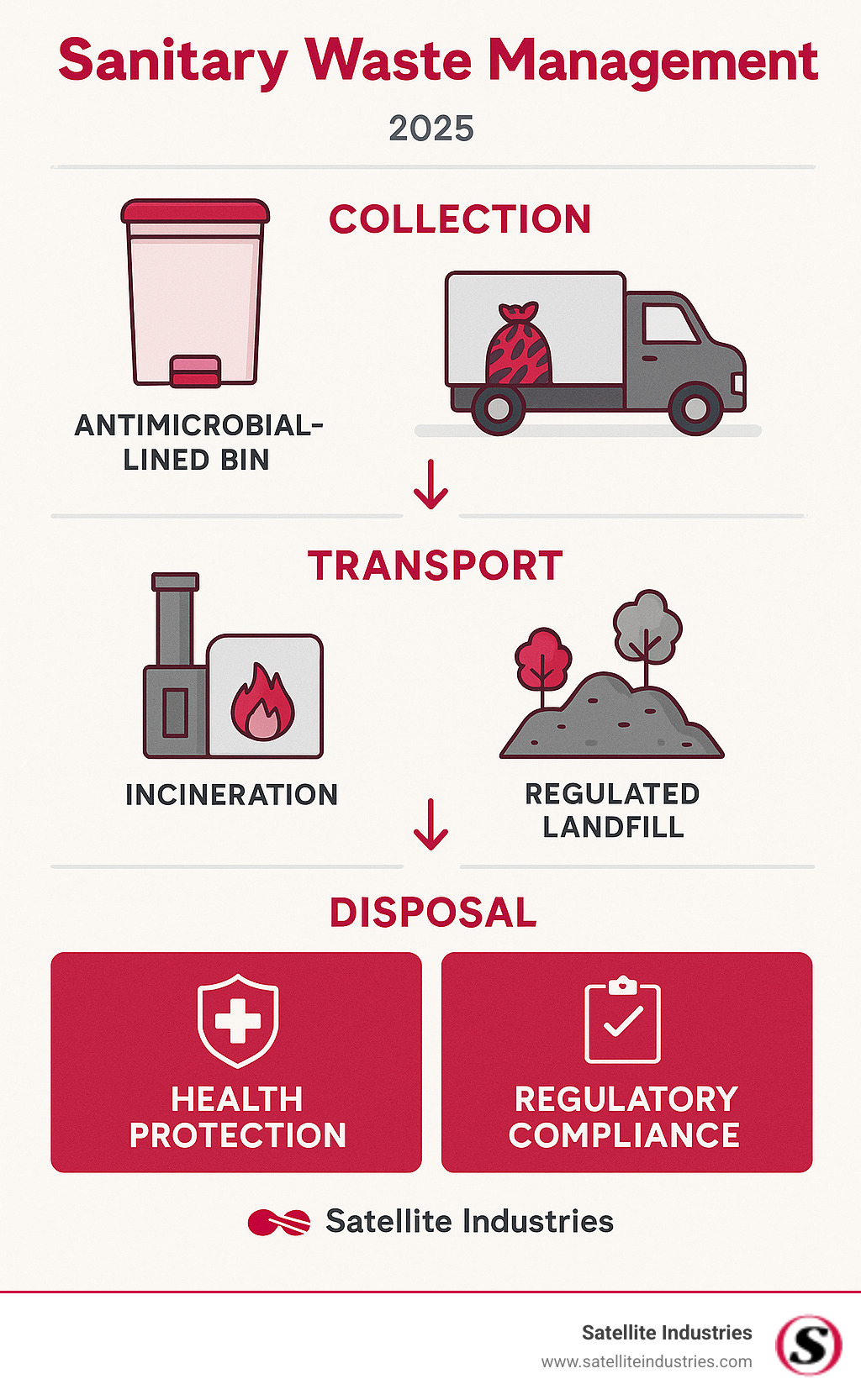
- Proper containment in designated, antimicrobial-lined bins
- Regular collection by licensed waste carriers every 2-6 weeks
- Safe transport in specialized “tiger bags” with black stripes
- Treatment methods including incineration or regulated landfill disposal
- Legal compliance with workplace health and safety regulations
Globally, over two billion tonnes of solid waste are generated annually. Sanitary waste is a significant part of this, requiring special handling as it can contain up to 100 billion bacteria per gram, making proper management essential to prevent disease and contamination.
Poor sanitary waste management leads to more than just health risks; businesses can face legal penalties, reputation damage, and operational disruptions. With over 800 million women menstruating globally at any time, the need for reliable solutions is constantly growing.
I’m Michelle Amelse, VP of Marketing and Customer Success at Satellite Industries. With over 26 years in the portable sanitation industry, my expertise in sanitary waste management systems comes from deep experience in strategic marketing, manufacturing, and team building. I understand the challenges businesses face in managing sanitary waste effectively.
Sanitary waste management terms to learn:
The Importance of Proper Sanitary Waste Disposal
When managing portable restrooms for a large event, proper sanitary waste management is critical—not just for appearances, but for public health. A single gram of waste can contain billions of bacteria, including pathogens that cause serious infections. Improper handling allows these threats to multiply, leading to bacterial growth and disease spread.
The environmental stakes are high. Improper disposal contributes to the more than two billion tonnes of solid waste generated annually, causing landfill pollution and waterway contamination. Many sanitary products are up to 90% plastic and can take 800 years to decompose.
Flushing sanitary waste also damages plumbing systems, causing expensive blockages. For portable sanitation businesses, this leads to costly repairs and dissatisfied customers. Poor sanitary waste management also damages your reputation, as one bad experience can lead to complaints that harm your brand.
Defining and Categorizing Sanitary Waste
Understanding what constitutes sanitary waste helps you provide the right disposal solutions. This includes any non-clinical materials soiled with bodily fluids that could be unpleasant or unsanitary.

Feminine hygiene products (pads, tampons) are a major component. The category also includes incontinence products (adult diapers, pads) and nappies and diapers for all ages. Medical dressings from non-clinical settings, stoma bags, and everyday items like wipes and cotton products also become sanitary waste once used.
The key is recognizing this waste category serves diverse needs. Your customers—whether at construction sites, outdoor events, or emergency response situations—need disposal solutions that accommodate this full spectrum of materials safely and discretely.
The Risks of Negligence
Neglecting sanitary waste management leads to a cascade of problems throughout your operation.
Cross-contamination begins when waste isn’t contained. Bacteria spread from contaminated surfaces to hands and then to high-touch areas, creating a facility-wide health risk.
Unpleasant odors signal poor maintenance, creating discomfort and driving people away from your facilities.
Pest infestation follows, as waste attracts rodents and insects, which become difficult to eliminate and create more health hazards.
Business impacts include legal penalties and fines for non-compliance and severe damage to brand image from being associated with unsanitary conditions.
Employee and customer dissatisfaction can lead to lost contracts and negative reviews. In the portable sanitation industry, your reputation for cleanliness is everything.
Proper sanitary waste management is essential for protecting public health, the environment, and the professional reputation that ensures your business thrives.
Compliance and Legal Obligations for Businesses
While legal compliance may not be exciting, for sanitary waste management, it’s crucial. Understanding your obligations protects your reputation, ensures public health, and helps you run a responsible business.
The core legal principle is simple: a “Duty of Care” means if you generate waste, you are responsible for its proper management. This concept is the foundation of waste regulations worldwide.
In the UK, for example, the Environmental Protection Act 1990 requires businesses to ensure a proper chain of custody for waste from creation to disposal. The Workplace (Health, Safety and Welfare) Regulations 1992 specifically mandate that employers provide suitable facilities for sanitary disposal. This is a legal requirement, not an optional amenity.
These principles are global. Similar frameworks exist in Africa, the Americas, Australia, and beyond. As a portable sanitation provider, we help clients steer these requirements wherever they operate.
Understanding the Legal Landscape of Sanitary Waste Management
Legal requirements for sanitary waste management follow a logical progression from both a health and business perspective.

Providing adequate facilities means having enough accessible sanitary bins in female and unisex restrooms to handle the expected volume without overflowing.
Waste segregation is crucial. Sanitary waste is “offensive waste.” It’s not infectious like clinical waste but requires special handling and must be segregated from regular trash.
Correct bin types and placement matter. Use foot-pedal or touch-free bins for hygiene. Place them discreetly but conveniently within toilet cubicles.
Professional collection arrangements are non-negotiable. Licensed waste carriers must collect, transport, and dispose of sanitary waste according to strict protocols.
Record keeping for two years is a must. Waste transfer notes document collection details, providing proof of responsible management that regulators require.
Creating a Compliant Workplace Environment
Compliance is about creating an environment where good practices are second nature.
Clear waste policies form the foundation. Simple signage with pictures is more effective than lengthy text.
Employee training and communication makes a difference. Train employees during orientation and use regular reminders to maintain good habits.
Color-coded and labeled bins eliminate guesswork. Use clearly marked and colored bins (yellow is common for sanitary waste) so users know where things belong.
Regular maintenance schedules keep things running smoothly. Consistent service prevents overflowing bins and maintains a professional appearance.
The history of sanitary bin legislation shows how science drives regulation. Research in the 1980s on bacteria in used menstrual products led to the development of bactericide treatments and the 1990s laws requiring safe disposal methods.
Ensuring accessibility for all users completes the picture. Bins should be accessible to everyone, including people with disabilities. Consider height, placement, and operation methods. Thoughtful design, like Braille labeling on some modern bins, serves everyone’s needs.
Getting these elements right makes compliance natural and creates facilities people want to use, which benefits the bottom line.
The Essentials of Effective Sanitary Waste Management
For portable sanitation providers, every detail matters. Your reputation depends on delivering clean, reliable facilities. Effective sanitary waste management is your key to standing out.
Your customers, whether hosting a wedding or managing a construction site, need peace of mind. Mastering waste management essentials provides that, going beyond basic requirements. Exceptional service requires a seamless sanitary waste management system, from the equipment you choose to the training you provide your teams.
Best Practices for On-Site Sanitary Waste Management
Success in the field comes down to getting the fundamentals right every time.
Providing durable, no-touch sanitary bins is the starting point. Choose foot-operated or sensor-based systems to minimize contact. Our bins are engineered to withstand high-traffic use without failing.
Using antimicrobial liners is a detail that pays dividends. These specialized liners fight bacterial growth and control odors between service visits, which is crucial for heavily used sites.
Establishing a frequent service schedule requires flexibility. A festival may need daily service, while a small construction site may only need weekly. The key is to scale service based on actual usage.
Ensuring discreet and accessible bin placement means thinking like an end user. Place bins for both privacy and convenience, typically inside individual cubicles where they are easy to reach but not in the way.
Training for service personnel on hygienic handling is critical. Proper PPE, safe removal techniques, and thorough cleaning protect your team and facility users. High standards reflect in your service quality.
The Journey of Waste: Collection to Disposal
Once waste is contained, the real logistics of sanitary waste management begin, involving specialized equipment and regulated processes.
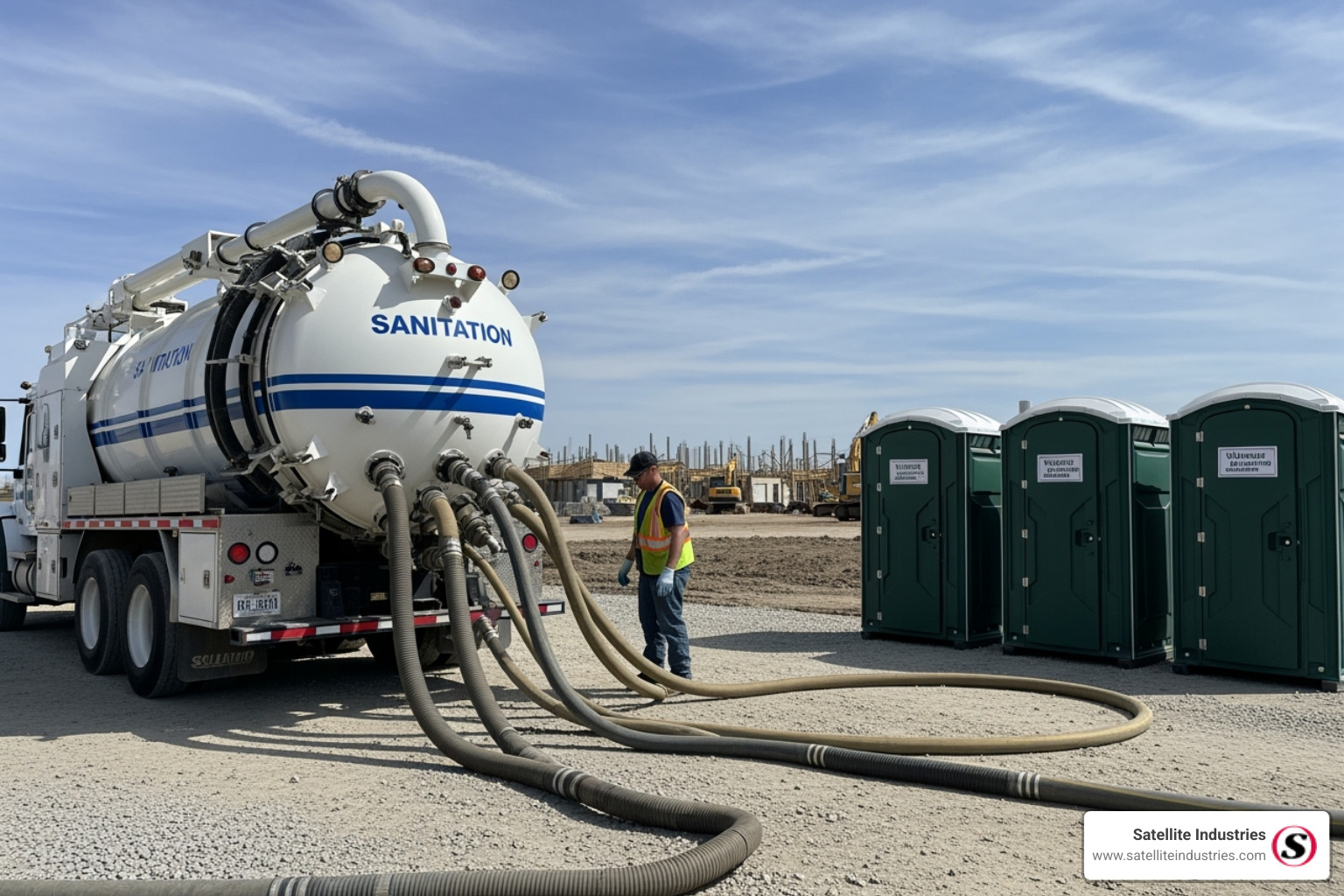
Segregated collection is your first defense against contamination. Sanitary waste travels in yellow ‘tiger bags’ with black stripes, signaling the need for special handling.
Transportation by licensed carriers is where quality equipment pays off. Licensed carriers use specialized vehicles for safe waste removal. Our vacuum technology solutions are engineered for this demanding work, making collection faster and safer. You can explore our durable vacuum technology solutions to see how the right equipment improves the process.
When it comes to disposal methods, regulated pathways ensure waste is handled responsibly. Incineration is the gold standard, destroying pathogens and reducing volume. Landfill disposal is used for treated waste but is a lesser option due to environmental concerns. Waste-to-energy processes are an emerging alternative, converting waste into energy.
This entire journey is modern sanitary waste management in action. When every link works—from durable equipment to reliable service—you deliver facilities people can use with confidence, knowing hygiene and safety are prioritized.
Innovations in Sanitary and Menstrual Waste Management
The sanitary waste management landscape is rapidly changing, driven by sustainability and technology. This shift creates opportunities for our clients to offer more eco-conscious and efficient services.
This evolution responds to environmental challenges, like the fact that conventional pads are 90% plastic and take 800 years to decompose. The future lies in solutions that protect both public health and the planet.
Eco-Friendly Products and Solutions
The move toward sustainable sanitary products is gaining momentum. Biodegradable sanitary products, made from plant-based materials, break down much faster than traditional plastic-based options.
Reusable menstrual products like silicone cups and period underwear are becoming mainstream, offering significant environmental and cost benefits. With over 800 million women are menstruating at any given time, the potential impact of reusable options is massive.
Waste reduction strategies, promoted through public education, encourage better disposal habits, which benefits portable sanitation providers.
Innovative recycling technologies are also emerging. Innovative companies are pioneering processes to turn sanitary napkin waste into usable byproducts, a crucial step toward a circular economy.
For our clients, supporting these eco-friendly innovations means positioning themselves at the forefront of sustainable portable sanitation.
Technological Advancements
Technology is making sanitary waste management more efficient, hygienic, and environmentally sound.
Smart bins with fill-level sensors monitor fill levels in real-time, optimizing collection schedules to prevent overflows and reduce unnecessary service visits. This cuts operational costs and improves customer satisfaction.
The Internet of Things (IoT) for efficient collection routes enables dynamic route planning, dispatching vehicles only when needed. This reduces fuel consumption, lowers emissions, and streamlines service.
Robotic sorting systems powered by AI show promise for sorting complex waste streams, enabling more efficient material recovery and precise treatment.
Blockchain for waste tracking can provide an immutable ledger to track waste from generation to disposal, increasing transparency, accountability, and compliance verification.
Advanced recycling techniques are being explored, such as pyrolysis and gasification, to break down sanitary waste into base components for reuse or energy recovery.
These advancements align with our commitment to engineering durable, user-friendly equipment. By embracing them, our clients can offer smart, sustainable, and efficient sanitary waste management solutions that provide a competitive edge.
Frequently Asked Questions about Sanitary Waste Management
Over the years, I’ve answered many questions about sanitary waste management. People want straightforward, actionable answers. Here are the most common questions and our practical insights.
Are sanitary bins a legal requirement in all business restrooms?
Yes, in most regions, providing sanitary bins is a legal requirement. In the UK, for example, the Workplace (Health, Safety and Welfare) Regulations 1992 and the Environmental Protection Act 1990 mandate suitable disposal means in washrooms, especially female and unisex facilities. This requirement is nearly universal, with similar legal frameworks found across the globe. The core principle is always protecting public health. For portable sanitation providers, this is both a responsibility and an opportunity to help customers meet their legal obligations. Our restrooms are engineered to make compliance a built-in feature.
What is the difference between sanitary waste and clinical waste?
This distinction is based on risk. Sanitary waste, also called ‘offensive’ or ‘hygiene’ waste, includes items like feminine hygiene products, nappies, and incontinence pads. While it contains bodily fluids, it’s not considered infectious. Clinical waste, from healthcare settings, is potentially infectious or hazardous (e.g., contaminated with blood or sharps) and requires much stricter disposal protocols. The portable sanitation industry primarily deals with sanitary waste. Understanding this distinction is key for choosing the correct disposal methods and carriers, which involves a more manageable, though still critical, regulatory burden.
How often should sanitary bins be serviced?
This depends entirely on usage. High-traffic locations like major events may need daily service. Medium-traffic environments like offices or construction sites often require weekly or bi-weekly service. Lower-traffic areas might only need service every two to four weeks. The goal is to prevent overflow, control odors, and maintain hygiene. Smart bin technology can help optimize schedules, but communication with customers about usage is always key. Servicing isn’t just emptying; it includes thorough cleaning, sanitizing, and replacing antimicrobial liners. This comprehensive approach to sanitary waste management ensures facilities remain pleasant and reflects well on your business.
Conclusion
Proper sanitary waste management is more than a compliance issue; it’s about creating safe, comfortable, and respectful environments. Your clients trust you to protect their users’ health and dignity, and every detail of your service matters to the real people who rely on your facilities.
As regulations evolve, your ability to provide compliant, innovative solutions is a key competitive advantage. Our industry’s accept of sustainability shows that environmental responsibility and excellent service can coexist, and delivering these forward-thinking solutions positions you as a market leader.
At Satellite Industries, we are committed to engineering durable, user-friendly equipment—including portable restrooms, vacuum technology, and sanitation solutions—to help you deliver exceptional service that keeps communities healthy. We understand that sanitary waste management is about people.
Together, we’re building a cleaner, healthier future, one portable restroom at a time.
Latest from the Satellite Industries Blog
Need Help {Finding the Right Sanitation Solution?}
Satellite Industries is the largest manufacturer of portable restrooms, restroom trailers, restroom trucks, septic trucks, slide-ins, unit haulers, vacuum technology, modular solutions, consumables and deodorizers.