The Definitive Guide to Buying Safety Apparel
Safety Apparel: Ultimate 2025 Buying Guide
Why Safety Apparel is Critical for Worker Protection and Business Success
Safety Apparel encompasses protective clothing designed to shield workers from workplace hazards while ensuring visibility and compliance with safety regulations. The global safety apparel market, valued at $29.5 billion in 2022, is projected to reach $47.8 billion by 2030, reflecting the growing emphasis on worker protection across industries.
Essential Safety Apparel Categories:
- High-Visibility Clothing – ANSI/CSA compliant vests, jackets, and shirts for traffic and construction zones
- Flame-Resistant (FR) Apparel – Protection against flash fires and arc flash incidents in electrical and industrial work
- Arc-Rated (AR) Clothing – Specialized protection for electrical workers following NFPA 70E standards
- Weather-Specific Gear – Insulated, cooling, and moisture-wicking apparel for extreme conditions
- Specialized Protection – High-heat, cut-resistant, and chemical-resistant clothing for specific hazards
For rental and distribution businesses, offering quality safety apparel means protecting your customers’ workers while meeting legal compliance requirements. The right safety clothing can prevent severe injuries, reduce liability, and demonstrate your commitment to worker well-being.
Whether you’re stocking Class 2 safety vests for construction sites or flame-resistant clothing for industrial facilities, understanding the standards and features that define quality safety apparel is essential for serving your customers effectively.
As Michelle Amelse, Vice President of Marketing and Customer Success at Satellite Industries with over 26 years of experience in safety and sanitation industries, I’ve seen how proper Safety Apparel protects workers and supports business operations. This guide will help you make informed purchasing decisions that benefit both your business and the workers who depend on quality protective gear.

A Buyer’s Guide to the Main Types of Safety Apparel
When you’re building an inventory of Safety Apparel, it’s like putting together a protective puzzle for your customers. Each piece needs to fit perfectly with the specific hazards their workers face every day. The key is understanding that not all safety gear is created equal – what protects a parking lot attendant won’t necessarily keep an electrical worker safe.

Think of your inventory as a safety toolkit. Your customers rely on you to have the right solution when they need it. A construction company might need high-visibility vests one week and flame-resistant shirts the next. By stocking a diverse range of quality Safety Apparel, you become their go-to partner for keeping workers protected and compliant.
The beauty of offering comprehensive safety solutions is that it builds trust. When customers know you understand their challenges and have the right gear ready, they’ll keep coming back. It’s not just about selling products – it’s about being part of their safety team.
Choosing the Right High-Visibility Safety Apparel
Getting workers noticed in the right way can literally save lives. High-visibility Safety Apparel follows the ANSI/ISEA 107 standard, which breaks down protection into three performance classes based on how much fluorescent material and reflective tape a garment has.
Class 1 gear works great for workers in low-traffic areas like warehouses or parking lots where vehicles move slowly. It’s the basic level of protection that still meets safety requirements.
Class 2 steps things up for workers around faster-moving traffic – think construction zones, roadside work, or busy industrial sites where vehicles travel up to 50 mph. This is probably your bread-and-butter inventory item since so many job sites require Class 2 protection.
Class 3 offers maximum visibility for the most dangerous situations. Workers on highways, in heavy traffic, or working at night need this level of protection. Class 3 garments include sleeves because they help drivers recognize the human form, especially against busy backgrounds.
The magic happens with fluorescent colors like lime-yellow and orange that pop during the day, combined with retroreflective tape that bounces headlight beams back to drivers from up to a quarter-mile away. It’s simple science that saves lives.
Here’s something important – safety shouldn’t exclude anyone. Make sure your inventory includes extended sizing up to 8XL and women-specific fits. A poorly fitting safety vest isn’t just uncomfortable, it can be dangerous if it doesn’t provide proper coverage or restricts movement.
Understanding Flame-Resistant (FR) Safety Apparel
When workers face fire hazards or electrical dangers, regular clothing becomes a liability. That’s where flame-resistant and arc-rated Safety Apparel becomes essential protection equipment.
Flame-resistant clothing is designed to self-extinguish when the fire source is removed, preventing burns from getting worse. Arc-rated clothing goes further by protecting specifically against electrical arc flash incidents, which can reach temperatures of 35,000°F – four times hotter than the sun’s surface.
The standards that govern this specialized gear include NFPA 70E for electrical safety and NFPA 2112 for flash fire protection. When you’re looking at arc-rated garments, pay attention to the Arc Thermal Performance Value (ATPV). This number tells you how much incident energy the fabric can handle before causing a second-degree burn.
Industries like utilities, oil and gas, and heavy manufacturing depend on this protection daily. Workers in these fields need clothing that not only protects but allows them to do their jobs effectively. The best FR/AR garments balance protection with comfort and mobility.
Some of these fabrics have interesting origins – certain flame-resistant materials were actually developed for military use before finding their way into industrial applications. Others are specifically engineered for electrical work, prioritizing both safety and the flexibility workers need to handle complex tasks.
Specialized and Weather-Specific Gear
Safety Apparel extends far beyond the basics when workers face extreme conditions or unique hazards. In foundries and metalworking facilities, specialized gear protects against molten splash and extreme heat while staying lightweight enough for workers to move freely.
Cold weather presents its own challenges. Insulated safety gear keeps workers warm in freezing conditions without turning them into marshmallows who can’t do their jobs. The trick is finding that sweet spot between warmth and mobility.
But let’s talk about the other extreme – heat stress is a real danger as temperatures rise. Cooling vests and moisture-wicking fabrics have become game-changers for outdoor workers. Some cooling products can provide relief for up to five hours, and anti-microbial treatments help fight odor buildup during long, hot days.
Proper fit matters more than you might think. A safety garment that doesn’t fit correctly can actually create hazards instead of preventing them. This is especially important for women workers and big and tall workers who have historically been underserved by safety apparel manufacturers.
The best Safety Apparel follows a simple philosophy: made to move, designed to work. When workers feel comfortable and unrestricted in their protective gear, they’re more likely to wear it consistently – and that’s when safety programs really succeed.
Key Features That Define Quality and Functionality
When you’re evaluating Safety Apparel for your inventory, don’t just settle for gear that barely meets minimum standards. Your customers depend on you to provide clothing that will protect their workers day after day, shift after shift. Quality safety gear should perform under pressure, last through countless wash cycles, and keep workers comfortable enough to focus on their jobs instead of their clothing.
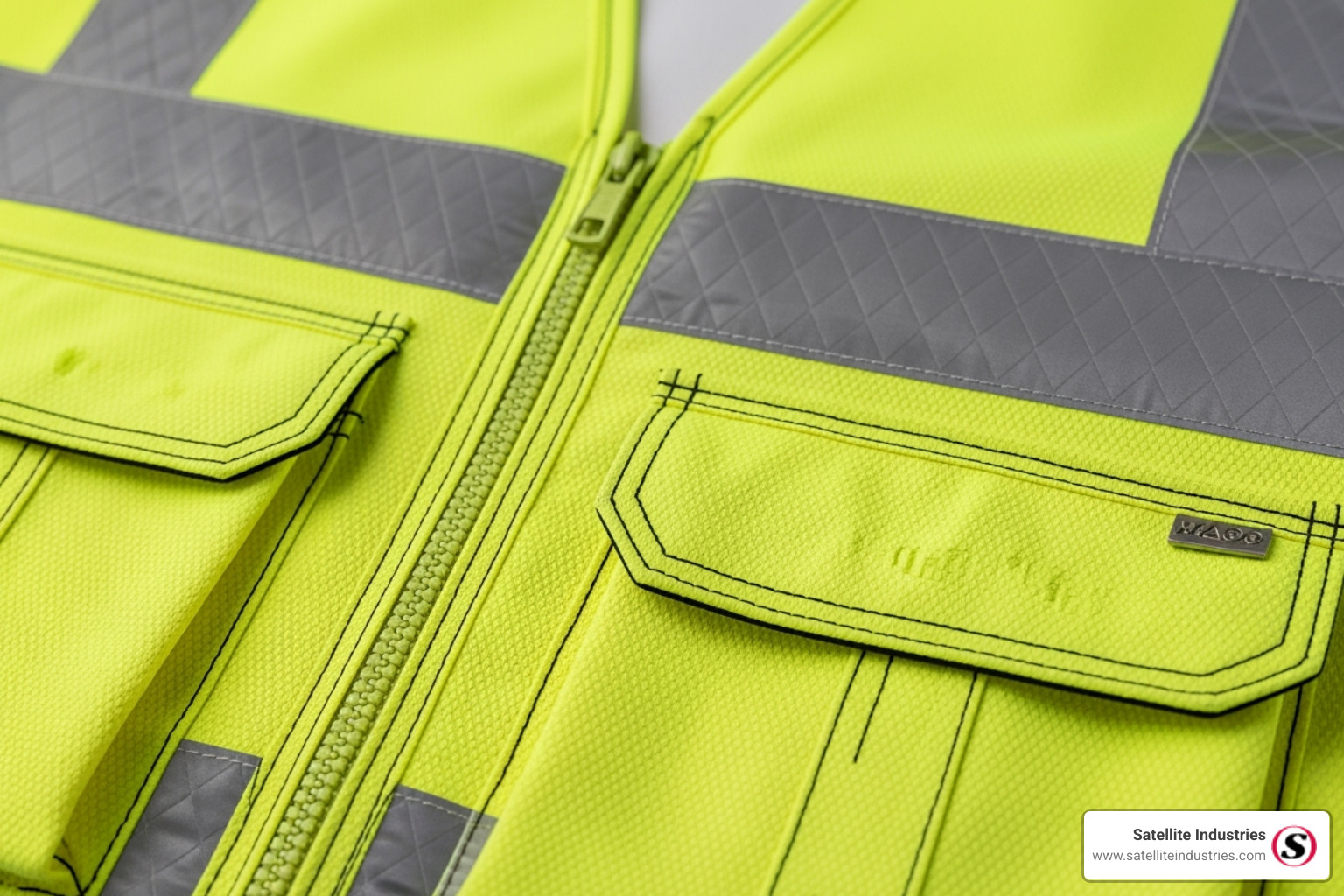
Material durability forms the foundation of any quality safety garment. Look for fabrics with appropriate denier ratings – heavy-duty vests might feature 500D material for maximum toughness, while summer versions use lighter 150D fabrics that still resist tears and abrasion. The best materials strike that perfect balance between protection and comfort, much like how we engineer our products for both durability and user-friendliness.
Reinforced stitching and bartacks separate professional-grade apparel from budget alternatives. Weak seams are where safety gear fails first, often at the worst possible moment. Quality garments feature power-stitched bartacks at stress points and double-stitching where workers move and stretch most. These details might seem small, but they make the difference between gear that lasts months and gear that lasts years.
Comfort features can make or break worker acceptance of safety gear. Breathable mesh panels strategically placed on sides or backs help workers stay cool during hot summer days. Some designs include overlapping shoulder vents that accommodate D-ring harnesses – it’s these thoughtful touches that show a manufacturer truly understands how their products get used in the real world.
Ergonomic pocket design goes far beyond just sewing on a few pouches. Well-designed Safety Apparel features mirrored pocket layouts so both right and left-handed workers can access their tools easily. Large back pockets accommodate everything from flagging rolls to tablets, while squared-off pocket lids with longer Velcro strips keep contents secure even when pockets are stuffed full. Some vests even feature shorter fronts for easy access to pant pockets and tool belts, paired with longer backs that prevent rain from soaking through.
For workers who carry heavy equipment all day, padded shoulders aren’t a luxury – they’re a necessity. Tapered shoulder pads prevent straps from slipping while providing crucial cushioning that reduces fatigue. After wearing gear for 8-10 hours, this comfort feature becomes a safety feature by keeping workers alert and focused.
The smallest details often prove most valuable in daily use. Tool loops and grommets keep radios, flagging tape, and other essential items organized and accessible. These simple additions prevent workers from fumbling around looking for tools when they need them most.
The best Safety Apparel comes from manufacturers who actually listen to the people wearing their products. Continuous redesign based on real user feedback and rigorous field testing ensures that safety gear genuinely improves both protection and productivity. When you stock quality apparel with these thoughtful features, you’re not just meeting compliance requirements – you’re helping your customers create safer, more efficient worksites.
Navigating Compliance and Verifying Certifications
When it comes to Safety Apparel, there’s no middle ground on compliance – it’s absolutely essential. Think of safety standards as the foundation that everything else builds upon. Without proper compliance, you’re not just risking your business; you’re putting workers’ lives on the line.
Why compliance matters so much: First and foremost, it’s about keeping people safe. Standards like ANSI/ISEA 107 for high-visibility gear and NFPA 70E for electrical safety weren’t created in a boardroom – they’re based on real-world incidents and extensive research into what actually protects workers from harm.
From a business perspective, regulatory bodies like OSHA don’t mess around. They require specific types of Safety Apparel for various workplace hazards, and the penalties for non-compliance can be severe. We’re talking hefty fines, legal headaches, and damage to your reputation that can take years to repair.
There’s also the insurance angle to consider. Many business insurance policies specifically require adherence to safety standards. If your customer gets hurt while wearing non-compliant gear you provided, it could void their coverage entirely – leaving everyone exposed to massive liability.
Reading product labels becomes second nature once you know what to look for. Every piece of certified Safety Apparel should clearly display its compliance credentials. For high-visibility garments, you’ll see the ANSI/ISEA 107 standard (or CSA Z96 in Canada) along with the performance class like Class 2 or Class 3, plus the type designation such as Type R for roadway use or Type O for off-road work.
Flame-resistant and arc-rated clothing will show NFPA 70E or NFPA 2112 compliance, along with the crucial ATPV rating that tells you exactly how much thermal energy the fabric can handle before causing second-degree burns. These labels aren’t just regulatory paperwork – they’re your guarantee that the garment has been rigorously tested.
Third-party testing adds credibility that you simply can’t get from manufacturer claims alone. Reputable companies don’t just say their products meet standards – they prove it by submitting them to independent testing laboratories. These facilities put Safety Apparel through demanding tests to verify every aspect of performance.
When you’re evaluating suppliers, always ask to see third-party testing reports. It’s the difference between trusting someone’s word and having documented proof that the gear will perform when it matters most.
Standards evolve constantly as researchers learn more about workplace hazards and develop better protection methods. What met requirements five years ago might not cut it today. That’s why staying current with standard revisions is crucial for your business.
We make it our business to monitor these changes continuously, ensuring our products stay ahead of the curve. The safety landscape moves fast, and partnering with suppliers who demonstrate deep expertise in PPE requirements and provide ongoing compliance support can save you countless hours of research and worry.
More about OSHA safety resources
The Business Advantage: Customization and Inventory Management
Smart distributors and rental providers know that offering high-quality, compliant Safety Apparel is just the beginning. The real competitive edge comes from adding value through customization services and managing your inventory like a pro.
The Power of Branded Safety Gear
There’s something special about seeing a crew suited up in matching, branded Safety Apparel. It’s not just about looking professional (though that certainly matters). When workers wear gear with their company logo, it builds team pride and creates instant recognition on busy job sites. Your customers get walking advertisements for their business, while their workers feel like they’re part of something bigger.
For your business, offering customization transforms you from just another supplier into a true partner. It’s a service that commands better margins and keeps customers coming back, especially when they see how their branded gear impacts their own professional image.
Making Customization Work for You
The good news is that there are several proven methods to add logos and designs to safety gear. Screen printing remains the go-to choice for large orders with bold, simple designs. Embroidery gives that premium, textured look that really makes logos pop, especially on polo shirts and jackets. For smaller runs or complex designs, heat transfer offers flexibility and quick turnaround times.
Before jumping into customization services, though, you’ll want to nail down the details with your suppliers. Understanding minimum order quantities helps you set realistic expectations with customers. Knowing typical lead times means you can promise delivery dates with confidence. And here’s a critical one for FR clothing: make sure any customization materials are also flame-resistant, so you don’t compromise the garment’s protective qualities.
Building a Profitable Inventory Strategy
The most successful distributors we’ve worked with treat inventory management as both an art and a science. They build strong relationships with key suppliers, which often leads to better pricing and early access to new products. These savings can then be passed along to customers, creating a win-win situation.
Smart purchasing means staying ahead of seasonal demands and industry trends. Construction season ramp-up, utility maintenance schedules, and weather patterns all affect what your customers need and when they need it. Custom fitting services have become a real differentiator too. Workers come in all shapes and sizes, and proper fit isn’t just about comfort – it’s about safety and compliance.
The businesses that really thrive understand that they’re not just moving products; they’re solving problems. When you can offer the right Safety Apparel in the right sizes with professional customization and reliable delivery, you become indispensable to your customers’ operations.
Questions to Ask Before Offering Customization:
- What are the minimum order quantities for each customization method?
- What are the typical lead times for customized orders?
- What file formats are required for customer logos and designs?
- How does the customization method affect the integrity or compliance of the Safety Apparel (especially for FR/AR garments)?
- What is the cost structure for different customization options?
- Can you offer mock-ups or samples before a full production run?
- What are the care instructions for customized garments?
- Do you have in-house capabilities or reliable partners for customization?
Frequently Asked Questions
After working with rental and distribution businesses for years, I’ve noticed the same thoughtful questions come up time and again about Safety Apparel. These aren’t just technical queries – they’re the real-world concerns that help you serve your customers better and keep their workers safe.
What’s the difference between ANSI Class 2 and Class 3 vests?
This is probably the most common question we hear, and for good reason. The choice between these two classes can literally be a matter of life and death on a busy worksite.
Class 2 vests are your workhorses for moderate-risk environments. They need at least 201 square inches of that bright fluorescent background material and 77.5 square inches of retroreflective tape. Think construction zones, parking lots, or utility work where traffic moves up to 50 mph. These vests do an excellent job keeping workers visible during the day and in low-light conditions.
Class 3 vests step up the protection significantly. They require 310 square inches of fluorescent material and 124 square inches of retroreflective tape – but here’s the key difference: they must have sleeves. Those sleeves aren’t just extra fabric; they’re crucial for defining the human form, especially when someone’s moving around heavy equipment or working near high-speed traffic over 50 mph.
What’s really clever is that some Class 2 vests now come with zip-in sleeves, letting workers upgrade to Class 3 protection when conditions change. It’s like having two safety levels in one garment – perfect for businesses that need flexibility.
How often should safety apparel be replaced?
This question always makes me think about a pair of work boots I had years ago. I loved them so much I kept wearing them long after they should have been retired – until someone pointed out the sole was nearly worn through! Safety Apparel works the same way.
The honest answer is: it depends on how hard the gear works. A vest worn daily on a dusty construction site will need replacing much sooner than one used occasionally for warehouse work. But there are clear warning signs to watch for.
Fading fluorescent colors are a dead giveaway. That bright lime-yellow that once screamed “notice me” shouldn’t look like it’s been through a hundred wash cycles. Damaged retroreflective tape is even more serious – if it’s cracking, peeling, or looks dull, it’s not doing its job of bouncing light back to drivers.
Any visible damage like rips, burns, or chemical stains means the garment needs to go immediately. Even small tears can compromise protection, especially in flame-resistant clothing where a tiny hole can become a dangerous heat pathway.
Most manufacturers provide replacement guidelines, but when in doubt, replace it. Your customers’ workers are worth more than the cost of a new vest.
Can I add a company logo to a flame-resistant garment?
Absolutely – but this is where we need to be extra careful. Adding logos to Safety Apparel is a great way to help your customers build team identity and look professional, but with flame-resistant gear, there’s no room for shortcuts.
The golden rule is simple: everything that touches an FR garment must also be FR-rated. That means the embroidery thread, the patch material, even the adhesive used for heat transfers. Why? Because regular materials can melt, ignite, or conduct heat right through the protective fabric, creating exactly the kind of injury pathway the garment was designed to prevent.
I’ve seen well-meaning customization jobs that turned protective gear into potential hazards. A regular polyester thread might seem fine, but in a flash fire, it could melt and cause severe burns. The same goes for standard vinyl heat transfers or non-FR patches.
The good news is that FR-rated customization materials are readily available. Work with suppliers who understand these requirements and can provide proper documentation. When in doubt, check with the garment manufacturer – they often have approved customization partners and specific guidelines.
Your customers are counting on you to maintain the integrity of their protective gear. A properly customized FR garment keeps workers safe while building brand recognition – that’s a win-win worth doing right.
Conclusion: Equipping Your Customers for a Safer Tomorrow
The world of Safety Apparel can feel overwhelming at first glance, but when you break it down, it’s really about one simple truth: keeping people safe so they can go home to their families every night. That’s what drives everything we do, and it’s what should guide every purchasing decision you make for your inventory.
Think of yourself as more than just a supplier – you’re a safety partner. Your customers trust you to understand the difference between a basic Class 2 vest and one with reinforced stitching that won’t fall apart after a month of hard use. They count on you to know why ATPV ratings matter for their electrical crews and which cooling vests will actually help their workers beat the summer heat.
When you’re evaluating Safety Apparel for your business, keep these four pillars in mind: compliance ensures you’re meeting legal requirements and truly protecting workers; durability means investing in garments that can handle real-world abuse without compromising safety; function covers all those thoughtful design elements like ergonomic pockets and breathable panels that make workers’ lives easier; and fit recognizes that safety gear only works when it fits properly – whether you’re outfitting a petite woman or someone who needs an 8XL.
The safety industry is constantly evolving, with new standards, better materials, and smarter designs emerging regularly. Staying informed about these changes isn’t just good business – it’s how you become the go-to expert your customers rely on. When they have questions about NFPA updates or need advice on customizing FR garments, they should think of you first.
At Satellite Industries, we understand the importance of advanced engineering for durability and user-friendliness. That same philosophy applies to every piece of Safety Apparel you choose for your inventory. Quality isn’t just about meeting minimum standards – it’s about exceeding them in ways that matter to the people wearing the gear day after day.
Your role in the safety ecosystem matters more than you might realize. Every high-quality vest you stock, every properly fitted FR shirt you provide, every compliant hard hat you deliver contributes to safer job sites across your community. That’s something to be proud of.
Explore our range of durable safety products for your business
Latest from the Satellite Industries Blog
Need Help {Finding the Right Sanitation Solution?}
Satellite Industries is the largest manufacturer of portable restrooms, restroom trailers, restroom trucks, septic trucks, slide-ins, unit haulers, vacuum technology, modular solutions, consumables and deodorizers.