Rolling in Style: The Best Showers for Wheelchair Users
Why Roll-In Showers Transform Independence for Wheelchair Users
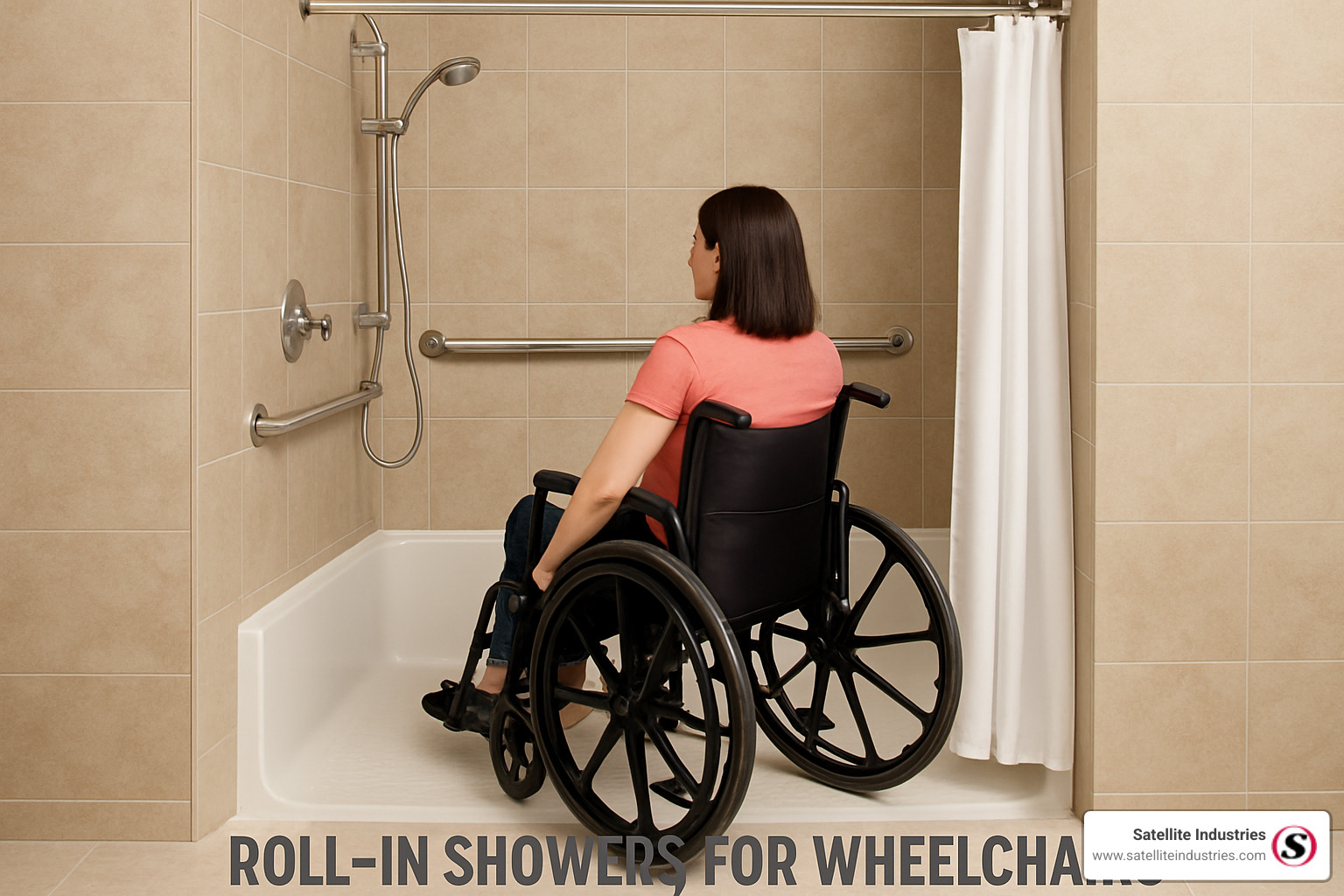
Roll in showers for wheelchairs are barrier-free shower stalls that allow direct wheelchair access without steps, curbs, or thresholds. They’re designed to restore dignity and independence for users with mobility challenges.
Key Features of Roll-In Showers:
– Zero threshold entry – no step to steer
– 60″ x 30″ minimum dimensions for wheelchair maneuvering
– Slip-resistant flooring to prevent falls
– Grab bars on all walls for safety
– Handheld shower heads for seated use
– Reinforced walls to support accessories
Main Types Available:
– Permanent installations – built into existing bathrooms ($10,000+)
– Portable units – connect to sink faucets, no remodel needed ($800-$8,000)
– Modular kits – prefab sections for easier installation ($1,200+)
As one quadriplegic user shared: “I now get a shower every day and that has become the best part of my day.” Falls are the most common accidents among seniors, and roll in showers for wheelchairs specifically address this safety concern while preserving independence.
I’m Michelle Amelse, Vice President of Marketing at Satellite Industries with over 26 years in the sanitation industry, including expertise in accessible shower solutions and ADA-compliant equipment.

What Is a Roll-In Shower and How Does It Differ From Tubs?
Think of a roll-in shower as a bathroom’s welcome mat for wheelchairs. It’s a shower space designed without barriers, where wheelchair users can roll straight in without hitting a curb, step, or any other obstacle. The magic happens at ground level – these showers are completely zero-threshold or have just a tiny beveled edge (no more than half an inch) that wheelchairs can easily steer.
Regular showers depend on raised curbs to keep water from flooding your bathroom floor. Roll in showers for wheelchairs take a smarter approach – they use gentle floor slopes (just 1/8 inch per foot so wheelchairs don’t slide around) and clever drain placement to guide water where it belongs.
Some modern units even feature flexible water dams – temporary barriers that pop up during shower time but fold down flat when you need to roll in or out.
Now, you might wonder about walk-in tubs versus roll-in showers. Walk-in tubs sound accessible, but there’s a catch – users still need to transfer from their wheelchair onto the tub’s built-in seat. That transfer can be challenging or impossible for some folks. Roll-in showers eliminate this hurdle completely, letting users stay in their shower wheelchair from start to finish.
Benefits for Users With Limited Mobility
The real-world impact of roll in showers for wheelchairs goes way beyond just getting clean. For seniors who want to stay in their own homes, these showers provide crucial protection against bathroom falls – which unfortunately cause more injury-related deaths among older adults than any other type of accident.
Veterans coming home with new mobility challenges often tell us that having a proper shower again feels like getting a piece of their independence back. It’s one of those daily activities that helps restore normalcy to life after service-related injuries.
Post-surgery patients find these showers invaluable during recovery periods. Instead of struggling with sponge baths or risking a dangerous transfer into a regular tub, they can maintain proper hygiene safely while they heal.
Caregivers experience significant benefits too. They can provide assistance without straining their backs or positioning themselves awkwardly around traditional tub edges. This injury-reduction benefit protects both the caregiver and the person receiving care.
But perhaps the most powerful benefit is psychological. One user shared that their daily shower became “the best part of my day.” When you’ve lost mobility, regaining control over basic self-care activities like bathing can be emotionally transformative.
ADA Requirements & Sizing Essentials
When it comes to roll in showers for wheelchairs, the Americans with Disabilities Act isn’t just a guideline – it’s your roadmap to creating truly accessible spaces. These requirements ensure every user can shower safely and independently.
The minimum interior dimensions of 60 inches by 30 inches might sound spacious, but wheelchair users will appreciate every inch of that space. Many customers find that going larger when possible makes the difference between a functional shower and a truly comfortable one. The 36-inch turning radius requirement ensures users can maneuver without feeling cramped.
Grab bar placement follows precise guidelines for good reason. Horizontal bars installed 33-36 inches above the floor on all non-seat walls provide that crucial stability for transfers and balance. Properly placed grab bars literally give users their confidence back.
The floor slope cannot exceed 1:48 (roughly 1/8 inch per foot). This careful balance prevents wheelchairs from sliding while still allowing water to drain properly. Beveled thresholds, when present, cannot exceed 0.5 inches in height. This minimal barrier helps contain water while remaining completely navigable for wheelchair users. Scientific research on fall prevention consistently shows that eliminating step-over barriers dramatically reduces bathroom injury rates.
Measuring Your Bathroom for Compliance
Before you get excited about that perfect roll in shower for wheelchairs, let’s talk measurements. Getting this right the first time saves headaches later.
Clear floor space requirements extend well beyond the shower itself – you need adequate maneuvering room outside the shower entrance. Doorway width must be at least 32 inches clear opening, measured between the door face and opposite stop. That “clear opening” part is key – don’t measure the door frame and call it good.
The transfer zone requires 12 inches of clear space alongside the shower seat or bench area. This space allows for safe wheelchair positioning during transfers.
Don’t forget about door swing patterns and ceiling height, particularly for portable units that may be taller than traditional showers. Most units work fine with standard 8-foot ceilings, but some models need extra clearance.
Roll in Showers for Wheelchairs: Types & Materials
When it comes to roll in showers for wheelchairs, you’ve got three main paths to choose from – and honestly, each one has its sweet spot depending on your situation and budget.
Permanent installations are the gold standard if you’re planning to stay put. These babies get built right into your bathroom structure, becoming part of the home itself. They look seamless and professional, but they’re also a serious commitment – both in terms of construction time and investment.
Portable units flip the script entirely. No construction crews, no permits, no months of living with a torn-up bathroom. These clever systems can be set up in under 10 minutes and work anywhere you’ve got a sink nearby. They’re perfect for temporary needs or when you’re just not ready for a full bathroom overhaul.
Modular kits split the difference nicely. They give you that professional, built-in look without quite as much complexity. Think of them as prefab components that snap together – easier to install than fully custom work, but more permanent than portable options.
Most quality units feature either gel-coat fiberglass or AcrylX acrylic surfaces. Both materials resist stains and scratches while being easy to clean. The plywood reinforcement backing is crucial – it means you can mount grab bars and accessories wherever you need them without hunting for studs or worrying about pull-out strength.

One-piece units arrive as complete shells – no assembly required, but good luck getting them through narrow doorways. Multi-piece systems solve that problem by shipping in manageable sections that fit through standard doorways, then connect together during installation.
FeaturePermanent InstallationPortable UnitCost$10,000+$800-$8,000Installation Time1-2 weeksUnder 10 minutesRemodel RequiredYesNoWater ConnectionPlumbing modificationSink faucetDrainageFloor drainPump-back systemPortabilityFixedFully portableADA ComplianceFull complianceMeets standards
Permanent Roll in Showers for Wheelchairs
If you’re going permanent, you’re getting the full treatment. Direct-to-stud mounting means these showers become part of your home’s structure. The walls get reinforced during construction, so you can mount grab bars, seats, and accessories exactly where they work best for you.
Wet-room remodels take things even further. Picture a completely barrier-free bathroom where the entire floor slopes gently toward a drain. It’s like having a giant shower that happens to have a toilet and sink in it. Pretty cool, right?
Trench drains are the secret sauce for truly level entries. Instead of a traditional center drain, these long, narrow drains run along one wall, allowing the entire floor to be perfectly level at the entrance while still managing water effectively.
Custom tile work means your new shower can match your existing bathroom perfectly. No one will look at it and think “medical equipment” – it just looks like a really nice, spacious shower that happens to be incredibly accessible.
The installation process is no joke though. You’re looking at sub-floor modifications, potential electrical work, and definitely some dust and disruption. But the end result is a shower that adds real value to your home while solving accessibility challenges permanently.
Portable Roll in Showers for Wheelchairs
Here’s where things get really interesting. Portable roll in showers for wheelchairs are like the Swiss Army knife of accessibility solutions. They connect to your existing sink faucet with quick-connect fittings – no plumber required.
The magic happens with pump-back drainage. Instead of needing a floor drain, these systems pump the wastewater back to your sink or any nearby drain. It’s surprisingly effective and eliminates the biggest barrier to shower accessibility – the need for major plumbing work.
That detachable ramp is genius too. When you’re done showering, it stores flat against the wall or slides under a bed. The whole system can disappear when you don’t need it, which is perfect for shared spaces or temporary living situations.
Bedroom setup opens up possibilities most people never consider. Can’t get to the bathroom safely? Bring the shower to you. As long as you’ve got space and a sink nearby, you’re in business. We’ve seen these units transform recovery experiences for people dealing with temporary mobility challenges.
The accessible bathroom renovations market has really acceptd these portable solutions, especially as interim measures while permanent work gets done. Nobody wants to go weeks without a proper shower during construction.
Safety, Seating & Must-Have Accessories
When it comes to roll in showers for wheelchairs, safety isn’t just a feature—it’s the foundation of independence. The right accessories can mean the difference between a refreshing shower and a dangerous situation.
Slip-resistant flooring forms the cornerstone of shower safety. The best surfaces provide excellent traction when wet without creating uncomfortable ridges for seated users. Look for textured patterns that grip wheelchair tires and bare feet equally well, while remaining easy to clean.
Phenolic fold-down seats offer the perfect blend of durability and hygiene. These smooth, non-porous surfaces resist bacteria and mold growth—crucial in wet environments. When folded up, they maximize shower space for wheelchair maneuvering. Most quality seats support 250-400 pounds.
L-shaped grab bars provide the most versatile support system. Unlike straight bars that only assist with one type of movement, L-shaped configurations help with transfers, balance, and repositioning.
Anti-scald valves prevent dangerous temperature spikes that could cause burns or sudden movements leading to falls. These safety devices maintain consistent water temperature even when other fixtures in the home are used simultaneously.
Flexible water dams represent a breakthrough in barrier-free design. These innovative strips compress flat under wheelchair weight but spring back to contain water during use. They solve the age-old problem of level entry versus water containment.
For privacy and access, curtain systems typically outperform doors in roll-in showers. Curtains provide completely unobstructed entry and won’t accidentally close on users or equipment.
Choosing the Right Shower Seat
Selecting the right seat depends on your specific mobility needs and shower layout. Fixed benches provide rock-solid stability but can’t be moved or adjusted. They’re ideal for users who always transfer to the same spot and prefer consistent, reliable support.
Folding seats offer the best of both worlds—stability when needed and space-saving convenience when not in use. Wall-mounted folding seats require reinforced walls but keep floor areas completely clear for easier cleaning and wheelchair movement.
Free-standing stools provide maximum positioning flexibility. Users who retain some mobility often prefer these because they can adjust placement for different shower activities. However, stability is crucial—look for models with wide bases and non-slip feet designed specifically for wet environments.
Weight capacity isn’t just about the seat itself. The mounting system must also handle the intended load with a comfortable safety margin.
Grab Bars & Controls Placement
Horizontal grab bars provide the most versatile support for the widest range of movements. Vertical bars excel at helping users stand up or sit down, while diagonal placement can accommodate specific physical limitations or user preferences.
The magic zone for reachable controls is 38-48 inches above the floor. This height range works for both seated and standing users. Lever-style handles beat traditional knobs hands-down for users with limited grip strength or arthritis.
Thermostatic mixing valves maintain consistent water temperature automatically. They’re especially important in homes where multiple people might use water simultaneously.
Consider the user’s dominant hand when positioning controls. Emergency shut-off capabilities should be easily accessible from multiple positions within the shower.
The goal is creating an environment where users feel confident and secure, not just safe.
Installation, Cost & Funding Tips
When you’re considering roll in showers for wheelchairs, understanding the financial landscape helps you make the best decision for your situation. The cost range is surprisingly wide, and there are more funding options available than most people realize.
Retrofit kits starting around $1,200 offer a practical entry point for existing bathroom modifications. These kits give you the essential components but you’ll need professional installation and likely some plumbing work.
Full bathroom remodels often climb beyond $10,000 when you factor in all the necessary pieces. We’re talking structural modifications, proper waterproofing, electrical updates, and skilled professional installation. Yes, it’s a significant investment, but you’re creating a complete accessibility solution that can last decades.

Portable options ranging from $800 to $8,000 deserve serious consideration, especially if you need accessibility right away. No construction delays, no permits, no disruption to your daily routine. The labor savings alone can justify the cost difference.
Medicare waivers may cover accessibility modifications under specific circumstances. Veterans Administration grants provide funding for service-connected disabilities, and many veterans don’t realize these benefits extend to home modifications. State rehabilitation programs often include bathroom modifications for qualifying individuals.
Don’t overlook tax credits for accessibility improvements. The IRS allows deductions for medical expenses, including home modifications that your healthcare provider prescribes.
Maintenance Checklist for Long-Term Durability
Keeping your roll in showers for wheelchairs in top condition isn’t complicated, but consistency matters. Non-abrasive cleaners protect gel-coat and acrylic surfaces – harsh chemicals might seem more effective, but they’ll dull finishes and create slip hazards over time.
Quarterly seal inspections catch problems before they become expensive headaches. Check all joints and connections for signs of wear or water penetration. Pay extra attention to areas around grab bars and fixtures.
Regular drain maintenance prevents clogs that lead to flooding or drainage problems. Remove hair and debris as you notice it, and consider professional drain cleaning annually for heavily used installations.
Mildew control requires attention to ventilation and moisture management. Make sure you have adequate air circulation during and after shower use.
Funding Resources & Financial Assistance
State rehabilitation programs often provide grants or low-interest loans that make accessibility modifications affordable. Your state’s Department of Rehabilitation or Aging Services can explain what’s available in your area.
Nonprofit grants from organizations like the Paralyzed Veterans of America or Christopher & Dana Reeve Foundation may provide funding assistance. These programs often have specific eligibility criteria and application deadlines.
Insurance riders for home modifications are becoming more common through major insurers. Review your homeowner’s policy for accessibility coverage options.
Frequently Asked Questions About Roll-In Showers
What is the typical size for a roll-in shower?
When it comes to roll in showers for wheelchairs, size really matters for both comfort and compliance. The ADA sets the baseline at 60 inches by 30 inches for standard installations, but bigger is almost always better.
Most users find the minimum dimensions cramped, especially when caregivers need to assist. That’s why we typically recommend 60 inches by 36 inches or even 60 inches by 42 inches when space allows.
For portable solutions, dimensions can be even more generous. Quality portable models often provide interior dimensions of 39.5 inches by 36 inches, giving users plenty of space to move comfortably.
If you’re planning a permanent installation and have the space, don’t hesitate to go larger. Your users will thank you for the extra room.
How is water prevented from leaking onto the bathroom floor?
This is probably the most common concern we hear about roll in showers for wheelchairs – and for good reason. Nobody wants water damage or slip hazards on bathroom floors.
The secret lies in smart engineering rather than high curbs. Subtle floor slopes do most of the heavy lifting, directing water toward drains at just 1/8 inch per foot – enough to move water but gentle enough that wheelchairs won’t slide around.
Beveled thresholds up to 0.5 inches high provide that extra bit of water containment while still allowing easy wheelchair access. Think of them as speed bumps for water.
One of the coolest innovations we’ve seen is flexible water dams. These clever barriers compress flat when a wheelchair rolls over them but spring back up to contain water during showering.
For portable units, many use angled bases and pump systems that continuously remove water during use, so there’s never standing water to worry about.
Are portable roll-in showers ADA compliant?
The short answer is yes – quality portable roll in showers for wheelchairs absolutely can meet ADA requirements. But the details matter.
Dimensional compliance is usually straightforward with good portable units. Many exceed the 30-inch minimum depth requirement with interior dimensions around 39.5 inches by 36 inches. Door openings typically start at 25 inches but can expand to 29 inches when both doors are removed.
But ADA compliance goes beyond just size. Grab bar placement, control heights, and transfer space requirements all need to be addressed. Well-designed portable units often include these features built-in, but proper setup is crucial.
Compliance depends on correct installation and positioning. Make sure there’s adequate clear floor space around the unit and that all controls are positioned within the 38-48 inch height range.
Conclusion
At Satellite Industries, we’ve spent decades perfecting the art of engineering durable, user-friendly solutions for essential human needs. While we’re best known for our portable sanitation equipment, we understand that true accessibility extends far beyond our core products. That’s why we’re passionate about helping businesses serve customers who need roll in showers for wheelchairs and other accessible facilities.
The parallels between our portable sanitation expertise and accessible shower solutions run deeper than you might think. Both require the same unwavering commitment to advanced engineering for durability and user-friendliness that defines everything we manufacture. Whether it’s a portable restroom that withstands harsh weather conditions or a roll-in shower that provides safe, dignified bathing, the engineering principles remain constant.
Your customers deserve solutions that work reliably, day after day. The investment in accessibility technology pays remarkable dividends in safety, independence, and quality of life – outcomes that justify careful consideration of all available options. From our manufacturing facilities to distributors across Africa, the Americas, Australia, New Zealand, East Asia, South Asia, Europe, and the Middle East, we’ve witnessed how proper accessibility equipment transforms lives.
The beauty of roll in showers for wheelchairs lies in their ability to restore something many of us take for granted – the simple dignity of independent bathing. These aren’t just medical devices; they’re freedom machines that prove engineered durability and user-friendliness can transform daily challenges into opportunities for confidence and self-reliance.
As the accessibility market continues evolving, we remain committed to supporting businesses that serve customers requiring accessible shower solutions. The future belongs to companies that understand accessibility isn’t about compromise – it’s about creating solutions so well-engineered that they improve everyone’s experience, regardless of mobility level.
Latest from the Satellite Industries Blog
Need Help {Finding the Right Sanitation Solution?}
Satellite Industries is the largest manufacturer of portable restrooms, restroom trailers, restroom trucks, septic trucks, slide-ins, unit haulers, vacuum technology, modular solutions, consumables and deodorizers.