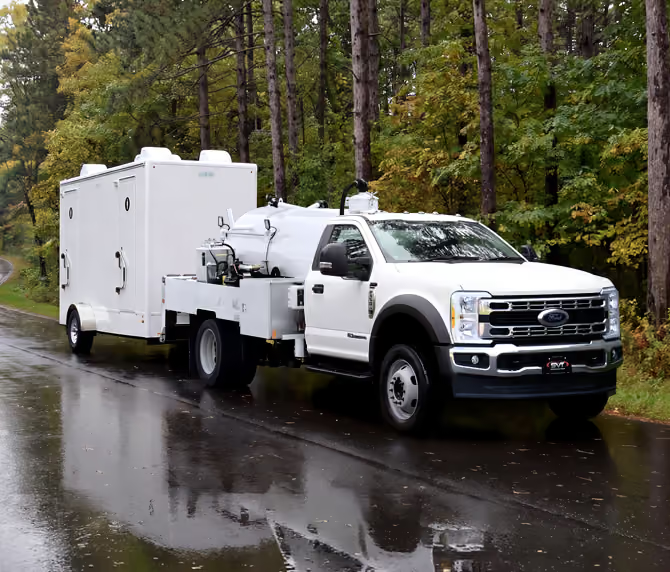
How to Operate a Guzzler Vacuum Truck: Your Comprehensive Guide
Why Understanding Vacuum Truck Operation Is Critical for Your Fleet Success
Learning how to operate a vacuum truck requires understanding its complex mechanical systems, safety protocols, and proper techniques. Whether you’re excavating, clearing debris, or handling industrial waste, mastering the operation is key to safety and productivity.
Quick Operation Overview:
- Pre-Operation Checks: Conduct a daily walk-around inspection, verify PPE, and assess job site hazards.
- PTO Activation: Place the vehicle in neutral, engage the parking brake, and flip the PTO switch.
- System Setup: Set the vacuum/pressure valve, check shut-off traps, and verify oil reservoir levels.
- Hose Deployment: Select the proper hose, avoid sharp turns, and install an inline safety breaker.
- Material Collection: Monitor gauges, manage suction levels, and prevent pump damage.
- Offloading: Select level ground, clear all personnel, and use the appropriate dumping system.
The vacuum system uses a positive displacement pump to generate powerful suction. Critical safety systems include primary and secondary shut-off traps, vacuum relief valves, and proper grounding to prevent static electricity buildup.
As Michelle Amelse, Vice President of Marketing and Customer Success at Satellite Industries with over 26 years in the portable sanitation industry, I’ve seen how proper training on how to operate a vacuum truck directly impacts fleet efficiency and operator safety. My experience has shown me that understanding these systems is essential for maximizing your equipment investment.
For additional safety guidelines and best practices in industrial operations, the Occupational Safety and Health Administration (OSHA) provides comprehensive resources for workplace safety standards.

Understanding Your Vacuum Truck’s Core Systems
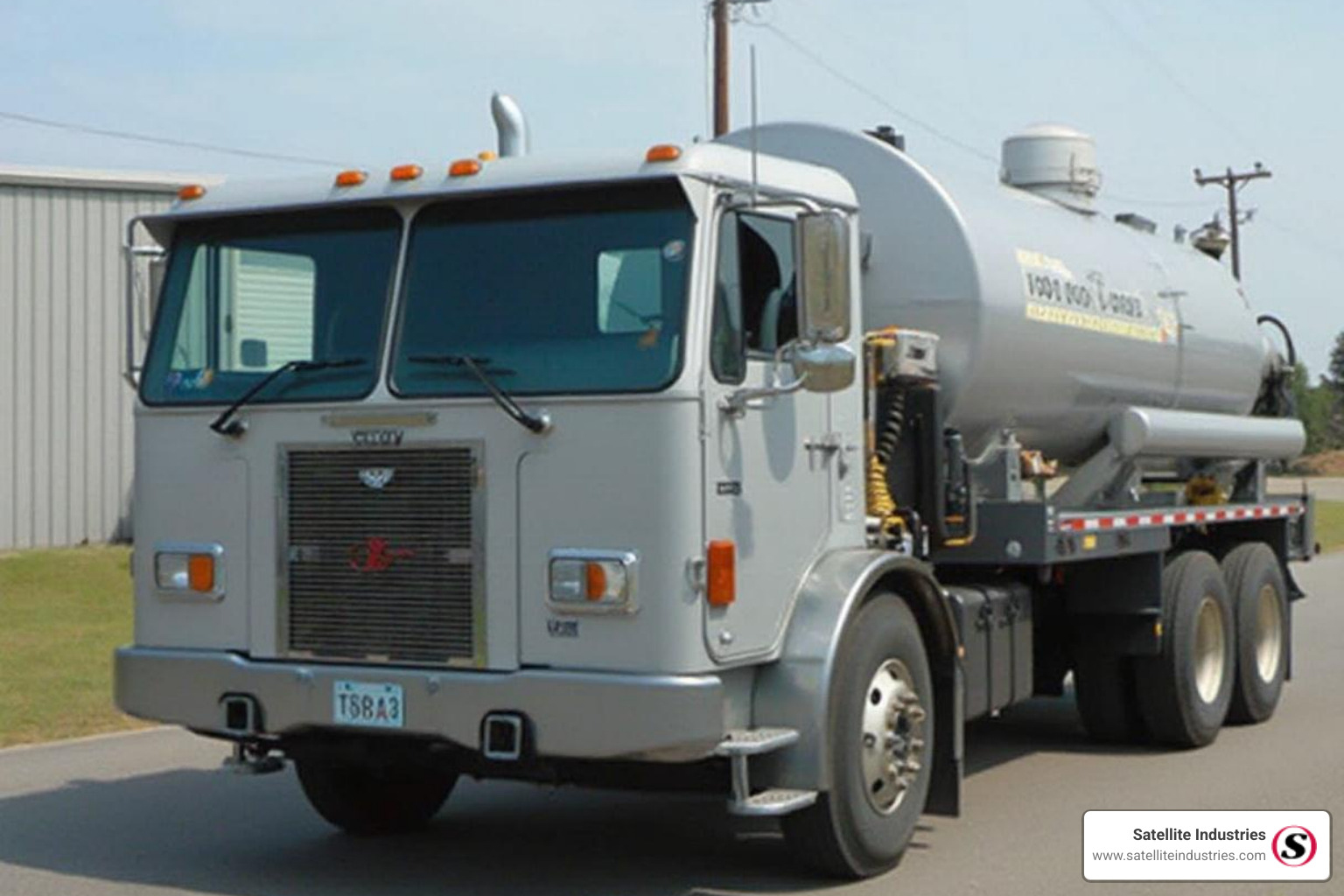
To master how to operate a vacuum truck, you must first understand its core components. These systems work together to recover and contain materials ranging from dry bulk powders to thick sludge. Key components include the Power Take-Off (PTO), vacuum pump, debris tank, filtration system, and shut-off traps.
The Power Take-Off (PTO) System
The PTO links your truck’s engine to the vacuum pump. To activate it, ensure the vehicle is in neutral with the parking brake engaged. Flipping the PTO switch sends engine power to the pump. A rubber sleeve often connects the PTO and pump shafts, acting as a safety feature to protect expensive components from stress-related failure.
The Vacuum Pump and Protection System
The vacuum pump is the workhorse, creating the powerful suction needed to move materials. Our trucks use high-powered positive displacement pumps or liquid ring pumps that can generate vacuum levels up to 27 inches Hg.
Because the pump isn’t designed to handle waste directly, several protection systems are in place:
- Primary Shut-Off Trap: Located at the top of the debris tank, a float ball rises with the liquid level to seal off the air intake, preventing overflows and pump damage.
- Secondary Shut-Off Trap: This trap, often called a scrubber, catches any carryover that gets past the primary trap, ensuring only clean air reaches the pump.
- Pump Lubrication: An oil reservoir automatically lubricates the pump. It’s essential to check the oil level daily and refill as needed to ensure a long service life.
Airflow and Pressure Management
Managing airflow is crucial for safe and efficient operation. A vacuum/pressure valve allows you to switch between suction and offloading modes. The oil separator removes lubricant from the exhaust air before it’s released through the vent, which must always be kept clear.
Critical safety devices include the vacuum relief valve, which prevents the tank from collapsing under too much vacuum, and the pressure relief valve, which prevents over-pressurization during offloading. Finally, a multi-stage filtration system, often including a baghouse, captures fine particles, ensuring only clean air is exhausted. Our trucks feature highly efficient filtration, which protects the environment and extends the life of your vacuum pump.
Pre-Operation: Safety Checks and Site Preparation

The Daily Walk-Around Inspection
Conduct a thorough walk-around inspection every day. This simple routine can prevent costly damage and accidents. Check the following:
- Fluid Levels: Engine oil, coolant, hydraulic fluid, and vacuum pump oil.
- Tires: Pressure and condition.
- Lights: Headlights, taillights, brake lights, and warning lights.
- Safety Guards: Ensure all are in place and secure.
- Hoses and Connections: Look for leaks, cracks, or wear.
- Controls: Scan for loose fasteners or worn parts.
If you find any issues, report them immediately and do not operate the truck until they are fixed.
Essential Personal Protective Equipment (PPE)
Operating a vacuum truck exposes you to powerful machinery and potentially hazardous materials. Always wear the appropriate PPE:
- Head and Face Protection: Hard hat, safety glasses with side shields, and a face shield when needed.
- Hand and Foot Protection: Chemical-resistant gloves and steel-toe boots.
- Hearing and Respiratory Protection: Ear plugs or muffs and a respirator or face mask suitable for the material being handled.
- High-Visibility Clothing: Reflective clothing to ensure you are visible on the job site.
Avoid loose clothing or jewelry that could get caught in machinery. For more detailed guidance, see our resource on hazardous waste removal.
Job Site and Material Hazards
Every job site has unique hazards. Be aware of the following:
- Static Electricity: Always ground the truck before operation, especially when handling dry or flammable materials, to prevent sparks.
- Utilities: Contact your local utility location service (like 811) to mark underground lines before any excavation.
- Traffic and Overhead Lines: Use traffic controls and maintain at least 10 feet of clearance from overhead power lines.
- Confined Spaces: These require special training, permits, and monitoring. Never enter without following proper safety protocols.
- Chemical and Dust Hazards: Understand the properties of the material you are handling. Consult the Material Safety Data Sheet (MSDS) to identify risks like flammability or toxicity and take appropriate precautions.
- Physical Hazards: Be aware of crushing risks from moving parts and high-pressure fluid leaks. Always use body props when working under a raised debris body.
How to Operate a Vacuum Truck: A Step-by-Step Guide
Once pre-operation checks are complete, it’s time to put your vacuum truck to work. This process involves careful system engagement, precise hose management, and attentive material collection.
Step 1: Engaging the PTO and Building Vacuum
With the truck in neutral and the parking brake engaged, flip the PTO switch to connect the engine’s power to the vacuum pump. At the control panel, set the vacuum/pressure valve to the “vacuum” position. Watch the vacuum gauge climb to the optimal level, typically around 27 inches of mercury, before you begin collecting material. Rushing this step will reduce efficiency.
Step 2: Best Practices for Hose Setup
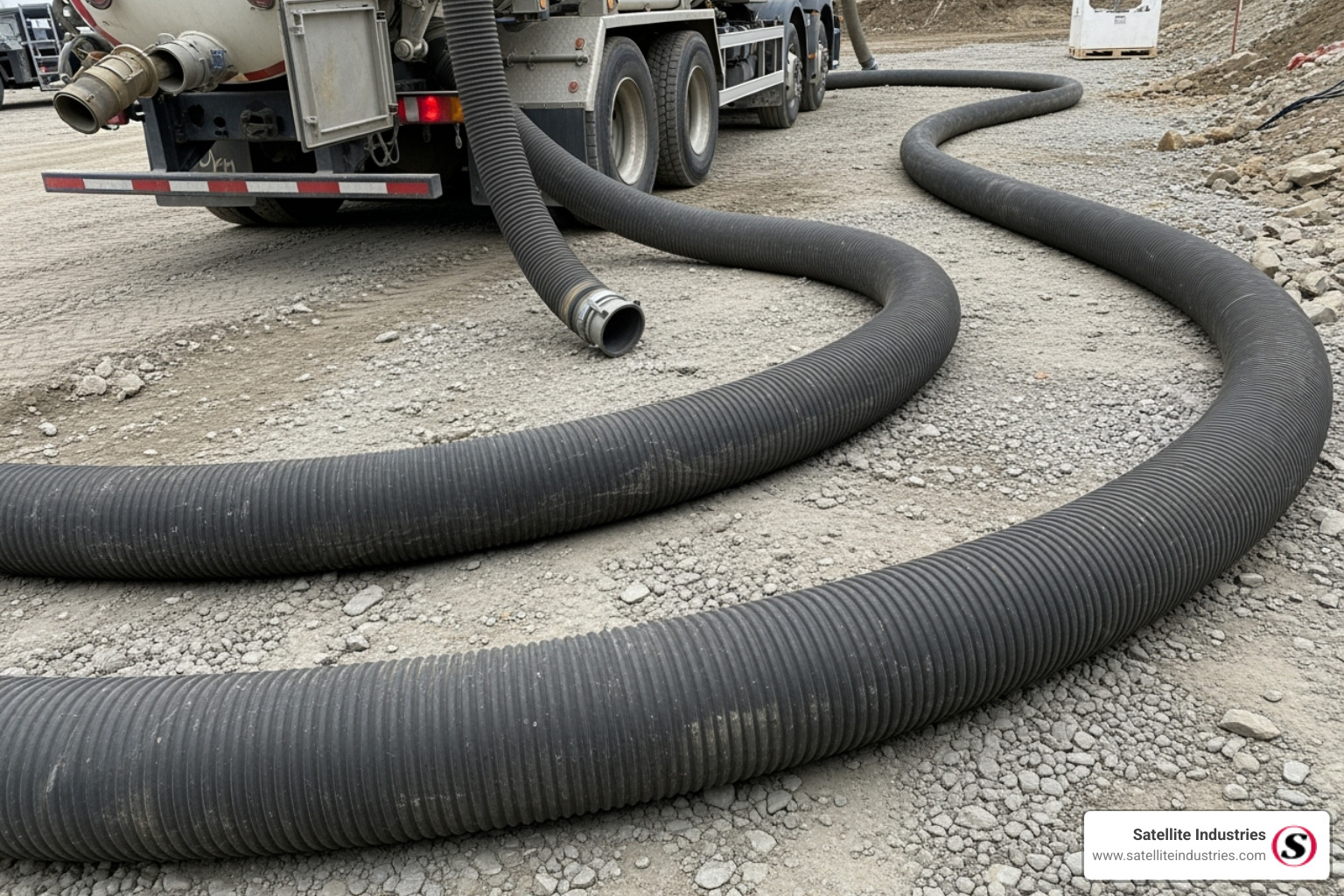
Your hose setup is critical for performance. Smooth bore hoses are superior to corrugated ones, as they create less friction and reduce the workload on your vacuum system. Use the correct hose diameter for the material to ensure adequate air velocity without causing clogs.
Whenever possible, keep hose runs straight. If turns are necessary, use long, gentle curves instead of sharp 90-degree turns to prevent blockages and wear. For operator safety, an inline safety ‘T’ vacuum breaker is essential. Install this device within 50 feet of the operator for emergency vacuum shutdown.
Many of our vacuum trucks offer remote operation capabilities, allowing you to control the vacuum from a safe distance. This feature is invaluable for jobs in tight or hazardous spaces. For more details about our equipment, check out more info about our Vacuum Trucks.
Step 3: Efficient Loading Techniques
Efficient loading is at the heart of how to operate a vacuum truck. Your primary focus should be on monitoring material flow. Listen for changes in the sound of the pump, as this often indicates a change in flow before the gauges do.
To prevent clogs, maintain proper suction for the material’s density. If you notice flow slowing, briefly lift the hose out of the material to allow a burst of air to clear the line. Different materials require different techniques:
- Solids: Require strong, consistent airflow.
- Liquids and Slurries: Respond to the pressure differential and can move very quickly.
- Mixed Materials: Require you to adjust your technique on the fly to keep everything moving.
Efficient loading is about finding the rhythm between maintaining vacuum, managing the hose, and preventing interruptions to maximize productivity.
Post-Operation: Offloading, Transport, and Maintenance
Your work isn’t done once the material is collected. Safely offloading, transporting the truck, and performing routine maintenance are key parts of learning how to operate a vacuum truck responsibly.

Safely Offloading the Debris Body
We offer various offloading solutions to fit different materials and job sites. These include systems for continuous offloading, which allow you to vacuum and offload simultaneously, dramatically boosting productivity. Traditional batch offloading systems use methods like Pressure Offload to gently push liquids out or specialized systems to convey dry material. Our Hi-Dump Systems allow you to raise the entire debris body to dump material directly into tall roll-off containers.
Regardless of the system, safety is paramount. Always dump on level ground to prevent tip-overs. Ensure the area is clear of all personnel and obstructions. After dumping, lower the body completely before moving the truck. Never drive with the body raised, and always use safety props when performing service under a raised body.
Transporting the Truck and Basic Troubleshooting
Before driving, secure the boom, lock the tailgate, and ensure all tools and hoses are stowed. Be mindful of your truck’s Gross Vehicle Weight Rating (GVWR). Transporting a full load raises the truck’s center of gravity, so reduce your speed and be extra cautious on curves or uneven roads.
Common troubleshooting tips:
- Loss of Vacuum: Check for a clogged hose, an open valve, a full tank, or leaks in the hose.
- Clogged Hose: Try lifting the hose from the material to let air clear the clog. You may need to clear it manually.
- PTO Not Engaging: Ensure the truck is in neutral with the parking brake set. Check the PTO switch and for any dashboard error codes.
For more detailed guidance, visit our page about Vacuum Truck Services.
Proper Maintenance
Regular maintenance is vital for a long, reliable service life. Our trucks are designed with advanced engineering for durability and user-friendly maintenance.
- Lubrication: Follow the manufacturer’s schedule. Check the vacuum pump oil daily.
- Filters: Regularly clean and replace the filter bags to maintain airflow and filtration efficiency.
- Hydraulics: Inspect hoses and lines for leaks and check fluid levels.
- Cleaning: Thoroughly clean the truck, especially the debris body, after each job to prevent cross-contamination and corrosion.
Frequently Asked Questions about Vacuum Truck Operation
We often get asked about the specifics of how to operate a vacuum truck, especially regarding safety and technical aspects. Here are some of the most common questions we hear.
What are the most critical safety features on a vacuum truck?
The most critical safety features are designed to protect both the operator and the equipment. They include:
- Primary and Secondary Shut-Off Traps: These prevent debris and liquids from damaging the vacuum pump.
- Vacuum and Pressure Relief Valves: These protect the debris tank from collapsing under excessive vacuum or rupturing from over-pressurization.
- Grounding Systems: These dissipate static electricity to prevent sparks and potential explosions when handling flammable materials.
- Emergency Stop Buttons: These allow for immediate shutdown of all vacuum operations.
- Boom and Tailgate Props: These provide mechanical support to safely hold a raised boom or debris body during maintenance.
How do you prevent the vacuum pump from being damaged?
Protecting your vacuum pump is essential. First, ensure the Primary and Secondary Shut-Off Traps are functional by inspecting them regularly. Second, perform daily checks of the pump’s oil reservoir and maintain proper lubrication. Finally, never vacuum incompatible materials. Avoid substances that are overly abrasive, corrosive, or have flash points outside the pump’s safe operating range. Always use extra precautions for combustible dusts or hydrocarbons.
What is the difference between pure vacuum and air conveyance?
These terms describe two different loading methods for different materials.
- Pure Vacuum Operation is used for liquids and sludge. The pump creates a strong negative pressure (vacuum) in the tank, and the resulting pressure differential pulls the material in. This method is about creating a powerful pull, not moving a high volume of air.
- Air Conveyance Operation is used for solids and dry powders. This method relies on a high volume of continuous airflow to lift material and carry it through the hose into the tank. The material is suspended in the air stream.
In short, pure vacuum is for loading liquids, while air conveyance is for moving solids.
Your Partner in Powerful and Reliable Operation
Now that you’ve learned the ins and outs of how to operate a vacuum truck, from engaging the PTO to safely offloading materials, you can see that proper training is key. The good news is you’re not alone on this journey. When you choose a vacuum truck from Satellite Industries, you’re not just getting heavy equipment; you’re gaining a partner dedicated to making your business run smoother.
Our trucks are built with advanced engineering for durability and user-friendliness. We know that in tough industrial environments, you need equipment that won’t quit. We also believe power shouldn’t come at the cost of simplicity. Our designs focus on intuitive operation and straightforward maintenance, which means less hassle for your team and more uptime for your customers who rent these reliable machines.
By putting these principles into practice—following proper procedures, prioritizing safety, and sticking to a regular maintenance schedule—you will open up the full potential of your investment. This ensures maximum productivity, boosts your fleet’s efficiency, and secures a long, profitable service life for your equipment.
Ready to experience the difference a reliable and user-friendly vacuum solution can make for your operations? Contact our team today – we’re here to help you succeed.
Latest from the Satellite Industries Blog
Need Help {Finding the Right Sanitation Solution?}
Satellite Industries is the largest manufacturer of portable restrooms, restroom trailers, restroom trucks, septic trucks, slide-ins, unit haulers, vacuum technology, modular solutions, consumables and deodorizers.