The Walk-In Revolution: Making Showers Accessible for All
Why Accessible Bathing Solutions Matter More Than Ever
Handicap walk in showers are barrier-free bathing solutions designed with low or no thresholds, grab bars, non-slip surfaces, and wheelchair accessibility features. These showers eliminate the traditional curb that creates a tripping hazard, allowing users to walk or roll directly into the shower space safely.
Key Features of Handicap Walk-In Showers:
• Low threshold entry – 0.5″ to 1″ maximum height vs. 4-6″ traditional curbs
• ADA-compliant dimensions – 36″×36″ for transfer showers, 60″×30″ for roll-in models
• Safety features – Grab bars, slip-resistant flooring, built-in seating
• Reinforced walls – Pre-engineered backing for secure grab bar installation
• Multiple drain options – Center, left, or right positioning to match existing plumbing
According to research, falls are the most common accidents among senior citizens, making accessible shower design critical for aging-in-place safety. George from Orlando finded this – after a fall, he installed a barrier-free shower with grab bars and a folding seat, allowing him to shower independently without assistance.
These solutions serve elderly users, people with disabilities, wheelchair users, and anyone with limited mobility. Installation typically takes 2-3 days for professional retrofit projects, with prices ranging from $1,000 to $5,000 depending on size and features.
I’m Michelle Amelse, Vice President of Marketing and Customer Success at Satellite Industries, where I’ve spent over 26 years developing expertise in accessible sanitation solutions including handicap walk in showers for commercial and residential applications. My background in strategic marketing and manufacturing operations gives me deep insight into what makes these accessibility solutions both practical and profitable for distribution partners.
What Are Handicap Walk-In Showers?
Think of handicap walk-in showers as the difference between climbing over a fence and walking through an open gate. These accessible bathing solutions eliminate the barriers that make traditional showers challenging or impossible for people with mobility needs.
The core difference lies in the threshold – that raised edge around a standard shower. While regular showers have curbs that rise 4-6 inches high, handicap walk-in showers feature ultra-low thresholds of just 0.5 inches or completely level entries. This simple change transforms bathing from a daily struggle into a safe, independent experience.
Universal design principles guide these showers, creating spaces that work beautifully for everyone. Rather than looking institutional or medical, today’s accessible showers blend seamlessly into any bathroom while providing improved safety and usability that benefits the whole family.
You’ll find two main types of accessible showers. Transfer showers work for people who can move from a wheelchair to a built-in seat for bathing. Roll-in showers allow wheelchair users to enter directly in their mobility device. Both designs prioritize independence and dignity in daily bathing routines.
Handicap Walk-In Showers vs Standard Showers
The differences go far beyond just curb height. Standard shower curbs create a 4-6 inch obstacle that can feel like scaling a mountain for someone with mobility challenges. Accessible showers maintain that critical low threshold while solving several other design challenges.
Wheelchair maneuvering space represents a major difference. Traditional showers rarely accommodate the turning radius needed for safe wheelchair navigation. Accessible designs ensure adequate clear floor space both inside and outside the shower – including a minimum 30-inch by 48-inch approach area.
The drain slope engineering gets more complex in barrier-free designs. Standard showers rely on that curb to contain water, allowing gentler slopes toward the drain. Accessible showers must manage water through precise slope calculations – typically 1/4 inch per foot grade – while maintaining the low threshold requirement.
Splash control becomes trickier without a traditional curb. These showers often incorporate specialized water retention systems, collapsible water dams, or strategic low-flow valve placement to keep water where it belongs while preserving accessibility.
Behind the walls, accessible showers require comprehensive reinforced wall backing to support grab bars, fold-down seats, and other safety accessories that users depend on for stability and independence.
Who Benefits from Handicap Walk-In Showers
The answer might surprise you – it’s not just people with obvious disabilities. Elderly individuals represent the largest user group, especially as more Americans choose to age in place. When climbing over a shower curb becomes risky, these barrier-free solutions preserve independence and safety.
Wheelchair users find immediate value in roll-in designs that eliminate challenging transfers. These showers accommodate both manual and power wheelchairs, with reinforced pans supporting up to 500 pounds when used with rolling mobility devices.
People with various disabilities benefit from different design elements. Those with mobility impairments appreciate the low threshold entry, while individuals with balance issues rely on grab bars and built-in seating. The predictable layouts help people with visual impairments steer safely.
Caregivers represent an often-overlooked group who benefit tremendously. Accessible showers reduce physical strain on family members and professional caregivers who assist with bathing. The spacious designs accommodate two people comfortably while safety features minimize fall risk for everyone involved.
Rehabilitation patients find these showers invaluable during recovery periods. Whether bouncing back from surgery, injury, or illness, accessible showers provide a safe environment for maintaining hygiene independence throughout the healing process. The modular nature of many systems allows for temporary modifications that adjust as mobility improves.
For our distribution partners, this broad appeal translates to strong rental demand across multiple customer segments, making handicap walk-in showers a valuable addition to any accessible equipment inventory.
Key Features & ADA Compliance Essentials
When you’re helping customers choose handicap walk in showers, understanding ADA compliance isn’t just about checking boxes – it’s about creating genuinely safe, usable spaces that transform daily routines. The Americans with Disabilities Act sets specific requirements that ensure real accessibility, not just token accommodation.
Transfer showers need minimum inside dimensions of 36 inches by 36 inches. This might sound compact, but it’s precisely engineered to provide adequate space for wheelchair approach and safe transfer to built-in seating. These dimensions work beautifully in smaller bathrooms while meeting full compliance standards – perfect for residential retrofits where space is at a premium.
Roll-in showers require larger minimum dimensions of 60 inches by 30 inches to accommodate wheelchair entry and maneuvering within the shower space. Many residential models expand to 60 inches by 33 inches or larger, giving users that extra comfort and functionality that makes all the difference in daily use.
The 0.5-inch maximum threshold requirement represents one of the most critical safety features. This ultra-low entry eliminates the tripping hazards and barriers that make traditional showers dangerous for people with mobility challenges. It’s amazing how such a small measurement change creates such a dramatic improvement in accessibility.
Grab bar placement follows precise ADA specifications that have been refined through years of research and user feedback. Horizontal grab bars must be installed 33-36 inches above the floor, while vertical bars provide additional support points throughout the wet area. The exact positioning depends on shower configuration and user needs, but the goal remains constant – providing secure support exactly where people need it most.
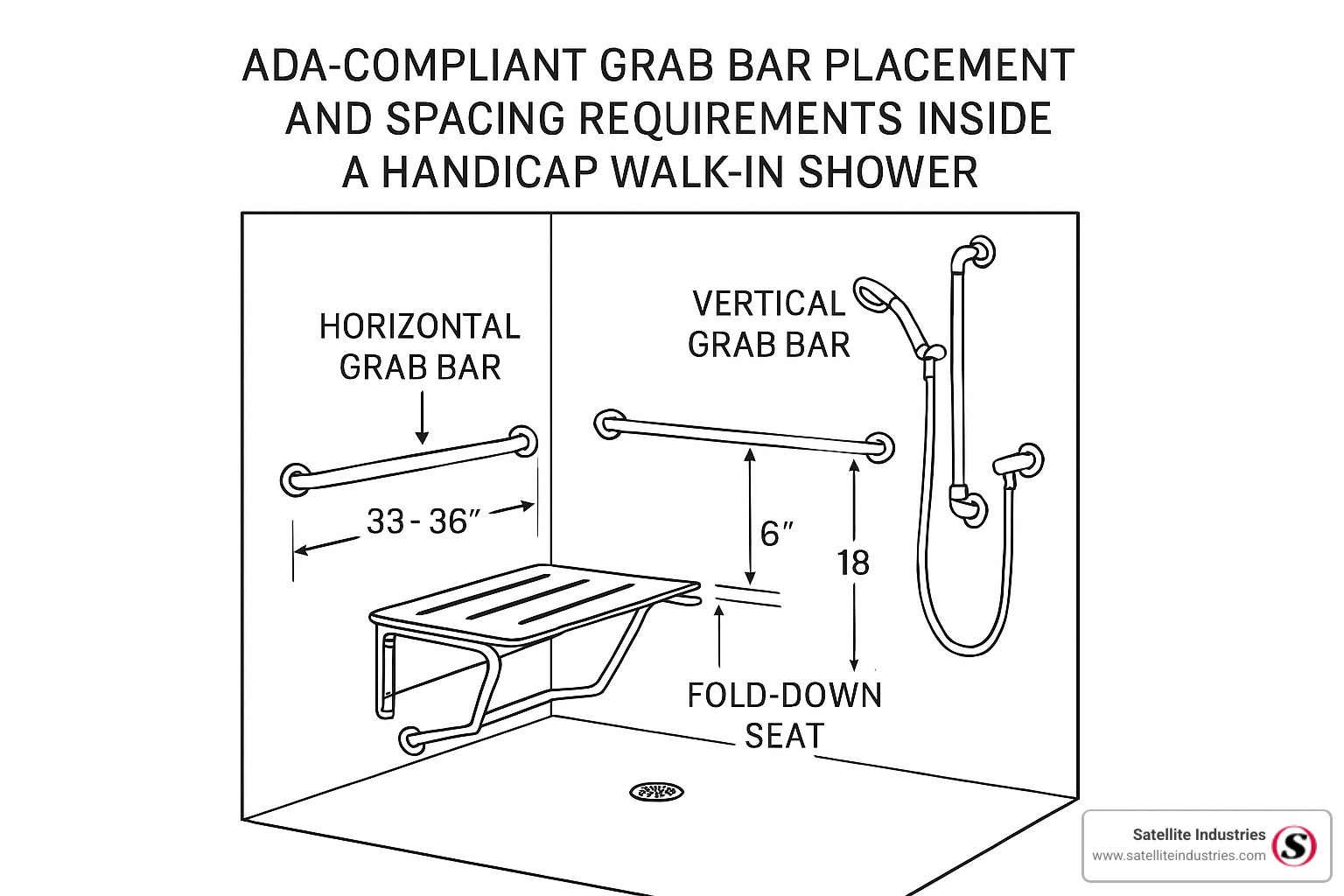
Non-slip flooring represents a non-negotiable safety feature that can prevent serious injuries. Slip-resistant textured surfaces dramatically reduce fall risk, with many manufacturers offering integral textured finishes that eliminate the need for separate bath mats or adhesive strips. The best surfaces balance safety with cleanability and comfort for bare feet – nobody wants a shower floor that feels like sandpaper.
Built-in seating options include fixed benches, fold-down seats, and removable transfer benches. Seating placement requires careful consideration of transfer angles, grab bar proximity, and shower head accessibility. Many users prefer fold-down designs that maximize space when not in use while providing sturdy support when needed – it’s like having the best of both worlds.
Handheld showerheads with adjustable slide bars accommodate users of varying heights and mobility levels. The ability to control water direction while seated provides independence and comfort that fixed showerheads simply cannot match. Many accessible showers include both fixed and handheld options for maximum flexibility.
Reinforced wall construction ensures secure mounting for all safety accessories. Pre-engineered backing systems, often featuring full plywood reinforcement, support grab bars, seating, and other fixtures without risk of pull-out or failure. This backing must be integral to the shower design rather than added afterward – retrofitting reinforcement is expensive and often inadequate.
For comprehensive accessibility planning beyond shower-specific requirements, practical tips for accessible bathrooms provide valuable guidance for creating fully accessible bathroom environments.
Safety Must-Haves Inside a Handicap Walk-In Shower
Slip-resistant pan surfaces form the foundation of shower safety in every handicap walk in shower. Modern accessible shower pans feature integral textured finishes that provide excellent traction without creating cleaning nightmares. These surfaces must be slip-resistant when wet while remaining comfortable for bare feet and easy to maintain over years of use.
Anti-scald valve technology protects users from dangerous temperature fluctuations that could cause serious injury. Thermostatic mixing valves maintain consistent water temperature even when water pressure varies elsewhere in the building. This protection becomes especially critical for users with reduced sensation or slower reaction times who might not immediately notice dangerous temperature changes.
Alert systems provide peace of mind for users and caregivers, though they’re optional rather than required. These range from simple pull cords connected to audible alarms to sophisticated wireless systems that notify caregivers via smartphone apps. The key is ensuring the alert mechanism remains accessible from any position within the shower – including if someone has fallen.
Water retention systems address one of the biggest challenges in barrier-free design: containing water without creating barriers. Collapsible water dams fold down for wheelchair access but pop up to contain water during use. Linear drain systems capture water along the shower perimeter, while specialized threshold designs minimize water escape while maintaining accessibility.
Collapsible ramps or threshold adaptors provide transitional solutions for users whose mobility needs may change over time. These systems allow installation of temporary barriers for water control that can be removed when full roll-in access becomes necessary. It’s smart planning for changing needs.
Emergency access considerations ensure that caregivers can reach users quickly if assistance becomes needed. This includes adequate maneuvering space outside the shower, easily removable or foldable shower curtains, and door designs that open outward to prevent blockage by a fallen user.
Popular Accessories & Upgrades for Handicap Walk-In Showers
The right accessories can transform a basic accessible shower into a truly exceptional bathing experience. Fold-down shower seats represent one of the most versatile accessibility accessories available. These wall-mounted seats fold flat against the wall when not in use, maximizing shower space while providing sturdy support when needed. Weight ratings typically accommodate users up to 300-400 pounds, with commercial-grade options supporting even higher capacities.
Magnetic shower curtains eliminate the frustration of traditional curtain systems that can be nearly impossible to manage with limited dexterity. Magnetic closures create a secure seal while allowing easy one-handed operation – a small detail that makes a huge difference in daily use. These systems often integrate with ceiling-mounted tracks for smooth operation and institutional-grade durability.
Trench drain systems provide superior water management in barrier-free designs. Linear drains installed along the shower entrance capture water before it can escape into the bathroom, allowing for truly level entries while maintaining effective drainage. These systems feature removable grates for easy cleaning and maintenance.
Shampoo niches and corner shelves keep bathing essentials within easy reach without creating obstacles or fall hazards. Recessed designs maintain clean lines while providing storage that won’t interfere with wheelchair navigation or transfer movements. Multiple niche locations accommodate different user heights and preferences – everyone can reach what they need.
Adjustable shower head systems with multiple mounting points provide flexibility for users with varying needs. Some systems include both overhead rain shower heads and handheld units with slide bars, allowing customization for different users or changing mobility requirements over time. It’s like having a shower that adapts to you rather than forcing you to adapt to it.
Water retention packages address splash control in curbless designs through specialized threshold systems, water dams, and drainage configurations. These comprehensive packages often include specific valve recommendations and installation guidelines to optimize water containment while preserving accessibility – taking the guesswork out of barrier-free design.
Types, Sizes & How to Choose the Perfect Fit
Finding the right handicap walk in showers for your customers starts with understanding the two main construction approaches: one-piece units and multi-piece kits. Each serves different situations, and knowing when to recommend which type can make or break a successful installation project.
One-piece units arrive at the job site as complete, factory-molded showers with walls, pan, and often pre-installed grab bars all seamlessly integrated. There’s something beautiful about their leak-proof construction – no joints means no potential failure points down the road. Your customers will appreciate the finished appearance that rivals expensive custom tile work, often at a fraction of the cost.
But here’s the catch: getting these units into existing homes can be tricky. They need wide doorways, straight hallways, and sometimes even crane access for upper-floor installations. I’ve seen too many projects stall because nobody measured the stairwell before ordering a one-piece unit.
Multi-piece kits solve this access puzzle brilliantly. The shower breaks down into manageable components that fit through standard 32-inch doorways, making them perfect for retrofit situations. The pre-leveled shower pan and connecting wall panels still provide excellent leak protection through engineered joints, while the modular approach lets you customize wall configurations and accessories for each customer’s specific needs.
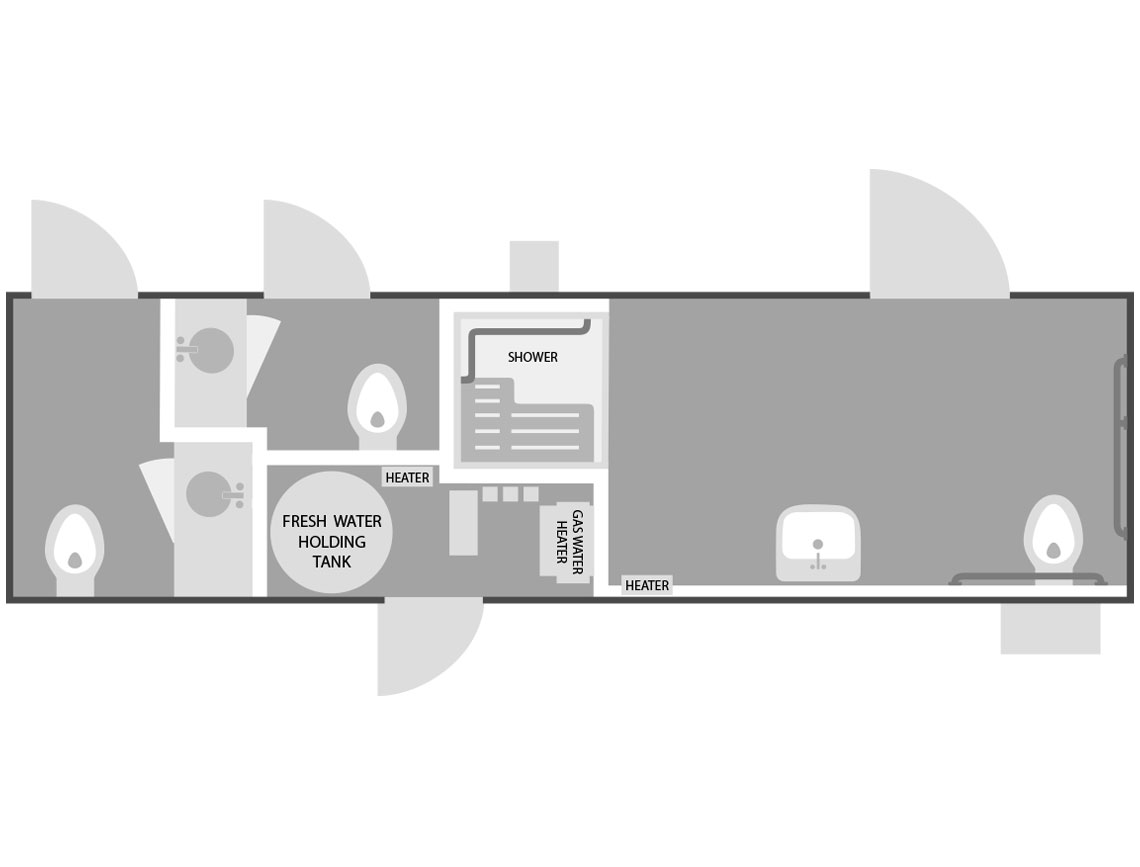
When it comes to sizing, the 60″ x 31″ configuration dominates residential installations because it perfectly replaces standard bathtubs. Your installation teams will love how the dimensions align with existing plumbing and framing – less demo work means faster turnaround and happier customers.
For customers wanting extra comfort, 60″ x 33″ models provide additional depth without requiring major structural changes. The 60″ x 37″ size works beautifully when caregivers need to assist with bathing, giving everyone room to move safely.
Smaller bathrooms benefit from 48″ x 37″ compact designs that still meet full ADA compliance. These units prove invaluable when converting powder rooms or working within tight space constraints that would otherwise make accessibility impossible.
Corner configurations like 61″ x 61″ models maximize usable space in bathrooms where corner placement makes sense. The angled entries provide barrier-free access while fitting efficiently into corners that might otherwise go unused.
Portable shower stalls represent an exciting opportunity for rental applications. These tool-free units connect directly to existing faucets, perfect for temporary housing situations, rental properties, or customers who need immediate accessibility solutions while planning permanent installations.
FeatureOne-Piece UnitsMulti-Piece KitsInstallation Time1-2 days2-3 daysLeak ResistanceExcellent (seamless)Very Good (sealed joints)Retrofit SuitabilityLimited (access required)Excellent (fits through doors)Customization OptionsLimitedExtensiveTransport RequirementsLarge truck/craneStandard deliveryCost Range$2,000-$4,000$1,500-$3,500
Matching Bathroom Layout & Plumbing
Smart shower selection starts with understanding what’s already there. The most profitable installations work with existing infrastructure rather than fighting against it, and that means paying attention to drain locations, wall backing, and clearance requirements from day one.
End-drain alignment can save your customers thousands of dollars. Many bathtubs feature end-mounted drains that line up perfectly with accessible shower designs. When the new shower drain connects directly to existing waste lines, you avoid the expense and complexity of moving plumbing – a win for everyone involved.
Wall backing requirements go far beyond basic framing. Those grab bars and fold-down seats need solid support, often requiring full plywood reinforcement behind shower walls. Older homes especially need careful evaluation, since original construction rarely anticipated the loads that accessibility features impose.
Doorway clearance becomes non-negotiable for wheelchair access. The bathroom entry needs at least 32 inches of clear width, though 36 inches works much better for comfortable navigation. Door swing direction matters too – outward-opening doors generally provide better accessibility by maximizing interior maneuvering space.
The maneuvering circle requirement mandates 60 inches of clear floor space for wheelchair turning. This space can overlap with other fixtures, but it must remain unobstructed. In smaller bathrooms, fixture placement becomes a puzzle that requires careful planning to maintain required clearances while preserving functionality.
Electrical considerations include GFCI protection for all circuits and adequate lighting for safe navigation. Accessible switches and controls must fall within ADA reach ranges – typically 15 to 48 inches above the floor depending on the control type.
Future-Proofing Your Handicap Walk-In Shower
The smartest handicap walk in showers adapt as needs change over time. Rather than locking customers into fixed configurations, forward-thinking designs accommodate evolving accessibility requirements while protecting the initial investment.
Modular wall systems provide incredible flexibility for changing needs. Instead of permanent installations that can’t be modified, modular approaches allow adding or removing accessories as user requirements evolve. This adaptability proves especially valuable for aging-in-place scenarios where mobility needs change gradually over years.
Removable threshold adaptors offer a brilliant solution for fluctuating accessibility needs. These systems allow temporary water barriers that can be removed when full roll-in access becomes necessary. The adaptor approach provides immediate water containment while preserving future roll-in options.
Door-ready framing accommodates future shower door installation without major modifications. Even when initial installation uses curtains or remains completely open, proper framing allows door addition later if water containment becomes a priority. This preparation costs very little during initial installation but preserves valuable future options.
Style palette considerations ensure accessible showers complement evolving design preferences. Modern accessible units offer extensive color and pattern options that rival traditional bathroom fixtures. Selecting neutral, timeless finishes helps ensure long-term satisfaction while accommodating future decorating changes.
Plumbing rough-in preparation can accommodate future fixture upgrades or modifications. Installing additional water lines or blocking for future grab bar locations costs little during initial construction but provides valuable flexibility for later modifications. This preparation proves especially important in multi-generational homes where different users may have varying accessibility needs over time.
Installation, Timeline & Cost Breakdown
Getting your customers’ handicap walk in showers installed doesn’t have to be a stressful ordeal. Most professional installations follow a pretty predictable rhythm that keeps disruption to a minimum while ensuring everything works perfectly.
The typical installation takes 2-3 days for a complete retrofit project, though this can vary depending on what you’re starting with. Day one usually involves saying goodbye to the old fixtures and getting everything ready for the new shower. This means removing that old bathtub or shower, making any necessary plumbing adjustments, and ensuring the walls have proper backing for all those important safety features.
Day two is when the magic happens – installing the actual shower system, connecting all the plumbing, and starting the finish work. Multi-piece systems might need a bit more time to get all the panels aligned just right and properly sealed, while one-piece units can often be set and connected in a single day.
Day three wraps everything up with final connections, thorough testing, and cleanup. This includes installing accessories like grab bars and shower seats, running comprehensive leak tests, and making sure every safety feature works exactly as it should.
Some handy homeowners can tackle the DIY prep work to reduce costs and professional installation time. If your customers can handle demolition and basic preparation, they might cut the professional portion down to just 1-2 days. However, the plumbing connections and final installation should definitely stay in professional hands to ensure proper function and maintain warranty coverage.
Prefabricated shower pans are real time-savers that eliminate the old-school mud-setting process required for traditional tile installations. These pre-leveled, factory-finished pans install directly onto properly prepared subflooring, cutting installation time while ensuring consistent quality and proper drainage slopes every time.
Project costs typically range from $1,000 to $5,000 depending on size, features, and how complex the installation gets. Basic 36″ x 36″ transfer showers start around $1,000 for the unit itself, while larger roll-in configurations loaded with accessories can push past $4,000.
Labor costs swing quite a bit depending on your region and project complexity. Simple retrofit installations in easy-to-reach locations cost less than projects requiring extensive plumbing modifications or structural changes. Most installers charge between $500-$1,500 for labor, depending on what the project involves.
Here’s something your customers will love: most accessible shower manufacturers provide 30-year warranties on materials and workmanship. These warranties typically cover manufacturing defects, structural integrity, and finish durability, offering long-term protection that really justifies the initial investment.
Financing assistance and VAT relief programs help make these modifications more affordable for end users. Many regions offer tax exemptions or reduced rates for accessibility improvements, while specialized financing programs provide favorable terms specifically for accessibility modifications.
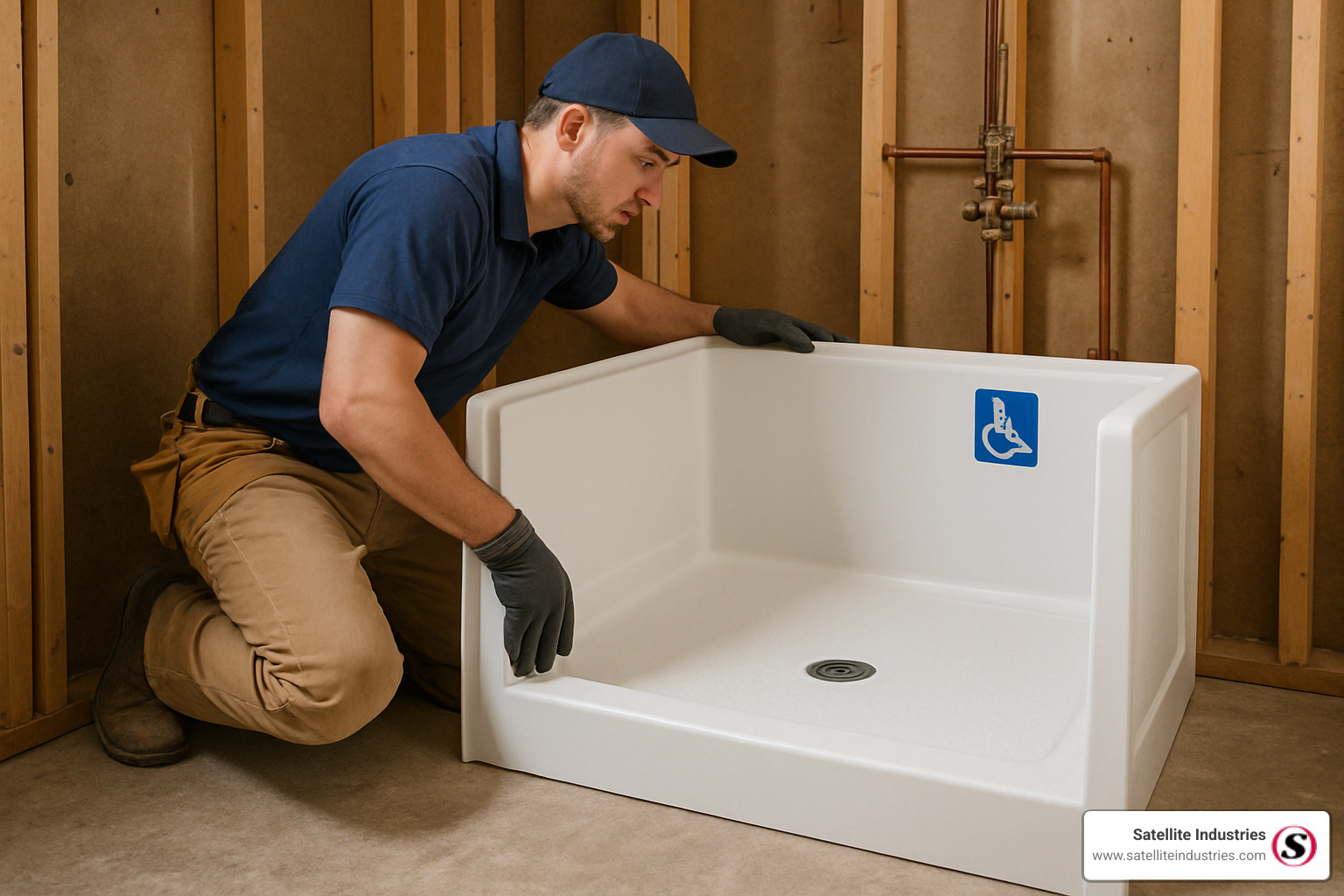
Multi-Piece Quick-Fit Installs for Handicap Walk-In Showers
Multi-piece shower systems have completely changed the game for handicap walk in showers installation. These innovative snap-lock panel designs eliminate the traditional mounting headaches that used to make installations so complex.
The beauty of direct-to-stud mounting is how it simplifies wall preparation by cutting out intermediate backing materials. The panels attach directly to existing wall framing, reducing material costs while ensuring rock-solid mounting for grab bars and accessories. This approach works especially well in retrofit situations where getting access to wall cavities can be tricky.
No mud-set installation represents a huge time savings over traditional tile construction. Instead of building up shower pans with mortar beds that need time to cure, these systems use factory-finished pans that install directly onto prepared subflooring. Eliminating these wet trades cuts installation time significantly while ensuring consistent quality every time.
Retrofit scenarios really benefit from multi-piece designs that steer through standard doorways and around existing obstacles. Where one-piece units might require wall removal or exterior crane access, multi-piece systems install through normal access routes without any building modifications.
The pre-reinforced wall panels include integral backing for grab bars and accessories, eliminating the guesswork and additional labor of field-installed reinforcement. This factory reinforcement ensures proper load distribution while simplifying installation and reducing the potential for costly installation errors.
Quality control gets a major boost from factory-controlled manufacturing conditions that ensure consistent panel fit and finish. Field assembly of precision-manufactured components typically produces better results than site-built alternatives while reducing both installation time and labor costs.
Budget Factors & Funding Paths
Size drives most of the cost differences in accessible shower installations. Basic 36″ x 36″ transfer showers cost significantly less than spacious 60″ x 36″ roll-in configurations, though size selection should always prioritize user needs over cost considerations. Undersized showers often require costly modifications later if user needs change.
Material selection affects both upfront cost and long-term value. Acrylic finishes offer durability and easy maintenance at moderate cost, while fiberglass provides budget-friendly options with solid performance. Custom tile installations cost more initially but offer unlimited design flexibility and potential resale value advantages.
Accessory packages can significantly impact total project cost. Basic installations with minimal accessories start around $1,000, while fully equipped systems with fold-down seats, multiple grab bars, and specialized fixtures can exceed $3,000. Phased installation allows spreading costs over time while ensuring essential safety features get installed first.
Grant programs and insurance coverage provide valuable funding assistance for qualifying individuals. Veterans Administration benefits, Medicare coverage for durable medical equipment, and state accessibility grant programs can offset significant portions of installation costs. Private insurance may cover accessibility modifications when prescribed by healthcare providers.
Financing options include specialized accessibility loans with favorable terms, home equity financing, and manufacturer financing programs. Many accessibility equipment suppliers offer payment plans that make installations affordable for users on fixed incomes.
Tax benefits include federal tax credits for accessibility improvements and state-level exemptions from sales tax on medical equipment. These benefits can reduce net costs by 10-30% depending on local tax rates and available programs.
Care, Maintenance & Long-Term Safety
Taking care of your handicap walk in showers doesn’t have to be complicated – in fact, these systems are designed to make maintenance easier than traditional tile showers. The key is establishing simple routines that keep everything working safely for years to come.
Mild, non-abrasive cleaners are your best friends when it comes to accessible shower maintenance. Many users have sensitive skin conditions, so harsh chemicals aren’t just unnecessary – they can actually cause problems. A gentle dish soap mixed with warm water handles most cleaning tasks beautifully.
Here’s where accessible showers really shine: grout-free wall systems eliminate the biggest maintenance headache of traditional bathrooms. No more scrubbing grout lines with a toothbrush or paying for expensive resealing every few years. Acrylic and fiberglass panels just need a quick wipe-down with mild soap and water.
The drain deserves special attention in barrier-free designs. Because these low-profile drains handle all the water without a curb to help, they can clog more easily than traditional shower drains. Monthly cleaning with enzymatic drain cleaners prevents soap and hair buildup before it becomes a problem. Trust me – prevention is much easier than dealing with a backup.
Annual seal checks around panel joints and fixtures help catch small issues before they become big, expensive problems. While quality installations should stay leak-free for decades, a quick inspection takes just a few minutes and provides peace of mind.
Weight ratings matter more than you might think. Most accessible shower pans support up to 500 pounds, but this assumes the weight is distributed properly. Rolling shower chairs and mobility equipment should meet manufacturer specifications – when in doubt, check with your installer or the manufacturer.
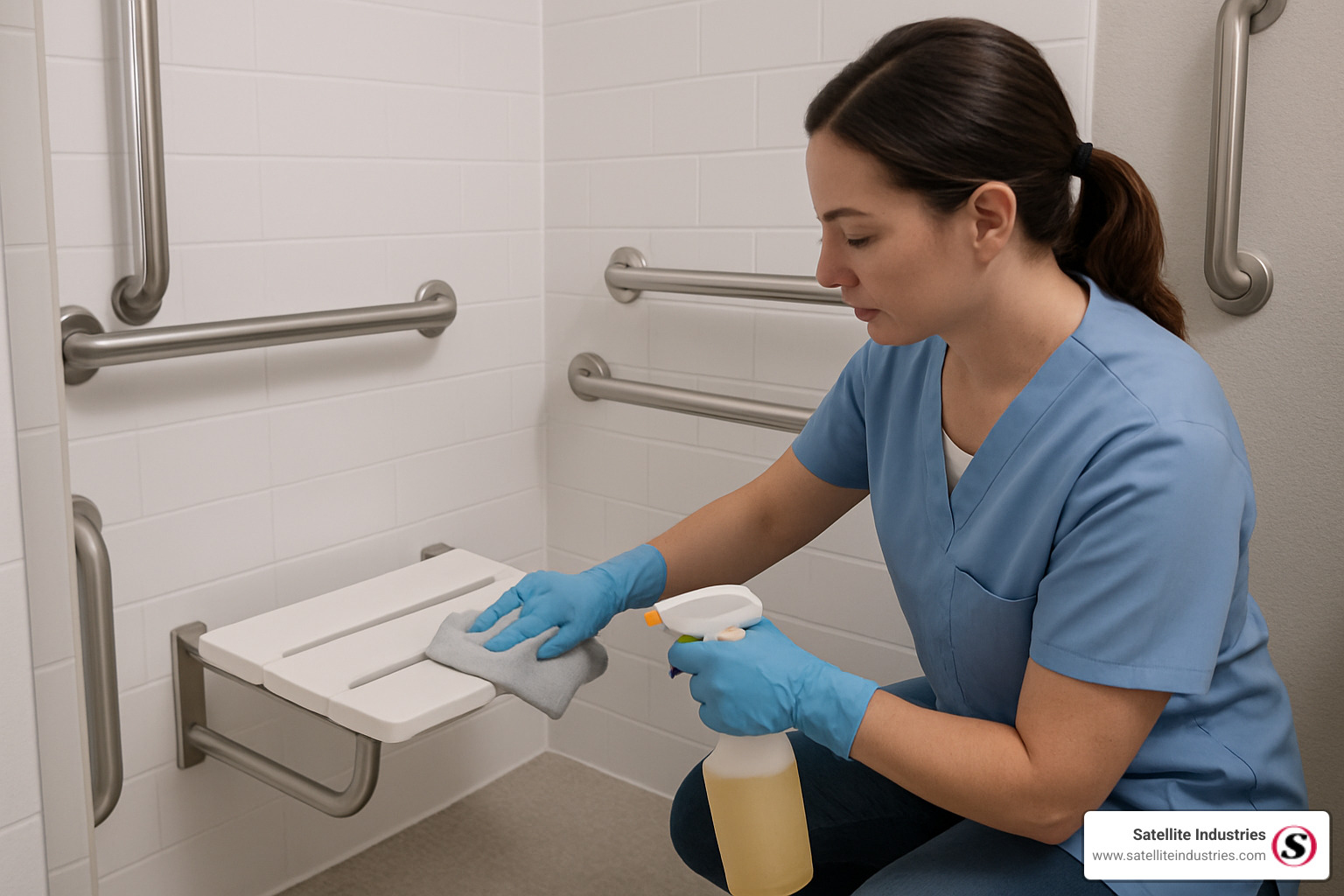
Eco-friendly cleaning products align perfectly with the health-conscious approach that often goes hand-in-hand with accessibility needs. Many users with chronic conditions prefer avoiding harsh chemicals that could trigger respiratory issues or skin reactions. Plant-based cleaners work just as well without the worry.
Mildew prevention is mostly about good ventilation and staying on top of cleaning. Run that exhaust fan during and after showers, and give fold-down seats and grab bars periodic attention. Mildew loves to hide in crevices and mounting areas where moisture lingers.
Routine Cleaning Steps for Handicap Walk-In Showers
Long-handled cleaning tools are game-changers for users with limited mobility. A soft-bristled brush or sponge mop with an extended handle lets seated users reach every corner safely without overextending or risking falls. These tools make thorough cleaning possible for everyone.
Daily maintenance is surprisingly simple and actually saves time in the long run. Rinse surfaces after each use and squeegee excess water from walls and glass. This prevents soap scum from building up and reduces how often you need to do deep cleaning. Five minutes daily beats an hour of scrubbing weekly.
Weekly deep cleaning involves applying mild cleaner to all surfaces and letting it work for a few minutes before scrubbing and rinsing. The key is patience – let the cleaner do the work instead of relying on elbow grease. Non-abrasive products protect those beautiful acrylic and fiberglass finishes while getting everything clean.
Monthly drain maintenance prevents the clogs that could turn your accessible shower into a wading pool. Enzymatic cleaners work effectively without harsh chemicals, breaking down soap and hair buildup naturally. Skip the chemical drain cleaners – they can damage plumbing and create harmful fumes.
Every three months, give special attention to grab bars, seating, and other accessories. These components can accumulate soap residue and need detailed cleaning around mounting points and crevices. Remove any detachable components for separate cleaning when possible – it’s much easier than trying to clean around them.
Don’t forget about slip-resistant mat inspection if you use them. Mats that have lost their grip or show wear need immediate replacement. Many users prefer the integral slip-resistant surfaces built into modern accessible showers – they eliminate the maintenance hassle while providing consistent safety.
When to Upgrade or Replace Components
Worn grab bars are serious safety concerns that demand immediate attention. Check monthly for any looseness, corrosion, or damage. If a grab bar moves even slightly when you test it, stop using it and call a professional. These safety features only work when they’re rock-solid.
Cracked shower pans need professional evaluation right away. Small cracks might be repairable with appropriate sealants, but extensive cracking usually means the pan needs replacement. Don’t wait – early detection prevents water damage to surrounding structures that costs much more to fix.
Outdated valve systems might be missing modern safety features like anti-scald protection that have become standard. Upgrading to thermostatic mixing valves improves safety while often providing better water pressure and temperature consistency. This upgrade proves especially valuable for users with reduced sensation or slower reaction times.
Style refresh opportunities let you update your bathroom’s look without compromising accessibility. Modern accessible showers offer extensive color and pattern options that can completely transform your space. Coordinate updates with other bathroom improvements to maximize impact while controlling costs.
Technology upgrades open exciting possibilities for improved independence. Voice-controlled fixtures, automated lighting, and smartphone-controlled temperature settings provide additional convenience for users with limited dexterity. Digital controls and LED lighting can make daily routines easier while adding modern convenience to accessible design.
Frequently Asked Questions about Handicap Walk-In Showers
When you’re considering handicap walk in showers for your rental inventory or customer installations, certain questions come up again and again. Let me walk you through the most common concerns distributors and end users share, based on my years of experience helping people steer accessibility solutions.
How much space is needed for a handicap walk-in shower?
The space question really depends on who will be using the shower and how they’ll access it. Transfer showers need minimum inside dimensions of 36 inches by 36 inches according to ADA standards – that’s just enough room for someone to wheel up and safely transfer to a built-in seat. But honestly, most people find bigger dimensions much more comfortable and practical for daily use.
Roll-in showers require minimum inside dimensions of 60 inches by 30 inches so wheelchair users can actually enter and maneuver inside the shower space. The popular residential models we see most often are 60 inches by 33 inches or even 60 inches by 37 inches, giving users that extra breathing room that makes all the difference.
Here’s what many people don’t realize: the shower itself is just part of the space equation. You need at least 30 inches by 48 inches of clear floor space right outside the shower opening for wheelchair approach. For really smooth navigation, especially with power wheelchairs, aim for a 60-inch diameter turning circle somewhere in the bathroom.
Don’t forget about the doorway leading into the bathroom – you need at least 32 inches of clear width for wheelchair passage. From what I’ve seen, 36-inch clear width works much better, particularly for users who need assistance or use larger mobility equipment.
Ceiling height usually isn’t a problem unless you’re planning ceiling-mounted track systems, which typically need 8-foot minimum ceiling height to work properly. Lower ceilings might limit some accessory options, but they won’t prevent you from installing a basic accessible shower.
Can a handicap walk-in shower replace my existing bathtub?
This is probably the most popular question we get, and the answer is a resounding yes! Handicap walk in showers make excellent bathtub replacements and often fit right into existing tub spaces with surprisingly little fuss.
Most standard bathtubs sit in 60-inch by 30-inch spaces, which align perfectly with popular accessible shower sizes like 60 inches by 31 inches or 60 inches by 33 inches. It’s almost like they were meant to go together.
Bathtub replacement represents one of the most common accessible shower installations we see in the field. There are specialized models designed specifically for this exact situation. The real beauty is that end-drain configurations usually match where the bathtub plumbing already sits, so you’re not tearing up half the bathroom to move pipes around.
The framing work is typically pretty straightforward since accessible showers fit nicely within existing tub alcoves. The main thing to watch for is making sure you have adequate wall backing for grab bars and accessories – older homes might need some reinforcement, but it’s usually not a big deal.
Plumbing connections are generally minor modifications to accommodate the new shower valve and drain setup. Many installations can reuse existing supply lines with just small changes, though upgrading to thermostatic mixing valves is smart for safety and might be required by local codes anyway.
The timeline works in your favor too – skilled tradesmen can typically complete bathtub-to-shower conversions in 2-3 days, so you’re not disrupting someone’s life for weeks while providing immediate accessibility improvements.
There’s also a weight advantage that people don’t always think about. Accessible showers eliminate those heavy structural loads from filled bathtubs while giving users much better access. This can be especially important in upper-floor installations or older homes where you don’t want to stress the structure.
How do barrier-free showers keep water inside the wet area?
This is the million-dollar question that stumps a lot of people. How do you contain water without that traditional curb? The answer involves some pretty clever engineering that balances accessibility with keeping your bathroom floor dry.
Precise slope calculations typically require a 1/4 inch per foot grade toward the drain while maintaining that low threshold that makes the shower accessible in the first place. It sounds simple, but getting those slopes just right takes real expertise.
Specialized water retention systems do most of the heavy lifting. Collapsible water dams fold down for wheelchair access but pop up to create effective water barriers during use. These often work together with linear drain designs that catch water along the shower perimeter before it has a chance to wander into the bathroom.
Low-flow mixing valves, recommended at 1.5 GPM at 45 PSI, help control splash and reduce the total water volume that could potentially escape. You still get adequate water pressure for a good shower experience, but you’re not creating a water management nightmare.
Linear drain systems represent the premium solution – they capture water along the entire shower entrance area. These drains sit flush with the floor surface, maintaining perfect accessibility while providing much better water collection than traditional center drains. They work especially well in larger roll-in configurations where you have more space to work with.
Smart shower head placement and adjustable spray patterns help direct water toward drain areas instead of toward the opening. Multiple shower head options, including both overhead and handheld units, let users control water direction based on where they’re positioned and what mobility equipment they’re using.
For users whose needs might change over time, threshold adaptors provide a smart transitional solution. These removable barriers can be installed temporarily for water control and removed when full roll-in access becomes necessary. It’s flexibility that really makes sense for long-term planning.
Conclusion
The handicap walk in showers revolution goes far beyond simple compliance checkboxes – it’s about creating spaces where independence thrives and dignity flourishes. When Brenda in Portland realized she could stay in her beloved home instead of moving to assisted living, or when George in Orlando finded he could shower safely without help after his fall, these weren’t just bathroom upgrades. They were life-changing changes.
At Satellite Industries, we’ve spent decades perfecting the engineering principles that make accessibility work in the real world. Our experience manufacturing durable, user-friendly solutions across six continents – from the dusty construction sites of Africa to the demanding commercial applications throughout Europe and Asia – gives us unique insight into what truly makes accessible design successful.
The beauty of modern accessible shower design lies in its universal appeal. What starts as accommodation for specific needs often becomes the preferred choice for everyone. Professional installation typically takes 2-3 days with total investments ranging from $1,000 to $5,000 – a remarkably modest cost for decades of improved safety and independence.
ADA compliance standards provide the foundation with 36″×36″ transfer showers and 60″×30″ roll-in models, but the most successful installations think beyond minimums. Reinforced walls that support grab bars securely, slip-resistant surfaces that work for bare feet, and modular accessories that adapt as needs change – these details separate good accessible showers from great ones.
The maintenance story tell[TRUNCATED - Original length: 52069 characters]
Latest from the Satellite Industries Blog
Need Help {Finding the Right Sanitation Solution?}
Satellite Industries is the largest manufacturer of portable restrooms, restroom trailers, restroom trucks, septic trucks, slide-ins, unit haulers, vacuum technology, modular solutions, consumables and deodorizers.