
Beginner’s Guide to Eco-Friendly Deodorizers
The Fresh Revolution: Why Eco-Friendly Deodorizers Matter
Looking for effective eco-friendly deodorizers that actually work? Here’s what you need to know:
- Natural ingredients: Look for plant-based enzymes, essential oils, activated charcoal, and baking soda
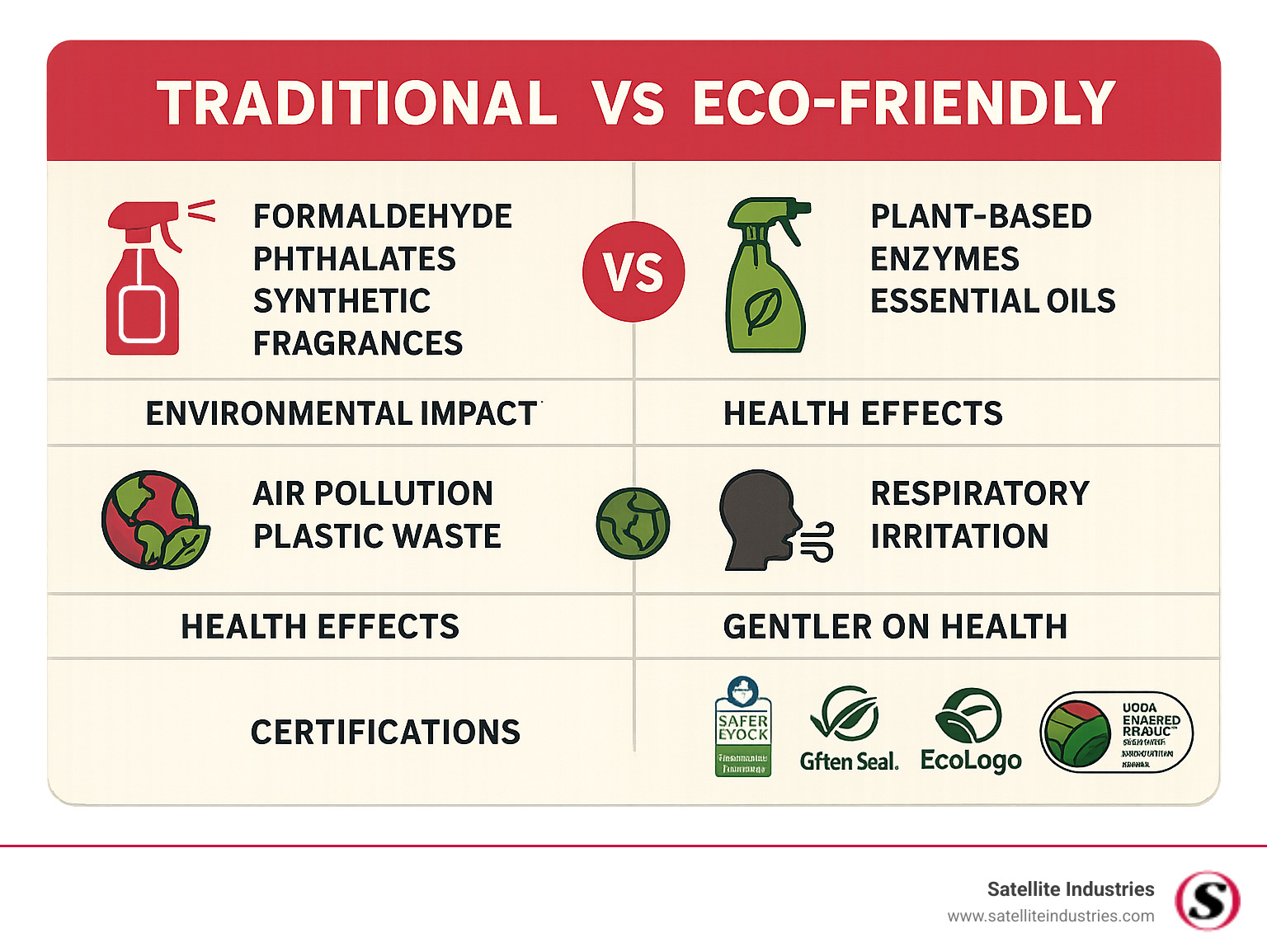
- Avoid harmful chemicals: Skip products containing formaldehyde, phthalates, benzene, and synthetic fragrances
- Key certifications: EPA Safer Choice, Green Seal, EcoLogo, and USDA BioPreferred indicate legitimate eco-friendly options
- Best types: Bio-enzymatic liquids, activated charcoal bags, essential oil diffusers, and portion-control packets
The air inside our homes and businesses can be 2-5 times more polluted than outdoor air, largely due to chemicals in traditional air fresheners and deodorizers. Eco-friendly deodorizers offer a safer, more sustainable solution by eliminating odors without introducing harmful substances into our environments.
Traditional deodorizers often contain volatile organic compounds (VOCs), formaldehyde, phthalates, and other chemicals linked to respiratory issues, headaches, and even long-term health concerns. These products may temporarily mask odors but can contribute to indoor air pollution while creating unnecessary plastic waste.
In contrast, eco-friendly options work with nature rather than against it. Many use natural enzymes or beneficial bacteria that actually consume odor-causing compounds instead of just covering them up. Others employ activated charcoal, essential oils, or plant extracts to neutralize smells without synthetic additives.
For businesses in the portable sanitation industry, switching to eco-friendly solutions isn’t just better for the environment – it’s increasingly what customers expect and what regulations are beginning to require.
As Michelle Amelse, Vice President of Marketing and Customer Success at Satellite Industries with over 26 years in the portable sanitation industry, I’ve witnessed the remarkable evolution of eco-friendly deodorizers and their growing importance for businesses committed to sustainability and customer satisfaction.
What You’ll Learn
In this comprehensive guide, we’ll walk you through everything you need to know about eco-friendly deodorizers, including:
- The environmental and health benefits of choosing eco-friendly options
- The risks associated with conventional deodorizing products
- How eco-friendly deodorizers actually work to eliminate odors
- A detailed product roundup to help you choose the right solutions
- Valuable insights for distributors and rental businesses
Whether you’re a homeowner looking for safer options or a distributor seeking sustainable products for your customers, this guide will equip you with the knowledge to make informed decisions about eco-friendly deodorizers.
Eco-Friendly Deodorizers 101: Definitions, Benefits & Risks of Traditional Options
What exactly makes a deodorizer “eco-friendly”? Simply put, eco-friendly deodorizers are products that eliminate odors using naturally derived, biodegradable ingredients with minimal environmental impact throughout their entire lifecycle. They’re formulated without harmful chemicals and typically come in sustainable packaging that won’t linger in landfills for centuries.
Traditional deodorizers, on the other hand, often rely on a concerning mix of synthetic chemicals to mask or neutralize odors. Many contain volatile organic compounds (VOCs) that significantly contribute to indoor air pollution. This is no small matter—research from Global Action Plan has found that indoor air can be 3.5 times more polluted than outdoor air, with conventional air fresheners and deodorizers being major culprits.
When you look at what’s actually inside many conventional products, it’s enough to make you think twice about spraying them around your customers or employees:
Formaldehyde lurks in many conventional deodorizers, and it’s a known carcinogen that irritates the respiratory system. Phthalates are another common ingredient—these endocrine disruptors have been linked to reproductive issues. Then there’s benzene, a carcinogenic compound that can cause blood disorders, and 1,4-dichlorobenzene, a possible human carcinogen commonly found in solid air fresheners. Even those pleasant-sounding synthetic fragrances can trigger asthma attacks and allergic reactions in sensitive individuals.
The environmental impact extends beyond health concerns. Traditional deodorizers typically come in single-use plastic containers that end up in landfills or oceans. In the UK alone, approximately 30 million plastic air freshener units are tossed away each year, adding to our already overwhelming plastic waste crisis.
Key Differences Between Eco-Friendly and Conventional Deodorizers
What really sets eco-friendly deodorizers apart from their conventional counterparts? Understanding these differences can help you make smarter choices for your distribution business:
FeatureEco-Friendly DeodorizersConventional DeodorizersBase ingredientsPlant-derived, natural mineralsSynthetic chemicals, petroleum derivativesBiodegradabilityFully biodegradableOften non-biodegradableVOC contentLow or zero VOCsOften high VOC contentDelivery methodNon-aerosol pumps, solids, tabletsFrequently aerosol spraysOdor approachNeutralizing or digestingOften masking with stronger scentsPackagingRecyclable, minimal, or refillableTypically single-use plasticCertificationsEPA Safer Choice, Green Seal, etc.Few or no eco-certificationsManufacturing impactLower carbon footprintHigher energy and resource use
Perhaps the most meaningful difference is in how these products actually tackle odors. While conventional deodorizers typically mask unpleasant smells with stronger fragrances (essentially playing odor tug-of-war), many eco-friendly deodorizers use natural enzymes or beneficial bacteria that break down the odor-causing compounds at their source. This means they’re eliminating what causes the smell rather than just temporarily covering it up—a much more effective long-term solution for your customers.
Why Choose Eco-Friendly Deodorizers For Your Home or Business
The benefits of offering eco-friendly deodorizers to your customers extend far beyond just personal health considerations.
First and foremost is health protection. By providing products that avoid harmful chemicals, you’re helping create safer environments for your customers’ employees, visitors, and rental clients. This is particularly important for those with respiratory conditions, allergies, or chemical sensitivities—a growing segment of the population.
For commercial properties in your client base, using eco-certified cleaning and deodorizing products can contribute to valuable green building credits like LEED (Leadership in Energy and Environmental Design) certification points. This can be a significant selling point for environmentally conscious businesses.
Your brand reputation also stands to benefit. Today’s consumers increasingly prefer to work with businesses that demonstrate environmental responsibility. By offering eco-friendly options, you can improve your brand image and attract the growing segment of environmentally conscious customers.
This ties directly into rising customer demand. The market for natural and eco-friendly products continues to grow steadily. A Nielsen report found that 73% of global consumers would definitely or probably change their consumption habits to reduce environmental impact—and this trend is only accelerating.
Finally, there’s the matter of regulatory compliance. As regulations around VOCs and other harmful chemicals tighten globally, providing eco-friendly options helps your customers ensure compliance and avoid potential fines.
For distributors in the portable sanitation industry, offering eco-friendly deodorizers isn’t just an ethical choice—it’s increasingly becoming a competitive necessity as clients actively seek greener solutions for their operations.
How Eco-Friendly Deodorizers Work & What to Look For
Ever wondered how eco-friendly deodorizers actually eliminate those stubborn odors without harsh chemicals? Unlike conventional products that simply mask smells, eco-friendly options work with nature to tackle odors at their source.
Most natural deodorizers use one of several effective mechanisms. Enzymatic products contain specialized proteins that break down organic matter—like urine or food waste—into odorless compounds. It’s like having tiny cleanup crews working at the molecular level! Similarly, some of the most powerful eco-friendly deodorizers contain live bacterial cultures that actually consume odor-causing waste. As one product in our research notes: “Our specialized Viable Bacterial Cultures live to serve, and they’re hungry for odor-causing organic debris.” These helpful bacteria convert what stinks into simple water and carbon dioxide.
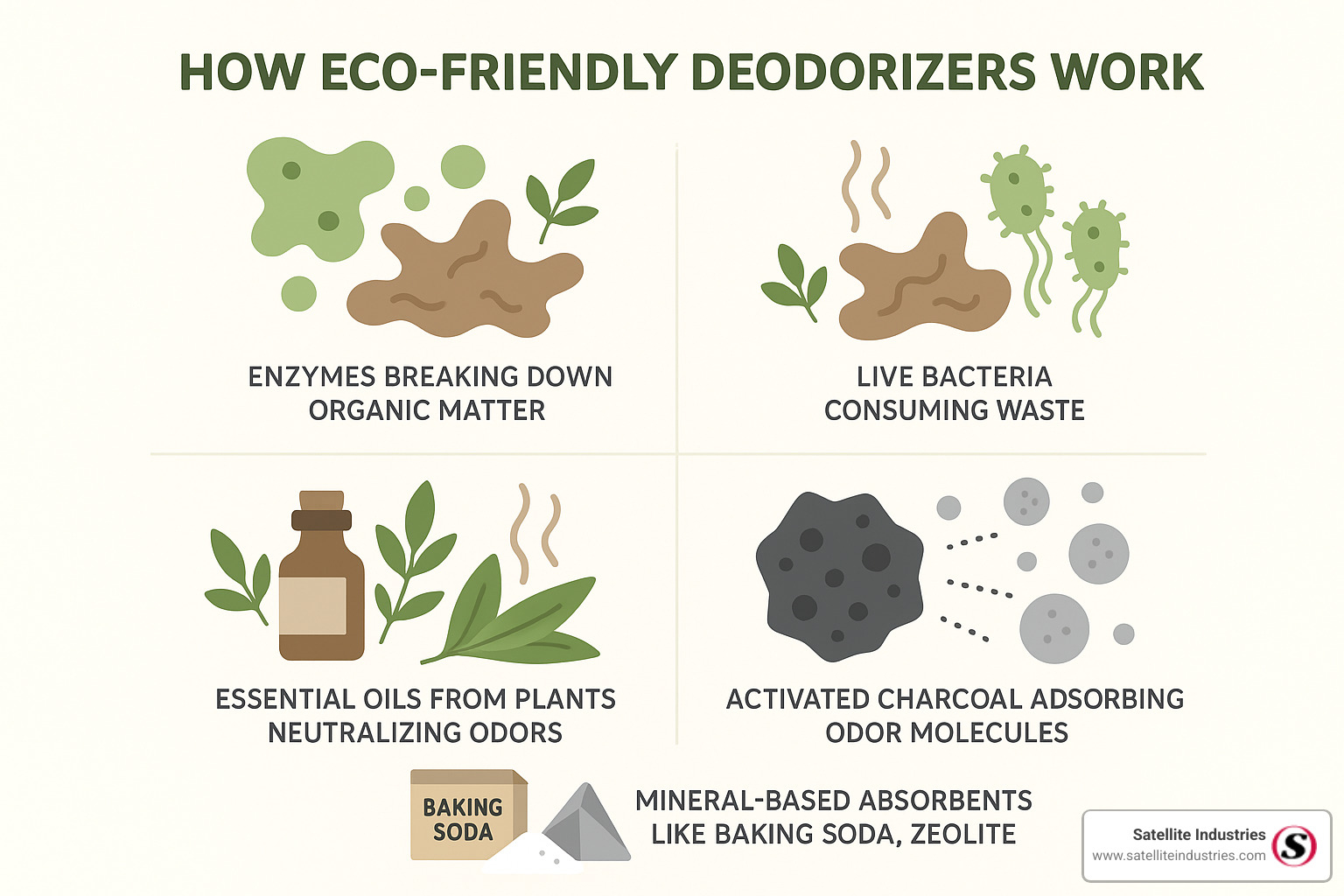
Essential oils do double duty in natural deodorizers. Beyond providing pleasant scents, oils like tea tree, citrus, and eucalyptus have natural antimicrobial properties that help eliminate odor-causing bacteria. For those preferring unscented options, activated charcoal works wonders through adsorption—attracting and trapping odor molecules in its incredibly porous surface. Just one gram of activated charcoal can have a surface area exceeding 3,000 square meters! Natural minerals like zeolite and baking soda round out the eco-friendly arsenal by absorbing both odors and moisture simultaneously.
When shopping for truly eco-friendly deodorizers, look for trusted certifications that verify environmental claims. The EPA Safer Choice label ensures every ingredient meets strict safety criteria. Green Seal and EcoLogo certify products against rigorous environmental standards, while the USDA BioPreferred designation confirms bio-based content. For portable sanitation distributors, these certifications can be powerful selling points when marketing to environmentally conscious clients.
Ingredient Checklist for Eco-Friendly Deodorizers
The best eco-friendly deodorizers contain ingredients that nature already uses to break down waste and neutralize odors. Look for plant enzymes like protease, lipase, and amylase, which target specific types of organic waste. Beneficial bacterial cultures, essential oils (especially citrus, lavender, and tea tree), and plant extracts provide natural odor-fighting power. Activated charcoal or bamboo charcoal, baking soda, and mineral absorbents like zeolite are also excellent choices.
Just as important is what to avoid. According to the CDC’s research on formaldehyde health impacts, even low-level exposure can irritate eyes, nose, and throat. Steer clear of products containing formaldehyde, phthalates, benzene, 1,4-dichlorobenzene, and synthetic fragrances (often sneakily listed simply as “fragrance”). Also watch out for d-limonene (unless naturally derived), styrene, acetaldehyde, triclosan, and methylene chloride—all of which can compromise indoor air quality and potentially harm health.
Decoding Certifications & Labels
In a market flooded with vague terms like “natural” and “green,” third-party certifications provide reliable verification of environmental claims. The EPA Safer Choice label is particularly rigorous, evaluating every ingredient—not just active ones—for human and environmental safety. Green Seal certification indicates a product meets strict standards for reduced environmental impact, including VOC limits and prohibited chemicals.
For distributors in the portable sanitation industry, the USDA BioPreferred certification can be especially relevant. This label verifies a product contains a specific amount of renewable biological ingredients. EcoLogo (administered by UL Environment) evaluates products across their entire lifecycle, while the Biodegradable Products Institute (BPI) focuses on certifying compostable materials and packaging.
These certifications help cut through marketing hype and identify genuinely eco-friendly deodorizers that deliver on their promises without greenwashing.
Eco-Friendly Packaging & Design Considerations
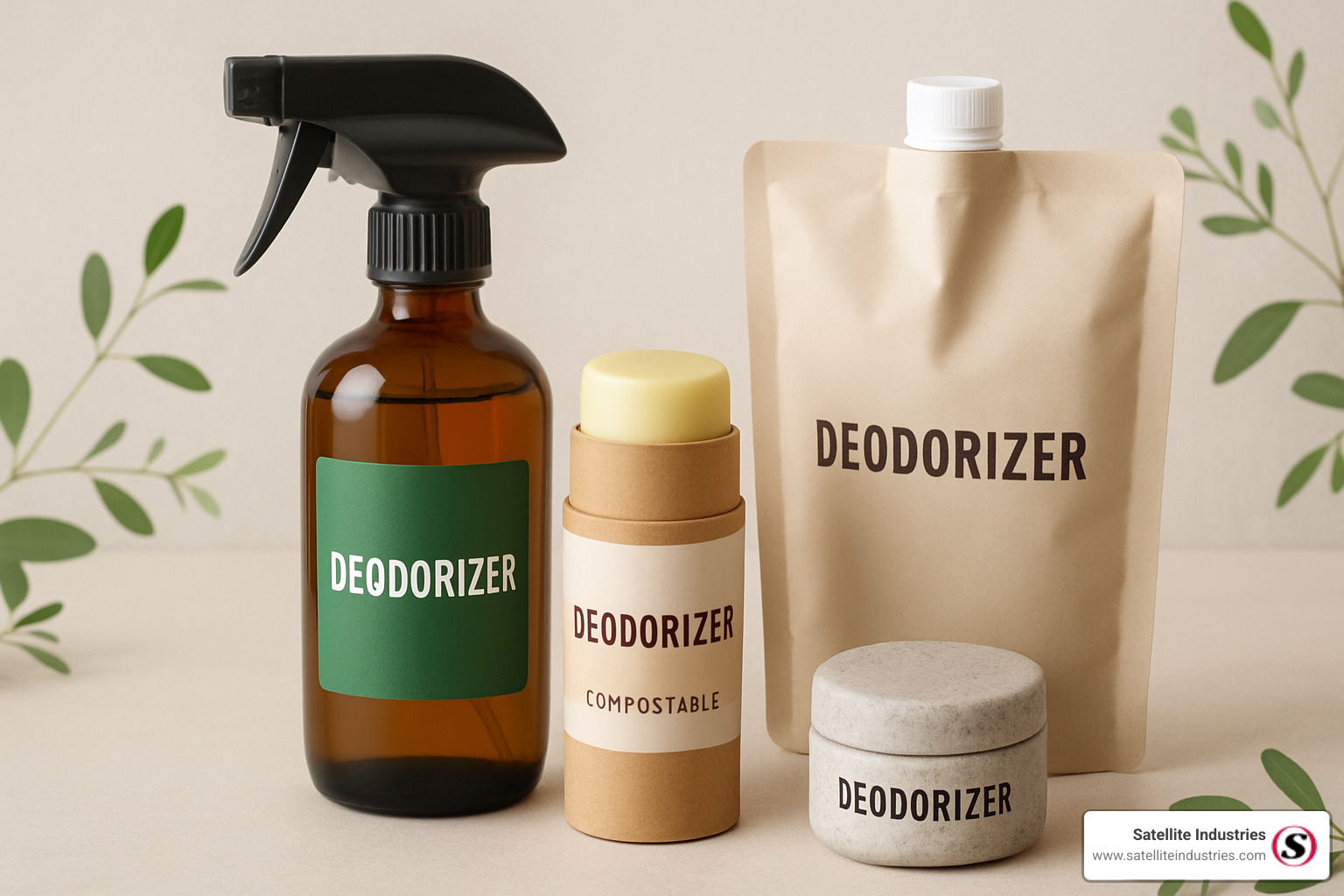
A truly sustainable deodorizer considers not just what’s inside the bottle but the bottle itself. The most environmentally responsible products often feature refill systems that dramatically reduce plastic waste. For example, some brands use refills made from eco-friendly paper pulp instead of plastic.
Concentrates offer another smart solution. Since ready-to-use liquid deodorizers can contain up to 95% water, concentrated formulas significantly reduce packaging waste and transport energy. Many eco-conscious brands also use post-consumer recycled plastic or paper, compostable packaging, or simply minimal packaging overall.
For portable sanitation distributors, these packaging considerations can translate to practical benefits beyond environmental impact. Concentrated products require less storage space and reduce shipping costs, while refill systems can create ongoing customer relationships and revenue streams.
By understanding how eco-friendly deodorizers work and what makes them truly sustainable, distributors can better educate their customers and position themselves as environmental leaders in the portable sanitation industry.
Product Roundup: Top Types of Eco-Friendly Deodorizers For Every Need
Let’s explore the wonderful world of eco-friendly deodorizers and find the perfect match for your specific needs. Whether you’re looking for solutions for your home, need something gentle for spaces with kids and pets, or require industrial-strength options for your portable sanitation business, there’s an eco-friendly option designed just for you.
Eco-Friendly Deodorizers for Homes & Offices
Creating fresh, inviting spaces at home or work doesn’t require harsh chemicals. Today’s eco-friendly deodorizers offer effective solutions that keep indoor air healthy.
Plant-based room sprays provide immediate relief when cooking odors linger or bathroom freshness needs a boost. Unlike traditional aerosols, these non-aerosol pump sprays distribute essential oils without propellants, often in beautiful glass bottles you’ll be proud to display.
For continuous freshness without any effort, reed diffusers offer a lovely passive option. These electricity-free fresheners use natural reeds to slowly disperse essential oil blends throughout your space. They’re particularly effective in entryways and conference rooms where a subtle, consistent scent creates a welcoming atmosphere.
Odor-absorbing gels, like Fresh Wave’s plant-based formulations, actively neutralize odors rather than masking them. Place these unobtrusive containers in bathrooms, near trash areas, or pet spaces for continuous odor control that lasts up to two months.
For those who love the convenience of plug-ins but worry about their environmental impact, companies like Enviroscent now offer eco-friendly alternatives with paper pulp refills instead of plastic. These can provide consistent fragrance in high-traffic areas for up to 45 days per refill.
Perhaps the simplest solution of all is activated charcoal bags. These reusable odor absorbers contain no fragrances whatsoever and can be “recharged” simply by placing them in sunlight. With proper maintenance, they’ll keep working for 1-2 years, making them perfect for closets, shoe racks, and damp areas.
Eco-Friendly Deodorizers for Pets, Kids & Allergy-Sensitive Spaces
When it comes to our most vulnerable family members – children, pets, and those with sensitivities – choosing the right eco-friendly deodorizers becomes even more important.
Hypoallergenic sprays offer odor neutralization without added fragrances that might trigger reactions. These gentle formulations often contain just water, plant-derived alcohol, and natural surfactants. Look for products that are pediatrician-tested or certified hypoallergenic, especially for use in nurseries, schools, and healthcare settings.
For pet parents, enzymatic odor eliminators are a game-changer. These specialized formulas contain enzymes that specifically target and break down the proteins in pet accidents. Unlike conventional fresheners that just mask the smell, these eco-friendly deodorizers actually eliminate the source of the odor. They’re perfectly safe for use around your furry friends once dry.
Sometimes the simplest solutions are the most effective. Baking soda-based products have been freshening homes for generations. Today’s versions often combine this natural odor absorber with light essential oil scents in sprinkle-on powders or breathable sachets. They’re particularly effective for carpets, pet beds, refrigerators, and trash cans.
Don’t overlook the power of plants as natural air purifiers. Peace lilies, snake plants, and pothos not only add beauty to your space but actively filter air and absorb odors. It’s like getting an air freshener and home décor in one living package!
Eco-Friendly Deodorizers for Portable Restrooms & Commercial Holdings
For distributors in the portable sanitation industry, powerful eco-friendly deodorizers that meet environmental standards while delivering exceptional performance are essential to your business.
Bio-enzymatic liquids represent the cutting edge of natural odor control. These formulations contain beneficial bacteria that actively digest waste and eliminate odors at the source. With their distinctive blue coloring for service verification and non-formaldehyde formulations, they offer both visual appeal and environmental safety for holding tanks in portable restrooms, RVs, and boats.
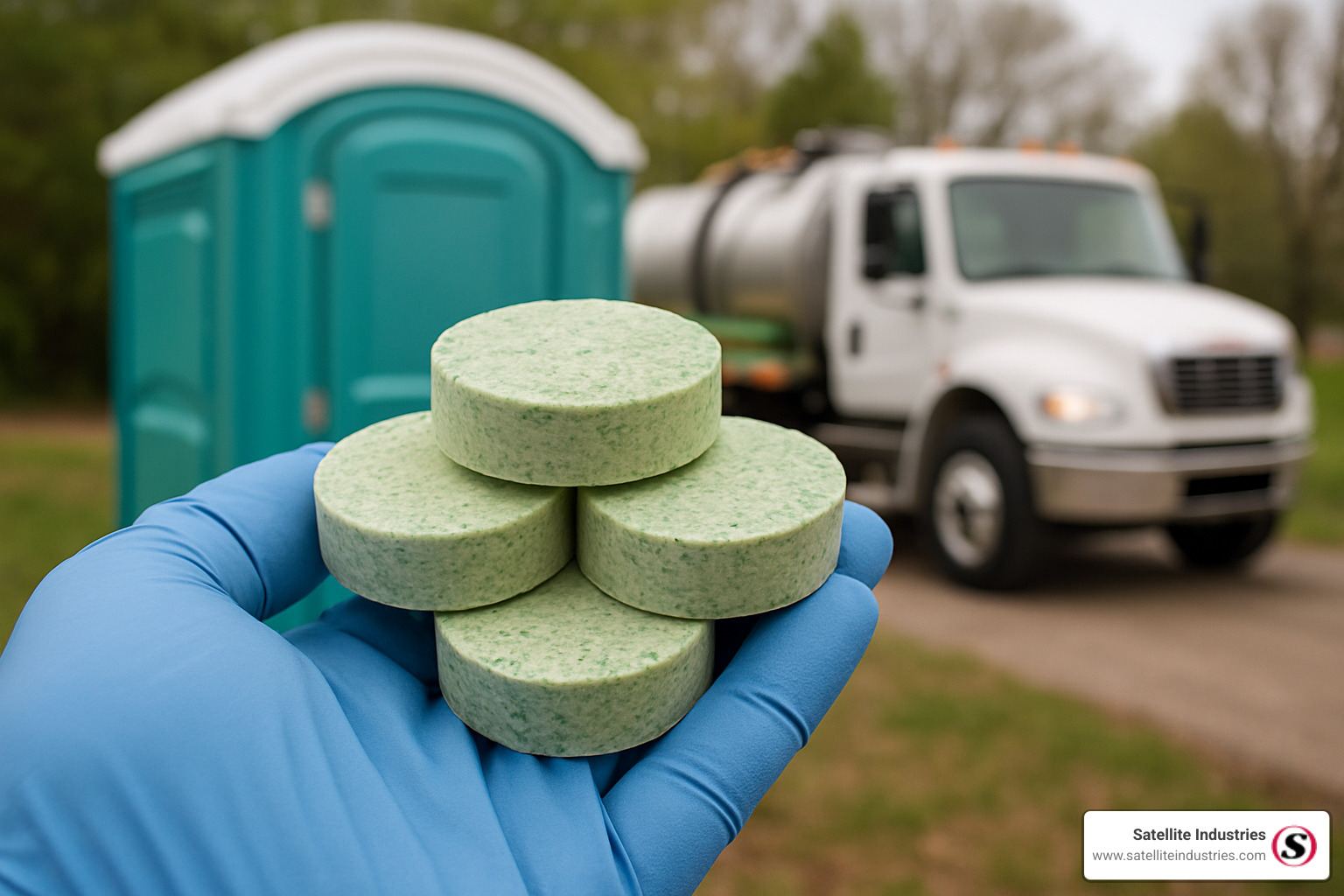
Water-soluble packets have revolutionized the way many operators handle deodorizers. These portion-controlled doses in water-soluble film eliminate measuring, reduce chemical exposure, and ensure consistent application every time. For high-volume operations where efficiency matters, these biodegradable packets offer the perfect balance of convenience and environmental responsibility.
When working in cold climates, effervescent tablets shine. These fizzing tablets dissolve quickly even in cold water or brine solutions, providing instant color and fragrance. Their portion-controlled format prevents waste from overuse while simplifying inventory management – a win for both your bottom line and the environment.
For operations focused on minimizing their carbon footprint, super-concentrated formulas make a tremendous difference. Typically mixing at just 2-4 oz per service, these concentrated eco-friendly deodorizers dramatically reduce packaging waste and shipping impacts while delivering powerful performance.
At Satellite Industries, our Bio-Base BioDeodorizer represents our commitment to both environmental responsibility and exceptional performance. This specialized formula uses viable bacterial cultures that actively consume odor-causing organic debris, converting it to water and carbon dioxide without leaving bacterial waste. With its neutral pH and fully biodegradable formula, it avoids environmental harm from phosphates and VOCs while providing the powerful odor control your customers expect.
Using & Disposing of Eco-Friendly Deodorizers: Best Practices & Cost Insights
Maximizing the effectiveness of eco-friendly deodorizers requires proper application techniques and understanding their lifecycle from purchase to disposal.
Maximizing Effectiveness & Longevity
Application Tips for Different Formats:
- Liquid concentrates: Measure accurately using the recommended dilution ratios. For portable sanitation applications, typical dosages range from 2-4 oz per service, depending on temperature and usage conditions.
- Water-soluble packets: Ensure complete dissolution by adding sufficient water after placing the packet in the holding tank. The standard recommendation is 5 gallons of water per packet.
- Effervescent tablets: Allow tablets to fully dissolve before service. These work particularly well in cold conditions where other products might be less effective.
- Room sprays: Spray toward the center of the room rather than directly on surfaces for better air distribution. For odor sources like fabrics or waste receptacles, spray from 6-8 inches away.
- Charcoal bags: Place these in areas with good air circulation for maximum odor absorption. Remember to “recharge” monthly by placing in direct sunlight for 1-2 hours.
Strategic Placement:
The effectiveness of any deodorizer depends largely on proper placement:
- Position products near odor sources rather than randomly throughout a space
- For portable restrooms, ensure deodorizer is properly added to the holding tank
- In homes and offices, place deodorizers in areas with air circulation but away from direct heat sources
- For charcoal bags, hanging them allows better air exposure than placing on surfaces
Maintenance Schedule:
Establish a regular maintenance routine to ensure continuous effectiveness:
- For bacterial/enzymatic products in portable sanitation: Apply with each service cycle
- For home diffusers and gels: Check weekly and replace or refill as needed
- For charcoal bags: Recharge monthly in sunlight
- For concentrated formulas: Follow the step-down dosage recommendations (starting with higher concentration, then reducing for maintenance)
Safe Disposal & End-of-Life Options
One of the key benefits of eco-friendly deodorizers is their reduced environmental impact at disposal. However, proper end-of-life handling is still important:
For Containers:
- Rinse plastic bottles thoroughly before recycling
- Check local recycling guidelines as capabilities vary by region
- For glass containers, remove any non-recyclable components (pumps, sprayers) before recycling
- Consider brands that offer refill programs to minimize container waste
For Product Residue:
- Biodegradable formulas can typically be diluted and poured down drains
- For solid products like charcoal bags, many can be composted in garden settings
- Expired or unused liquid products should never be dumped directly into waterways
- When in doubt, check with local hazardous waste disposal guidelines
For Commercial Applications:
- Ensure waste water containing deodorizers is properly directed to approved treatment facilities
- Train service technicians on proper disposal protocols
- Keep documentation of environmentally friendly disposal practices for regulatory compliance
Cost & Performance Comparison: Are Eco-Friendly Deodorizers Worth It?
A common concern about eco-friendly deodorizers is whether they provide value compared to conventional options. Let’s break down the cost considerations:
Initial Cost vs. Lifetime Value:
While eco-friendly options often have a higher upfront price, several factors offset this initial investment:
- Concentrated formulas typically yield more applications per bottle
- Longer-lasting effectiveness means less frequent application
- Reduced health risks may lower potential liability and absence costs
- Growing consumer preference for eco-friendly services can command premium pricing
Performance Metrics:
Research indicates that modern eco-friendly deodorizers perform comparably to conventional options:
- Bio-enzymatic formulas continue working long after application, unlike masking agents that fade quickly
- Natural odor neutralizers bond with odor molecules rather than temporarily covering them
- Activated charcoal can absorb odors for months with proper maintenance
- Bacterial formulas actually improve in effectiveness over time as beneficial bacteria multiply
Subscription and Bulk Savings:
For distributors and rental businesses, cost efficiencies can be found through:
- Bulk purchasing arrangements with manufacturers
- Subscription services that ensure regular delivery at reduced rates
- Concentrated formulas that reduce shipping costs and storage requirements
- Portion-controlled formats that eliminate waste from overuse
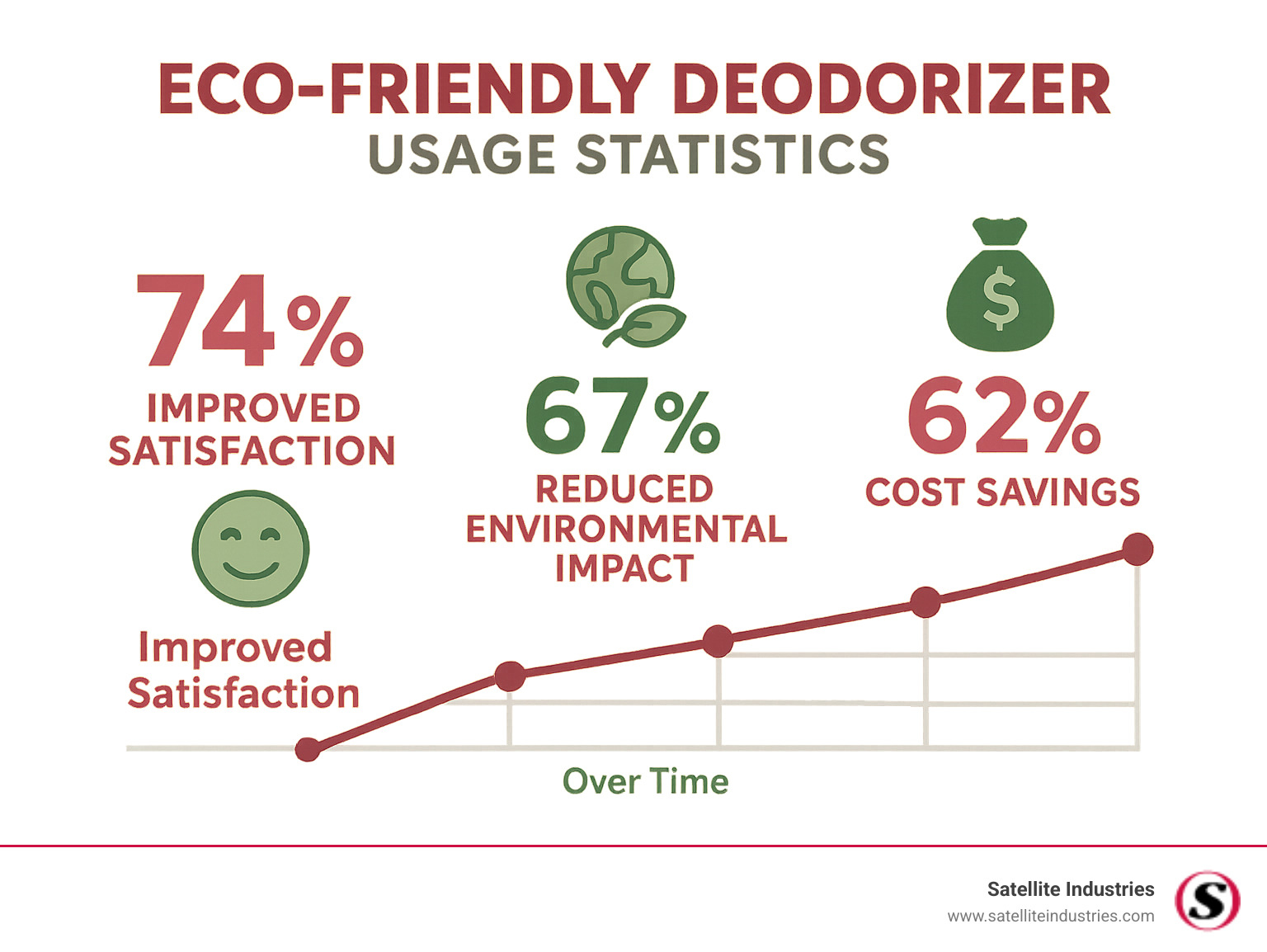
The verdict? While individual product costs may be higher, the total cost of ownership for eco-friendly deodorizers is often comparable or even lower than conventional options when considering longevity, effectiveness, and customer satisfaction.
Frequently Asked Questions about Eco-Friendly Deodorizers
Are eco-friendly deodorizers as effective as traditional sprays?
When customers ask about effectiveness, I always tell them that modern eco-friendly deodorizers absolutely can match traditional options—they just work through different mechanisms.
Traditional deodorizers typically mask odors with powerful synthetic fragrances, giving that immediate “fresh smell” we’ve grown accustomed to. In contrast, eco-friendly versions often take a more sophisticated approach by neutralizing odors at their source.
The bio-enzymatic formulas are particularly impressive. They contain beneficial bacteria or natural enzymes that actually consume the organic matter causing the smell in the first place. This means they continue working long after application, providing more lasting results than simple masking agents.
For portable restroom operators facing particularly challenging environments, specialized eco-friendly formulations have been developed that perform exceptionally well. Many of our customers who’ve switched to products like our Bio-Base BioDeodorizer report equal or better odor control compared to the harsh chemicals they used previously.
The secret to success with eco-friendly deodorizers is matching the right product to your specific application. A charcoal-based product might be perfect for a small enclosed space, while a bacterial formula would be better suited for a portable restroom holding tank.
Are they safe around children, pets, and asthma sufferers?
Safety is where eco-friendly deodorizers truly shine compared to conventional options. That said, it’s still important to evaluate each product individually rather than assuming “natural” always means completely safe for everyone.
For homes with asthma sufferers or those with respiratory sensitivities, look for hypoallergenic or fragrance-free formulations. Many of our distributors specifically request these options for clients with health concerns.
If you have pets, especially cats (who can be particularly sensitive to essential oils), check for pet-safe certifications. For children’s spaces, pediatrician-tested products offer additional peace of mind.
Even with natural products, it’s wise to test in small areas first and ensure proper ventilation. Natural doesn’t mean non-reactive—some people may still have sensitivities to certain plant-based ingredients.
For those with multiple chemical sensitivities, I often recommend non-scented options like activated charcoal bags. These work by absorbing odors rather than adding any fragrance to the environment, making them ideal for the most sensitive individuals.
Can I make my own eco-friendly deodorizer at home?
You absolutely can create effective eco-friendly deodorizers in your kitchen! Many of our customers supplement their commercial products with simple DIY solutions for their homes or offices.
A basic baking soda deodorizer is remarkably effective—just mix a cup of baking soda with 10-15 drops of your favorite essential oil. Store it in a jar with a perforated lid, and you can sprinkle it on carpets before vacuuming or place it open in the refrigerator to absorb odors.
For a refreshing spray, try the citrus vinegar approach. Fill a jar with orange, lemon or lime peels, cover with white vinegar, and let it infuse for 1-2 weeks. After straining and diluting with water, you’ll have an all-purpose deodorizing spray that costs pennies compared to store-bought versions.
For fabrics and upholstery, a simple mixture of vodka, distilled water and essential oils works wonders. The alcohol evaporates quickly, taking odors with it and leaving just a hint of natural fragrance behind.
That said, for commercial applications like portable restrooms, professionally formulated products typically provide more consistent results and include stabilizers that extend shelf life. The specialized bacterial formulations used in professional settings are difficult to replicate at home and have been engineered specifically for challenging waste environments.
For distributors looking to offer the most effective solutions to their rental customers, commercial eco-friendly deodorizers with proper certifications will always provide the most reliable performance and customer satisfaction.
Conclusion
The journey through eco-friendly deodorizers reveals a remarkable evolution in how we approach odor control. These innovative solutions don’t just mask smells—they eliminate them at the source while safeguarding our health and the planet we all share. Whether you’re managing a home, office, or a fleet of portable restrooms, today’s eco-friendly options deliver powerful performance without the concerning chemicals found in traditional products.
For distributors in the portable sanitation industry, the shift toward greener deodorizing solutions represents both an opportunity and a responsibility. Your customers increasingly expect environmentally conscious options, and regulations continue to tighten around chemical usage. By offering eco-friendly deodorizers, you’re not just avoiding potential liability—you’re actively positioning your business as a forward-thinking partner in sustainability.
The beauty of these products lies in their dual benefit: they’re better for people and better for the planet. The natural enzymes, beneficial bacteria, essential oils, and activated charcoal in today’s formulations work with nature rather than against it. And as we’ve seen, this approach doesn’t require compromising on effectiveness or economic viability.
At Satellite Industries, we understand the unique challenges faced by portable sanitation professionals. That’s why we’ve developed bio-enzymatic deodorizers that harness natural processes to deliver superior odor control. These specialized formulas don’t just cover up smells—they actively digest the organic matter causing those odors in the first place. We invite you to learn more about our biological deodorizers and find how they can improve your service offerings.
True sustainability isn’t just about what’s in the bottle—it encompasses everything from sourcing and manufacturing to packaging, usage, and disposal. By making thoughtful choices about the eco-friendly deodorizers you distribute, you’re contributing to a healthier indoor environment for users and a healthier outdoor environment for everyone.
The path toward more sustainable business practices isn’t just a passing trend—it’s becoming the new standard across industries. With every eco-conscious product choice, you’re helping to build a better future while meeting the practical needs of today’s customers.
We hope this guide has illuminated eco-friendly deodorizers and equipped you with valuable insights to make choices that benefit your business, your customers, and our shared environment. The future of odor control is here—and it smells pretty great.
Latest from the Satellite Industries Blog
Need Help {Finding the Right Sanitation Solution?}
Satellite Industries is the largest manufacturer of portable restrooms, restroom trailers, restroom trucks, septic trucks, slide-ins, unit haulers, vacuum technology, modular solutions, consumables and deodorizers.
.webp)
.webp)