
OSHA Portable Toilet Requirements: The Construction Manager's 2026 Guide
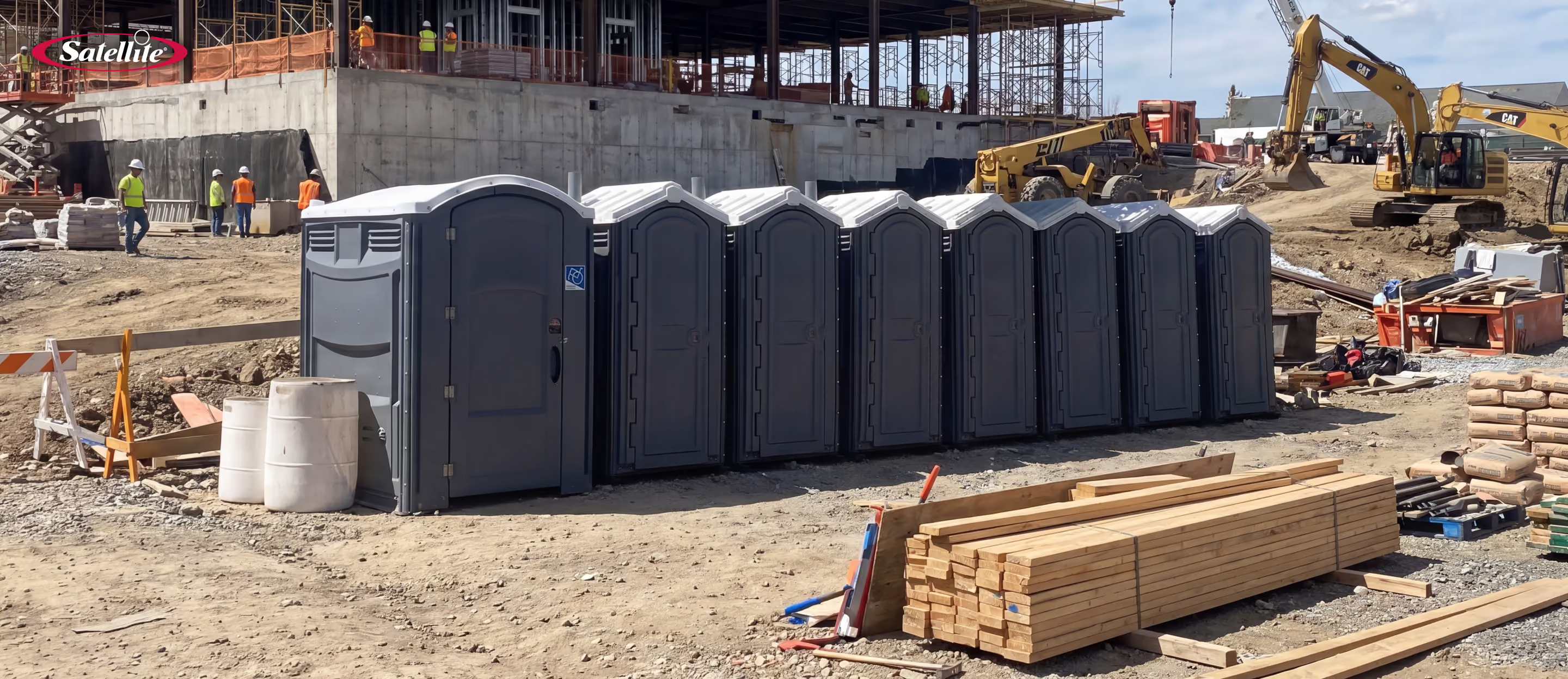
Construction site sanitation is far more than a convenience, it's a legal responsibility that directly impacts worker safety, productivity, and regulatory compliance. Under OSHA 29 CFR 1926.51, construction employers must provide workers with adequate and readily accessible sanitation facilities throughout every phase of a project. Failure to comply can result in OSHA citations, costly penalties, and project delays.
Maintaining compliance, however, involves much more than simply placing portable restrooms onsite. Construction managers must consider the number of units required, where they're located, how frequently they're serviced, whether proper handwashing facilities are available, and if accessible restrooms are provided when needed.
Whether you're managing a small commercial renovation or a multi-story construction project, understanding OSHA's sanitation requirements can help keep your project inspection-ready while providing a safer, more comfortable work environment.
As one of the portable sanitation industry's leading manufacturers, Satellite Industries provides contractors and portable sanitation operators with compliant portable restrooms, ADA-accessible units, high-rise solutions, handwash stations, and service products designed specifically for demanding construction environments.
What OSHA Actually Requires: Understanding the Core Standard
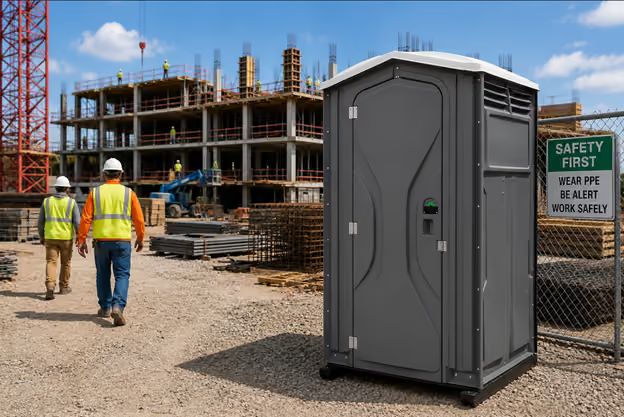
The primary federal regulation governing sanitation on construction sites is OSHA 29 CFR 1926.51, which requires employers to provide adequate and readily accessible toilet facilities for employees.
While OSHA establishes the legal requirement, it intentionally leaves operational details—such as restroom quantities and servicing frequencies—to nationally recognized industry standards. That's where ANSI/PSAI Z4.3-2024 plays an important role. OSHA inspectors frequently reference ANSI guidance when determining whether a construction site provides sufficient sanitation facilities.
In practice, compliance means more than simply placing portable restrooms somewhere on the jobsite. Facilities should generally be located within approximately a 10-minute walk of active work areas, remain clean and fully operational, and provide workers with the privacy and accessibility they need throughout the workday.
To remain compliant, construction site restroom facilities should be:
- Readily accessible to all employees
- Clean, sanitary, and routinely serviced
- Fully operational and properly ventilated
- Equipped with functioning interior door locks
- Supported by nearby handwashing facilities
A damaged, overflowing, or unusable restroom may no longer satisfy OSHA's sanitation requirements, even if it counts toward the total number of units onsite.
For a deeper look at industry best practices, see our guide to Understanding ANSI Regulations for Portable Sanitation.
- Compliance Tip: Review restroom locations during each phase of construction. As projects expand horizontally or vertically, restroom placement should evolve with the workforce.
How Many Portable Toilets Are Required on a Construction Site?
One of the most common questions construction managers ask is:
How many portable toilets does my construction site need?
OSHA requires employers to provide adequate restroom facilities, while ANSI Z4.3-2024 provides the recommended unit ratios commonly used as the industry benchmark.
These recommendations provide a solid starting point, but every construction project is unique. Factors such as walking distance, workforce distribution, shift schedules, project duration, and weather conditions can all influence the number of portable restrooms needed.
Example
A commercial project with 25 workers would generally require three portable restrooms. However, if crews are spread across several acres or multiple buildings, additional units may improve accessibility and reduce lost productivity—even if the minimum requirement has technically been met.
Try our Satellite Restroom Calculator!
Remember, compliance isn't determined by restroom count alone. Cleanliness, servicing frequency, accessibility, and placement all contribute to maintaining a compliant construction site.
OSHA Handwashing Requirements for Construction Sites
Providing portable restrooms is only part of a comprehensive sanitation plan. Proper handwashing facilities are equally important for reducing the spread of illness and supporting a healthier, safer workforce.
OSHA requires employers to provide potable water and adequate handwashing facilities for construction workers.
A common misconception is that hand sanitizer alone satisfies OSHA requirements. While sanitizer is a valuable supplemental hygiene measure, it should not replace proper handwashing facilities whenever running water is available.
As a best practice, handwash stations should be located immediately adjacent to restroom banks to encourage regular use while minimizing unnecessary walking.
Satellite Industries' foot-operated handwash stations provide a hands-free washing experience that helps reduce cross-contamination while improving overall jobsite hygiene.
Placement Rules: Where Should Portable Toilets Be Located?
Having enough portable restrooms is only part of OSHA compliance. Their location has a direct impact on worker productivity and accessibility.
As construction progresses, restroom locations should move with the workforce. A restroom that was conveniently located during site preparation may become impractical once framing begins or additional structures are erected.
When planning restroom placement:
- Position facilities within approximately 10 minutes of active work areas.
- Relocate units as work zones shift throughout the project.
- Install restrooms on firm, level surfaces.
- Maintain clear access for service vehicles.
- Keep units away from emergency exits and fire lanes.
- Ensure ADA-accessible units remain on accessible routes.
High-Rise Construction
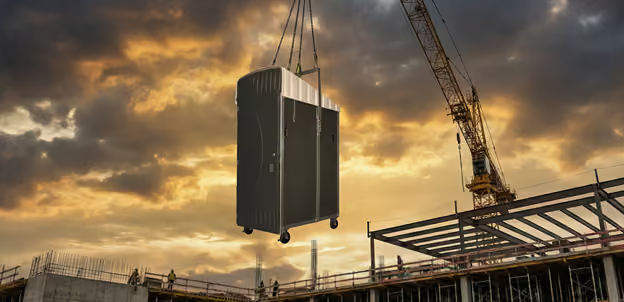
Multi-story construction presents unique sanitation challenges. Workers on upper floors shouldn't have to travel multiple flights of stairs to access restroom facilities.
Satellite Industries' High-Rise Portable Restrooms are specifically designed for crane delivery and floor-by-floor placement, allowing contractors to keep restroom access close to active work areas while improving productivity throughout every phase of construction.
Common Mistake: Waiting until workers complain before relocating restrooms. Proactively adjusting restroom placement helps maintain compliance and minimizes unnecessary downtime.
ADA Compliance on Construction Sites
Providing accessible sanitation facilities is an essential part of construction site planning. When workers with disabilities are employed on a jobsite, employers are responsible for ensuring appropriate restroom accommodations are available in accordance with applicable OSHA and ADA requirements.
ADA-compliant portable restrooms differ from standard units by offering features designed to improve accessibility, comfort, and maneuverability. These typically include:
- Wider door openings
- Spacious interior turning radius
- Grab bars positioned to ADA standards
- Accessible door hardware
- Low-entry thresholds
- Interior layouts designed for wheelchair accessibility
Satellite Industries offers ADA-certified portable restrooms, including the Liberty Wheelchair Accessible and Freedom ADA, engineered to meet accessibility requirements while providing the durability needed for demanding construction environments.
Accessibility extends beyond the restroom itself. ADA units should be placed on firm, level ground with a clear, unobstructed path from the primary work area to ensure workers can safely access the facility.
For a complete overview of accessibility requirements, dimensions, and placement considerations, see our guide to ADA-Compliant Portable Restrooms.
- Best Practice: Position ADA units near the main work area—not at the far edge of the site—to ensure convenient, equitable access for all employees.
Servicing Requirements: Keeping Portable Restrooms Compliant
Installing portable restrooms is only the first step. Regular servicing is what keeps a construction site compliant, sanitary, and ready for inspection.
OSHA requires restroom facilities to remain clean, sanitary, and serviceable throughout the life of a project. Even if the correct number of units is onsite, poorly maintained or unusable restrooms may lead to compliance concerns and negatively affect worker morale.
While weekly servicing may be sufficient for smaller crews, factors such as workforce size, project duration, weather conditions, and daily usage often require more frequent maintenance.
A standard service visit typically includes:
- Pumping and waste removal
- Interior cleaning and sanitizing
- Fresh water replenishment
- Restocking toilet paper and hygiene supplies
- Refilling deodorizer
- Inspecting vents, door hardware, and structural components
Maintaining documented service records also demonstrates that sanitation is being actively managed should an OSHA inspection occur.
Example
A warehouse expansion with 75 workers operating six days a week will likely require more frequent servicing than a small office renovation with a crew of ten. Monitoring actual restroom usage—not simply following a fixed calendar schedule—helps maintain cleaner facilities while minimizing service disruptions.
Satellite Industries' Safe-T-Fresh products, available within our Deodorizer line, help control odors and extend restroom performance between scheduled service visits, especially during periods of heavy use.
- Compliance Tip: Review servicing frequency every few weeks as crew size changes. Increasing service visits during peak construction phases can prevent sanitation issues before they become compliance concerns.
Common OSHA Sanitation Violations—and How to Avoid Them
Most OSHA sanitation citations stem from issues that can be prevented with proper planning and routine maintenance. Understanding the most common violations can help construction managers stay ahead of potential problems.
Insufficient Restroom Capacity
As projects progress and subcontractors rotate onto the jobsite, workforce numbers often increase. Failing to add additional restrooms as crews grow is one of the most common sanitation deficiencies.
How to avoid it: Review restroom needs whenever staffing levels change and adjust quantities accordingly.
Poorly Maintained Facilities
Portable restrooms that are dirty, damaged, or out of service can quickly become a compliance issue, regardless of how many units are onsite.
How to avoid it: Schedule servicing based on actual usage rather than a fixed calendar, and inspect units regularly between service visits.
Restrooms Located Too Far from Active Work Areas
Large commercial developments and high-rise projects often evolve rapidly. If restroom locations remain static while work progresses, employees may be forced to travel excessive distances.
How to avoid it: Relocate restroom banks as work zones shift and consider floor-by-floor placement on multi-story projects.
Inadequate Handwashing Facilities
Providing portable restrooms without nearby handwashing stations reduces overall hygiene and may not satisfy OSHA expectations where handwashing facilities are required.
How to avoid it: Install handwash stations adjacent to restroom banks and keep them fully stocked throughout the project.
Missing ADA Accessibility
Projects employing workers with disabilities should ensure accessible restroom facilities are available and positioned along accessible routes.
How to avoid it: Plan for accessibility during the initial site layout rather than treating it as an afterthought.
Lack of Routine Service Documentation
While maintaining clean facilities is essential, documenting servicing schedules can also demonstrate that sanitation is being actively managed if questions arise during an inspection.
How to avoid it: Keep service logs and communicate regularly with your portable sanitation provider to ensure servicing matches current site conditions.
Frequently Asked Questions
What are OSHA's portable toilet requirements for construction sites?
Construction employers must provide workers with adequate and readily accessible restroom facilities throughout the project. Portable restrooms should remain clean, functional, conveniently located, and supported by nearby handwashing facilities. Many contractors also follow ANSI/PSAI Z4.3-2024 recommendations for restroom quantities and servicing schedules to help maintain compliance.
How many portable toilets are required on a construction site?
The number of portable restrooms depends on workforce size and cumulative labor hours. As a general guideline, ANSI recommends approximately one toilet for every ten workers on smaller projects, with additional units added as staffing levels and project demands increase.
Does OSHA require handwashing stations on construction sites?
Yes. OSHA requires employers to provide adequate handwashing facilities for workers. Where running water is available, employees should have access to soap, clean water, and hand-drying materials. Hand sanitizer is an excellent supplement but should not replace proper handwashing facilities.
What is OSHA 29 CFR 1926.51?
29 CFR 1926.51 is OSHA's sanitation standard for construction sites. It outlines employer responsibilities for providing restroom facilities, potable drinking water, handwashing opportunities, and other sanitation measures necessary to protect worker health.
What is the difference between OSHA and ANSI requirements?
OSHA establishes the legal requirements for construction site sanitation, while ANSI provides detailed industry recommendations for restroom quantities, servicing frequencies, and operational best practices. Following both helps contractors build safer, more compliant jobsites.
Conclusion
Construction site sanitation is about far more than meeting regulatory requirements—it's about supporting worker health, improving productivity, and keeping projects running efficiently.
By planning restroom quantities, placing facilities where workers need them most, maintaining consistent service schedules, providing proper handwashing stations, and ensuring accessibility, contractors can reduce downtime, improve employee satisfaction, and stay prepared for OSHA inspections.
For more than 65 years, Satellite Industries has partnered with portable sanitation operators and construction professionals to deliver dependable sanitation solutions for projects of every size. From standard portable restrooms and ADA-certified models to high-rise units, handwash stations, and industry-leading service products, our equipment is built to perform in demanding construction environments.
Whether you're planning a small commercial build or a large-scale infrastructure project, the right sanitation strategy starts with the right equipment.
Explore Satellite Industries' complete line of portable sanitation solutions or contact your local Account Executive to discuss the best products for your next construction project.
Lo último del blog de Satellite Industries
¿Necesita ayuda {¿Encontrar la solución de saneamiento adecuada?}
Satellite Industries es el mayor fabricante de baños portátiles, remolques para baños, camiones para baños, camiones sépticos, deslizantes, transportadores de unidades, tecnología de vacío, soluciones modulares, consumibles y desodorantes.
.webp)
.webp)