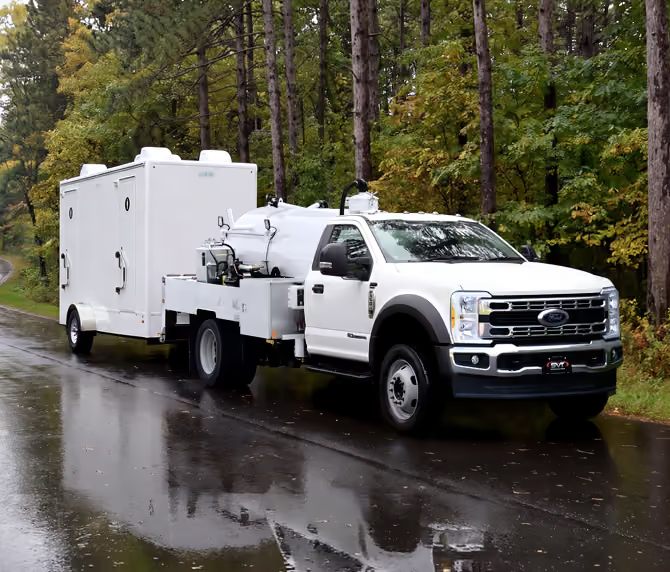
Year-End Fleet Planning and Section 179: What to Look At Before You Buy
As the year comes to a close, what gaps did your fleet reveal?
Reviewing your operations now can help you identify equipment needs, prepare for next year's demand, and make more informed purchasing decisions. The Section 179 tax deduction may also factor into your plans, but eligibility and timing requirements matter. With equipment lead times to consider, early planning is essential.
Why Year-End Is Fleet Planning Season
By the fourth quarter, you have a clearer picture of your fleet's performance. You know which routes operated efficiently, where equipment shortages created challenges, and which opportunities you may have missed.
It's also a good time to review budgets and prepare for the upcoming busy season.
Before purchasing equipment, consider what will make the greatest impact on your operations. That could mean replacing an aging truck, improving route efficiency, or expanding your ability to serve new customers.
Section 179 adds another consideration to your year-end planning. You may qualify for a deduction on certain equipment purchases, provided the applicable requirements are met. Talk to your CPA to see how to qualify and which products qualify.
Your Year-End Fleet Checklist: Let the Data Guide Your Decisions
Your service records, maintenance reports, and customer inquiries can reveal where additional equipment may be needed.
Start by reviewing five key areas:
- Route performance: Identify routes operating at capacity, recurring delays, and missed services.
- Missed opportunities: Review jobs you declined because of equipment shortages or limited availability.
- Customer requirements: Consider requests for specialized equipment, accessibility, or event accommodations.
- Maintenance and downtime: Evaluate repair expenses, equipment reliability, and units approaching replacement.
- Future demand: Review upcoming contracts, seasonal events, and anticipated business growth.
Once you've identified patterns, match them to potential solutions. Whether you're evaluating vacuum trucks or restroom trailers, focus on equipment that addresses a specific operational need.
Match Your Fleet Gaps to Equipment Needs
| What your data shows | Potential fleet gap | Equipment to consider |
|---|---|---|
| Short, light routes regularly tie up full-size trucks | Limited flexibility for smaller service routes | Slide-in unit |
| Deliveries and pickups interfere with scheduled service routes | Insufficient delivery and exchange capacity | Pick-up and delivery truck |
| Difficulty meeting accessibility requirements during event season | Limited accessible restroom inventory | ADA compliant trailers |
| Increased requests for premium events you cannot accommodate | Insufficient upscale restroom options | Executive restroom trailer |
| Routes consistently at capacity with rising repair costs | Aging equipment or insufficient fleet capacity | Fleet upgrade |
The goal isn't necessarily to expand your fleet. A targeted addition or replacement may help reduce downtime, improve service efficiency, or position your business for future opportunities.
What Is Section 179 and How Does It Work?
The Section 179 tax deduction is an IRS provision that allows businesses to deduct the cost of certain qualifying equipment in the year it is placed in service, rather than depreciating the entire cost over several years. This is commonly called Section 179 expensing.
There are several important requirements:
- Business use: Equipment generally must be used more than 50% for business purposes.
- Placed in service: Equipment must generally be ready and available for its intended use during the applicable tax year. Placing an order alone is not sufficient.
- Annual limits: For 2026, the maximum deduction is $2,560,000, with a phaseout beginning when qualifying purchases exceed $4,090,000.
- Equipment purchases: New and used equipment may qualify. Certain financed purchases and leases may also qualify depending on the arrangement.
For additional details, review the IRS guidance on depreciation and Section 179.
Because eligibility depends on your business circumstances, consult your CPA before making tax-related purchasing decisions.
The Date That Matters: Plan Ahead for Equipment Delivery
For Section 179 purposes, the important date is generally when equipment is placed in service, not when the purchase agreement is signed.
With estimated manufacturing and shipping lead times of four to six weeks, waiting until December may leave limited time for delivery and preparation.
Here's how potential ordering dates could affect your timeline:
| Order date | Estimated readiness window | Planning consideration |
|---|---|---|
| October 26 | November 23–December 7 | More time for delivery and setup |
| November 1 | November 29–December 13 | Allows some scheduling flexibility |
| November 15 | December 13–December 27 | Limited time for unexpected delays |
| December 1 | December 29–January 12 | May extend beyond the calendar year |
These are illustrative planning windows based on a four-to-six-week estimate, not confirmed delivery commitments. Actual lead times and availability vary.
If you're considering a purchase, ask your Satellite Account Executive about current inventory and available financing options.
Your CPA can help determine which deadlines apply to your business.
Frequently Asked Questions
What is the Section 179 tax deduction?
Section 179 is an IRS provision that may allow businesses to deduct the cost of qualifying equipment in the year it is placed in service rather than depreciating it over multiple years. This is known as Section 179 expensing. Talk to your CPA to determine how to qualify and which products qualify.
Does equipment have to be delivered by December 31 to qualify for Section 179?
Equipment generally must be placed in service, meaning ready and available for business use, by the end of your tax year. For calendar-year taxpayers, that deadline is typically December 31. Ordering equipment alone is generally not enough. Confirm the requirements and applicable dates with your CPA.
How do I know what equipment my fleet needs for next year?
Review route capacity, missed service opportunities, maintenance expenses, downtime, and anticipated customer demand. Look for recurring challenges that additional or replacement equipment could address. Use those findings to prioritize purchases, then consult your CPA about whether Section 179 may apply.
Plan Your Next Move With Confidence
A well-planned fleet starts with understanding what your business needs. Reviewing this year's performance can help you prioritize improvements and prepare for the opportunities ahead.
Ready to explore your options? Contact your Satellite Account Executive to discuss equipment availability, lead times, and solutions that support your operations.
This article is general information, not tax or legal advice. Satellite Industries is not a tax advisor. Talk to your CPA or tax professional about whether Section 179 applies to your business and which products qualify.
Latest from the Satellite Industries Blog
Need Help {Finding the Right Sanitation Solution?}
Satellite Industries is the largest manufacturer of portable restrooms, restroom trailers, restroom trucks, septic trucks, slide-ins, unit haulers, vacuum technology, modular solutions, consumables and deodorizers.