Portable Toilet Pumping: What You Need to Know for Compliance
Why Portable Toilet Pumping is Critical for Your Rental Business Success
Portable toilet pumping is the process of removing waste from portable restroom units with vacuum trucks and transporting it to approved treatment facilities. This essential service keeps units hygienic, prevents overflows, and ensures compliance with health regulations.
Key aspects of portable toilet pumping include:
- Frequency: Typically weekly for stationary units, but varies with usage.
- Equipment: Vacuum trucks with specialized pumps, hoses, and washdown systems.
- Process: Waste removal, cleaning, chemical replenishment, and restocking supplies.
- Capacity: Standard units hold 40-50 gallons; luxury trailers can hold 500+ gallons.
- Compliance: Waste must be disposed of at licensed wastewater treatment facilities.
Understanding the pumping process is essential for maintaining customer satisfaction and regulatory compliance, whether for weekly construction routes or high-traffic events requiring daily service.
The typical service ratio is one portable toilet per 50 people for general use, while construction sites require one unit per ten full-time workers. Temperature, waste type, and traffic patterns also impact pumping frequency.
As Michelle Amelse, Vice President of Marketing and Customer Success at Satellite Industries with over 26 years in the industry, I’ve seen how proper portable toilet pumping separates successful rental businesses from those that struggle. Understanding the technical requirements and best practices is fundamental to building a profitable, sustainable portable sanitation business.

The Essential Equipment and Process of Portable Toilet Pumping
In the portable sanitation rental business, portable toilet pumping is more than emptying tanks—it’s about delivering a complete service that ensures customer satisfaction. At Satellite Industries, we engineer our vacuum systems and sanitation trucks to make your job easier and deliver exceptional results, because your success depends on reliable equipment.
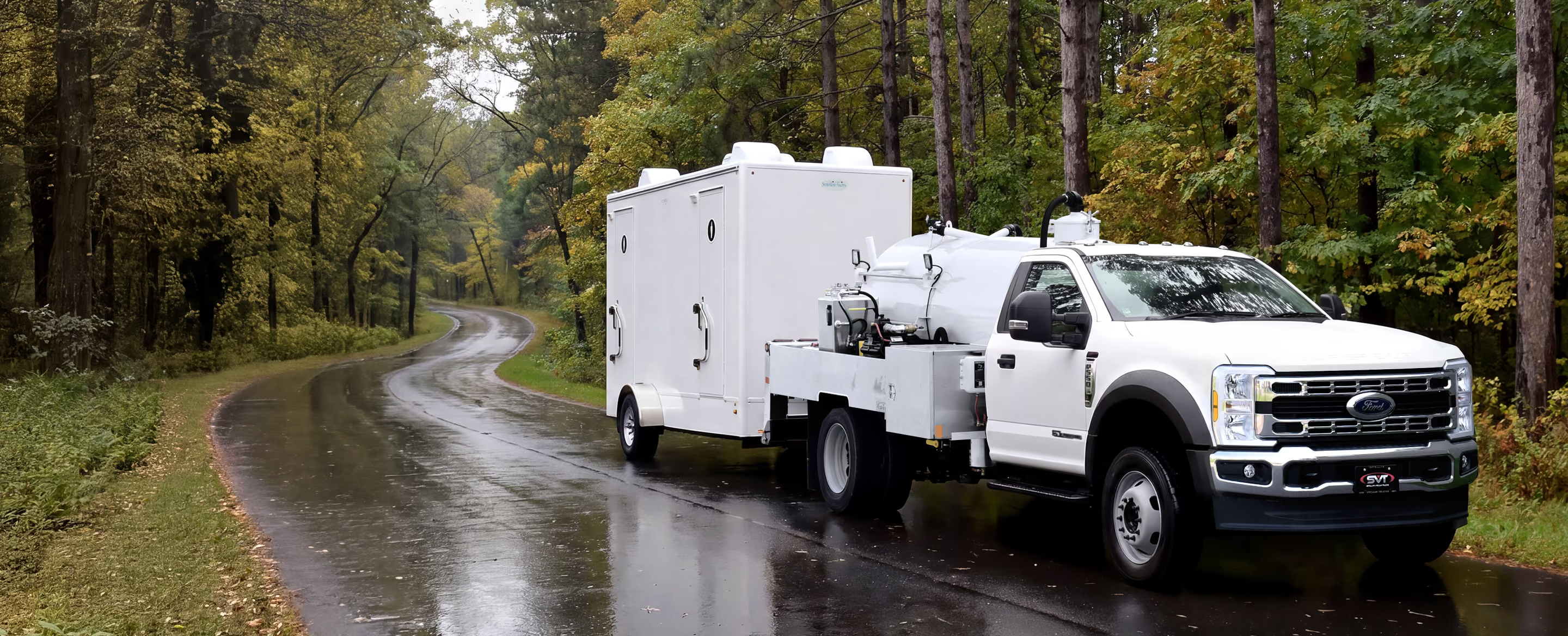
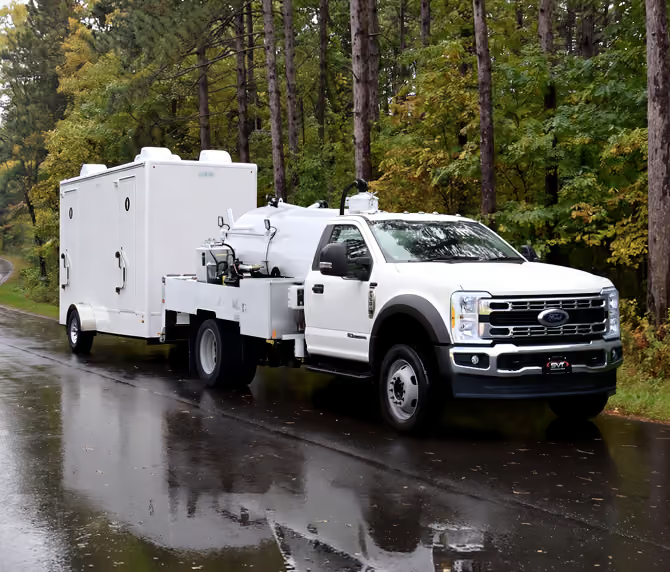
Portable toilet pumping starts with the right truck setup. The main options are full-sized vacuum trucks or versatile slide-in units for pickups. The choice depends on route density and budget, but reliable vacuum technology is essential for both.

The pumping process follows a standard sequence for safety and cleanliness. It begins with preparation: positioning the truck, using proper PPE, and readying equipment. Next, a technician inserts the vacuum hose into the holding tank, and a powerful pump suctions waste into the truck’s sealed tank. Standard units hold 40-50 gallons, ADA-accessible models up to 100 gallons, and luxury trailers can hold 500 gallons or more.
Occasionally, you’ll find items that don’t belong in a toilet, like wipes or personal items, which is why robust pumping systems are critical.
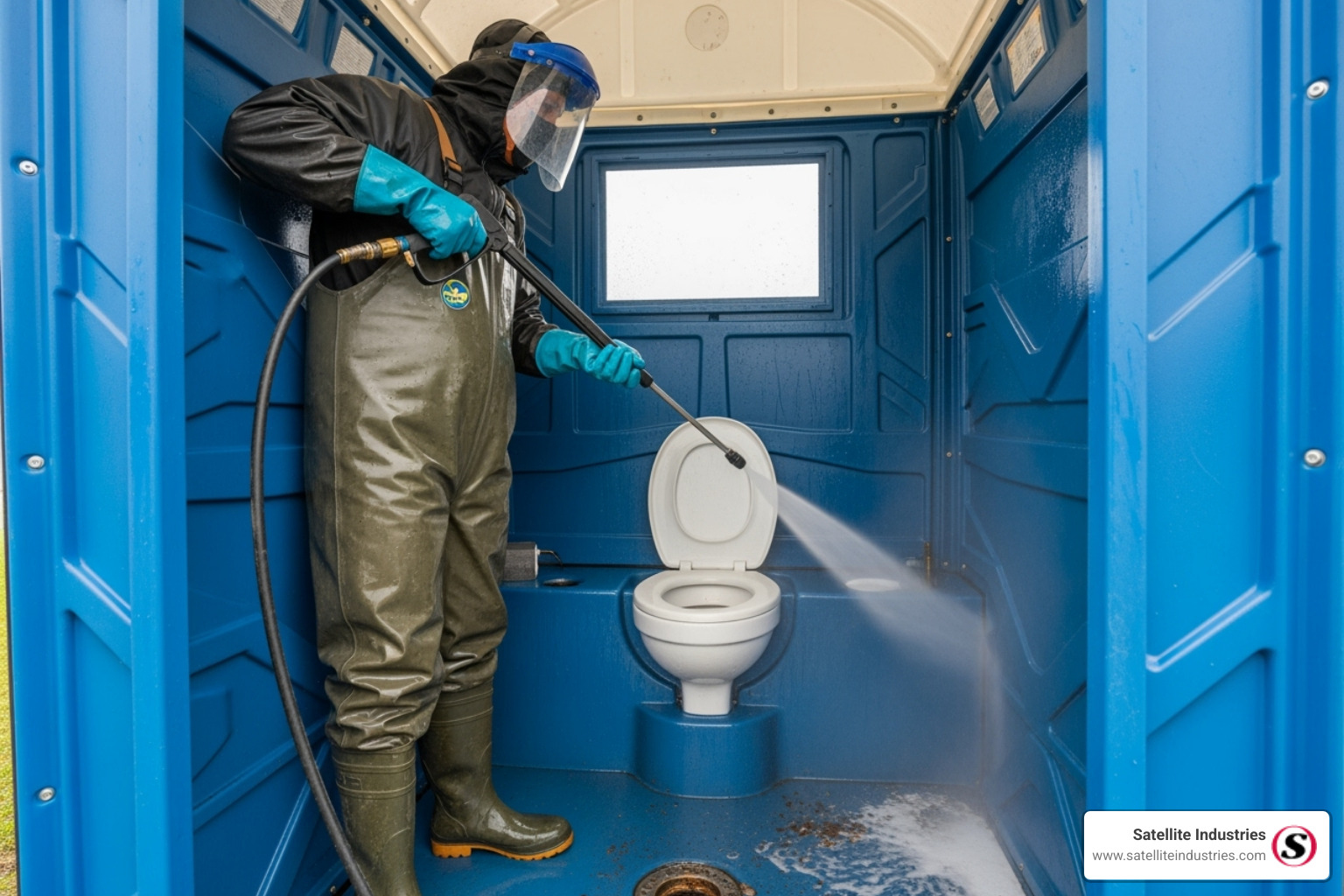
After waste removal, the washdown is crucial for customer satisfaction. Integrated high-pressure systems quickly clean the interior, ensuring proper odor control and hygiene to protect your reputation. Chemical replenishment follows, using a formulated blend of enzymes and microbes to break down waste and control odors. Getting the dosage right is key.
Finally, the technician restocks supplies like toilet paper and hand sanitizer, performs a quick inspection, and moves to the next unit. A correct process is smooth, efficient, and thorough.
The Heart of the Operation: Vacuum Pump Systems
Your vacuum pump system is the heartbeat of your portable toilet pumping operation. When evaluating systems, consider GPM (gallons per minute) and PSI (pounds per square inch). Higher GPM means faster pumping and more stops per day. PSI is important for both suction and washdown capabilities.
Different pump types serve different needs. Diaphragm pumps are reliable and handle debris well, macerator pumps excel at breaking down solids, and traditional vacuum pumps remain industry workhorses for their proven efficiency.
Pump durability is non-negotiable. Equipment faces constant use, chemical exposure, and varying weather. We use materials like aircraft-grade anodized aluminum and stainless steel valves for superior chemical compatibility and longevity. Modern systems also include smart features like run-dry and high-temperature protection to prevent costly damage and downtime.
Innovations in pump design continue to evolve. Some systems allow seamless transitions between high-pressure washdown and fresh water filling with a single hose, saving 1 to 1.5 minutes per unit—time that adds up over a full route.
A demonstration of a modern pump system shows how these innovations translate into real-world efficiency gains.
On-Site Servicing: More Than Just Pumping
Successful portable toilet pumping is a complete service experience. Every detail matters for your reputation.
Washdown systems are key after pumping. High-pressure tools clean toilet seats, walls, and urinals. The goal is to balance cleaning power with water conservation. Smart pump designs use lower GPM rates (around 1.4 GPM) to conserve fresh water, allowing technicians to complete routes without refilling. Water conservation improves efficiency and sustainability.
Chemical replenishment requires precision. The blue deodorizer is a sophisticated blend of biocides, enzymes, and microbes that break down waste and eliminate odors. Correct dosage is critical; too little causes odor complaints, while too much wastes money.
Restocking supplies like toilet paper and hand sanitizer is what customers often notice most. This attention to detail sets professional operators apart. When technicians leave every unit spotless and fully stocked, customers notice, leading to repeat business.
Determining Service Frequency for Different Scenarios
Proper timing for portable toilet pumping is crucial for your rental business. Servicing too infrequently leads to customer complaints and health violations, while servicing too frequently cuts into profits. The ideal frequency depends on several key factors.
Usage patterns are the biggest indicator. A construction site with ten workers fills a unit differently than a weekend wedding with 100 guests. High-traffic events might need portable toilet pumping twice daily, while a quiet site might go two weeks between services.
Temperature plays a significant role. In hot weather, waste breaks down faster and odors develop more quickly. Smart rental businesses adjust their pumping frequency seasonally.
The type of waste also matters. Events where alcohol is served increase usage by about 20%, affecting both filling rates and pumping schedules.
Here’s a practical guide for service frequency:
Number of UsersScenarioRecommended UnitsPumping Frequency10 workersConstruction site1 unitWeekly50 guests6-hour event (no alcohol)1 unitPre/post event25 guests4-hour event (with alcohol)1 unitPre/post event100+ guestsMulti-day festival2-3 unitsDaily
Event duration is another critical factor. Short events may only need pre- and post-event service, whereas long-term placements require regular weekly service.
Calculating Needs for Construction Sites
Construction sites are a core part of many portable sanitation businesses. OSHA guidelines suggest one portable toilet for every ten full-time workers for a 40-hour work week. This is often a regulatory requirement.
Construction sites are predictable, with consistent usage patterns, unlike events where usage can spike. Long-term placements typically require weekly portable toilet pumping as a baseline, but smart operators adjust based on site conditions like dust or weather.
Durability is crucial for construction sites, as units face weather, dust, and heavy use. We engineer our construction-grade units with reinforced components to handle demanding environments. The worker-to-unit ratio is about compliance and productivity; long lines for toilets lead to lost time and unhappy workers.
Planning for Events and Public Gatherings
Event portable toilet pumping requires careful planning and flexibility. The guest count is a starting point, but the general rule of one unit per 50-75 people needs adjustment based on event type. A beer festival has different needs than a corporate picnic.
Event duration dramatically affects your strategy. A four-hour wedding might only need service before and after, but a three-day music festival requires daily portable toilet pumping, sometimes multiple times per day in high-traffic areas.
Alcohol service is a game-changer. When alcohol is involved, increase your unit count by 15-20% and plan for more frequent service, as units can fill 30% faster than expected.
ADA-accessible units are about compliance and excellent service. Their larger holding tank capacity (around 100 gallons) can be factored into your pumping schedule. Luxury restroom trailers, with tanks exceeding 500 gallons, offer extended service intervals but require specialized equipment.
The key to successful event planning is flexibility. Be prepared to add unscheduled portable toilet pumping services if crowds exceed expectations. Your ability to adapt quickly often determines whether you get invited back.
Health, Safety, and Environmental Compliance
In the portable toilet pumping business, health and safety are foundational. Technicians handle waste containing pathogens, so strict compliance and safety-engineered equipment are top priorities.
Improper waste handling endangers workers, customers, and the environment. Strict personal protective equipment (PPE) protocols—including gloves, protective clothing, and eyewear—are essential for every service call. Consistent safety practices are non-negotiable.
Portable toilet pumping operations must follow a clear chain of custody for waste disposal. All waste must travel in sealed, leak-proof sanitation trucks to licensed wastewater treatment facilities. These facilities are equipped to treat human waste, removing contaminants before water is returned to the environment.
Our manufacturing process creates tanks and pumping systems that ensure integrity during transport. A leak is a serious environmental and health hazard, leading to fines and reputational damage. The regulatory landscape includes local, state, and federal guidelines, often from agencies like the EPA. Staying compliant protects public health and your business.

Adhering to Industry Standards
Industry associations have been instrumental in elevating professional standards. These standards are the blueprint for running a successful, ethical operation.
Adhering to industry standards means implementing comprehensive hygiene protocols. This includes correct chemical usage, systematic cleaning, and proactive measures to prevent disease transmission. Thorough technician training on waste handling, equipment operation, and emergency protocols is the backbone of safe operations.
Regulatory compliance requires staying current with evolving regulations. During the COVID-19 pandemic, our industry was recognized as essential for providing critical services to frontline workers and disaster relief efforts, highlighting our vital role in public health.
The Role of Chemicals in Safe Portable Toilet Pumping
The blue liquid in portable toilet holding tanks is a sophisticated chemical solution that enables safe portable toilet pumping. Modern formulations are biodegradable and formaldehyde-free, reflecting a commitment to environmental responsibility.
These chemicals provide several benefits:
- Odor control: Powerful deodorizers neutralize smells by inhibiting odor-producing bacteria.
- Waste breakdown: Enzymes and beneficial microbes liquefy solid waste and toilet paper, making pumping more efficient and preventing clogs.
- Disinfection: Biocides kill germs and inhibit bacterial growth, creating a more hygienic environment.
- The blue coloration also serves to mask the appearance of waste. For colder climates, special antifreeze agents are added to prevent freezing, ensuring units remain functional in winter. Using high-quality, environmentally responsible chemicals provides a superior customer experience while maintaining high safety standards.
Frequently Asked Questions about Portable Toilet Pumping Operations
For any portable sanitation business, questions about portable toilet pumping are common. Here are answers to help you provide exceptional, compliant, and profitable service.
How many portable toilets are recommended per person at an event?
The answer depends on your event. For most standard events, one unit per 50-75 people is a good starting point. However, experienced operators know that key details can change this ratio.
Event duration is critical. An event lasting six to ten hours will require more facilities than a two-hour ceremony. Your portable toilet pumping schedule may need to be adjusted accordingly.
Alcohol service increases usage by 15-20% or more. Skimping on units for events with alcohol can lead to overwhelmed facilities and emergency service calls. Food service at longer events also increases the need for facilities.
Unit choice also impacts ratios. ADA-accessible units and luxury restroom trailers have larger holding tanks, which can extend service intervals.
Our advice is to err on the side of too many units rather than too few. Happy guests lead to repeat customers.
What are the most critical features of a modern sanitation truck?
Your sanitation truck is the core of your portable toilet pumping operation. Choosing the right features is key to efficiency and profitability.
- Vacuum Pump System: You need reliable, high-power suction. Look for strong GPM and PSI ratings and proven durability. Features like run-dry and high-temperature protection are necessities that prevent costly breakdowns.
- Tank Quality: Fresh water and waste tanks must handle long-term chemical and waste exposure without corroding or leaking. We manufacture our tanks for maximum durability and chemical compatibility.
- Efficient Washdown System: A high-pressure system that conserves fresh water is essential to avoid mid-route refills.
- Ergonomic Design: What separates good trucks from great ones is thoughtful design. Quick hose access, easy-to-read gauges, and intuitive controls help operators work faster and safer, saving significant time over a full route.
How is waste from portable toilets properly disposed of?
Proper waste disposal protects public health and the industry’s reputation. The process is straightforward, but every step is critical.
Waste is collected from the unit’s holding tank into your truck’s sealed waste compartment. Our tanks are manufactured to contain waste safely during transport.
Transportation requires proper licensing and adherence to safety standards. You must then take the waste to a licensed wastewater treatment plant or other approved disposal site. These facilities use specific processes to treat the waste, removing pathogens and pollutants before safely releasing treated water.
Never dispose of waste anywhere else, such as storm drains or private property. This is illegal, dangerous, and creates serious public health risks. The disposal facility should provide documentation of proper treatment, which serves as your proof of compliance.
Conclusion
A successful portable sanitation rental business hinges on mastering one fundamental process: portable toilet pumping. It’s the core of your operation, determining customer satisfaction and protecting your reputation.
This guide has covered every aspect of this critical service, from the vacuum technology that powers your trucks to the precise scheduling for construction sites and events. Portable toilet pumping is more than emptying tanks; it’s about maintaining hygiene standards, protecting public health, and building the operational efficiency that drives profitability.
Quality equipment makes all the difference. Investing in robust vacuum pumps, durable tanks, and efficient washdown systems is an investment in technician safety, customer satisfaction, and your business’s long-term success. Durable, user-friendly equipment pays for itself through reduced downtime, faster service, and fewer repairs.
Compliance isn’t optional. Adhering to health, safety, and environmental regulations protects everyone. From proper waste disposal to using biodegradable chemicals, these standards are the foundation of professional service.
The portable sanitation industry plays an essential role in communities, providing the dignity of clean restrooms during construction, events, and disaster relief. This responsibility drives everything we do at Satellite Industries.
Your success is our success. We have spent decades perfecting the manufacturing of portable restrooms, trailers, trucks, and vacuum technology because we understand your daily challenges. Our equipment is engineered to perform when you need it most.
Building a thriving rental business requires focusing on the bigger picture: efficient portable toilet pumping operations, reliable equipment, and customer relationships built on trust. When you consistently deliver clean, well-maintained units, you exceed expectations.
Ready to take your portable sanitation business to the next level? Explore our complete line of portable sanitation solutions and find how our commitment to innovation can help you build the successful rental business you’ve envisioned.
Latest from the Satellite Industries Blog
Need Help {Finding the Right Sanitation Solution?}
Satellite Industries is the largest manufacturer of portable restrooms, restroom trailers, restroom trucks, septic trucks, slide-ins, unit haulers, vacuum technology, modular solutions, consumables and deodorizers.