Portable Sinks with Water Tanks: A Comprehensive Guide
Why Portable Sinks with Water Tanks Matter for Your Business
A portable sink with water tank is a self-contained handwashing station that stores fresh water and waste water in built-in tanks, requiring no plumbing connections. These units use foot pumps, battery-powered pumps, or electric pumps to deliver water on demand.
Quick Comparison Guide:
- Basic Camping Models: $17-$60, 2-5 gallon capacity, collapsible design
- Mid-Range Wheeled Units: $200-$400, 5-7 gallon tanks, soap dispensers, towel holders
- Commercial NSF-Certified: $800-$1,900, hot water heaters, stainless steel construction
- Key Features: Tank capacity, pump type (foot/electric), heating element, mobility (wheels/handles)
- Popular Uses: Construction sites, outdoor events, food service, camping, emergency response
The portable sanitation industry has seen explosive growth, with over 10,000 portable sink units sold monthly on major platforms. This demand reflects growing awareness that proper handwashing beats sanitizer alone for removing dirt and germs.
Whether you’re stocking inventory for construction contractors, event planners, or outdoor enthusiasts, portable sinks with water tanks offer your customers a complete hygiene solution without permanent plumbing. From lightweight 2-gallon collapsible basins to heavy-duty 7-gallon heated stations, these units solve the universal challenge of accessing clean water in remote locations.
I’m Michelle Amelse, Vice President of Marketing and Customer Success at Satellite Industries, with over 26 years of experience in the portable sanitation industry including hands-on expertise with portable sink with water tank solutions for diverse commercial applications.

How a Portable Sink with Water Tank Works
A portable sink with water tank operates as a miniature plumbing system that fits wherever you need it. The system uses a simple water cycle: fresh water sits in one tank, waiting for action. When someone needs to wash up, a pump creates pressure to push clean water through the faucet. After washing, the grey water flows into a separate waste tank.
The waste tank is always sized bigger than the fresh tank – usually 15-20% larger to accommodate soap volume and prevent overflow. A typical 5-gallon fresh water system pairs with a 6-7 gallon waste tank.
Water delivery happens three ways: Foot pumps let users step on a pedal to create pressure – each pump delivers about 6 ounces while keeping hands clean. Electric pumps powered by 110V outlets or 12V batteries provide consistent pressure and hands-free operation. Propane-powered water heaters can heat water to 160°F in under 5 seconds.
High-density polyethylene (HDPE) cabinets resist dents, stains, and mold while staying lightweight. Stainless steel basins meeting NSF standards ensure food-safe operation for commercial applications.
Flow rates typically range from 1-3 gallons per minute, depending on pump type. The CDC’s research on unsafe tap water shows why self-contained systems using purified water offer superior hygiene control.
Anatomy of the Unit
Every portable sink with water tank consists of six key components. The basin serves as the handwashing area – typically 14-19 inches wide and 5-10 inches deep. The faucet assembly includes spouts, handles, and valve systems. Pump systems create water pressure through foot pumps or electric motors.
Fresh water tanks store clean water, ranging from 2 gallons in camping models to 7+ gallons in commercial stations. Waste water tanks handle used water and accommodate soap expansion. Power sources vary by model – battery compartments, electrical cords, or propane connections.
Pump & Power Options for a Portable Sink with Water Tank
Manual foot pumps are reliable workhorses requiring no electricity. Each pump stroke delivers about 6 ounces of water with excellent flow control. 12V battery systems provide consistent pressure with 40-50 fifteen-second washes per charge. 110V electric pumps deliver up to 3 gallons per minute for high-volume applications. Propane heating elements heat water to 160°F using standard propane cylinders, working independently of electrical power.
Main Types of Portable Sinks with Water Tanks

The portable sink with water tank market segments into three main categories based on customer applications. Camping models focus on portability and space efficiency. Commercial food service stations prioritize regulatory compliance with NSF certification. Heavy-duty construction units emphasize durability and extended service intervals.
Compact Camping Models
Camping customers need practical hygiene solutions without bulk and weight. These units typically weigh 8-15 pounds empty with 2-5 gallon tank capacities that balance water supply with transport convenience.
Collapsible basin designs fold down to 3-4 inches thick, perfect for RV storage. Rigid camping sinks offer better durability with integrated pump systems and soap dispensers.
Tank CapacityEmpty WeightTypical PriceBest Use Case2-3 gallons3-8 lbs$17-$40Backpacking, minimal space4-5 gallons8-12 lbs$50-$120Car camping, RV supplement6-7 gallons12-18 lbs$100-$200Base camp, group camping
Foot pump systems help users control flow precisely, critical where refill opportunities might be miles away.
Commercial & Food-Service Stations
NSF-certified commercial units meet health department requirements with stainless steel basins and certified heating systems. These stations feature 5-7 gallon fresh water capacity providing 40-50 hand washes before service.
Lockable casters offer excellent maneuverability with locking mechanisms preventing unwanted movement. Water heaters maintain temperatures from 90-149°F with thermostatic control, while propane systems reach 160°F for sanitization.
Integrated soap dispensers and paper towel holders complete the handwashing process with commercial-grade dispensers resisting heavy use.
Heavy-Duty Construction & Job Site Units
Construction sites demand HDPE cabinet construction that handles impact damage and UV exposure. These units provide 40-50 wash cycles per fill, reducing service frequency.
Winterization features prevent freezing with heated cabinets and insulated tanks. Battery backup systems ensure operation when generator power isn’t available, with deep-cycle batteries powering pumps for several days.
Choosing the Best Portable Sink with Water Tank for Your Needs
Making smart inventory decisions starts with understanding your customers’ real-world challenges. Match tank capacity to actual usage patterns – that 5-gallon fresh water tank delivers about 40-50 hand washes, perfect for small crews but insufficient for larger operations.
Consider climate factors when choosing inventory. HDPE construction handles temperature extremes better than stainless steel and won’t dent when knocked around job sites.
Regulatory compliance can make or break sales, especially in food service where health departments require NSF certification. Your pricing strategy should align with customer budgets: Entry-level models under $50 for camping, mid-range units at $200-$400 for contractors, and premium systems at $800-$1,900 for serious food service.
The rental market offers strong opportunities since portable sinks solve temporary problems perfectly. For comprehensive information about hand sanitation solutions, visit our hand sanitation solutions page.
Key Features Checklist
Tank sizing drives inventory decisions. Match capacity to customer crew sizes and usage patterns. Material durability separates temporary solutions from long-term investments – HDPE cabinets bounce back from abuse while stainless steel basins clean easily but add weight and cost.
Pump systems create performance differences. Foot pumps never break but limit convenience. Electric pumps provide hands-free experience. Water heating transforms basic units into premium solutions, especially important for cold weather and sanitization requirements.
Mobility features matter more than expected. Large wheels handle rough terrain, locking mechanisms prevent rolling, and built-in handles ease positioning.
Price Ranges & Cost Drivers
Budget models start around $20 for collapsible 2-3 gallon camping units. Mid-market opportunities live in the $80-$300 range with integrated pumps and convenience features. Commercial systems command $400-$1,900 due to regulatory compliance and extended service life.
Certification costs significantly impact pricing. NSF certification adds $200-$500 to manufacturing costs, while UL electrical certification adds $100-$300. Shipping logistics affect total costs – compact models ship economically while heavy commercial units require freight delivery.
Safety & Compliance Considerations
NSF certification opens food service markets where health departments don’t negotiate. Proposition 65 warnings affect California sales and increasingly other states. For detailed guidance, check Learn More about Prop 65.
ADA accessibility requirements vary by application. Grey water disposal regulations surprise many buyers – some areas allow ground discharge, others require collection. Local health codes can override manufacturer specifications with minimum requirements.
Setup, Operation & Maintenance
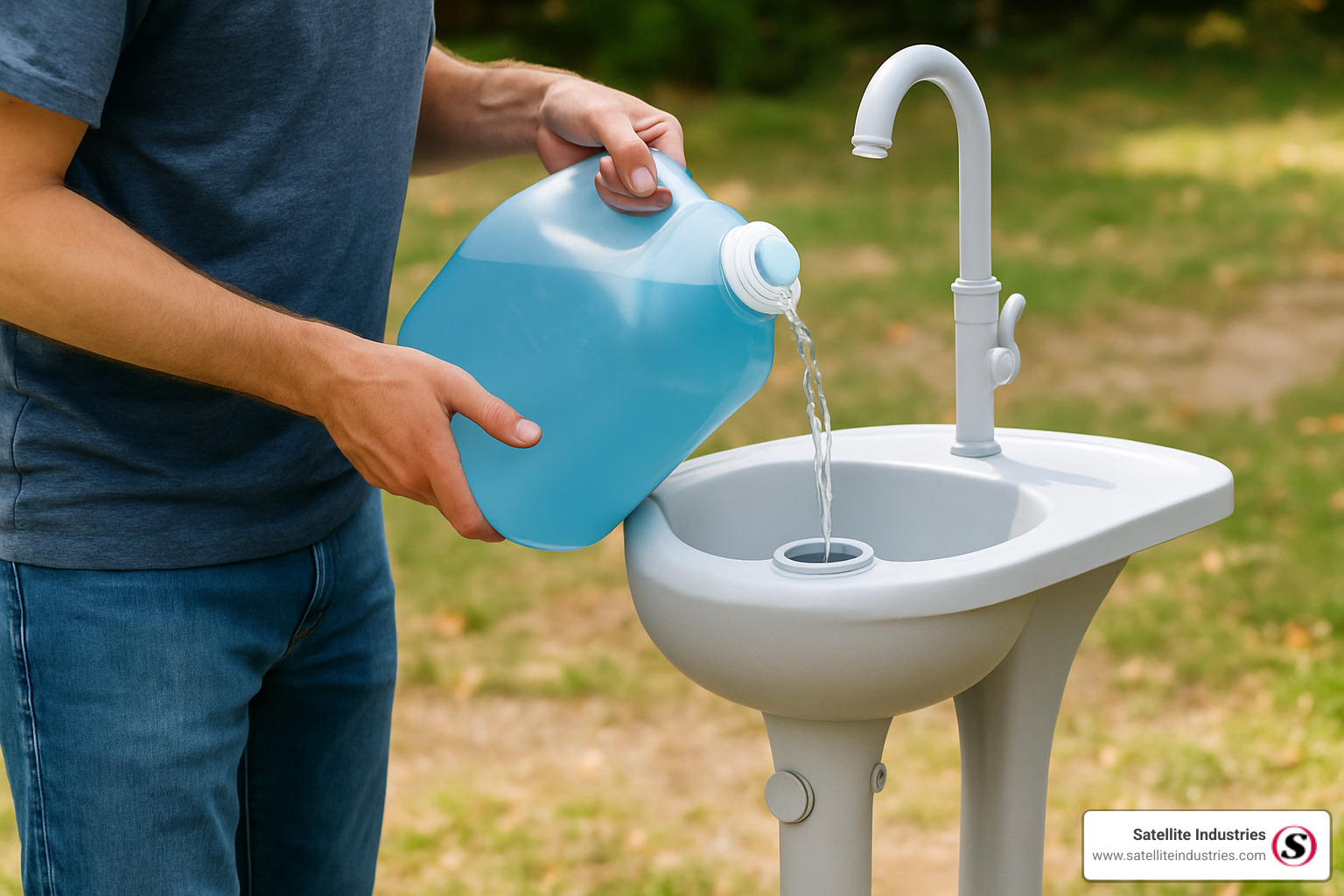
Modern portable sink with water tank units feature tool-free assembly – most go from box to operational in under 10 minutes. Assembly time rarely exceeds 15 minutes even for feature-rich commercial units.
Quick-Start Guide
Unboxing should reveal clearly labeled components with photo-illustrated instructions. Check for shipping damage before assembly. Attaching the faucet involves hand-tightening pre-aligned connections – avoid over-tightening to prevent damage.
Filling the fresh water tank works best with clean, filtered water. Connecting power varies by model – battery systems use standard batteries while electric units need dedicated circuits. Priming the pump removes air from lines and takes 30-60 seconds.
Cleaning & Long-Term Care
Daily rinse procedures prevent soap residue buildup and bacterial growth. Weekly sanitizer treatment becomes essential for commercial applications using quaternary ammonium sanitizers like Steramine.
Descaler applications address mineral buildup in heating elements. Hard water areas need monthly treatment. Gasket inspection catches small problems before they become major issues. Filter replacement maintains water quality and system performance.
Troubleshooting Common Issues with a Portable Sink with Water Tank
Low flow problems usually trace to low fresh water levels, clogged filters, or air in the system. Air locks happen after refilling – run the pump continuously for 2-3 minutes while operating the faucet.
Heater trips indicate electrical overload or thermal protection activation. Check connections and allow complete cooling before resetting. Foot pump leaks typically involve worn diaphragms that are easily replaceable.
Frequently Asked Questions about Portable Sinks with Water Tanks
How many washes per 5-gallon fill?
Your customers will get approximately 40-50 fifteen-second hand washes from a standard 5-gallon fresh water tank. This estimate assumes normal handwashing technique with moderate water flow and includes the extra water needed for soap usage and initial system priming.
Real-world usage varies quite a bit depending on how people actually wash their hands. Quick rinses might stretch that number to 60+ uses, while thorough washing with higher flow rates could bring it down to 30-35 washes. Foot pump systems typically deliver more washes per fill because users naturally control the flow more carefully when they have to pump for each bit of water.
Here’s where you can really help your rental customers save money: teach their users simple water conservation techniques. The classic wet-soap-rinse method – where you wet your hands, turn off the water while soaping, then rinse – can significantly extend capacity. It’s better hygiene practice anyway, and it makes each tank fill go much further.
Can I get both hot & cold water off-grid?
Absolutely! Several technologies deliver reliable hot water without any electrical grid connection. Propane-powered water heaters offer the most dependable off-grid hot water solution, heating water to 160°F in under 5 seconds using standard propane cylinders that your customers can pick up at any sporting goods store.
Battery-powered heating elements provide a quieter alternative using 12V deep-cycle batteries. These systems typically heat water to a comfortable 110-130°F and can run for several hours on a single battery charge. Add solar battery charging, and you’ve got indefinite off-grid operation – perfect for remote job sites or extended camping operations.
Some premium units offer dual-fuel capability, automatically switching between 110V electricity when it’s available and propane or battery power when off-grid. This flexibility maximizes utility across different operating environments, which your rental customers really appreciate.
The investment in heating capability usually pays for itself quickly. Hot water dramatically improves cleaning effectiveness and user comfort, especially in cold weather. When workers are more comfortable using the handwashing station, compliance with safety protocols goes way up.
What certifications should distributors demand?
NSF certification is absolutely essential for any commercial or food service application you’re stocking. This certification guarantees that materials meet strict food safety standards and won’t contaminate water or food contact surfaces. Always look for NSF marks on basins, heating elements, and all water system components.
UL electrical certification applies to any portable sink with water tank that includes electric pumps, heating elements, or control systems. This certification ensures electrical safety and may be required by local codes or your customers’ insurance policies. If you’re serving Canadian markets, CSA certification provides equivalent protection.
FDA approval for water contact materials ensures safety for potable water systems. While it’s not always legally required, FDA-approved materials provide that extra assurance for health-conscious customers and sensitive applications like healthcare or childcare facilities.
ASTM standards cover the nuts and bolts – literally. These standards apply to water lines, fittings, and structural components, ensuring adequate performance and safety margins. ASTM F876/F877 specifically covers water supply lines, while other ASTM standards address structural and material requirements. When you’re stocking inventory that needs to perform reliably day after day, these certifications aren’t just paperwork – they’re your insurance against callbacks and unhappy customers.
Conclusion
The portable sink with water tank market offers tremendous growth potential with over 10,000 units selling monthly and increasing awareness that proper handwashing beats sanitizer alone.
Your rental business can tap into attractive opportunities as construction contractors, event planners, and emergency response teams prefer renting over buying. Weekly rental rates typically range from $50-$150, with many customers booking extended periods.
Distributor margins work well when matching products to applications. Basic camping models offer 30-40% margins while commercial units deliver 40-60% margins with longer sales cycles rewarding technical expertise.
Portable sink with water tank systems deliver compelling environmental benefits. Self-contained units using purified water eliminate contamination risks while enabling responsible grey water management. Battery and propane options reduce generator fuel consumption.
At Satellite Industries, our advanced engineering approach prioritizes durability and user-friendliness across all portable sanitation solutions. Our global presence spanning Africa, Americas, Australia, New Zealand, East Asia, South Asia, Europe, and Middle East gives us deep insight into diverse market requirements and regulatory environments.
Success comes down to three factors: matching product features to customer applications, understanding regulatory requirements, and providing solid technical support. The growing emphasis on hygiene creates sustained demand for distributors who position themselves as knowledgeable partners.
Focus on understanding your customers’ real-world challenges, stock appropriate solutions for your market segments, and build the technical knowledge that sets you apart from competitors.

Latest from the Satellite Industries Blog
Need Help {Finding the Right Sanitation Solution?}
Satellite Industries is the largest manufacturer of portable restrooms, restroom trailers, restroom trucks, septic trucks, slide-ins, unit haulers, vacuum technology, modular solutions, consumables and deodorizers.