Dump Like a Pro: Portable RV Sewer Tank Secrets Revealed
Why Quality Portable Holding Tanks Matter for Your Rental Fleet
A portable sewer tank for rv use is essential equipment that allows RV owners to transport waste from their holding tanks to dump stations when direct hookups aren’t available. These tanks solve the common problem of being parked too far from sewer connections or needing to empty tanks without moving the entire RV.
Key benefits of portable RV sewer tanks:
- Transport waste efficiently – Move up to 42 gallons from RV to dump station
- Enable dry camping – Stay longer at sites without hookups
- Reduce trip frequency – Match tank capacity to RV holding tank size
- Improve customer satisfaction – Easy-to-use wheels and tow handles
- Expand rental opportunities – Serve customers in remote locations
For rental business owners, stocking quality portable holding tanks means happier customers and fewer service calls. Offering a range of sizes from 15 to 42 gallons allows you to meet diverse customer needs, with 21-28 gallon tanks often being the sweet spot for many RV users. Features like steerable wheels, integrated rinsers, and durable HDPE construction directly impact customer experience and your equipment longevity.
As Michelle Amelse, Vice President of Marketing at Satellite Industries with over 26 years in portable sanitation, I’ve seen how the right portable sewer tank for rv rental inventory transforms customer relationships. Quality tanks with user-friendly features reduce complaints and increase repeat business for rental operators.
A Guide to Choosing and Using a Portable Sewer Tank for RV Fleets
Building the right rental inventory means understanding exactly what your customers need when they’re dealing with RV waste management. After 26 years in this industry, I’ve learned that the difference between a satisfied customer and a frustrated one often comes down to the quality and usability of their equipment.
Your customers will face real challenges out there – rocky campground terrain, tight spaces around dump stations, and the simple reality that nobody wants to wrestle with a heavy, unwieldy tank. That’s why selecting the right portable sewer tank for rv inventory isn’t just about price points – it’s about choosing equipment that makes your customers’ lives easier.
Key Features to Look for in a Durable Portable Sewer Tank for RV Use
When you’re investing in rental equipment, you need tanks that can handle frequent use while remaining simple enough for any customer to operate confidently. Here’s what separates quality tanks from the ones that’ll have you fielding complaint calls.
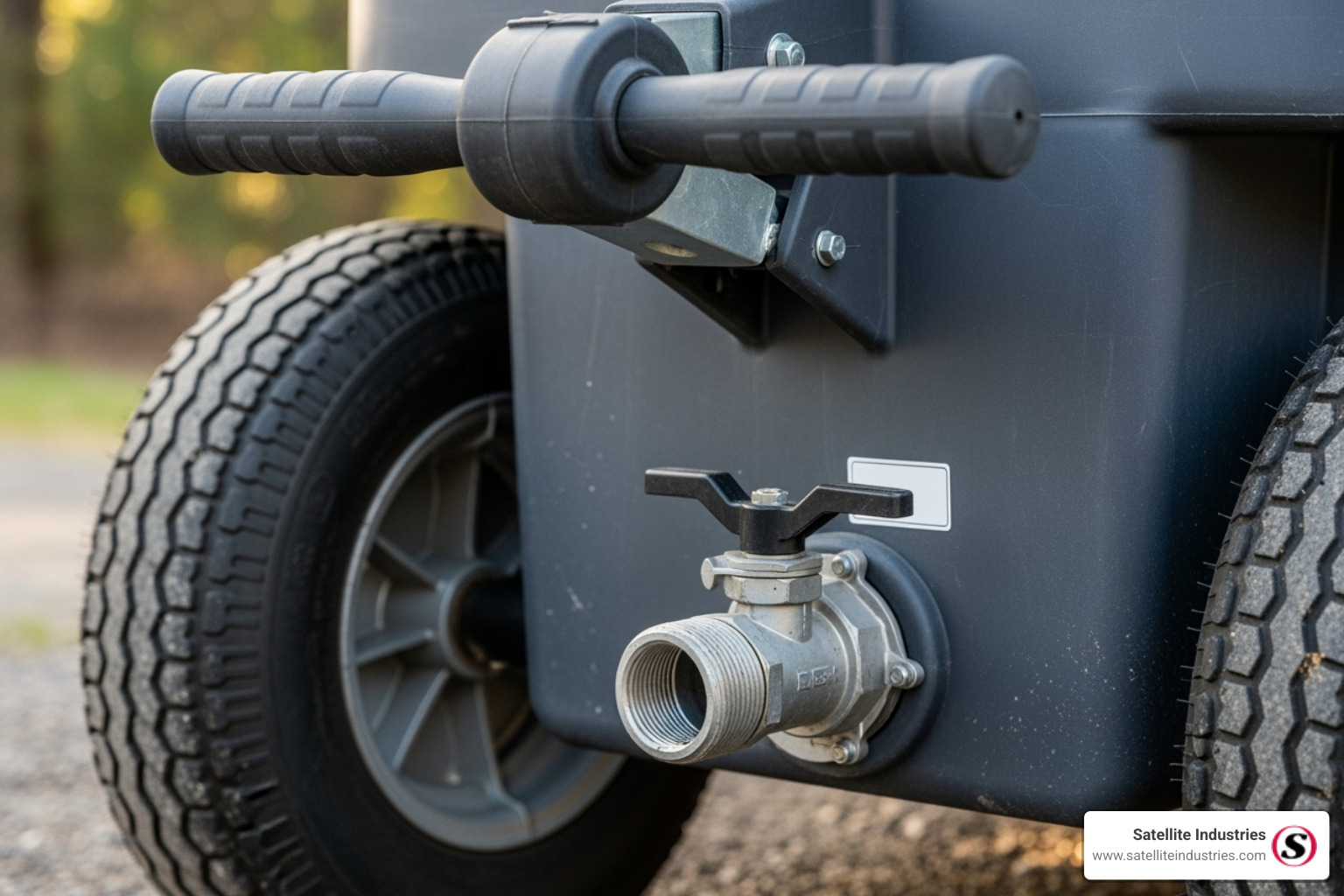
Material quality makes all the difference. Look for tanks constructed from high-density polyethylene (HDPE) using blow-molded construction. This isn’t just marketing speak – HDPE won’t crack under pressure, leak at the worst possible moment, or deteriorate under constant UV exposure. The smooth interior surface makes cleaning straightforward, which matters when your rental staff needs to quickly prep tanks between customers.
Wheel systems can make or break the customer experience. Picture your customer trying to drag a 200-pound tank across uneven gravel – not a pretty sight! Heavy-duty, no-flat wheels with quality bearings roll smoothly over campground terrain without leaving your customers stranded with a flat tire. Steerable front wheels are worth their weight in gold because they eliminate the need for customers to lift and pivot heavy loads. Four-wheel configurations offer superior stability and maneuverability compared to two-wheel models, especially when tanks are full.
Transport versatility keeps customers happy. A removable steel tow adapter gives customers options – they can roll the tank by hand using the sturdy handle for short distances, or hitch it behind a golf cart or truck for longer hauls to the dump station. This flexibility means fewer calls about customers who can’t physically manage the equipment.
Drainage engineering matters more than you’d think. A low drain hole ensures complete emptying, preventing residual waste that creates odor problems. Paired with an integrated rinser system, your tanks stay cleaner between rentals. Built-in gate valves provide controlled, sanitary emptying that even nervous first-time users can manage confidently.
Smart storage features like integrated ladder hooks let customers secure tanks to their RV ladders, while body grooves provide anchor points for safe strapping during transport. These details might seem small, but they prevent damage to your equipment and keep customers safe.
Sizing and Capacity: Matching Tanks to Customer Needs
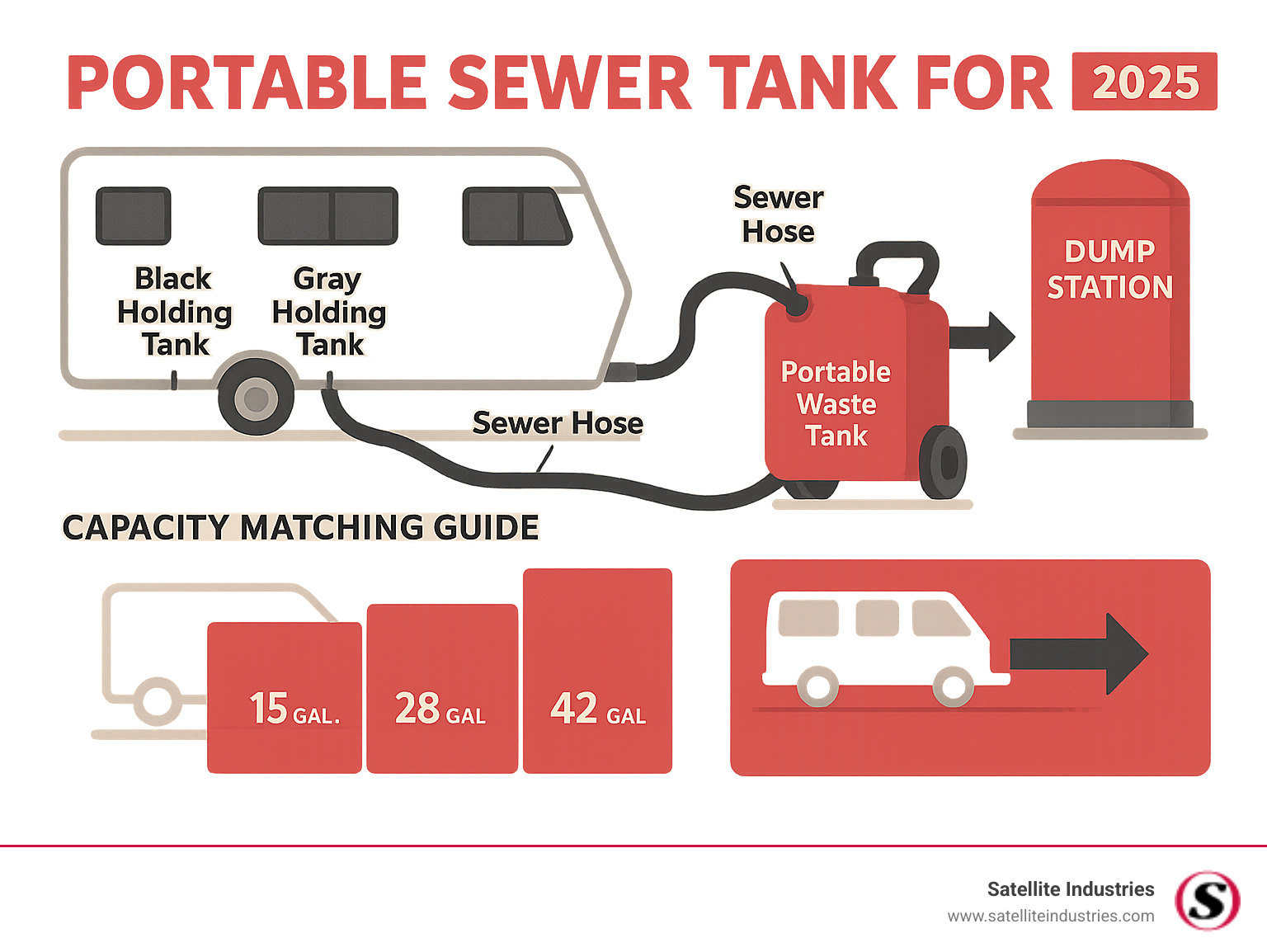
Getting the size right prevents customer frustration and reduces your service calls. Most RVs have separate black water tanks (toilet waste) and gray water tanks (sink and shower water), typically ranging from 20 to 40 gallons each.

For weekend warriors, 15-21 gallon tanks work well for couples on short trips. Family trips lasting a week or more need 28-35 gallon capacity to avoid constant dump station runs. Serious boondockers who dry camp for extended periods should get your largest tanks – 36-42 gallons – because tank capacity often determines how long they can stay off-grid.
Match capacity to usage patterns. A family of four generates significantly more waste than a couple, and customers with large fresh water tanks (40+ gallons) will produce proportionally more wastewater. The sweet spot is usually a portable sewer tank for rv with at least half the capacity of the RV’s largest holding tank.
Price considerations help you build a diverse inventory. Offering a range of tank sizes and feature sets allows you to serve everyone from budget-conscious renters to premium customers who want the best possible experience.
Proper Usage and Transport: A Step-by-Step Guide for End-Users
Clear instructions prevent equipment damage and keep customers safe. Most problems happen because people skip steps or rush the process.
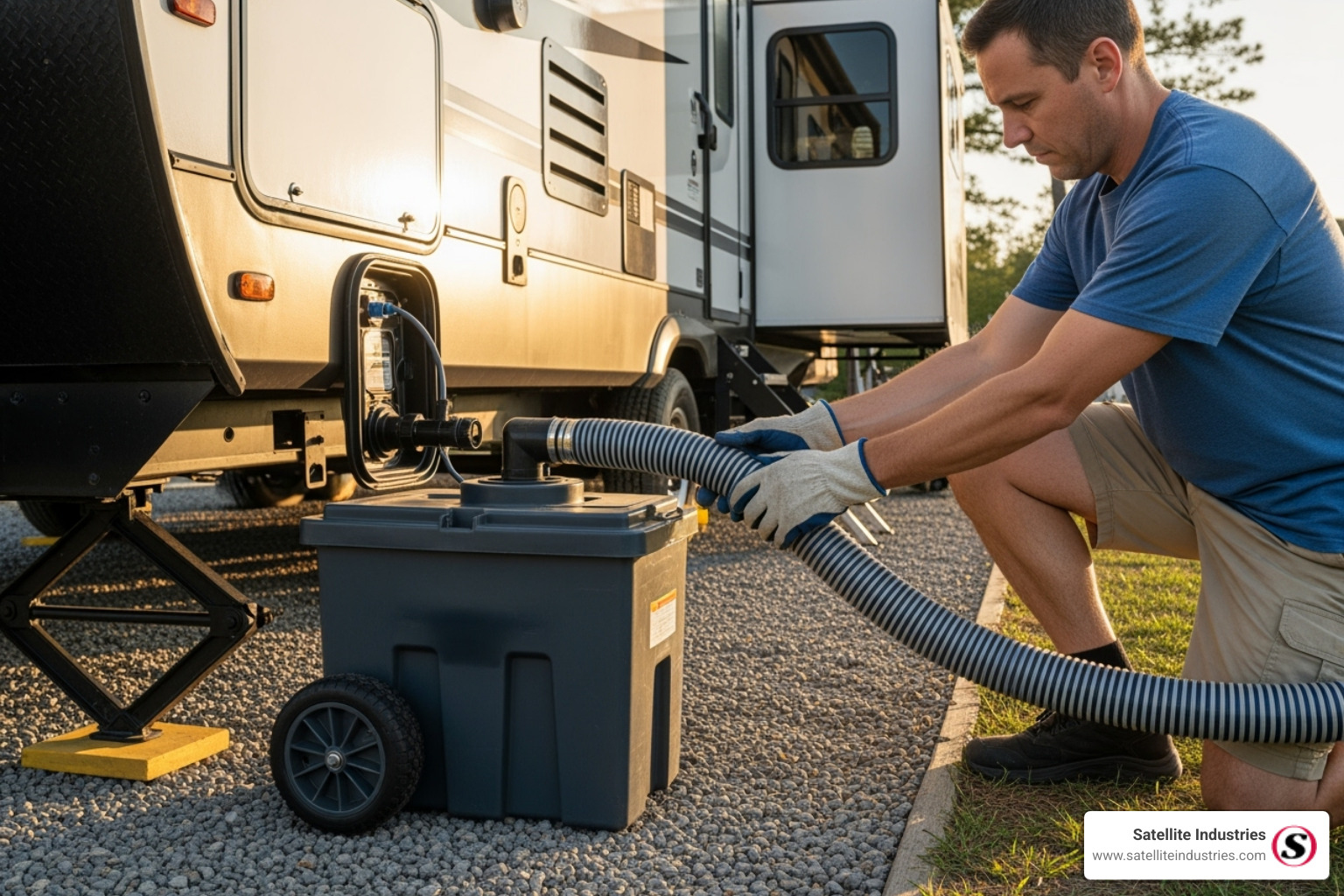
Connection safety starts with closed valves. Customers should verify all RV waste valves are closed before connecting anything. The sewer hose connects from the RV’s waste outlet to the portable tank’s inlet – clear elbow adapters let them see when tanks are empty and ensure sanitary connections.
Emptying sequence prevents messy mistakes. Always empty the black water tank first to flush out solids, then close that valve and open the gray water valve. The gray water rinses both the sewer hose and portable tank, cleaning out black water residue naturally.
Transport requires attention to detail. Once full, customers must secure all caps before moving the tank. They can roll it using the handle for short distances or use the tow adapter for longer hauls – but emphasize moving slowly! Proper strapping using the tank’s body grooves prevents dangerous shifting during transport.
Dump station procedures should be second nature. Connect to the dump station inlet, open the gate valve, and let the integrated vent system speed the emptying process. The low drain hole ensures complete emptying. Always finish with thorough rinsing using the integrated rinser before disconnecting and capping everything.
Essential Accessories for a Complete Portable Sewer Tank for RV Kit
Smart accessory bundling increases rental value and prevents customer problems. Think of these as insurance policies against frustrated phone calls.
Heavy-duty sewer hoses with swivel bayonet fittings ensure reliable connections between RV and tank. Clear elbows and universal adapters let customers see when tanks are empty while connecting to various dump station configurations. Storage caps with lanyards prevent dripping during transport and storage.
Ladder mounts save precious RV storage space by securing tanks externally during travel. Hose supports maintain proper drainage slope and prevent clogs that cause backup problems.
Cleaning supplies make the difference between one-time renters and repeat customers. RV-specific cleaners, deodorizers, and waste treatment products keep systems flowing smoothly and odor-free. An integrated tank rinser on the tank itself is essential, but additional cleaning agents help customers maintain sanitary conditions throughout their trip.
These accessories aren’t extras – they’re necessities for a smooth, sanitary waste management. Including them in your rental packages shows customers you understand their needs and care about their experience, which translates directly into positive reviews and repeat business.
Maintenance and Long-Term Care for Your Portable Tank Inventory
Proper maintenance extends the life of your rental inventory, ensures customer safety, and protects your investment. Follow these best practices for cleaning, sanitizing, and storing your portable sewer tanks. By providing well-maintained equipment, you reduce downtime, minimize repair costs, and uphold your reputation as a reliable rental provider.
Cleaning and Sanitization Best Practices
Regular and thorough cleaning is paramount for your portable sewer tank for rv rental fleet. It ensures hygiene, eliminates odors, and extends the lifespan of the units.

1. Rinsing Process: After each rental, ensure the tank is thoroughly rinsed. The integrated tank rinser, common on our tanks, makes this incredibly easy. Simply connect a water hose to the rinser inlet and let it flush the smooth interior of the tank. Continue rinsing until the water runs clear. This removes most of the residual waste.
2. Cleaning Agents and Deodorizers: For deeper cleaning and odor control, use RV-specific cleaning agents and deodorizers. These products are designed to break down waste and neutralize odors without harming the tank material or the environment. We recommend using a quality deodorizer after each cleaning, especially before storing the tanks. This ensures they are fresh and ready for the next customer. Don’t forget proper personal protective equipment, like gloves, during this process.
3. Proper Storage:
* Drying: After rinsing and cleaning, allow the tank to air dry as much as possible before sealing it. This prevents mildew and unpleasant odors from developing.
* Caps and Lanyards: Ensure all caps are securely fastened to prevent any remaining drips or odors during storage. Many of our tanks come with caps that have lanyards, making them easy to keep track of.
* UV Protection: While our HDPE tanks are UV-stabilized, prolonged exposure to direct sunlight over many years can still take a toll. If possible, store tanks in a shaded area or use a protective tank cover. This helps preserve the plastic and extends the tank’s aesthetic appeal and structural integrity.
* Ventilation: Store tanks in a well-ventilated area. This helps dissipate any lingering odors and prevents moisture buildup.
* Ladder Hooks: Use the integrated ladder hooks for external storage on an RV or camper ladder when not in use. This keeps them off the ground and out of the way.
By adhering to these cleaning and sanitization best practices, you’ll ensure your portable sewer tank for rv inventory remains in top condition, providing a pleasant and hygienic experience for every customer.
Maximizing ROI Through Quality and Service
Investing in quality portable sewer tank for rv units for your rental fleet is not just about providing a product; it’s about offering a solution that improves your customers’ outdoor trips. This strategic investment directly impacts your return on investment (ROI) through increased customer satisfaction, reduced maintenance, and expanded opportunities.
Our portable sewer tanks offer unparalleled flexibility and convenience for RVers. They are an essential supplement to built-in RV holding tanks, not a replacement. While built-in tanks are great for short trips or when full hookups are available, portable tanks become indispensable when:
- Full Hookups are Unavailable: Many beautiful campsites offer only electric and water, requiring RVers to move their entire rig to a dump station. Portable tanks eliminate this hassle.
- Extending Stays: For dry camping or boondocking, portable tanks allow customers to stay longer in remote, scenic locations without needing to pack up and move.
- Convenience: They eliminate the need to break down an entire campsite just to empty tanks, saving time and effort. This convenience is a huge selling point for your customers.
Built-in tanks are fixed, larger capacity, and integral to the RV’s plumbing. Portable tanks offer mobility and flexibility, acting as an overflow or transport solution. They empower RVers to manage waste on their terms, making them a crucial companion for diverse camping scenarios. The key is that they work with the built-in tanks to provide a complete waste management solution.
At Satellite Industries, our unique selling proposition lies in our advanced engineering for durability and user-friendliness. We understand that meticulous research and development, combined with quality ingredients and controlled production, result in products that deliver consistently high performance. Our passion drives our sales and customer service team to ensure you have what you need when you need it. You can depend on our products to provide the best user experience, even in challenging conditions.
By stocking your rental fleet with our carefully engineered portable sewer tank for rv solutions, you are not just offering a product; you are offering peace of mind, convenience, and an improved camping experience for your customers. This translates into repeat business, positive word-of-mouth, and ultimately, a healthier ROI for your rental operation.
Latest from the Satellite Industries Blog
Need Help {Finding the Right Sanitation Solution?}
Satellite Industries is the largest manufacturer of portable restrooms, restroom trailers, restroom trucks, septic trucks, slide-ins, unit haulers, vacuum technology, modular solutions, consumables and deodorizers.