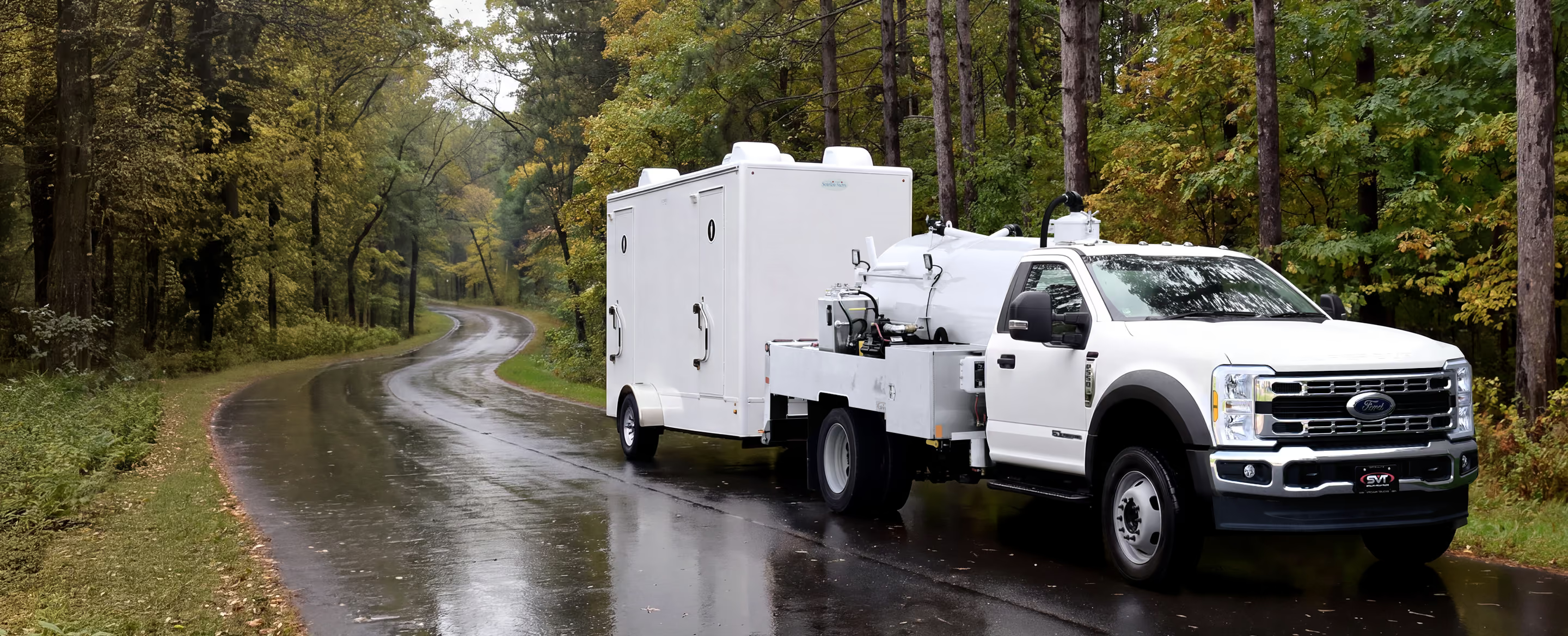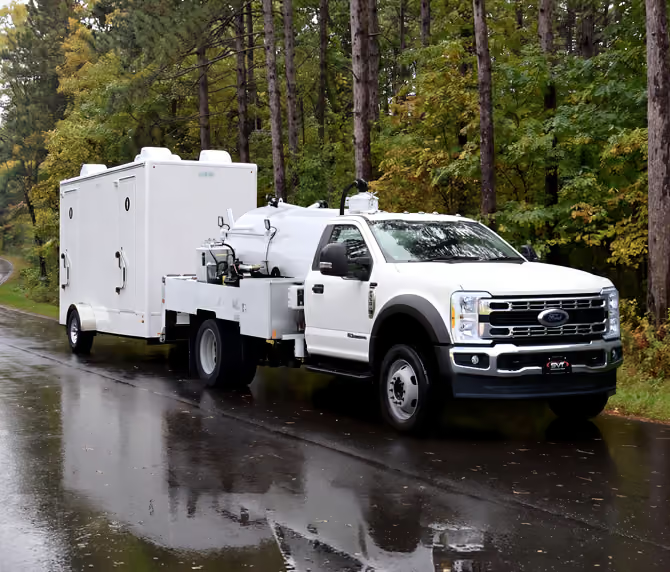
A Comprehensive Guide to Renting Portable Restrooms
The Evolution of Portable Restrooms: Modern Solutions for Sanitation Needs
Portable restrooms are self-contained sanitation units designed for temporary use at events, construction sites, and disaster relief areas. They provide essential bathroom facilities where permanent plumbing is unavailable.
Key Portable Restroom TypesBest ForFeaturesStandard UnitsConstruction sites, basic eventsSingle occupancy, chemical toilet, basic ventilationADA-Compliant UnitsPublic events, inclusive settingsWider doors, grab bars, flat floors, wheelchair accessLuxury Restroom TrailersWeddings, corporate eventsFlushing toilets, running water, climate control, mirrorsSpecialty UnitsConstruction/industrialCrane-liftable designs for high-rise projects
When you need temporary bathroom facilities, understanding your options helps ensure you select the right units for your specific needs. The portable sanitation industry has evolved significantly from basic “porta potties” to offering sophisticated solutions that prioritize user comfort, accessibility, and environmental sustainability.
Modern portable restrooms are constructed of high-density polyethylene (HDPE), making them durable yet lightweight. Standard units can serve approximately 250 uses before requiring servicing, while luxury trailer options offer amenities comparable to permanent facilities, including climate control, running water, and premium fixtures.
For construction sites with fewer than 20 employees, industry standards recommend at least two portable toilets—typically one for each gender. At larger events, the number of units needed depends on attendance, duration, and whether food and beverages are being served.
The rental process typically includes:
- Assessment of your specific needs
- Selection of appropriate unit types
- Delivery and setup at your location
- Regular servicing during the rental period
- Pickup and removal when no longer needed
I’m Michelle Amelse, Vice President of Marketing and Customer Success at Satellite Industries, with over 26 years of experience in the portable sanitation industry where I’ve helped distributors select the right portable restrooms for their rental fleets and end-user needs.

Portable Restrooms 101: How They Work & Core Features
Ever wonder what makes those familiar blue boxes work so well? While portable restrooms might look simple from the outside, they’re actually clever engineering marvels designed to keep us comfortable when nature calls outdoors.
At Satellite Industries, we’ve spent decades perfecting these units. Our portable restrooms are built using high-density polyethylene (HDPE) – a fancy way of saying “really tough plastic” that stands up to sunshine, rain, and everything in between. This material is lightweight enough to transport easily but durable enough to last for years (we back them with up to five years of warranty protection, though many serve faithfully much longer).
The heart of any portable restroom is its holding tank. This isn’t just an empty container – it contains special chemical additives that do the important work of breaking down waste and controlling odors. These blue liquids you see work hard to neutralize smelly bacteria, break solids into manageable bits, add pleasant fragrances, and provide color that helps service technicians know when it’s time for maintenance.
Good airflow is crucial for a pleasant experience, which is why our units feature carefully designed vent stacks. These allow gases to escape upward rather than, well… where you’re sitting. Modern portable restrooms also include clever odor control flaps that create a barrier between you and what’s below.
Hand hygiene matters! That’s why many of our models include foot-pump operated sinks or hand sanitizer dispensers – no touching required after you’ve done your business.
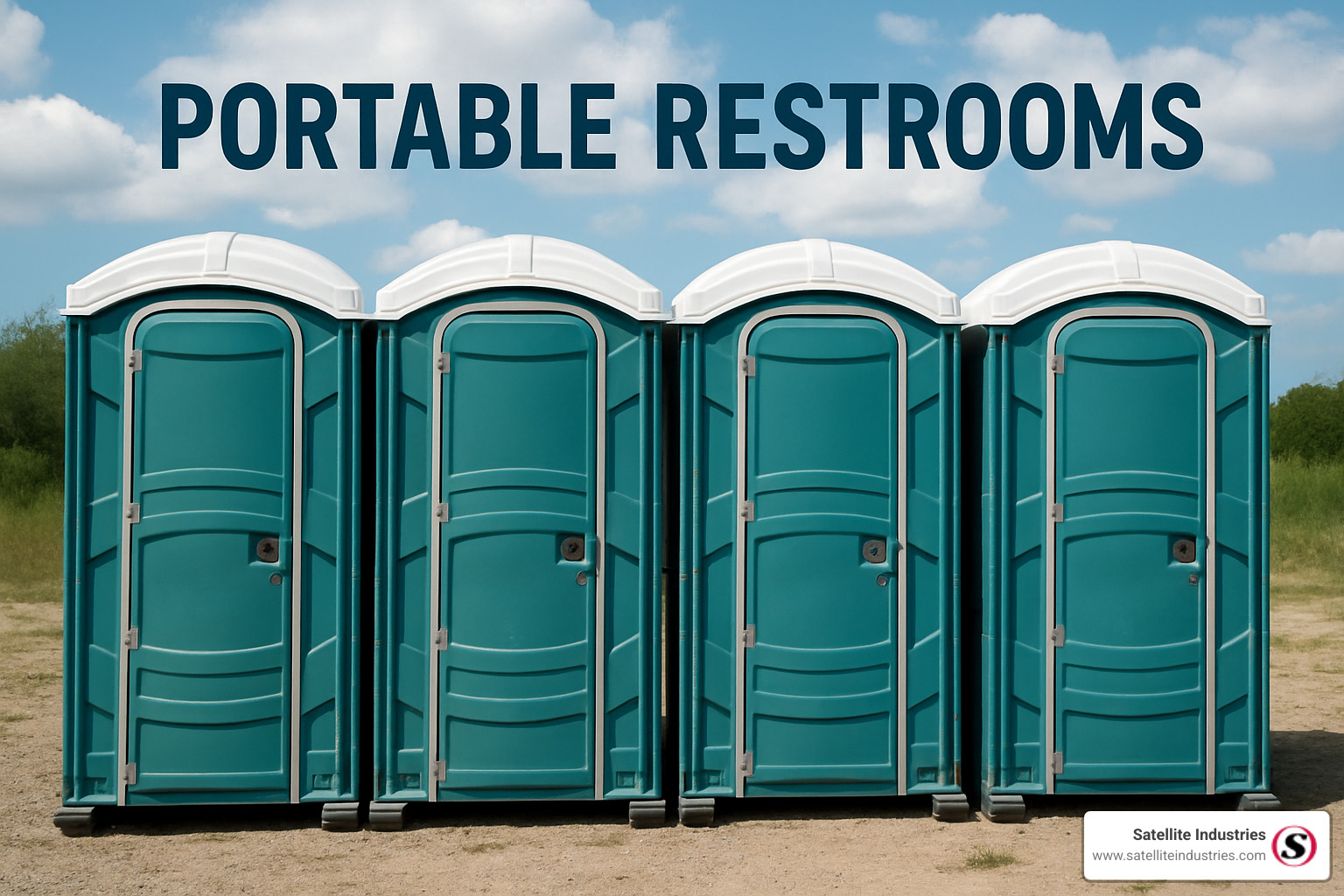
Most portable restrooms receive weekly servicing, though high-traffic locations might need more frequent attention. During these service visits, waste gets vacuumed out, fresh chemicals are added, and all surfaces get a thorough cleaning.
Anatomy of a Porta Potty
Think of a portable restroom as having several key parts working together:
The outer shell panels form the walls, roof, and door – all designed to withstand whatever weather comes their way. Up top, the roof vent allows air circulation while keeping rain out. The door includes a secure lock, often with those handy “occupied/vacant” indicators we all rely on.
Down below, you’ll find non-skid flooring that prevents slips even when wet. The holding tank sits beneath the toilet seat, containing all waste and treatment chemicals. The toilet seat itself is made from easy-to-clean plastic, and nearby you’ll find a toilet paper dispenser designed to keep the paper dry and discourage the paper-takers among us.
Our engineering team at Satellite Industries has spent years refining these components to create portable restrooms that can handle tough conditions while still providing a pleasant experience for users.
Key Features That Drive User Satisfaction
When our distributors are selecting units for their rental fleets, we recommend focusing on features that users actually notice and appreciate:
Hand-wash stations make a huge difference in user satisfaction. Whether built into the unit or standing separately, giving people a way to wash up properly is especially important these days.
Touchless hardware has become increasingly popular – think foot-operated flush mechanisms or motion-activated dispensers. These features reduce contact with surfaces and make users feel more comfortable.
Interior lighting might seem like a luxury, but it’s a game-changer for evening events. Solar-powered or battery-operated lights extend usability and improve safety after dark.
Everyone appreciates a coat hook for keeping jackets, purses, or bags off the floor. It’s a small touch that shows you’re thinking about the complete user experience.
Mirrors – small, shatterproof ones – add that civilized touch that users appreciate. Good ventilation keeps odors minimized, while non-slip flooring prevents accidents in high-traffic settings.
A slightly more spacious interior can dramatically improve user perception without significantly increasing costs – those extra few inches make a world of difference!
Our research shows that rental companies who invest in these improved features can charge premium rates while keeping customers happier. For distributors building their rental fleets, choosing units with these amenities can give you a real edge in the marketplace.
When your customers have a surprisingly pleasant experience in a portable restroom, they remember it – and they remember who provided it. That’s why we focus so intently on the details that make these necessary facilities as comfortable as possible.
Types & Amenities: Standard, ADA, Luxury & Trailer Solutions
The portable restroom industry has come a long way from the basic blue boxes of yesteryear. Today’s market offers diverse options to meet virtually any need or budget. As a distributor building your rental fleet, understanding these different categories helps you serve a wider range of customers and applications—from construction sites to black-tie weddings.

Standard Portable Restrooms: The Workhorse Unit
Think of standard portable restrooms as the reliable pickup trucks of your rental fleet—nothing fancy, but they get the job done day in and day out. These single-occupancy units shine in settings where functionality trumps frills.
These workhorses offer exceptional value through their cost-effectiveness, allowing you to provide competitive rental rates while maintaining healthy margins. Their rugged durability stands up to the toughest conditions, whether it’s a muddy construction site or a three-day music festival in the summer heat.
One of the biggest advantages of standard units is their easy deployment. Their lightweight construction means your team can quickly set up and relocate units without specialized equipment. When it comes to maintenance, standardized components simplify servicing and repairs, keeping your fleet operational with minimal downtime.
While basic in design, these units cover essential needs with a non-flush toilet, holding tank, toilet paper dispenser, and ventilation system. For your customers managing construction sites or large outdoor events, standard units provide the perfect balance of functionality and affordability when quantity matters more than premium features.
ADA-Compliant Units & Accessibility Upgrades
Inclusivity isn’t just good business—it’s often the law. ADA-compliant portable restrooms ensure that everyone has access to sanitation facilities, regardless of physical ability. These specialized units meet Americans with Disabilities Act requirements and are essential for public events and most job sites.
What sets these units apart is their thoughtful design. The extra floor space (typically providing a 60-inch diameter turning radius) allows wheelchair users to maneuver comfortably. Strategically placed grab bars offer support and stability, while ground-level access or proper ramps eliminate barriers to entry. The wider doors (minimum 32 inches clear width) accommodate wheelchairs, and lower fixtures positioned for seated access make these units truly functional for all users.
The hardware details matter too—door handles and other controls are designed for people with limited hand dexterity. As research from accessibility specialists shows, proper placement of these units is just as important as their design. Always position ADA-compliant portable restrooms on accessible routes with clear pathways and appropriate signage.
Smart distributors maintain a healthy inventory of ADA-compliant units not just to meet legal requirements, but because providing dignified facilities for all users is simply the right thing to do.
Luxury Restroom Trailers & Premium Amenities
When your customers are planning upscale events like weddings or corporate functions, standard units just won’t cut it. This is where luxury restroom trailers shine, offering amenities that rival permanent facilities.
These premium portable restrooms transform the portable sanitation experience with flushing porcelain toilets that operate just like home bathrooms. Hot and cold running water with foot or hands-free operation lifts hand hygiene from necessary to pleasant. Year-round comfort comes standard with climate control systems (typically featuring 9 MBTU air conditioning and 5600 BTU heating).
The upscale experience continues with solid-surface counters that are both beautiful and easy to clean. Premium lighting illuminates both the interior and exterior for safety and ambiance, while built-in sound systems provide background music that improves privacy and the overall experience.
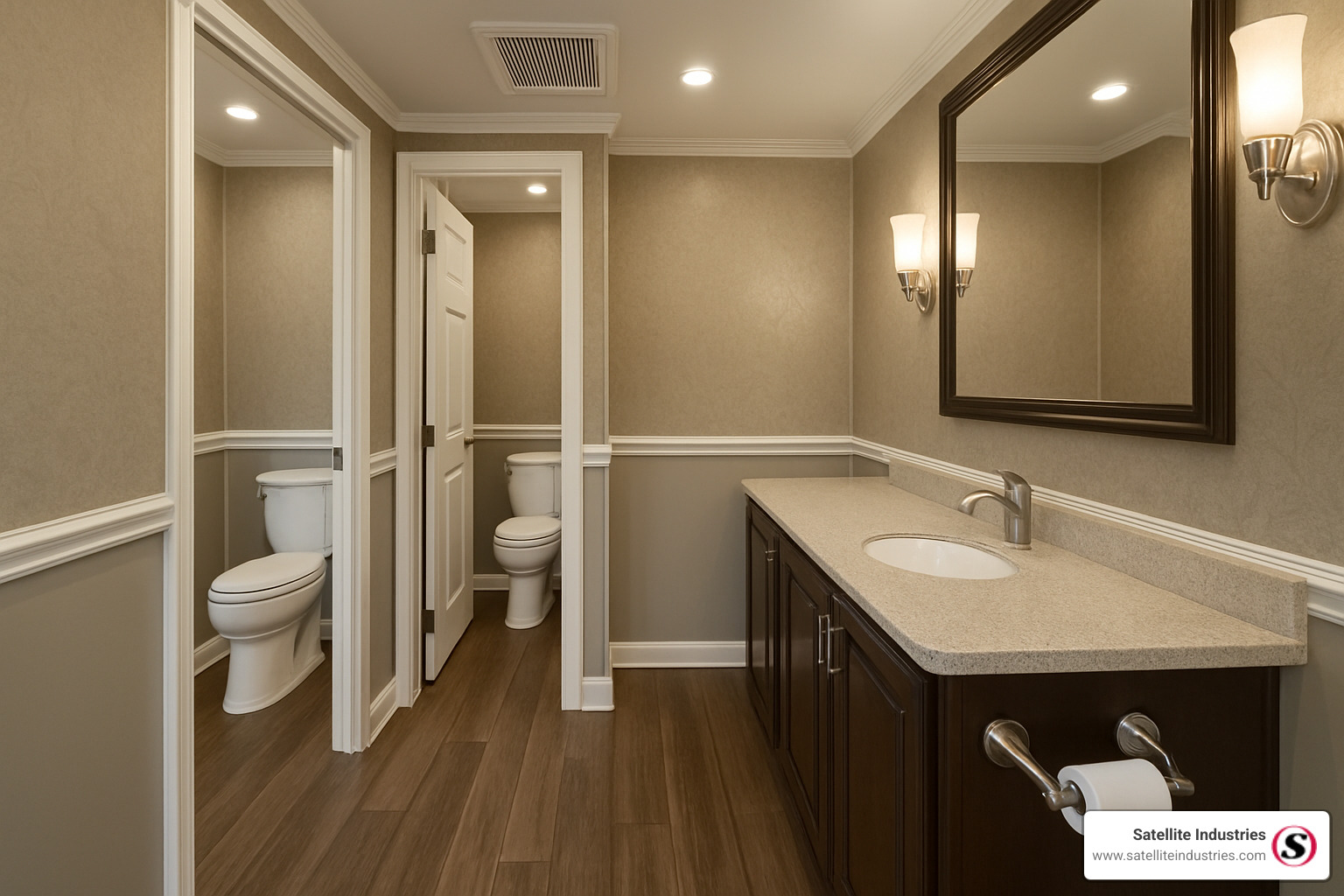
The residential-style finishes—from neat flooring to tasteful wall coverings—create an environment that feels more like a high-end hotel than a temporary facility. Most trailers house multiple stations (typically 2-10 individual restrooms) with separate entrances often divided by gender.
Capacity is impressive too—a standard 3-station trailer can serve up to 250 guests before requiring servicing. For distributors looking to expand into premium markets, luxury trailers represent a significant initial investment but command rental rates several times higher than standard units.
FeatureStandard UnitLuxury TrailerToilet TypeChemical, non-flushPorcelain, flushableHandwashingExternal or sanitizerHot/cold running waterClimate ControlNoneFull HVAC systemLightingMinimal/noneInterior and exteriorCapacity1 personMultiple stations (3-10)AmenitiesBasicMirrors, music, premium fixturesApproximate Uses Before Service250250 per stationBest ApplicationsConstruction, basic eventsWeddings, corporate events
The market for premium facilities continues to grow as event planners and their clients increasingly prioritize guest comfort. By offering a range of options from standard units to luxury trailers, you position your distribution business to meet the full spectrum of customer needs—and capture revenue at every price point.
Planning & Operations: Sizing, Permits, Maintenance & Sustainability
When it comes to portable restrooms, proper planning makes all the difference between a smooth operation and a logistical headache. As a distributor guiding your rental customers, your expertise in these operational details adds tremendous value to your service.
Calculating the Right Number of Portable Restrooms
“How many toilets do I need?” This question comes up in nearly every rental conversation. The answer isn’t one-size-fits-all, but rather depends on several key factors that you should discuss with your customers.
The industry standard suggests one portable restroom can handle about 250 uses before needing service. For practical planning purposes, this translates to one unit per 50 guests for events lasting up to 4 hours, or one unit per 100 workers at construction sites with weekly servicing. When alcohol is being served, it’s wise to increase your count by 15-20% – we all know what happens when drinks are flowing!
Event duration significantly impacts your calculations too. While the standard ratios work well for gatherings under 4 hours, longer events need more facilities. For events running 5-8 hours, increase your unit count by about 15-20%. For all-day or multi-day events, you’ll either need additional units or daily servicing to maintain sanitary conditions.
The nature of your audience matters just as much as their numbers. Family-friendly events benefit from baby-changing stations, while corporate functions often call for upgraded units that reflect company standards. Construction sites typically require gender-specific facilities – at minimum, one unit per gender. And don’t forget ADA compliance for public events, where approximately 10% of your total units should be accessible.
For construction sites specifically, OSHA provides clear guidelines: sites with 1-20 workers need a minimum of two toilets (one per gender); sites with 20-200 workers need one toilet seat and one urinal per 40 workers; and larger sites with over 200 workers need one toilet seat and one urinal per 50 workers.
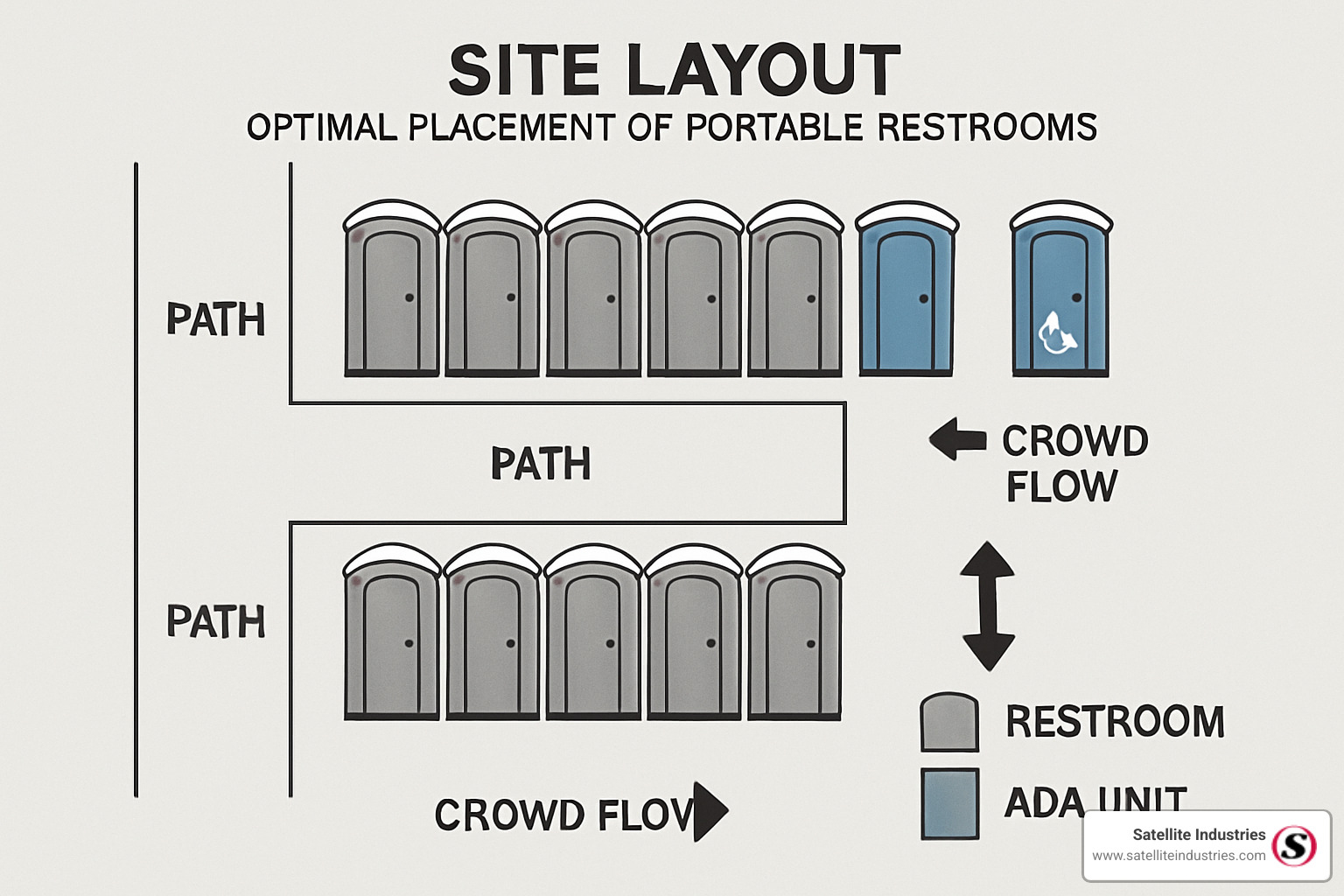
Keeping Portable Restrooms Clean & Odor-Free
Nothing ruins an event faster than neglected portable restrooms. Standard servicing includes waste removal through vacuum extraction, replenishing the holding tank with fresh deodorizing solution, thorough cleaning and sanitizing of all surfaces, and restocking essentials like toilet paper and hand sanitizer.
For high-traffic events, consider suggesting additional maintenance strategies to your rental customers. On-site attendants can monitor cleanliness and keep supplies stocked throughout the event. Standalone hand sanitizer stations provide extra hygiene options beyond the built-in facilities. Strategic placement away from food areas (but still conveniently accessible) improves both sanitation and the guest experience. And proper lighting along pathways to the units ensures safety during evening events.
The blue chemical mix traditionally used in portable restrooms is specifically formulated to break down waste while controlling odors. Modern formulations are increasingly focused on environmental impact while maintaining effectiveness. Proper airflow through the vent stack also plays a crucial role in minimizing odors, which is why units should never be placed in completely enclosed areas.
Today’s environmentally conscious rental companies are increasingly offering sustainable options that you can highlight to your customers. These include plant-based deodorizers that break down more readily in wastewater treatment facilities, water-saving fixtures in luxury trailers that reduce consumption, solar-powered lighting and ventilation fans, and components manufactured from recyclable materials that can be repurposed at end-of-life.
When advising customers about permits and regulations, remind them that local health departments often have specific requirements for temporary sanitation at public events. ADA compliance isn’t just good practice—it’s legally required for public gatherings. Many jurisdictions also have placement regulations specifying minimum distances from water sources, food service areas, and property lines. For construction sites, both OSHA and local building codes typically mandate minimum facilities based on worker counts.
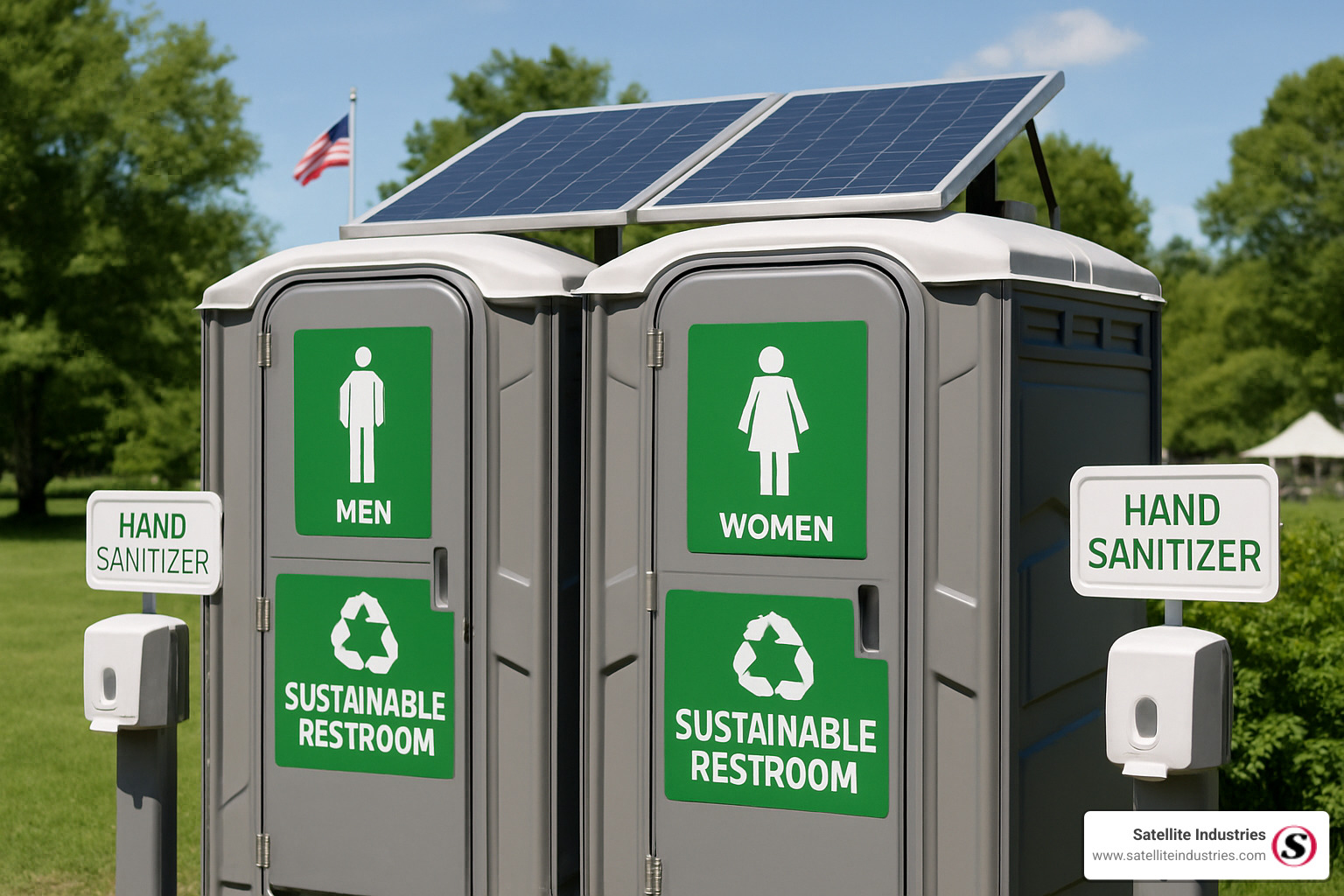
At Satellite Industries, we design our portable restrooms with these operational considerations in mind, creating units that are easy to transport, simple to maintain, and built to withstand the demands of regular service. Our products help your rental business deliver exceptional experiences while meeting all regulatory requirements and sustainability goals.
Frequently Asked Questions About Portable Restrooms
How much does it cost to rent different unit types?
While we at Satellite Industries don’t directly rent portable restrooms to end users (we manufacture them for distributors), we’re often asked about typical pricing. The rental companies we work with generally base their pricing on a variety of factors that affect their business costs and market positioning.
Standard units are naturally the most economical option, with luxury trailers commanding premium rates that reflect their improved amenities and larger capital investment. The duration of your rental also impacts pricing – many distributors offer discounted daily rates for longer-term rentals, especially for construction projects that might need facilities for weeks or months.
Service frequency is another important pricing factor. If your event requires daily servicing rather than the standard weekly schedule, you can expect additional charges to cover those labor costs. Location matters too – delivery distance from the rental company’s base affects transportation costs, which is why some distributors have service area limitations or tiered pricing based on distance.
Event type and seasonal demand also influence what you’ll pay. Special events like weddings might have different pricing structures than construction projects, and you’ll often find rates increase during peak event seasons when demand is highest.
For distributors establishing their rental businesses, we recommend developing transparent pricing structures that clearly account for all operational costs while remaining competitive in your local market. Your investment in quality portable restrooms can command better rates when you emphasize the durability and user-friendly features that set Satellite Industries products apart.
What is the delivery, setup and pickup timeline?
For rental companies using our portable restrooms, efficient logistics are essential for maximizing equipment utilization and customer satisfaction. The typical delivery and setup process for standard units takes about 15-30 minutes per unit for proper placement and preparation. For our luxury trailers, distributors should allocate 30-60 minutes for leveling, connection, and testing all systems before customer handover.
Advance scheduling is particularly important during the summer months, which represent peak season for most distributors. During this busy time, we recommend that rental companies advise their customers to book 4-6 weeks in advance to ensure availability. During off-peak seasons, 1-2 weeks notice is typically sufficient for most rentals. For large events requiring 50+ units, even more lead time (2-3 months) helps ensure that distributors can properly plan their inventory allocation.
The pickup process includes a final servicing before removal for standard units, while luxury trailers require system shutdown, tank emptying, and preparation for safe transport. For distributors, developing efficient delivery routes and scheduling systems can significantly improve profitability while ensuring timely service for customers.
One of our distributor partners in Texas told us: “Having a clear timeline that we communicate to customers has dramatically reduced last-minute emergencies and improved our operational efficiency. It’s a win-win when expectations are clear from the start.”
Do I need special permits for public events?
Permit requirements vary widely by location, but distributors should advise their rental customers that public events typically require several types of documentation. Many health departments require specific permits that dictate the number and type of sanitation facilities needed based on expected attendance. These requirements aren’t arbitrary – they’re designed to ensure public health standards are maintained.
For events open to the public, ADA compliance documentation is essential, confirming that accessible units meet legal requirements. Site plans showing unit placement in relation to food service areas, water sources, and emergency access routes are often required by local authorities. Some jurisdictions also request waste disposal documentation that proves you have proper servicing and waste management plans in place.
Construction sites have their own set of requirements, including compliance with OSHA regulations for worker sanitation, adherence to local building codes regarding temporary facilities, and environmental compliance considerations for units placed near environmentally sensitive areas.
As a distributor of portable restrooms, providing guidance on these requirements adds significant value to your service and helps customers avoid potential legal issues or fines. Many of our most successful distributors include a simple permit checklist in their rental agreements to help customers steer these requirements.
The regulatory landscape can seem complicated, but it’s actually quite manageable with proper planning. By helping your customers understand and meet these requirements, you position yourself as a knowledgeable partner rather than just an equipment provider – and that’s the kind of value that builds long-term business relationships.
Conclusion
The world of portable restrooms has come a long way from the basic units of yesteryear. Today’s solutions blend sophisticated engineering with thoughtful design to create experiences that prioritize comfort, accessibility, and environmental responsibility. As a distributor partnering with Satellite Industries, you’re uniquely positioned to provide your rental customers with the industry’s finest sanitation solutions.
When guiding your customers through their portable restroom needs, keep these essential points in mind:
First, always match the right unit to the specific application. Your construction clients need durable standard units that can withstand tough conditions, while your event planners may require luxury trailers for upscale gatherings. And remember—every public event needs appropriate ADA-compliant options to ensure all guests are accommodated.
Calculating the right quantity is crucial for customer satisfaction. The 250-uses guideline provides a solid starting point, but don’t forget to factor in event duration, whether food and drinks will be served, and when peak usage periods might occur. Nobody wants to face a line when nature calls!
Proper maintenance makes all the difference between a positive experience and a negative one. Regular servicing isn’t just about cleanliness—it’s about creating an environment where users feel respected. Adjust your servicing frequency based on actual usage to keep conditions pleasant throughout the rental period.
Today’s customers increasingly care about sustainability. The eco-friendly options in our lineup not only reduce environmental impact but can also become a compelling selling point for your environmentally conscious clients. From water-saving fixtures to solar-powered features, these green innovations help your customers meet their sustainability goals.
Always ensure your rental customers understand the permit requirements and regulations specific to their location and application. This guidance helps them avoid costly delays and potential compliance issues while positioning you as a knowledgeable partner in their success.
At Satellite Industries, we’re deeply committed to supporting our distributors with portable restroom products engineered for exceptional durability, user satisfaction, and operational efficiency. Our global presence—spanning Africa, the Americas, Australia, New Zealand, East Asia, South Asia, Europe, and the Middle East—ensures you’ll receive consistent support no matter where your business operates.
Our industry continues to evolve, with innovative features and technologies regularly emerging to improve both user experience and operational efficiency. By choosing Satellite Industries as your manufacturing partner, you gain access to the latest advancements in portable restroom design and construction, keeping your rental fleet competitive and current.
For a deeper dive into our complete lineup of portable restrooms and accessories, we invite you to explore our product catalog and connect with our team of industry experts. We’re here to help you build the ideal rental fleet custom to your specific market needs and customer expectations.

Latest from the Satellite Industries Blog
Need Help {Finding the Right Sanitation Solution?}
Satellite Industries is the largest manufacturer of portable restrooms, restroom trailers, restroom trucks, septic trucks, slide-ins, unit haulers, vacuum technology, modular solutions, consumables and deodorizers.