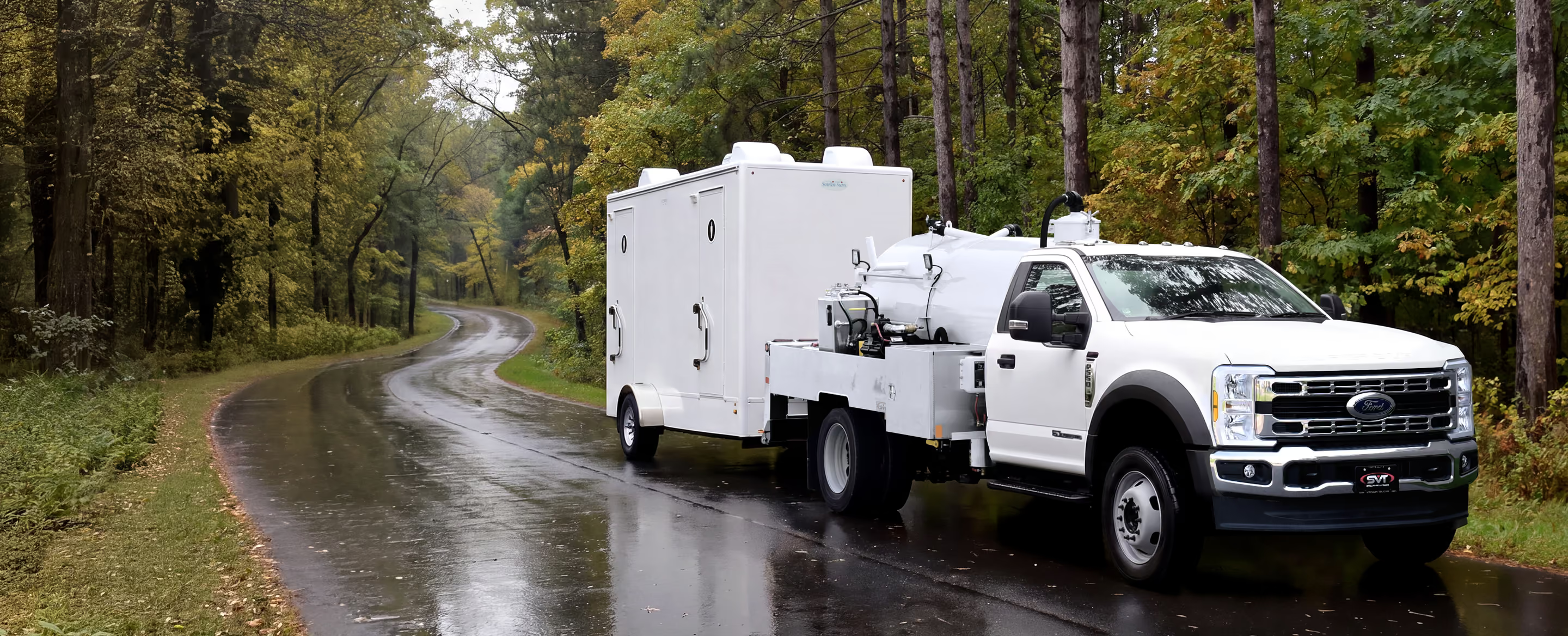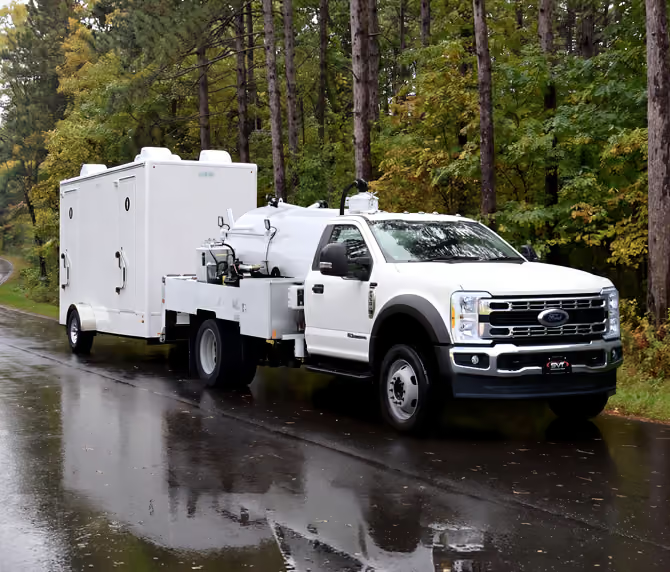
Stay Safe: The Importance of Portable Emergency Showers
Your First Line of Defense: The Power of Portable Emergency Shower Units
Portable emergency shower units are a first line of defense against hazardous chemical exposure, protecting workers and minimizing injury. For any business operating in environments with potential chemical or material hazards, having these units on standby isn’t just good practice—it’s a critical safety measure that ensures immediate response.
Here’s why they are vital for safety:
- Rapid First Aid: They provide immediate flushing of irritants or chemicals from the body, eyes, and face.
- Contamination Minimization: Quick response within 10 seconds of exposure is crucial to prevent lasting damage.
- Regulatory Compliance: These units help meet strict safety standards like OSHA and ANSI Z358.1.
- Versatile Protection: They serve as primary safety equipment or as a backup when fixed showers are unavailable or undergoing maintenance.
I’m Michelle Amelse, Vice President of Marketing and Customer Success at Satellite Industries, with over 26 years of experience in the portable sanitation industry. My expertise spans strategic marketing, brand management, and manufacturing, ensuring that our portable emergency shower units meet the highest standards for safety and reliability.

Simple guide to portable emergency shower units:
Understanding the Types of Portable Emergency Showers and Their Applications
Portable emergency shower units are a lifeline when workers are exposed to hazardous materials on skin, eyes, or clothing. Accidents happen in inconvenient locations. A construction worker on a high-rise, an oil field technician miles from a building, or an agricultural worker in a remote field all need immediate decontamination where they are.
This is where the versatility of portable emergency shower units shines. They bring the safety station to the hazard, not the other way around. Whether you’re dealing with remote sites like mining operations, temporary work areas, or serving industries like construction, oil and gas, agriculture, or hazmat response, these units adapt to your world.
They’re equally at home on a busy construction site, a remote agricultural field, or serving as a reliable backup when your fixed units need maintenance. No matter where danger lurks, these units can be there too.
Why Self-Contained Portable Emergency Shower Units are Ideal for Rental Fleets
For rental businesses, self-contained portable emergency shower units are versatile, reliable, and always ready. Their flexibility and mobility are ideal for customers in dynamic environments.
Here’s what makes them rental gold: no plumbing required. With no digging, pipes, or permits, your customers can have units operational in under an hour, which means happy clients and fewer headaches.
The self-contained water tank is the real star. These units come ready to work, whether they’re gravity-fed systems or pressurized units that maintain steady flow through pump systems. For example, a 400-gallon unit can provide 17 minutes of emergency shower time, while a 600-gallon model offers 27 minutes of protection. Even compact mobile units with 114-liter capacity deliver over 1.5 minutes of crucial immediate response.
Rapid deployment means your customers can respond to safety needs instantly. When a new hazard zone appears or a work site shifts, these units move right along with them. It’s like having a safety net that follows you everywhere.
The industries that benefit most from these units include construction, oil and gas, agriculture, mining, and hazmat response teams. Any business working in temporary installations or on sites lacking fast access to plumbed emergency showers becomes a prime customer for your fleet.
Our advanced engineering ensures these units can handle the rental life—durable enough for repeated deployments while staying user-friendly for your customers’ peace of mind.
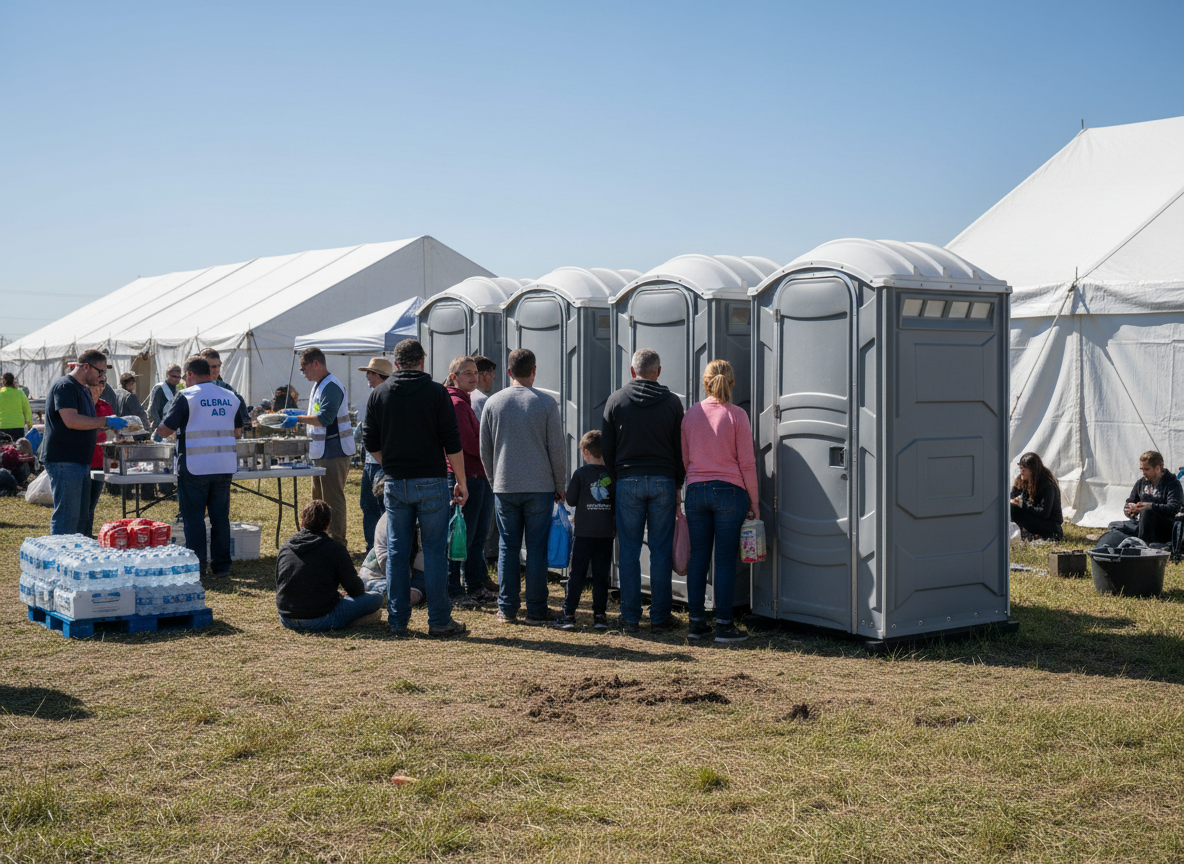
Key Differences: Portable vs. Plumbed-In Showers
Understanding the difference between portable and plumbed-in showers helps you guide customers to the right solution. Both save lives, but they do it in very different ways.
FeaturePortable Emergency ShowersPlumbed-In Emergency ShowersCostLower initial investment, flexible rental optionsHigher upfront installation costsInstallationReady in under 60 minutes, no construction neededRequires plumbing, electrical work, permanent setupFlexibilityMoves anywhere your work goesStays put once installedComplianceMeets ANSI Z358.1 with 20 GPM for 15 minutesContinuous flow compliance, higher capacityMaintenanceWater replacement every 7-30 days, component checksWeekly flushing, less frequent water changes
The water source dependency tells the whole story. Fixed units need continuous plumbing, while portable units bring their own water. This site versatility means portable units work where plumbing can’t—remote locations, temporary sites, or anywhere that changes faster than you can say “building permit.”
Installation time is where portables really shine. While plumbed systems might take days or weeks to install, portable units are working within the hour. For rental customers, this speed means they can respond to safety requirements immediately.
Think of it as a long-term investment in flexibility. Portable units serve as primary safety equipment in dynamic environments and essential backups when permanent systems need downtime. They fill the gaps that fixed systems can’t reach.
Key Features to Look for When Selecting Portable Emergency Shower Units for Your Fleet
Adding portable emergency shower units to your rental inventory is a smart investment in client safety and ROI. At Satellite Industries, our advanced engineering ensures our units are durable and user-friendly, providing reliable safety gear that can handle repeated use and transport.
Our advanced engineering focuses on durability and customer satisfaction. Look for robust materials like rust-resistant stainless steel for industrial settings, and high-density polyethylene (HDPE), a tough, chemical-resistant, and lighter plastic ideal for tanks and outer components.
Key specifications to check are tank capacity and flow rate. The ANSI Z358.1 standard requires an emergency shower to deliver 20 GPM (gallons per minute) of tepid water for 15 minutes. This typically requires a unit with at least a 300-gallon tank. Larger tanks, like our SC-400 (400 US gallons for 17 minutes) or our SC-600 (600 US gallons for 27 minutes), offer even more safety time. Ensure the unit can deliver the 20 GPM flow rate for a full-body shower, plus 0.4 GPM for eyewash stations. Meeting these numbers is vital for safety and compliance.
Essential Specifications: Water, Power, and Climate Control
Portable emergency shower units must function perfectly in any location or weather, which requires careful consideration of their water, power, and climate control systems.
First, let’s talk about tepid water. The ANSI Z358.1 rule says emergency showers must deliver water between 60-100 °F (16-38 °C). This temperature range prevents thermal shock, allowing an exposed person to complete the full 15-minute flush without further injury. For clients in extreme temperatures, look for units with smart temperature control. This might include immersion heaters to warm the water or insulated jackets made of materials like polyester-coated PVC with thick insulation. Some models in our AH40K heated series are designed to work from ‑4 °F up to 104 °F, using insulation to keep the water just right. Don’t forget freeze protection for cold climates; it’s a must-have to ensure the unit is always ready.
Next up, power requirements. For remote sites, solar power options are a fantastic, eco-friendly choice. Some of our stand-alone units are 100 % solar-powered with a 12 V battery. For bigger jobs, check for generator compatibility. Also, ensure they can connect to standard site power (like 240 VAC 50 A single phase) when available. Regarding water supply solutions, it’s great to have easy ways to refill and keep the water clean. Some systems have dual tanks and special valved pipes that make filling and adjusting chlorine levels a breeze. Since water sits in these units, water treatment additives (like bacteriostatic treatments or chlorine) are key to stop germs from growing. The water should be replaced or treated often, usually every 7 to 30 days.
Customization and Activation Mechanisms
In an emergency, effectiveness depends on fast and easy activation. Your rental customers need simple, reliable units that perform under pressure.
Look for intuitive activation methods like a hand lever or a push-plate, which is easy to find and use even with impaired vision. A foot pedal is another smart option, allowing hands-free activation if the user’s hands are contaminated. Most quality portable emergency shower units will also have integrated eyewash stations. These often turn on by lifting a lid or pushing a separate handle, ensuring immediate flushing for the eyes and face. Some have covered nozzles to keep them clean.
For your rental fleet, ease of mobility and setup is a big deal. Look for features like forklift pockets built into the base for easy placement. Heavy-duty wheels, especially pneumatic tires, are perfect for rolling units over rough ground. For ultimate portability, towable trailer models can be hitched to vehicles and moved quickly between sites. While often for specialized decontamination, some units can have 360° spray nozzles for thorough rinsing. We pride ourselves on our advanced engineering that allows for custom solutions. This means your rental fleet can offer units customized to specific needs, whether it’s special materials for harsh chemicals or unique setups for tight spaces.
Ensuring Compliance: Navigating ANSI and OSHA Standards
Compliance with safety standards is non-negotiable for you and your rental clients. Portable emergency shower units are critical for meeting regulatory requirements, reducing liability, and protecting workers. The primary U.S. standards are ANSI Z358.1 and OSHA 29 CFR 1910.151(c).
- ANSI Z358.1 (American National Standards Institute) – Emergency Eyewash and Shower Equipment: This is the most comprehensive standard. It provides detailed guidelines for the design, performance, installation, use, and maintenance of emergency showers and eyewash stations. Key requirements include:
- Flow Rate: Emergency showers must deliver a minimum of 20 GPM (gallons per minute) of water.
- Duration: The flow must be continuous for at least 15 minutes.
- Tepid Water: The water temperature must be maintained between 60 F and 100 F (16 C and 38 C). This is crucial for user comfort and to encourage the full flush duration.
- 10-Second Access Rule: The shower must be located within 10 seconds or approximately 55 feet (16.7 meters) of the hazard. This rapid response time is critical for minimizing injury.
- Unobstructed Pathway: The path to the shower must be clear of any obstacles.
- Activation: The shower must be operable in one second or less and remain open without the use of the operator’s hands.
- Visibility: The unit must be clearly marked and easily visible.
- Weekly Activation Testing: All emergency showers, portable or fixed, must be activated weekly to ensure proper operation and flush out any stagnant water.
- OSHA 29 CFR 1910.151(c): Medical Services and First Aid: This Occupational Safety and Health Administration regulation states, “Where the eyes or body of any person may be exposed to injurious corrosive materials, suitable facilities for quick drenching or flushing of the eyes and body shall be provided within the work area for immediate emergency use.” While less prescriptive than ANSI, OSHA relies on ANSI Z358.1 as the recognized industry consensus standard for what constitutes “suitable facilities.” Therefore, meeting ANSI Z358.1 is generally considered the best way to comply with OSHA.
Ensuring that the portable emergency shower units in your rental fleet comply with these standards not only protects your clients’ employees but also shields your business from potential liability and fines. We ensure our products are designed with these rigorous standards in mind.
It’s also important to be aware of other regional regulations. For instance, in California, certain products may require specific warnings:
This emergency shower safety equipment can expose you to chemicals including lead, which is known to the State of California to cause cancer and birth defects or other reproductive harm. For more information go to www.P65Warnings.ca.gov.
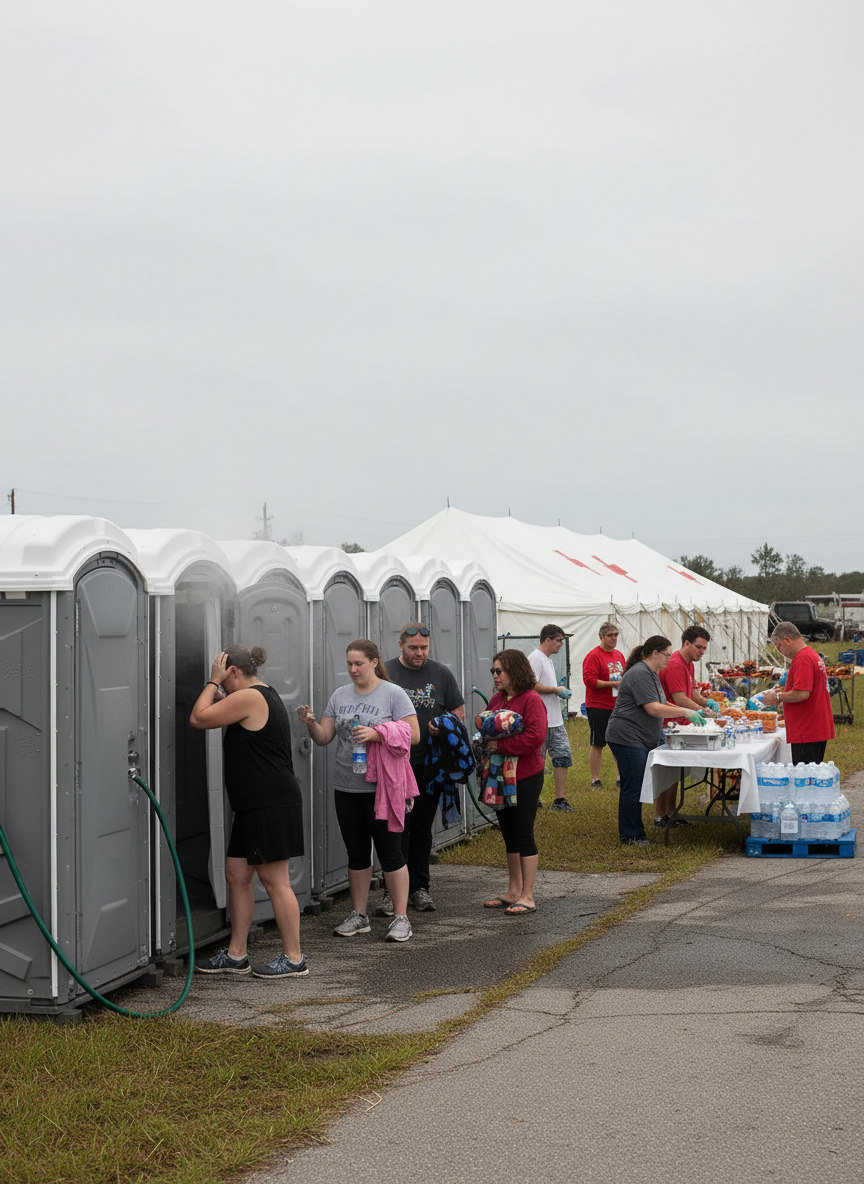
Deployment and Maintenance: Maximizing Readiness and ROI
Proper deployment and maintenance are key to maximizing the ROI of your portable emergency shower units. For rental fleet owners, this means ensuring assets are durable, always ready, and add value to your offerings—protecting both your investment and workers’ lives.
One of the biggest perks of portable emergency shower units is their rapid deployment. Many of our self-contained models can be fully operational in less than 60 minutes after arrival on site. This is a huge win for clients who need immediate safety solutions for a new project or an unexpected hazard.
The process is straightforward. A site assessment ensures stable, level ground, ideally downwind from hazards. Positioning is simplified by features like integrated forklift pockets, heavy-duty wheels, or towable designs, helping meet the 10-second access rule. The process concludes with water filling and treatment (using potable water and bacteriostatic additives), securing power connections for heated units, and a final functionality check to ensure proper flow.
Maintenance Checklist for Portable Emergency Shower Units
A solid maintenance program is essential to maximize the readiness, longevity, and ROI of your portable emergency shower units. It ensures your units remain compliant, functional, and ready to protect. While our advanced engineering makes them durable, regular care is key.
Think of this as your essential checklist to keep your fleet sparkling and safe:
- Regular Inspections: Before and after every rental, and weekly during longer contracts, inspect each unit for leaks, damage, and general wear and tear on parts like nozzles, valves, and hoses. A quick visual check can catch small issues before they become big problems.
- Water Quality Management: This is critical for self-contained units. While ANSI requires weekly activation to flush stagnant water, the stored water in portable units needs more attention. You should replace the water or treat it with bacteriostatic additives regularly, usually every 7 to 30 days, depending on the environment and manufacturer’s advice. Periodically clean and sanitize the water tank to prevent biofilm buildup.
- Component Checks: Ensure valves and nozzles are clear of debris and move smoothly. Check hoses for cracks or kinks. On pressurized units, confirm pressure gauges are reading correctly. For units with climate control, test heating elements and check insulation, especially before winter. Our units are built with features like freeze protection that can handle temperatures from -4 F to 104 F, but proper checks keep them ready.
- Winterization Procedures: For units in frosty locations, proper winterization is key. This involves draining water, using approved antifreeze in specific components if recommended, and double-checking heating elements to prevent costly freeze damage.
- Record Keeping: Keep detailed logs of all inspections, water changes, treatments, and repairs. This demonstrates compliance and provides a valuable history for each unit in your fleet, proving you’re a reliable, safety-first provider.
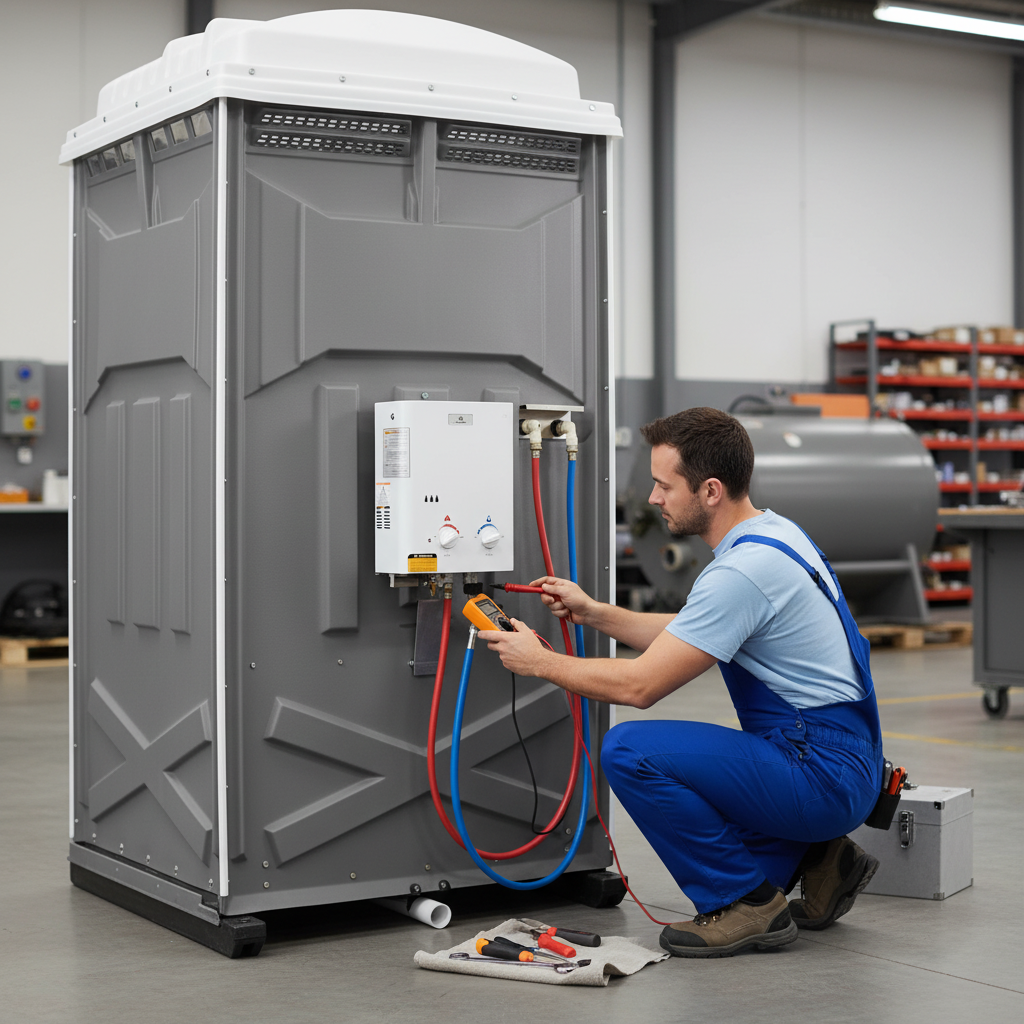
By adhering to these maintenance best practices, you ensure that your portable emergency shower units are always ready to protect, enhancing your reputation as a reliable provider of essential safety equipment.
Frequently Asked Questions about Portable Emergency Showers
Here are answers to the most common questions we receive from distributors and rental companies about the practical operation of portable emergency shower units.
How is contaminated water managed after use?
Most portable emergency shower units include a containment sump or collection basin in the base. This essential feature collects contaminated water, preventing runoff and environmental damage. After use, the collected water must be pumped out and disposed of by a licensed hazardous waste company, in accordance with local environmental regulations. Disposal requirements vary based on the contaminant.
Can these units provide the required tepid water in cold climates?
Yes, our advanced engineering ensures many units can handle extreme weather. Specialized features maintain the ANSI-required 60-100 F water temperature. Cold-weather models include insulated jackets, and some can operate in ambient temperatures from -4 F to 104 F. For more extreme climates, units can be equipped with thermostatically controlled immersion heaters and space heaters for freeze protection. These systems work automatically to maintain the correct temperature, ensuring the unit is always ready for an emergency.
What is the typical setup time for a portable emergency shower?
A key advantage is rapid deployment. Most self-contained units can be fully operational in under an hour, compared to days or weeks for a plumbed system. The process is simple: position the unit using integrated wheels, forklift pockets, or a towable trailer; fill the water tank; connect power if needed; and perform a quick functionality check. No specialized training is required.
Conclusion: Equipping Your Business to Protect and Serve
As a rental business leader, you know the responsibility of providing equipment that keeps workplaces safe. Adding portable emergency shower units to your inventory makes you a pivotal part of your clients’ safety strategy in industries where worker well-being is an absolute necessity.
These units offer unparalleled flexibility, allowing your clients to meet safety standards in remote or temporary locations. They ensure regulatory compliance, helping businesses avoid costly fines and providing life-saving first aid in critical moments. You’re not just renting equipment; you’re renting peace of mind.
When you choose to partner with a trusted manufacturer like Satellite Industries, you’re investing in durable, user-friendly, and compliant equipment that stands the test of time and tough environments. Our advanced engineering ensures that each unit is built for longevity and ease of operation, which translates into less downtime for your fleet and happier clients.
By making this smart addition, you improve your fleet’s value and solidify your role as a comprehensive safety solutions provider. You become an indispensable resource, ready to protect and serve.
Ready to improve your rental fleet and truly make a difference? Explore our full range of innovative portable sanitation solutions and find how Satellite Industries can help your business thrive.
Latest from the Satellite Industries Blog
Need Help {Finding the Right Sanitation Solution?}
Satellite Industries is the largest manufacturer of portable restrooms, restroom trailers, restroom trucks, septic trucks, slide-ins, unit haulers, vacuum technology, modular solutions, consumables and deodorizers.