From Sludge to Success: Comprehensive Liquid Waste Solutions
Liquid waste pumping: Mastering Success 2025
What is Liquid Waste Pumping and Why It’s a Critical Service
Liquid waste pumping is the essential service of collecting, transporting, and disposing of liquid waste materials that cannot go into standard sewer systems. It covers everything from septic tank contents and grease trap waste to industrial sludge and contaminated water.
Key services include septic tank pumping, grease trap cleaning, industrial holding tank maintenance, and emergency spill response. The industry is more critical than ever, with rising disposal costs, aging infrastructure, and stricter environmental regulations creating steady demand.
For your business, understanding the complexities of liquid waste management is key to long-term success. A professional approach to liquid waste pumping protects public health, ensures environmental compliance, and builds a profitable operation.
As Michelle Amelse, Vice President of Marketing at Satellite Industries, I have over 26 years of experience in the portable sanitation industry. I’ve seen how proper liquid waste pumping strategies drive business growth and operational excellence.

Simple Liquid waste pumping glossary:
Understanding the Waste Stream: Types and Sources
Liquid waste pumping involves a diverse range of materials. Understanding these types is the first step in providing effective service.
- Domestic Waste: Primarily from residential sources.
- Septage: A mix of wastewater, solids (sludge), and scum from septic tanks. Tanks typically need pumping every 3-5 years.
- Greywater: Wastewater from sinks, showers, and laundry that requires proper management.
- Holding Tank Waste: All wastewater from facilities not connected to a sewer, like portable restrooms.
- Industrial Waste: Varies by industry and often requires specialized handling.
- Sludge: A thick, semi-solid byproduct from industrial processes or wastewater treatment. It can be viscous and have a high solids content (up to 40%), making it challenging to pump.
- Hazardous Materials: Waste that poses a threat to human health or the environment, requiring strict regulatory compliance.
- Grease Trap Waste: Fats, oils, and grease (FOG) from food service establishments that solidify and can block sewer lines if not regularly pumped.
- Leachate: Contaminated liquid from landfills that requires careful collection and treatment.
- Oily Water: Water contaminated with oils from industrial settings or spills, requiring specialized separation.
- Hydro-excavation Mud / Dirty Water: A slurry byproduct from non-destructive digging that needs vacuum removal.
Each waste type requires the right equipment and expertise to handle safely and efficiently.
The Right Tools for the Job: Essential Pumping Equipment
Top-notch liquid waste pumping service requires a robust fleet with the right tools for efficient and safe operations.
Essential equipment for a pumping business includes:
- Vacuum Trucks: The workhorses of the industry, these vehicles use a powerful vacuum system to collect waste. They come in various sizes for everything from residential septic tanks to large-scale industrial jobs. Our advanced engineering focuses on durability and user-friendliness.
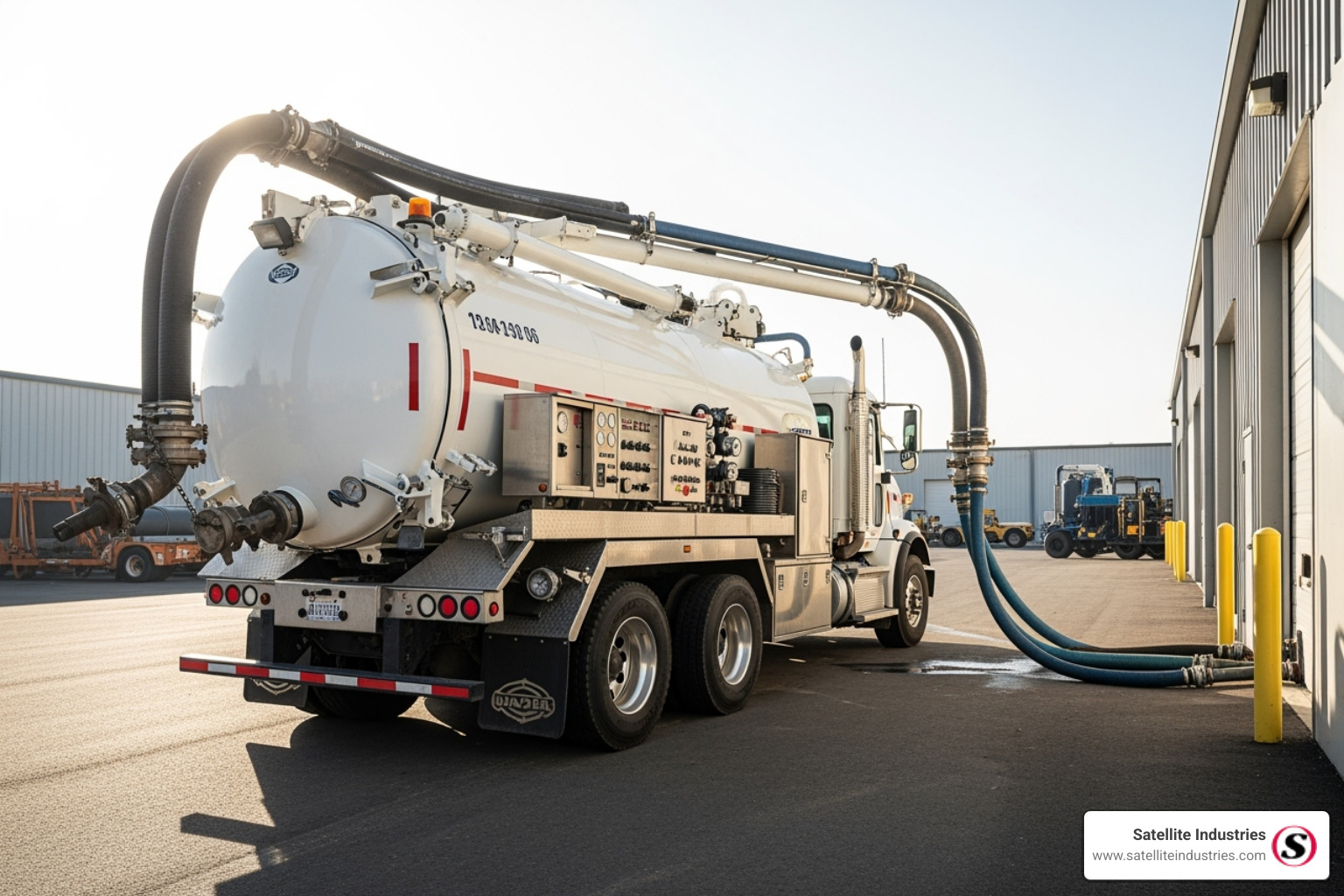
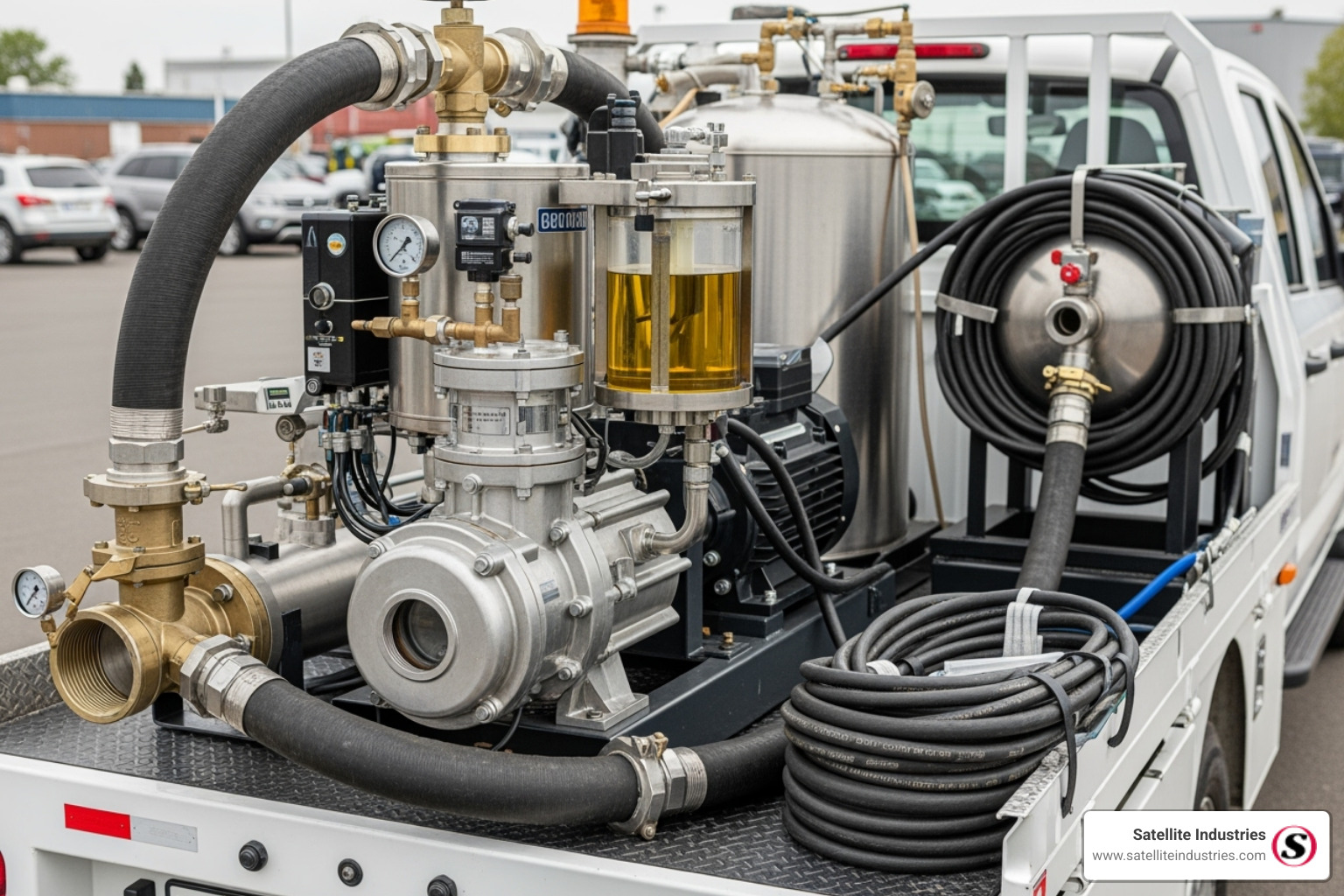
- Vacuum Pumps: The heart of the vacuum truck, these pumps create the suction needed to draw waste into the tank. Proper maintenance is key to performance.
- Blowers: Used with vacuum pumps, blowers move air to help load and unload liquid waste efficiently.
- Progressive Cavity Pumps: Ideal for handling thick, high-solids fluids like sludge. They provide a continuous, non-pulsating flow, perfect for materials with up to 40% solids content.
- Lift Stations: Facilities that pump wastewater when gravity drainage isn’t possible, handling various industrial liquids and slurries.
- Hoses and Nozzles: Specialized hoses and nozzles are needed to handle corrosive materials, high pressures, and specific tasks like breaking up grease.
- Dewatering Technology: These solutions reduce the moisture content in sludge, creating a drier material that is cheaper to store, transport, and dispose of.
Our commitment to advanced engineering ensures our equipment is durable, efficient, and user-friendly for professionals in the field.
Navigating Regulations and Disposal Best Practices
The liquid waste pumping industry is governed by a complex web of regulations, environmental practices, and financial factors.
1. Environmental Compliance and Permitting:
Regional rules govern the collection, transport, and disposal of liquid waste to prevent pollution and protect public safety.
- Local government bylaws dictate where and what can be discharged. Prohibited wastes must be taken to approved facilities by certified haulers.
- Manifests: This documentation is essential for tracking waste from origin to disposal, ensuring accountability.
2. Disposal Fees and Cost Recovery Models:
Disposal fees are a significant and growing cost. Municipalities charge these fees to recover treatment costs, and they can vary by waste type, origin, and volume.
- Rising Costs: Some regions are seeing dramatic fee increases. For example, case studies on regional rules show how disposal rates can rise by several hundred percent in just a few years to recover program costs. This financial pressure affects both businesses and their customers.
3. Environmental Impacts of Improper Disposal:
Improper disposal has severe consequences, including pollution of waterways, soil contamination, public health risks from pathogens, and odor issues.
4. Safety Considerations for Workers:
Worker safety is paramount due to inherent risks.
- Biohazards: Proper personal protective equipment (PPE) is essential to protect against pathogens in liquid waste.
- Hazardous Gases: Confined spaces can accumulate toxic and flammable gases, requiring ventilation, gas detection, and proper entry procedures.
- Physical Hazards: Risks include slips, trips, and falls on wet surfaces and injuries from improper operation of heavy equipment.
Adhering to regulations and best practices is the right thing to do for our workers, communities, and the planet.
Building a Successful Liquid Waste Pumping Business
The liquid waste pumping industry offers incredible opportunities, but success requires more than just a vacuum truck. It demands strategic thinking, customer care, and adaptability.

Businesses today face rising disposal fees, equipment costs, and complex regulations. However, demand continues to grow as communities expand and environmental standards tighten.
The key to thriving is financial sustainability and operational excellence. Successful operators build diverse revenue streams, invest in reliable equipment, and develop strong customer relationships. Modern fleet management is also critical, using technology to optimize routes, predict maintenance, and treat equipment as a valuable asset.
Core Services and Growth in the Liquid Waste Pumping Market
A thriving liquid waste pumping business offers a mix of services to drive consistent revenue and build customer relationships.
- Septic tank pumping: This is a foundational service with predictable, recurring revenue from residential customers.
- Grease trap cleaning: Provides steady contracts from restaurants and food facilities that require this essential service to operate.
- Industrial holding tanks: A higher-value market segment involving large volumes from manufacturing and processing plants that require specialized handling.
- Hydro-excavation: A growing service that complements pumping, as this safe digging method creates slurries that need immediate vacuum removal.
- Emergency response: Offering 24/7 service for spills and overflows builds incredible customer loyalty and often leads to planned maintenance contracts.
- Portable restroom services: Regular service routes for construction sites and events provide steady income, leveraging our expertise in portable sanitation.
- Sump and pump station maintenance: Critical for commercial and municipal clients, regular cleaning prevents costly failures.
Successful businesses combine these services to create multiple, stable revenue streams.
Future-Proofing Your Business with Technology and Strategy
The liquid waste pumping industry is undergoing a technological revolution. Smart operators are adopting new tools to improve efficiency and safety.

- Smart monitoring: IoT sensors track tank levels and system health in real-time, allowing for proactive scheduling and preventing costly emergencies.
- Route optimization software: This software creates the most efficient routes, saving fuel and time, which directly improves profitability.
- High-efficiency pumps: Modern pumps, like progressive cavity models, handle thick sludge with high solids content (up to 40%) more effectively and with less maintenance.
- Sludge dewatering solutions: As disposal costs skyrocket, on-site dewatering technology can dramatically reduce the volume of waste, saving significant money.
- Worker safety technology: Beyond PPE, tools like real-time gas detectors, ergonomic equipment, and communication systems protect your most valuable asset: your people.
- Adapting to fee increases: Strategic businesses use these efficiencies to absorb rising costs and communicate transparently with customers about pricing changes.
Embracing these technologies positions a business to lead in the evolving liquid waste pumping market.
Conclusion: Your Partner in Pumping Success
Success in liquid waste pumping is about being a trusted partner in community health and environmental protection.
While the industry faces challenges like rising disposal fees and tightening regulations, these create opportunities for strategic operators. Business success depends on combining reliable technology with smart strategies and excellent customer service.
At Satellite Industries, we build our reputation on advanced engineering for durability and user-friendliness. We know your success depends on equipment that performs reliably every day. Equipment durability and operational efficiency are critical because downtime costs money and communities depend on your reliability.
We are proud to support liquid waste pumping professionals who take this responsibility seriously. Together, we can advance this essential industry through innovation and quality.
Latest from the Satellite Industries Blog
Need Help {Finding the Right Sanitation Solution?}
Satellite Industries is the largest manufacturer of portable restrooms, restroom trailers, restroom trucks, septic trucks, slide-ins, unit haulers, vacuum technology, modular solutions, consumables and deodorizers.