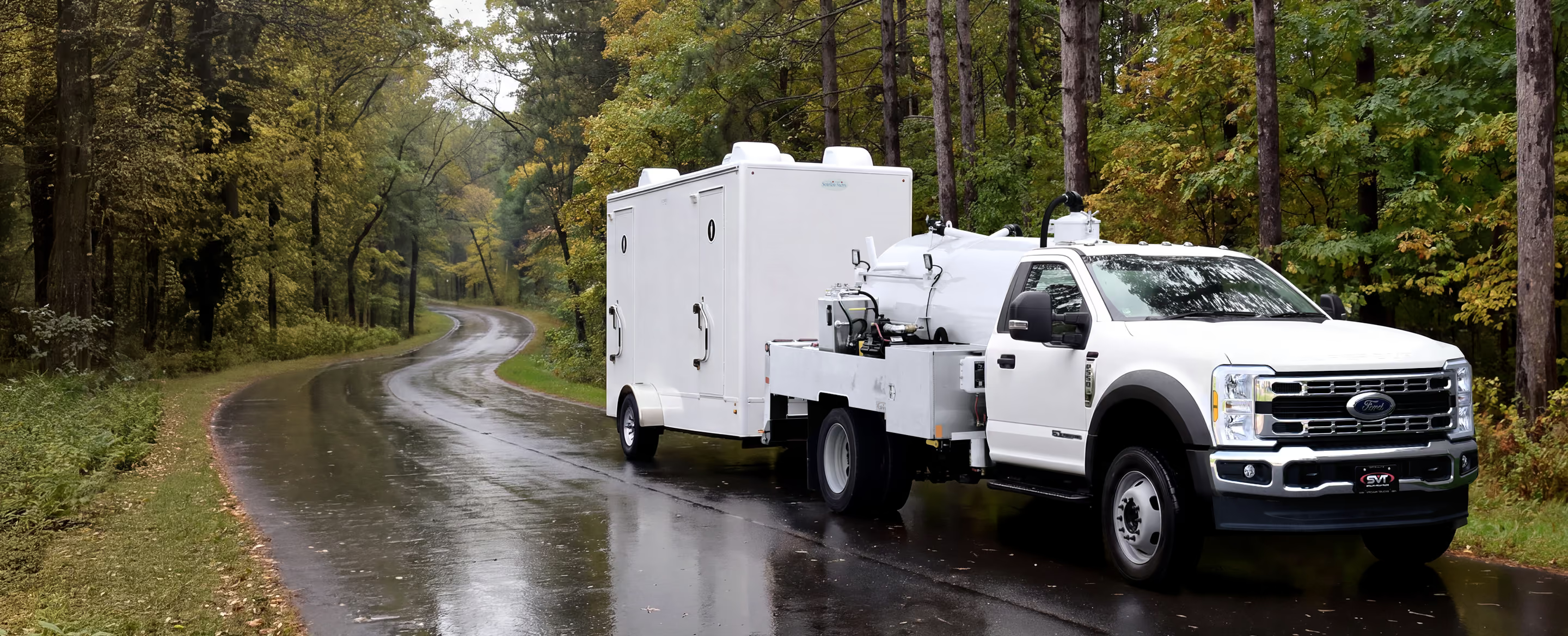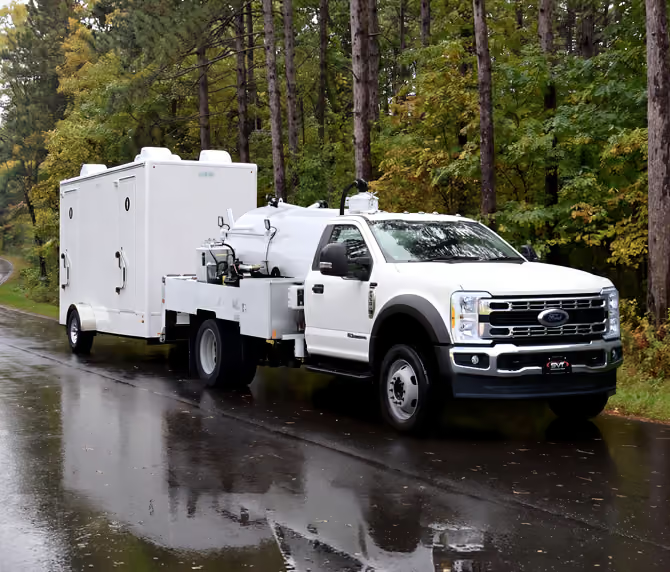
The Unsung Heroes: Emergency Vacuum Trucks on Call 24/7
Emergency vacuum truck: 24/7 Critical Aid
The First Responders on Wheels
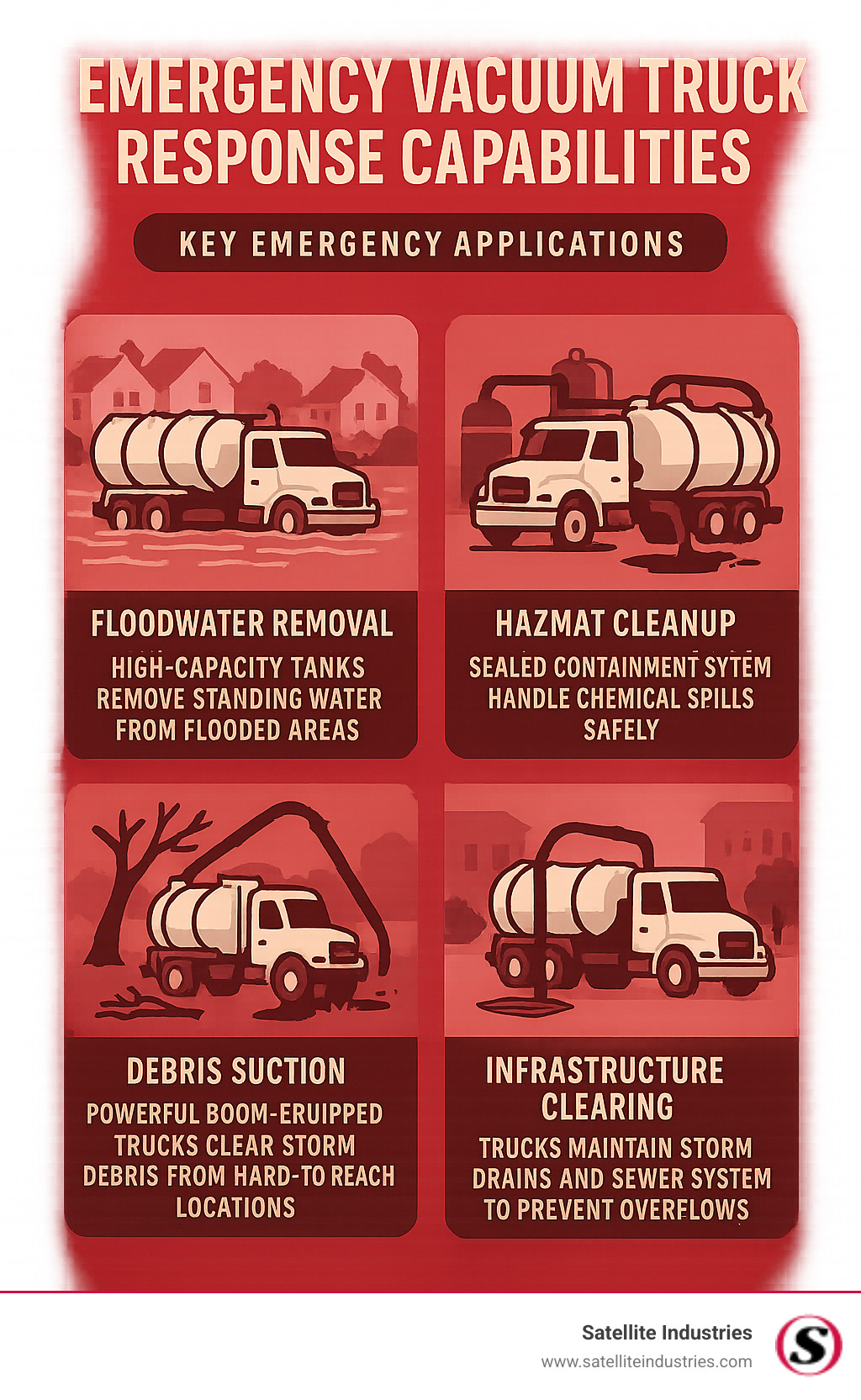
When disasters strike, Emergency vacuum truck services provide critical 24/7 response capabilities for floodwater removal, hazardous waste cleanup, debris suction, and infrastructure clearing. These specialized vehicles mobilize within one hour of emergency calls and handle everything from post-storm debris to industrial spills with powerful suction systems and high-capacity containment tanks.
Key Emergency Vacuum Truck Services:
- Floodwater and mud removal after natural disasters
- Hazardous material spill cleanup with sealed containment systems
- Storm drain and sewer line clearing to prevent infrastructure damage
- Industrial accident response with specialized filtration systems
- Debris suction from hard-to-reach locations using boom-equipped trucks
Natural disasters don’t wait for business hours. Neither do equipment failures, industrial spills, or infrastructure emergencies. When these critical situations arise, emergency vacuum trucks become the unsung heroes working around the clock to protect communities and restore normalcy.
These purpose-built vehicles combine powerful suction systems with advanced safety features to handle the most challenging cleanup scenarios. From hurricane aftermath to chemical spills, they deliver rapid response when every minute counts. Leading service providers commit to mobilizing crews within one hour of a call, operating 24/7/365 to serve communities in crisis.
For rental fleet operators, understanding emergency vacuum truck capabilities means being prepared to serve customers facing their most urgent needs. Whether it’s a municipality dealing with storm damage or an industrial facility managing a hazardous spill, having the right equipment available can make the difference between a contained situation and a community-wide disaster.
As Michelle Amelse, Vice President of Marketing at Satellite Industries with over 26 years in the sanitation and industrial equipment sector, I’ve seen how Emergency vacuum truck technology has evolved to meet increasingly complex emergency response demands. My experience spans fleet management and emergency service applications, giving me insight into what rental operators need to serve their communities effectively.
The Anatomy of an Emergency Vacuum Truck: Power, Safety, and Reliability
When crisis strikes, you need equipment that won’t let you down. Emergency vacuum truck technology represents decades of engineering innovation, designed to handle the toughest cleanup challenges while keeping operators safe. These aren’t your average industrial vehicles – they’re sophisticated machines built to perform under extreme pressure.
For rental fleet operators, understanding what makes these trucks tick is essential. Your customers depend on you to provide reliable equipment when they’re facing their worst moments. Whether it’s a flooded downtown district or a hazardous spill at an industrial site, the right vacuum truck can mean the difference between a successful cleanup and a prolonged disaster.
This section details the essential features that make these vehicles indispensable during a crisis, focusing on the technology that rental companies should look for to best serve their customers.
Best Suction and Containment Capabilities
The heart of any Emergency vacuum truck beats with impressive power. Think of it as nature’s own atmospheric pressure working through carefully engineered systems to move massive amounts of material quickly and safely.
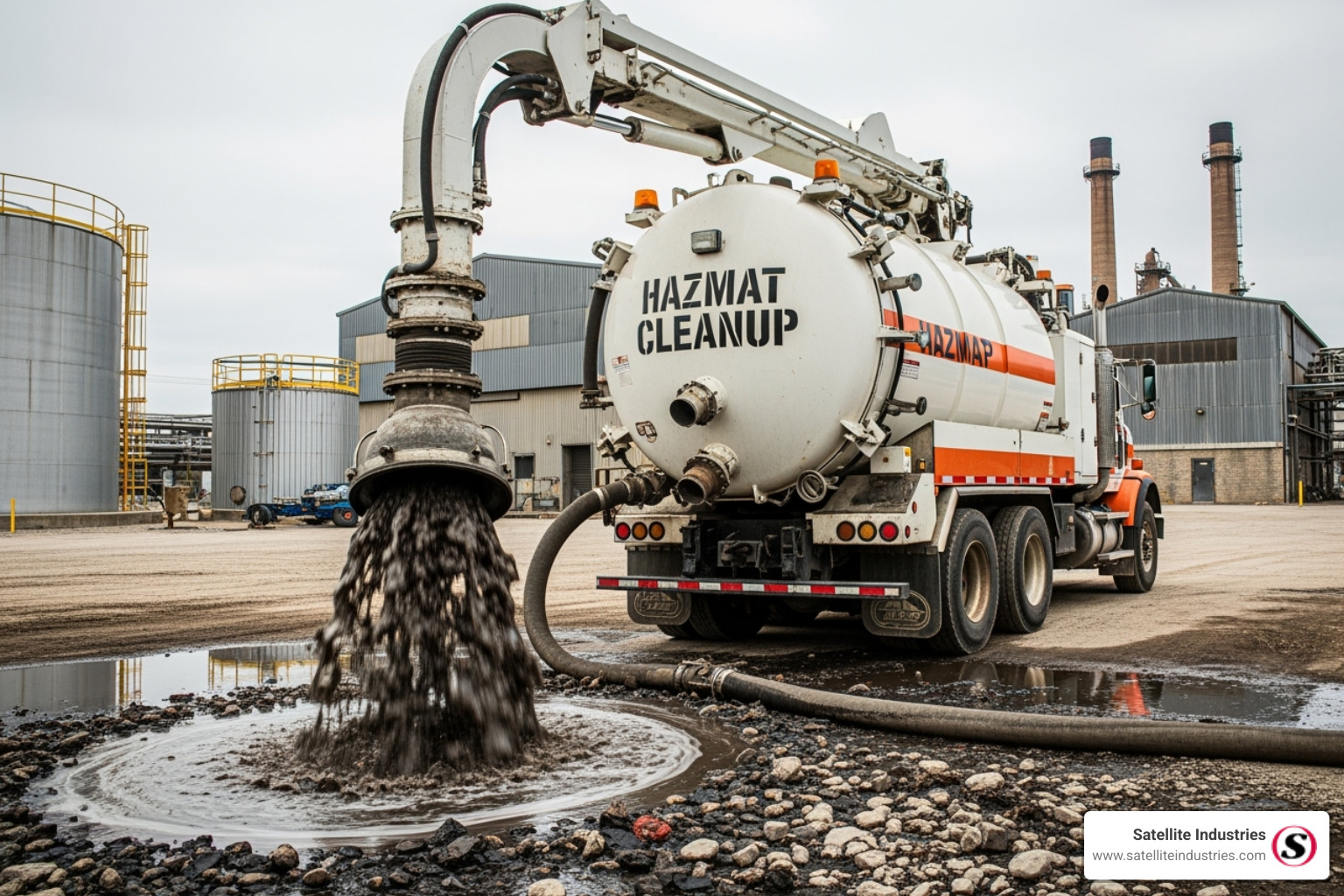
Powerful suction systems form the backbone of these operations. The magic happens through either rotary vane pumps or positive displacement pumps. Rotary vane pumps use spinning vanes inside a chamber to create vacuum, while positive displacement pumps change chamber volume to achieve the same result. Both create that crucial low-pressure environment that lets atmospheric pressure do the heavy lifting, pushing materials through durable hoses into the containment tank.
High-capacity tanks work hand-in-hand with these suction systems. We’re talking about tanks that can hold thousands of gallons of material – meaning fewer trips to disposal sites and more continuous operation when every minute counts. The engineering behind these tanks goes far beyond just size. They’re designed for wet/dry material handling, switching seamlessly between floodwater removal and debris suction as conditions change.
Advanced filtration becomes critical when dealing with hazardous materials. These systems ensure that any air released from the truck meets environmental standards, preventing further contamination during cleanup operations. The materials stay securely contained until they reach proper disposal facilities, protecting both the environment and the communities these trucks serve.
Engineered for Safety and Rapid Deployment
Speed matters in emergencies, but safety comes first. Modern Emergency vacuum truck design balances these priorities through thoughtful engineering that gets crews where they need to be quickly while protecting everyone involved.
Mobility for remote areas sets these trucks apart from standard equipment. Some units can operate on both roads and rails, converting between modes in minutes. This flexibility means reaching disaster zones that conventional vehicles simply can’t access – whether it’s a flooded neighborhood with damaged roads or a remote industrial site miles from the nearest highway.
Rapid deployment design extends beyond mobility. Every system on these trucks prioritizes quick setup and operation. Controls are positioned for easy access, hoses deploy efficiently, and boom systems extend to reach difficult spots without repositioning the entire vehicle.
Safety features work around the clock to protect operators and communities. Sealed tanks prevent accidental exposure to hazardous materials, while leak detection systems provide early warning of any containment issues. Pressure relief valves act as critical safety backstops, preventing dangerous pressure buildup that could damage equipment or endanger operators.
Operator-focused controls make these complex machines surprisingly intuitive to operate. In high-stress emergency situations, simple and clear controls reduce errors and improve efficiency. When operators can focus on the cleanup instead of wrestling with complicated systems, everyone benefits.
Compliance with safety regulations isn’t just about meeting standards – it’s about exceeding them. Every safety system reflects our commitment to protecting the people who operate these machines and the communities they serve.
What to Look for in an Emergency Vacuum Truck for Your Fleet
Choosing the right Emergency vacuum truck for your rental fleet requires balancing multiple priorities. Your customers need reliable equipment that can handle diverse emergencies, while your business needs assets that deliver strong returns and minimal headaches.
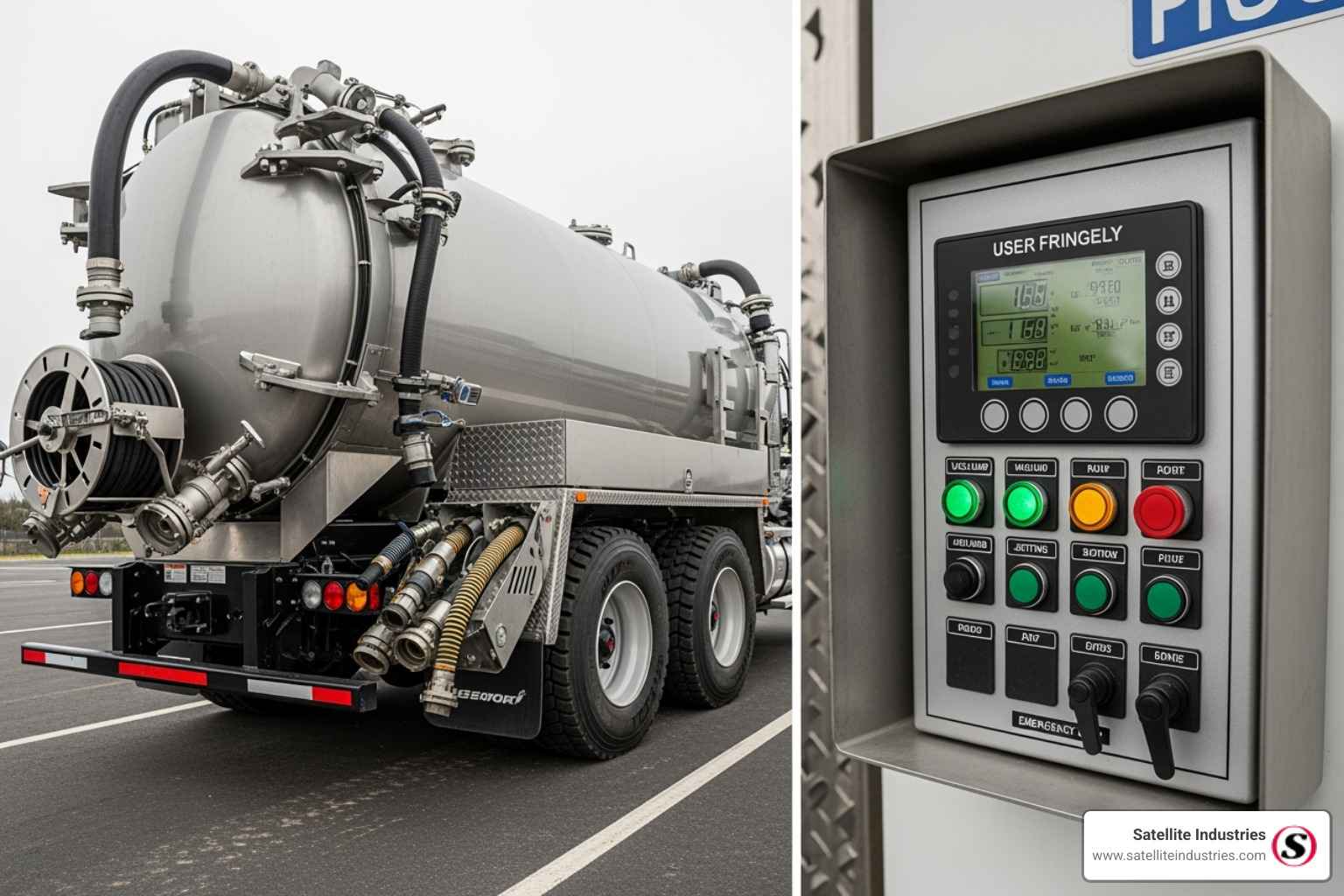
Advanced engineering for durability tops the priority list. Emergency work is tough on equipment. Harsh conditions, repeated heavy use, and demanding environments require trucks built to last. Look for robust chassis construction, high-quality components, and systems designed for longevity rather than just initial cost savings.
Low maintenance requirements keep your fleet ready when emergencies strike. Equipment that’s easy to service with readily available parts minimizes downtime. When disaster hits at 2 AM on a weekend, you need trucks that start reliably and perform consistently.
Operator safety features protect your most valuable assets – the people operating these machines. Beyond the essential sealed tanks and pressure relief valves, look for ergonomic controls, clear visibility, and safe access for maintenance tasks. Well-designed safety features reduce accident risk and ensure regulatory compliance.
Versatility for multiple job types maximizes your investment value. Trucks capable of handling both wet and dry materials, along with specialized applications like hydro-excavation, serve broader customer needs. This flexibility means more rental opportunities and better returns on your equipment investment.
Regulatory compliance protects both your business and your customers. Ensure trucks meet all relevant local, state, and federal requirements for waste handling, transportation, and safety standards. This foundation of compliance prevents costly issues down the road.
User-friendliness reflects our core philosophy at Satellite Industries. Intuitive controls and straightforward operation reduce training time and improve safety. When operators can focus on the emergency rather than complex machinery, cleanup operations run more smoothly and safely.
The right vacuum truck becomes an extension of your commitment to serving communities in crisis. By focusing on these key features, you’re building a fleet capable of responding to any emergency while delivering the reliability your customers depend on.
Mission Critical: How Vacuum Trucks Serve Communities in Crisis
When disaster strikes, Emergency vacuum truck services transform from everyday workhorses into community lifelines. These specialized vehicles don’t just clean up after emergencies – they actively prevent disasters and protect public health in ways most people never see. From the quiet work of storm preparation to the urgent response after hurricanes, vacuum trucks serve communities through every stage of crisis management.
The real magic happens in how these trucks adapt to whatever challenge they face. One day they might be preventing flooding by clearing storm drains. The next, they could be containing a hazardous spill that threatens an entire neighborhood’s water supply. This versatility makes them invaluable partners for cities, industries, and emergency responders worldwide.
Proactive Preparedness for Severe Weather
Smart communities know that the best emergency response happens before the emergency arrives. Emergency vacuum truck services play a quiet but crucial role in this preparation, working behind the scenes to strengthen infrastructure against incoming storms.
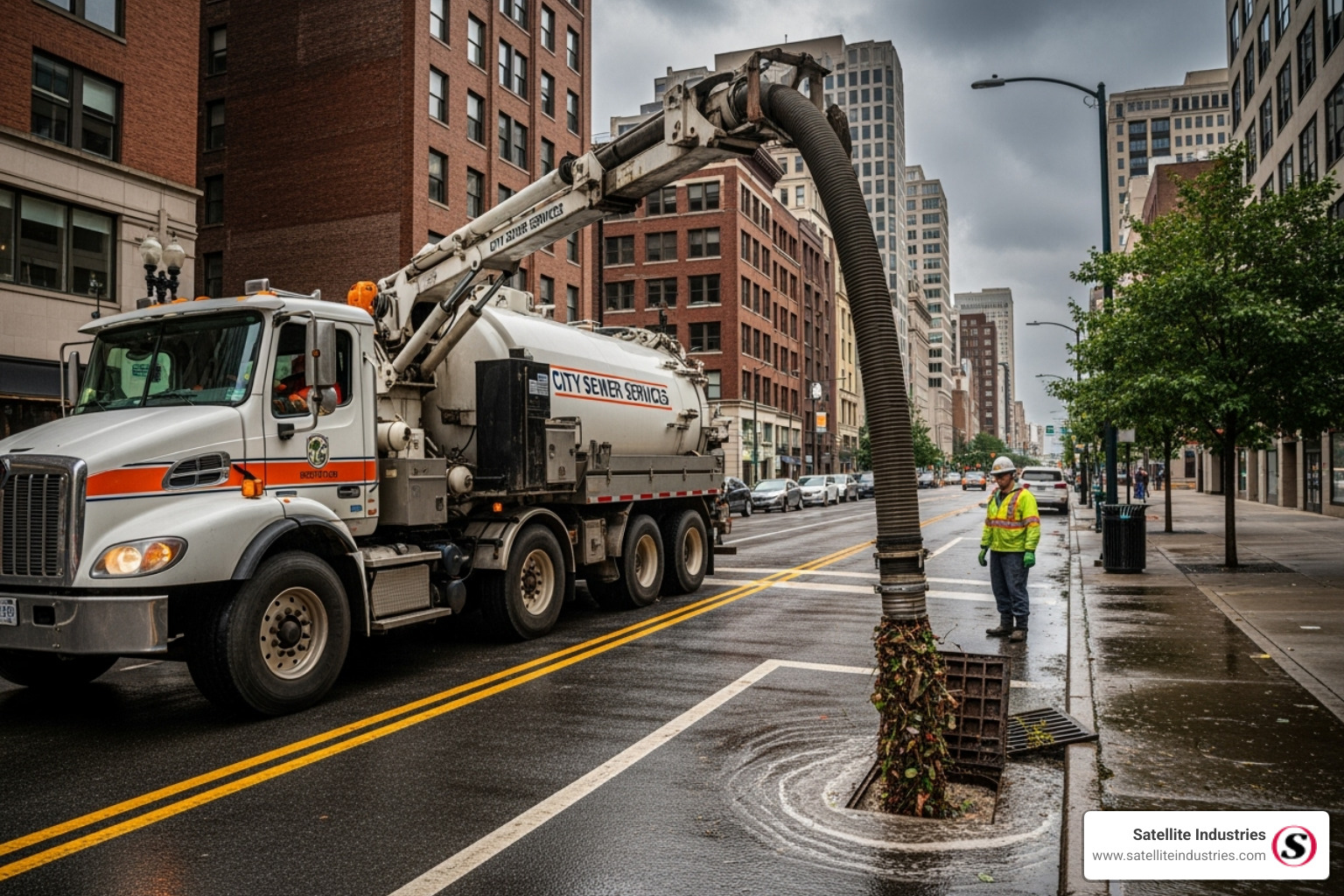
Think of storm drain cleaning as giving your city’s circulatory system a checkup. Over months and years, leaves, debris, and sediment build up in these critical pathways. When hurricane-force rains arrive, those seemingly small blockages become major problems. A clogged storm drain can turn a manageable downpour into neighborhood flooding that damages homes and traps residents.
Sewer line maintenance follows the same principle. Regular vacuum truck service keeps these underground networks flowing smoothly, preventing the kind of backups that can contaminate entire areas during heavy weather. It’s unglamorous work, but it’s the difference between a community that weathers the storm and one that gets overwhelmed by it.
Septic system management becomes especially critical in rural and suburban areas. When flood waters rise, an unmaintained septic system can fail catastrophically, creating serious health hazards just when emergency services are already stretched thin. Regular pumping and maintenance by vacuum trucks ensures these systems can handle the extra stress that severe weather brings.
This infrastructure preparedness for storm seasons might not make headlines, but it saves lives and prevents millions in damage. Communities that invest in proactive vacuum truck services find themselves bouncing back faster when storms do hit.
Immediate Disaster Response: The Role of an Emergency Vacuum Truck
When prevention isn’t enough and disaster strikes anyway, Emergency vacuum truck services shift into their most visible and vital role. These are the moments when their rapid response capabilities and specialized equipment become community lifelines.
Floodwater removal is often the most urgent need. Standing water doesn’t just damage property – it blocks emergency vehicles, cuts off evacuation routes, and creates breeding grounds for disease. High-capacity vacuum trucks can clear roads and critical areas quickly, opening pathways for rescue teams and relief supplies.
The work goes far beyond just water, though. Post-storm debris cleanup and mud and sludge removal are equally important. After hurricanes or severe flooding, thick layers of contaminated mud can make entire neighborhoods uninhabitable. Traditional cleanup methods would take weeks, but vacuum trucks can clear these heavy materials efficiently, helping families return to their homes sooner.
Hazardous waste containment represents perhaps the most critical emergency application. When industrial accidents happen during disasters – fuel tanks rupture, chemical storage fails, or treatment facilities overflow – vacuum trucks provide the specialized response needed to prevent environmental catastrophe. Their sealed tanks and filtration systems can safely contain dangerous materials that would otherwise spread through flood waters.
These capabilities make vacuum trucks essential for supporting rescue missions and helping municipalities manage the immediate aftermath of disasters. They clear the way for other emergency services and prevent secondary disasters that could make bad situations even worse.
Specialized Applications: From Hydro-Excavation to Industrial Spills
Beyond general emergency response, Emergency vacuum truck technology excels in specialized applications that require precision and safety above all else. These situations showcase the advanced engineering that makes modern vacuum trucks so versatile.
Hydro-excavation represents a perfect example of this precision work. This non-destructive digging method uses high-pressure water to break up soil while simultaneously vacuuming the debris away. The result is surgical accuracy in excavation work, which becomes crucial when protecting underground utilities during emergency repairs.
Imagine a gas line damaged during a storm, with repair crews racing against time while worried about hitting electrical cables or water mains buried nearby. Hydro-excavation allows them to expose the damaged area safely, without the risk of creating additional emergencies through accidental utility strikes.
Industrial spill response demands similar precision and safety. When chemical plants, refineries, or manufacturing facilities experience accidents, the response must be swift and thorough. Vacuum trucks equipped for hazardous materials can contain spills before they spread, preventing environmental damage and protecting worker safety.
Tank cleanouts might seem routine, but they’re often urgent. When storage tanks fail or overflow during disasters, quick cleaning prevents business shutdowns and environmental violations. The ability to handle various industrial materials – from petroleum products to chemical sludges – makes vacuum trucks indispensable for industrial emergency response.
Our commitment to advanced engineering for durability and user-friendliness ensures that rental fleet operators can provide these critical services reliably. When communities face their worst moments, having equipment that works flawlessly becomes a matter of public safety.
Learn more about our vacuum truck technology to find how our innovations support emergency response efforts worldwide.
Latest from the Satellite Industries Blog
Need Help {Finding the Right Sanitation Solution?}
Satellite Industries is the largest manufacturer of portable restrooms, restroom trailers, restroom trucks, septic trucks, slide-ins, unit haulers, vacuum technology, modular solutions, consumables and deodorizers.