
Vac Trucks: The Complete Guide to Vacuum Truck Types, Applications, and Equipment
A vac truck is a tank truck equipped with a vacuum pump thatpulls liquids, sludge, or slurry into a sealed onboard tank for transport to atreatment or disposal site. The term covers several configurations, each designedaround a specific material, access condition, or job type.
Satellite Industries manufactures vac trucks for portable sanitation, septic, and industrial operators across North America. This guide explains the equipment from a manufacturer's perspective: the main truck types, the core components that affect performance, and the decision points that matter when specifying a truck for a fleet.
What Is a Vac Truck?
A vac truck, short for vacuum truck, uses a vacuum system to pull liquid, sludge, or slurry through a hose and into a sealed tank. The material is then held under negative pressure for transport to a treatment or disposal facility.
Vac trucks are used across a range of industries, including:
- Portable sanitation
- Septic services
- Municipal utilities
- Construction
- Industrial plant maintenance
- Rural and agricultural operations
Different Names for the Same Equipment
Vac trucks are known by different names depending on the region and industry.
Common terms include:
- Vacuum tanker
- Vactor truck
- Vac-con
- Sucker truck
- Sewer sucker
- Hydro-vac
- Exhauster truck
In many cases, these terms describe the same or very similar equipment configurations.
This is important when comparing suppliers. One quote may refer to a vacuum tanker while another uses the term vactor truck, even though the underlying equipment may be comparable.
How Vac Trucks Support Field Servicing
For portable sanitation and septic operators, vac trucks enable on-site servicing. The vacuum system lets operators empty holding tanks and transport collected waste for treatment or disposal.
Satellite Industries has built vacuum equipment for operators across Jobsite, Industrial and Energy, Government and Rural and Agricultural applications for decades. The truck types and components covered below reflect the requirements of these different operating environments.
Focus on the Specification, Not the Name
Regional terminology can become especially confusing when fleet managers compare quotes from several suppliers or replace equipment sourced from different markets.
Rather than comparing trucks by name alone, look at the actual specifications, including:
- Tank capacity and material
- Vacuum pump configuration
- Hose setup
- Payload capacity
- Chassis
- Intended application
Two trucks with different names may be configured for the same job, while two trucks described with the same general term may have very different capabilities.
Reading the equipment specification rather than relying on the label helps avoid ruling out a suitable truck simply because a supplier uses different terminology.
The Main Types of Vac Trucks
This table groups vac trucks by what they physically do rather than by brand or model, making it easier to compare similar configurations across suppliers.
Use the columns to compare:
- What it does: The mechanical function of the truck
- Best suited for: The operating environment or application the configuration is designed for
- Satellite Industries fit: Whether Satellite Industries manufactures that type of equipment
Satellite Industries manufactures several types of liquid vacuum trucks, including:
- SVT restroom trucks
- Septic trucks
- Slide-in vacuum units
- Cabover trucks
- Pick-up and delivery trucks
Combination jetter and vacuum units, as well as wet and dry industrial vacuum trucks, are established categories within the broader market but fall outside Satellite Industries' current manufacturing lineup.
Hydro-excavators are also related to vacuum trucks but serve a different purpose. They are designed for non-destructive digging rather than waste transport. Operators comparing this type of equipment can read the dedicated hydro-excavation vacuum trucks article for a more detailed breakdown.
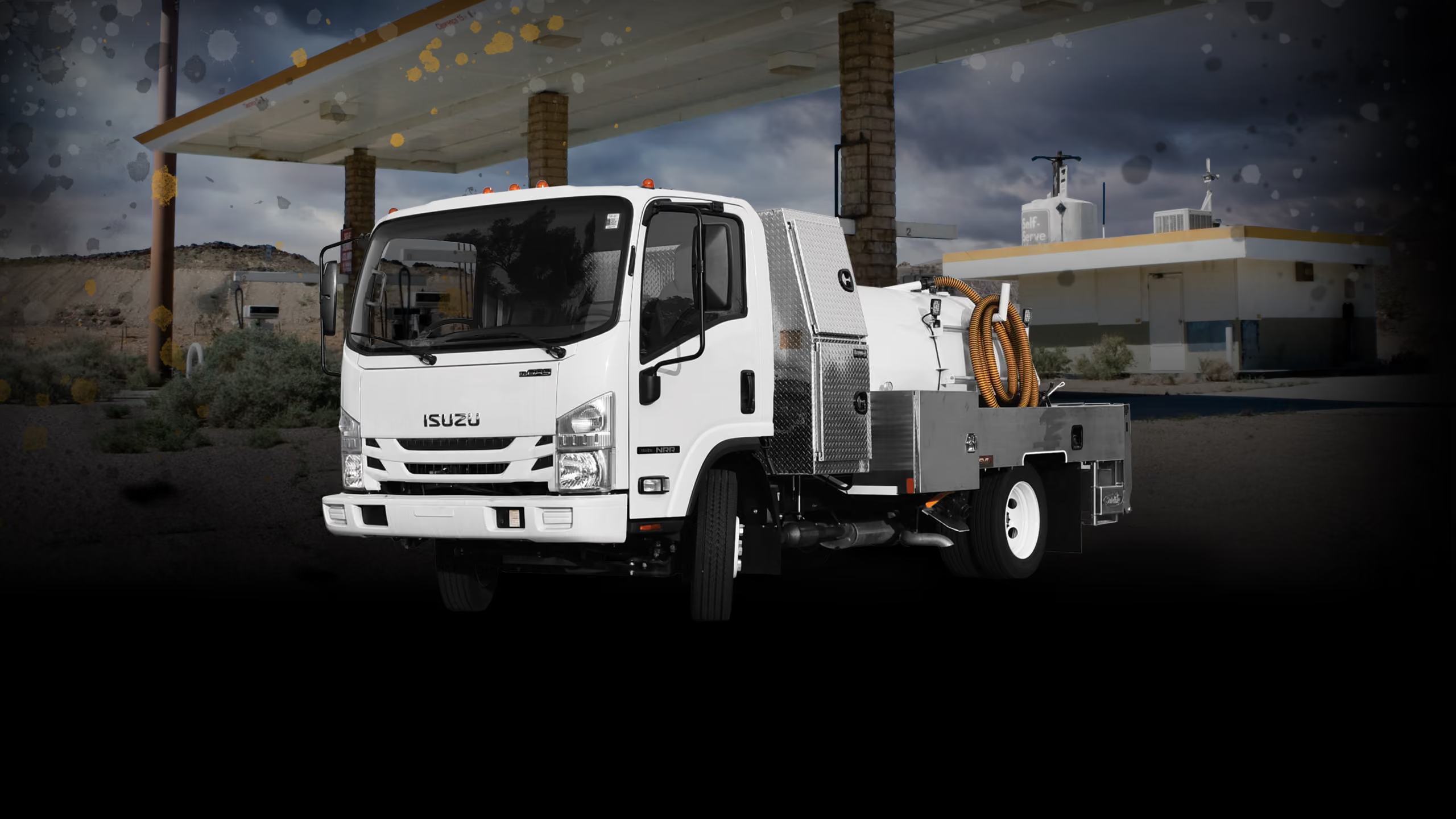
For most portable sanitation and septic operators, liquid vacuum trucks serve as the primary fleet workhorse. Slide-in units can suit smaller routes or operators looking for a lower upfront commitment, while cabover configurations can help address access and maneuverability challenges on tighter urban or job-site routes.
Vac Truck Equipment and Components
Comparing vacuum truck quotes does not require a mechanical deep dive. A few key specifications will tell you whether a truck fits your application, route, and payload requirements.
Tank Material and Capacity
The tank is one of the first variables to compare. Capacity and material will vary depending on the configuration and the type of material being hauled.
The two most common options are:
- Steel tanks: Well suited to abrasive materials and heavier-duty applications.
- Aluminum tanks: Reduce overall vehicle weight, which can provide more usable payload on a given chassis.
Neither material is universally better. The right choice depends on the corrosive or abrasive properties of the material being hauled, as well as how tank weight affects payload capacity.
Vacuum Pump Capacity
Vacuum pumps are typically rated by displacement in cubic feet per minute (CFM). This rating affects:
- How quickly the truck can build vacuum
- Performance over longer hose runs
- The speed of material collection during each service stop
A higher CFM rating may improve productivity, but consider it alongside the rest of the truck's configuration.
Hose Diameter and Reach
Hose specifications can significantly affect operating efficiency. Longer or narrower hose runs reduce effective flow, which can slow down each service stop across a route.
When comparing quotes, consider:
- Hose diameter
- Maximum hose reach
- Typical distance between the truck and service point
Washdown Systems
Washdown systems are standard on many vacuum trucks configured for portable sanitation. They allow operators to clean units and job sites at the point of service instead of carrying contamination back to the yard.
This can be particularly valuable on routes with tight turnaround times between stops.
Chassis and Payload Capacity
The tank, pump, and other equipment must all work within the chassis’ gross vehicle weight rating (GVWR).
Payload capacity determines how much material the truck can carry before it needs to offload, so the largest available tank is not always the most efficient option.
When choosing a configuration, consider:
- Tank size
- Available payload
- Route density
- Distance to disposal sites
- Vehicle weight limits
A truck that maximizes tank volume at the expense of payload margin may spend more time offloading or dealing with weight restrictions, reducing overall route efficiency.
Comparing Vacuum Truck Specifications
The goal is to choose a configuration that balances tank capacity, pump performance, hose requirements, and payload for the work the truck will actually perform.
For a deeper explanation of how the vacuum pump and the rest of the system generate suction and move material, see how a vacuum truck works.
What Vac Trucks Are Used For
Vac trucks support a wide range of field-service work, but most buyers start with one primary use case. Portable sanitation and septic operators typically prioritize waste collection, route efficiency, and job-site access, while municipal, construction, industrial, oil and gas, and agricultural users may prioritize different material-handling requirements. The same broad truck category can look very different once it is configured for a specific industry.
For a sector-by-sector breakdown of specifications and priorities, including what oil and gas, municipal, and industrial operators each prioritize, see vacuum trucks across industries.
How to Choose the Right Vac Truck for Your Fleet
Choosing the right vac truck starts with the work your fleet actually performs. A mixed portable restroom and septic route has very different requirements from a high-volume municipal contract.
A poor equipment match can lead to:
- Wasted drive time
- Insufficient payload
- Limited access to job sites
- Higher operating costs
- Increased downtime and premature component wear
Before choosing a configuration, work through four key questions.
1. What Material Are You Moving?
The type of material you haul affects the tank, pump, and hose configuration you need.
Common materials include:
- Septage
- Sludge
- Industrial slurry
- Dry material
Different materials may require different tank linings, pump configurations, and hose setups. For example, a liquid vacuum truck designed for septic service may not suit abrasive industrial slurry.
Matching the equipment to the material from the outset can help reduce unnecessary wear on tank and pump components.
2. What Is Your Route Density and Daily Volume?
Route structure should play a major role in truck selection.
For dense, short-hop routes, priorities may include:
- Faster cycle times
- Easier maneuverability
- Tighter turning radius
- Smaller overall footprint
This can make a cabover or well-configured slide-in unit a practical choice.
For longer routes with higher volume per stop, priorities may shift toward:
- Greater tank capacity
- Higher usable payload
- Fewer trips to offload
In these situations, maximum capacity may be more important than maneuverability.
3. What Access Constraints Do Your Job Sites Have?
The largest truck isn't always the most useful.
Tight urban streets, gated communities and constrained construction sites may require:
- A smaller vehicle footprint
- Better maneuverability
- A tighter turning radius
- Easier access to restricted spaces
A truck that cannot physically reach stops on its assigned route will limit fleet productivity, regardless of tank capacity or pump performance.
4. What Will Service and Parts Availability Look Like?
Long-term serviceability matters just as much as the initial specification.
When comparing new and used equipment, consider:
- Availability of replacement parts
- Manufacturer or dealer support
- Maintenance history
- Expected downtime
- Remaining service life
New equipment from a manufacturer with an established parts network can reduce service and downtime risks over the truck's life.
Used equipment may provide a more accessible way for smaller or growing operators to add capacity without the full upfront investment of a new build. However, a truck with an unknown maintenance history can create higher repair and downtime costs later.
Match the Truck to the Work
These questions apply regardless of the truck configuration you are considering.
A liquid vacuum truck chosen using the wrong route assumptions can underperform just as easily as a slide-in unit placed on a route it was never sized to handle.
Instead of choosing a preferred truck type first, evaluate your requirements in this order:
- Material being hauled
- Route density and daily volume
- Job-site access
- Service and parts availability
Once those four factors are clear, comparing suitable vac truck configurations becomes much more straightforward.
Consider Financing Alongside the Specification
Financing can make a first truck purchase or fleet expansion more manageable by spreading the investment rather than absorbing the full cost upfront.
Consider financing at the same time as the equipment specification, rather than treating it as a separate decision later.
Financing is easiest to evaluate once the operating requirements are clear. After you know the material, route profile, access constraints, and service expectations, you can compare truck configurations and financing options together instead of treating cost as a separate decision at the end.
Compare the current vacuum truck lineup to review available configurations, or explore financing options built around fleet growth.
FAQ
What is a vac truck?
A vac truck is a tank truck fitted with a vacuum pump that pneumatically lifts liquids, sludges, and slurries into a sealed onboard tank for transport to a treatment or disposal site. The same equipment is called a vacuum tanker, vactor truck, sucker truck, or hydro-vac depending on region and industry. Satellite Industries manufactures liquid vacuum trucks, slide-in units, cabover trucks, and pick-up and delivery trucks for portable sanitation and septic operators.
What is a vac truck used for?
Vac trucks pump and transport liquid and semi-liquid waste. Common applications include portable restroom servicing and septic pumping, municipal sewer and storm drain maintenance, industrial tank and silo cleanout, oil and gas field waste handling, and agricultural slurry removal. The specific configuration varies by material, since septage, industrial slurry, and dry material each call for a different tank and pump setup.
What are the different types of vacuum trucks?
The main categories are liquid vacuum trucks for septage and sludge, slide-in vacuum units that mount into a pickup bed, cabover trucks built for tight access, pick-up and delivery trucks for repositioning units, combination jetter and vacuum units for sewer work, hydro-excavators for non-destructive digging, and wet and dry industrial vacuum trucks for plant cleanout. Satellite Industries builds the first four.
What is the difference between a vac truck and a septic truck?
A septic truck is a type of vac truck. A vac truck is the broad category for any tank truck that uses vacuum to lift material, while a septic truck is the configuration built specifically for pumping septic tanks and portable restrooms. The difference is in tank material, pump sizing, and hose configuration rather than in the underlying principle. Satellite Industries manufactures septic trucks as part of its wider vacuum truck line.
How much can a vac truck hold?
Tank capacity varies by configuration and chassis. Slide-in units generally serve smaller routes, while purpose-built septic and industrial trucks carry more. The right capacity depends on route density and disposal-site distance, not simply the largest available tank, because excess drive time and offloading frequency can erase the benefit of more volume. Exact capacity ranges by model are available on the vacuum truck lineup page.
Get Vacuum Trucks From Satellite Industries
Satellite Industries is the largest manufacturer of portable sanitation equipment in North America and builds restroom trucks, septic trucks, cabover trucks, slide-in units, and pick-up and delivery trucks for operators across the continent.
Browse the full vacuum truck lineup, explore financing options, or contact a Satellite Account Executive to discuss the configuration that best fits your routes.
Latest from the Satellite Industries Blog
Need Help {Finding the Right Sanitation Solution?}
Satellite Industries is the largest manufacturer of portable restrooms, restroom trailers, restroom trucks, septic trucks, slide-ins, unit haulers, vacuum technology, modular solutions, consumables and deodorizers.
.webp)
.webp)